Studies of the Weatherhead East Asian Institute – serie
Visar alla böcker i serien Studies of the Weatherhead East Asian Institute. Handla med fri frakt och snabb leverans.
8 produkter
8 produkter
284 kr
Skickas inom 7-10 vardagar
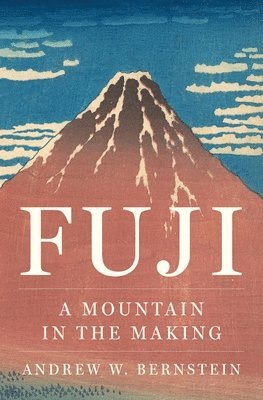
A panoramic history of Japan’s iconic mountain from the Ice Age to the presentMount Fuji is everywhere recognized as a wonder of nature and enduring symbol of Japan. Yet behind the picture-postcard image is a history filled with conflict and upheaval. Violent eruptions across the centuries wrought havoc and instilled fear. Long an object of worship, Fuji has been inhabited by deities that changed radically over time. It has been both a totem of national unity and a flashpoint for economic and political disputes. And while its soaring majesty has inspired countless works of literature and art, the foot of the mountain is home to military training grounds and polluting industries. Tracing the history of Fuji from its geological origins in the remote past to its recent inscription as a World Heritage Site, Andrew Bernstein explores these and other contradictions in the story of the mountain, inviting us to reflect on the relationships we share with the nonhuman world and one another.Beautifully illustrated, Fuji presents a rich portrait of one of the world’s most celebrated sites, revealing a mountain forever in the making and offering a meditation on the ability of landscape both to challenge and inspire.
398 kr
Skickas inom 7-10 vardagar
What is time made of? We might balk at such a question, and reply that time is not made of anything--it is an abstract and universal phenomenon. In Making Time, Yulia Frumer upends this assumption, using changes in the conceptualization of time in Japan to show that humans perceive time as constructed and concrete. In the mid-sixteenth century, when the first mechanical clocks arrived in Japan from Europe, the Japanese found them interesting but useless, because they failed to display time in units that changed their length with the seasons, as was customary in Japan at the time. In 1873, however, the Japanese government adopted the Western equal-hour system as well as Western clocks. Given that Japan carried out this reform during a period of rapid industrial development, it would be easy to assume that time consciousness is inherent to the equal-hour system and a modern lifestyle, but Making Time suggests that punctuality and time-consciousness are equally possible in a society regulated by a variable-hour system, arguing that this reform occurred because the equal-hour system better reflected a new conception of time--as abstract and universal--which had been developed in Japan by a narrow circle of astronomers, who began seeing time differently as a result of their measurement and calculation practices. Over the course of a few short decades this new way of conceptualizing time spread, gradually becoming the only recognized way of treating time.
333 kr
Skickas inom 7-10 vardagar
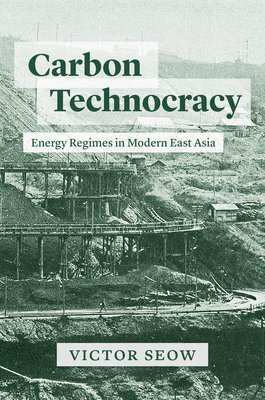
A forceful reckoning with the relationship between energy and power through the history of what was once East Asia’s largest coal mine.The coal-mining town of Fushun in China’s Northeast is home to a monstrous open pit. First excavated in the early twentieth century, this pit grew like a widening maw over the ensuing decades, as various Chinese and Japanese states endeavored to unearth Fushun’s purportedly “inexhaustible” carbon resources. Today, the depleted mine that remains is a wondrous and terrifying monument to fantasies of a fossil-fueled future and the technologies mobilized in attempts to turn those developmentalist dreams into reality.In Carbon Technocracy, Victor Seow uses the remarkable story of the Fushun colliery to chart how the fossil fuel economy emerged in tandem with the rise of the modern technocratic state. Taking coal as an essential feedstock of national wealth and power, Chinese and Japanese bureaucrats, engineers, and industrialists deployed new technologies like open-pit mining and hydraulic stowage in pursuit of intensive energy extraction. But as much as these mine operators idealized the might of fossil fuel–driven machines, their extractive efforts nevertheless relied heavily on the human labor that those devices were expected to displace. Under the carbon energy regime, countless workers here and elsewhere would be subjected to invasive techniques of labor control, ever-escalating output targets, and the dangers of an increasingly exploited earth.Although Fushun is no longer the coal capital it once was, the pattern of aggressive fossil-fueled development that led to its ascent endures. As we confront a planetary crisis precipitated by our extravagant consumption of carbon, it holds urgent lessons. This is a groundbreaking exploration of how the mutual production of energy and power came to define industrial modernity and the wider world that carbon made.
231 kr
Skickas inom 7-10 vardagar
A forceful reckoning with the relationship between energy and power through the history of what was once East Asia’s largest coal mine.The coal-mining town of Fushun in China’s Northeast is home to a monstrous open pit. First excavated in the early twentieth century, this pit grew like a widening maw over the ensuing decades, as various Chinese and Japanese states endeavored to unearth Fushun’s purportedly “inexhaustible” carbon resources. Today, the depleted mine that remains is a wondrous and terrifying monument to fantasies of a fossil-fueled future and the technologies mobilized in attempts to turn those developmentalist dreams into reality.In Carbon Technocracy, Victor Seow uses the remarkable story of the Fushun colliery to chart how the fossil fuel economy emerged in tandem with the rise of the modern technocratic state. Taking coal as an essential feedstock of national wealth and power, Chinese and Japanese bureaucrats, engineers, and industrialists deployed new technologies like open-pit mining and hydraulic stowage in pursuit of intensive energy extraction. But as much as these mine operators idealized the might of fossil fuel–driven machines, their extractive efforts nevertheless relied heavily on the human labor that those devices were expected to displace. Under the carbon energy regime, countless workers here and elsewhere would be subjected to invasive techniques of labor control, ever-escalating output targets, and the dangers of an increasingly exploited earth.Although Fushun is no longer the coal capital it once was, the pattern of aggressive fossil-fueled development that led to its ascent endures. As we confront a planetary crisis precipitated by our extravagant consumption of carbon, it holds urgent lessons. This is a groundbreaking exploration of how the mutual production of energy and power came to define industrial modernity and the wider world that carbon made.
781 kr
Skickas inom 7-10 vardagar
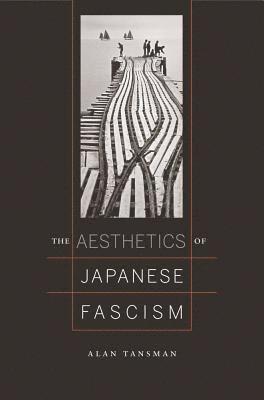
In this wide-ranging study of Japanese cultural expression, Alan Tansman reveals how a particular, often seemingly innocent aesthetic sensibility - present in novels, essays, popular songs, film, and political writings - helped create an 'aesthetic of fascism' in the years leading up to World War II. Evoking beautiful moments of violence, both real and imagined, these works did not lead to fascism in any instrumental sense. Yet, Tansman suggests, they expressed and inspired spiritual longings quenchable only through acts in the real world. Tansman traces this lineage of aesthetic fascism from its beginnings in the 1920s through its flowering in the 1930s to its afterlife in postwar Japan.
700 kr
Skickas inom 7-10 vardagar
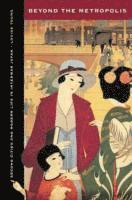
In "Beyond the Metropolis", Louise Young looks at the emergence of urbanism in the interwar period, a global moment when the material and ideological structures that constitute "the city" took their characteristic modern shape. In Japan, as elsewhere, cities became the staging ground for wide ranging social, cultural, economic, and political transformations. The rise of social problems, the formation of a consumer marketplace, the proliferation of streetcars and streetcar suburbs, and the cascade of investments in urban development reinvented the city as both socio-spatial form and set of ideas. Young tells this story through the optic of the provincial city, examining four second-tier cities: Sapporo, Kanazawa, Niigata, and Okayama. As prefectural capitals, these cities constituted centers of their respective regions. All four grew at an enormous rate in the interwar decades, much as the metropolitan giants did. In spite of their commonalities, local conditions meant that policies of national development and the vagaries of the business cycle affected individual cities in diverse ways.As their differences reveal, there is no single master narrative of twentieth century modernization. By engaging urban culture beyond the metropolis, this study shows that Japanese modernity was not made in Tokyo and exported to the provinces, but rather co-constituted through the circulation and exchange of people and ideas throughout the country and beyond.
414 kr
Skickas inom 7-10 vardagar
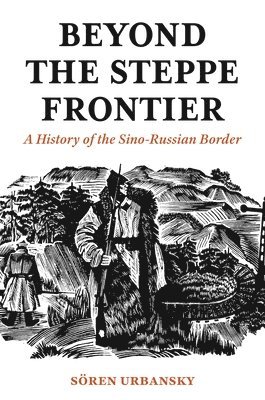
A comprehensive history of the Sino-Russian border, one of the longest and most important land borders in the worldThe Sino-Russian border, once the world’s longest land border, has received scant attention in histories about the margins of empires. Beyond the Steppe Frontier rectifies this by exploring the demarcation’s remarkable transformation—from a vaguely marked frontier in the seventeenth century to its twentieth-century incarnation as a tightly patrolled barrier girded by watchtowers, barbed wire, and border guards. Through the perspectives of locals, including railroad employees, herdsmen, and smugglers from both sides, Sören Urbansky explores the daily life of communities and their entanglements with transnational and global flows of people, commodities, and ideas. Urbansky challenges top-down interpretations by stressing the significance of the local population in supporting, and undermining, border making.Because Russian, Chinese, and native worlds are intricately interwoven, national separations largely remained invisible at the border between the two largest Eurasian empires. This overlapping and mingling came to an end only when the border gained geopolitical significance during the twentieth century. Relying on a wealth of sources culled from little-known archives from across Eurasia, Urbansky demonstrates how states succeeded in suppressing traditional borderland cultures by cutting kin, cultural, economic, and religious connections across the state perimeter, through laws, physical force, deportation, reeducation, forced assimilation, and propaganda.Beyond the Steppe Frontier sheds critical new light on a pivotal geographical periphery and expands our understanding of how borders are determined.
284 kr
Skickas inom 7-10 vardagar
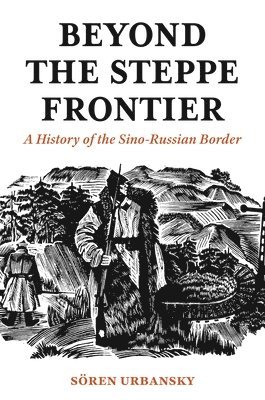
A comprehensive history of the Sino-Russian border, one of the longest and most important land borders in the worldThe Sino-Russian border, once the world’s longest land border, has received scant attention in histories about the margins of empires. Beyond the Steppe Frontier rectifies this by exploring the demarcation’s remarkable transformation—from a vaguely marked frontier in the seventeenth century to its twentieth-century incarnation as a tightly patrolled barrier girded by watchtowers, barbed wire, and border guards. Through the perspectives of locals, including railroad employees, herdsmen, and smugglers from both sides, Sören Urbansky explores the daily life of communities and their entanglements with transnational and global flows of people, commodities, and ideas. Urbansky challenges top-down interpretations by stressing the significance of the local population in supporting, and undermining, border making.Because Russian, Chinese, and native worlds are intricately interwoven, national separations largely remained invisible at the border between the two largest Eurasian empires. This overlapping and mingling came to an end only when the border gained geopolitical significance during the twentieth century. Relying on a wealth of sources culled from little-known archives from across Eurasia, Urbansky demonstrates how states succeeded in suppressing traditional borderland cultures by cutting kin, cultural, economic, and religious connections across the state perimeter, through laws, physical force, deportation, reeducation, forced assimilation, and propaganda.Beyond the Steppe Frontier sheds critical new light on a pivotal geographical periphery and expands our understanding of how borders are determined.