The Cambridge History of Japan – serie
Visar alla böcker i serien The Cambridge History of Japan. Handla med fri frakt och snabb leverans.
6 produkter
6 produkter
1 096 kr
Skickas inom 7-10 vardagar
Japan's ancient age was a period of radical and political change during which a Chinese-style empire emerged. This volume of The Cambridge History of Japan spans the beginnings of human existence to the end of the eighth century, focusing on the thousand years between 300 BC and 784, the end of the fabulous Nara period. The volume explores this period in four stages: (1) The Yayoi period (to about AD 250) when small kingdoms and kingdom federations accumulated enough power to dispatch diplomatic missions to Korea and China; (2) the Yamato period (to 587) when priestly rulers, having gained economic and military power, conquered most of Japan; (3) the Century of Reform (to 710) when Japanese leaders, pressed by China's expanding T'ang empire, set out to build a strong Chinese-style empire of their own; (4) the Nara period (to 784) when spectacular literary, artistic, architectural, and religious advances were made.
1 096 kr
Skickas inom 7-10 vardagar
This volume provides the most comprehensive treatment of the Heian period, the golden age of the Japanese imperial court, in any Western language. From Heian-kyo, founded in 794, the Japanese emperor ruled over an elaborate government modelled on China's absolute monarchy. Ambassadors to the T'ang court and students studying in China brought back laws, ideas, Buddhism, temple architecture, sculpture, and wall-painting. Chinese influences blended with native Japanese elements in courtly painting, calligraphy, poetry and prose. The world's first novel, The Tale of Genji, was completed about 1020. In 1185 the elegant and peaceful world of the court was shattered by the struggle of the Taira and Minamoto warrior clans, who usurped real political power and left the emperor with a symbolic, legitimizing role. Contributors to this volume emphasize political history, the land system, provincial administration, the capital and its society, aristocratic culture, and the acceptance of Buddhism and popular religious practices.
1 096 kr
Skickas inom 7-10 vardagar
This third volume of The Cambridge History of Japan is devoted to the three and a half centuries spanning the final decades of the twelfth century when the Kamakura bakufu was founded to the mid-sixteenth century when civil wars raged following the demise of the Muromachi bakufu. The volume creates a rich tapestry of the events that took place during these colourful centuries, when the warrior class ruled Japan, institutions underwent fundamental transformations, the economy grew steadily, and Japanese culture and society evolved with surprising vitality to leave legacies that still characterize and affect contemporary Japan. As with other volumes in The Cambridge History of Japan, Volume 3 was carefully prepared so as to be accessible to specialists and students as well as to general readers wishing to increase their understanding of the period. This is the most extensive treatment available on medieval Japan, and it will serve as an indispensible tool and authoritative guide for all interested in Japan's medieval age.
1 096 kr
Skickas inom 7-10 vardagar
This is the fourth of six volumes designed to explore the history of Japan from prehistoric to modern times. Volume 4 covers the years from 1550 to 1800, a short but surprisingly eventful period in Japanese history commonly referred to as Japan's Early Modern Age. At the start, in the sixteenth century, much of the country was being pulled apart by local military lords engaged in a struggle for land and local hegemony. These daimyo succeeded in dividing Japan into nearly autonomous regional domains. This volume attempts to flesh out the historical tale with insights into the way that people lived and worked. It examines the relationship between peasant and local lord, and between the lord, as a unit of local government, and the emerging shogunate. It offers insights into the evolution of indigenous thought and religion and it also deals with Japan's foreign relations, particularly the impact of the Christian missionary movement.
1 096 kr
Skickas inom 7-10 vardagar
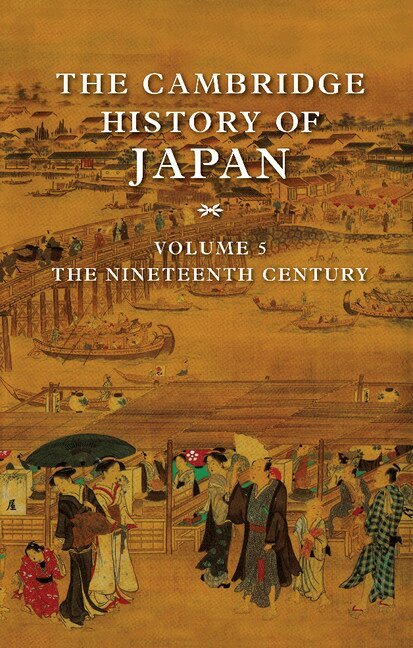
Volume 5 of The Cambridge History of Japan provides the most comprehensive account available in any Western language of Japan's transformation from a feudal society to a modern nation state. It traces the roots and course of political, social, and institutional change that took place in Japan from late Tokugawa times to the early twentieth century. During this period Japan, under pressure from the intrusive West, abandoned its policy of national seclusion and remodeled its institutions to build the strength necessary to join the great powers and to fashion an empire in East Asia. The volume consists of an interrelated collection of authoritative and analytical chapters by specialists in the history of nineteenth-century Japan that discuss the fissures in late feudal society, the impact of and responses to the West, the overthrow of the shogunal government, and the revolutionary changes that were instituted as defensive measures to strengthen the country against what seemed a dangerous competition with the Western world.
1 096 kr
Skickas inom 7-10 vardagar
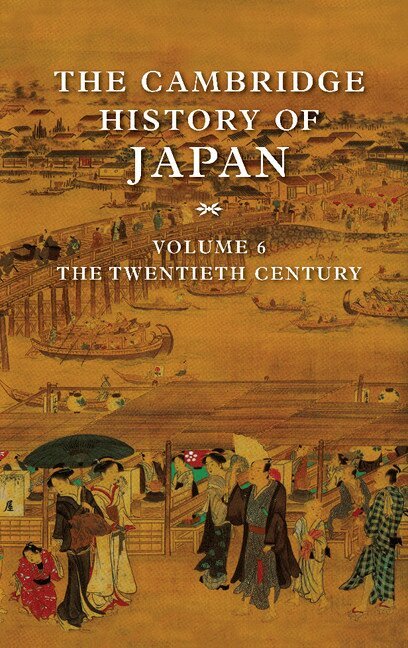
Japan has played a key role in spurring this transformation. Once an isolated island society, little known to its neighbours and practically unknown to the West, Japan has emerged today as a leading economic power. The country's rise to a position of international prominence has not been a smooth process, however - it has come only after a period of turmoil and conflict. Volume 6 provides a general introduction to Japan's history during the first three quarters of the twentieth century, with emphasis on political, economic, social and intellectual trends. Leading historians have contributed essays dealing with the development of domestic politics, particularly the politics of representative institutions, and Japan's relations with the outside world, including its prewar territorial expansion and aggrandizement on the Asian continent. Although written by specialists, this volume will be an important reference work for general readers as well as scholars and students of modern Japanese history.