The W. B. Stanford Memorial Lectures - Böcker
Visar alla böcker i serien The W. B. Stanford Memorial Lectures. Handla med fri frakt och snabb leverans.
14 produkter
14 produkter
560 kr
Skickas inom 7-10 vardagar
How does Plato view his philosophical antecedents? Plato and his Predecessors considers how Plato represents his philosophical predecessors in a late quartet of dialogues: the Theaetetus, the Sophist, the Politicus and the Philebus. Why is it that the sophist Protagoras, or the monist Parmenides, or the advocate of flux, Heraclitus, are so important in these dialogues? And why are they represented as such shadowy figures, barely present at their own refutations? The explanation, the author argues, is a complex one involving both the reflective relation between Plato's dramatic technique and his philosophical purposes, and the very nature of his late philosophical views. For in these encounters with his predecessors we see Plato develop a new account of the principles of reason, against those who would deny them, and forge a fresh view of the best life - the life of the philosopher.
626 kr
Skickas inom 7-10 vardagar
The gens, a key social formation in archaic Rome, has given rise to considerable interpretative problems for modern scholarship. In this comprehensive exploration of the subject, Professor Smith examines the mismatch between the ancient evidence and modern interpretative models influenced by social anthropology and political theory. He offers a detailed comparison of the gens with the Attic genos and illustrates, for the first time, how recent changes in the way we understand the genos may impact upon our understanding of Roman history. He develops a concept of the gens within the interlocking communal institutions of early Rome, which touches on questions of land ownership, warfare and the patriciate, before offering an explanation of the role of the gens and the part it might play in modern political theory. This significant work makes an important contribution not only to the study of archaic Rome, but also to the history of ideas.
644 kr
Skickas inom 7-10 vardagar
The sexy, witty and often bizarre novels, poetry and dialogues of the first centuries of this era (works such as Longus' Daphnis and Chloe, Achilles Tatius' Leukippe and Cleitophon and Plutarch's Amatorius) were being composed at the same time as fundamental ideas about the body, gender and sexuality were being set in place with the rise of Christianity and the Church to dominate the pagan world. Modern writers on the history of sexuality have largely ignored this literature in favour of prose treatises, philosophy and Christian homilies. Simon Goldhill, writing with the same wit and verve as the ancient writers with whom he engages, sets out to put these texts back into the history of sexuality. The result is a dazzling celebration of sex and sexuality in the Greek literature of the first centuries CE.
563 kr
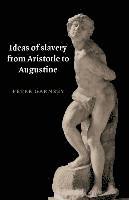
This study, unique of its kind, asks how slavery was viewed by the leading spokesmen of Greece and Rome. There was no movement for abolition in these societies, nor a vigorous debate, such as occurred in antebellum America, but this does not imply that slavery was accepted without question. Dr Garnsey draws on a wide range of sources, pagan, Jewish and Christian, over ten centuries, to challenge the common assumption of passive acquiescence in slavery, and the associated view that, Aristotle apart, there was no systematic thought on slavery. The work contains both a typology of attitudes to slavery ranging from critiques to justifications, and paired case-studies of leading theorists of slavery, Aristotle and the Stoics, Philo and Paul, Ambrose and Augustine. A final chapter considers the use of slavery as a metaphor in the Church Fathers.
1 245 kr
Skickas inom 7-10 vardagar
How does Plato view his philosophical antecedents? Plato and his Predecessors considers how Plato represents his philosophical predecessors in a late quartet of dialogues: the Theaetetus, the Sophist, the Politicus and the Philebus. Why is it that the sophist Protagoras, or the monist Parmenides, or the advocate of flux, Heraclitus, are so important in these dialogues? And why are they represented as such shadowy figures, barely present at their own refutations? The explanation, the author argues, is a complex one involving both the reflective relation between Plato's dramatic technique and his philosophical purposes, and the very nature of his late philosophical views. For in these encounters with his predecessors we see Plato develop a new account of the principles of reason, against those who would deny them, and forge a fresh view of the best life - the life of the philosopher.
871 kr
Skickas inom 7-10 vardagar
For many years the domain of specialists in early Latin, in complex metres, and in the reconstruction of texts, Roman comedy is now established in the mainstream of Classical literary criticism. Where most books stress the original performance as the primary location for the encountering of the plays, this book finds the locus of meaning and appreciation in the activity of a reader, albeit one whose manner of reading necessarily involves the imaginative reconstruction of performance. The texts are treated, and celebrated, as literary devices, with programmatic beginnings, middles, ends, and intertexts. All the extant plays of Plautus and Terence have at least a bit part in this book, which seeks to expose the authors' fabulous artificiality and artifice, while playing along with their differing but interrelated poses of generic humility.
1 228 kr
Skickas inom 7-10 vardagar
Social memory - the shared remembrances of group experience - creates shared identity, and provides people with both an image of their past and a design for their future. But how are we to conceive the memories of past peoples such as, for example, the ancient Greeks? This 2002 book makes a strong case for the use of archaeology, particularly the evidence of landscape and of monuments, to trace patterns in commemoration and forgetfulness. Three detailed case studies (early Roman Greece, Hellenistic and Roman Crete, and Messenia in Archaic to Hellenistic times) focus on societies undergoing different types of social transformation. Material evidence allows us to observe how groups responded to these challenges, and how they made different uses of the past, in the past.
1 442 kr
Skickas inom 7-10 vardagar
The gens, a key social formation in archaic Rome, has given rise to considerable interpretative problems for modern scholarship. In this comprehensive exploration of the subject, Professor Smith examines the mismatch between the ancient evidence and modern interpretative models influenced by social anthropology and political theory. He offers a detailed comparison of the gens with the Attic genos and illustrates, for the first time, how recent changes in the way we understand the genos may impact upon our understanding of Roman history. He develops a concept of the gens within the interlocking communal institutions of early Rome, which touches on questions of land ownership, warfare and the patriciate, before offering an explanation of the role of the gens and the part it might play in modern political theory. This significant work makes an important contribution not only to the study of archaic Rome, but also to the history of ideas.
563 kr
Skickas inom 7-10 vardagar
Social memory - the shared remembrances of group experience - creates shared identity, and provides people with both an image of their past and a design for their future. But how are we to conceive the memories of past peoples such as, for example, the ancient Greeks? This 2002 book makes a strong case for the use of archaeology, particularly the evidence of landscape and of monuments, to trace patterns in commemoration and forgetfulness. Three detailed case studies (early Roman Greece, Hellenistic and Roman Crete, and Messenia in Archaic to Hellenistic times) focus on societies undergoing different types of social transformation. Material evidence allows us to observe how groups responded to these challenges, and how they made different uses of the past, in the past.
1 431 kr
Skickas inom 7-10 vardagar
This book proposes a new approach to the study of ancient Greek and Mesopotamian literature. Ranging from Homer and Gilgamesh to Herodotus and the Babylonian-Greek author Berossos, it paints a picture of two literary cultures that, over the course of time, became profoundly entwined. Along the way, the book addresses many questions of crucial importance to the student of the ancient world: how did the literature of Greece relate to that of its eastern neighbours? What did ancient readers from different cultures think it meant to be human? Who invented the writing of universal history as we know it? How did the Greeks come to divide the world into Greeks and 'barbarians', and what happened when they came to live alongside those 'barbarians' after the conquests of Alexander the Great? In addressing these questions, the book draws on cutting-edge research in comparative literature, postcolonial studies and archive theory.
1 144 kr
Skickas inom 7-10 vardagar
This ambitious book investigates a major yet underexplored nexus of themes in Roman cultural history: the evolving tropes of enclosure, retreat and compressed space within an expanding, potentially borderless empire. In Roman writers' exploration of real and symbolic enclosures - caves, corners, villas, bathhouses, the 'prison' of the human body itself - we see the aesthetic, philosophical and political intersecting in fascinating ways, as the machine of empire is recast in tighter and tighter shapes. Victoria Rimell brings ideas and methods from literary theory, cultural studies and philosophy to bear on an extraordinary range of ancient texts rarely studied in juxtaposition, from Horace's Odes, Virgil's Aeneid and Ovid's Ibis, to Seneca's Letters, Statius' Achilleid and Tacitus' Annals. A series of epilogues puts these texts in conceptual dialogue with our own contemporary art world, and emphasizes the role Rome's imagination has played in the history of Western thinking about space, security and dwelling.
644 kr
Skickas inom 7-10 vardagar
For many years the domain of specialists in early Latin, in complex metres, and in the reconstruction of texts, Roman comedy is now established in the mainstream of Classical literary criticism. Where most books stress the original performance as the primary location for the encountering of the plays, this book finds the locus of meaning and appreciation in the activity of a reader, albeit one whose manner of reading necessarily involves the imaginative reconstruction of performance. The texts are treated, and celebrated, as literary devices, with programmatic beginnings, middles, ends, and intertexts. All the extant plays of Plautus and Terence have at least a bit part in this book, which seeks to expose the authors' fabulous artificiality and artifice, while playing along with their differing but interrelated poses of generic humility.
584 kr
Skickas inom 7-10 vardagar
This ambitious book investigates a major yet underexplored nexus of themes in Roman cultural history: the evolving tropes of enclosure, retreat and compressed space within an expanding, potentially borderless empire. In Roman writers' exploration of real and symbolic enclosures - caves, corners, villas, bathhouses, the 'prison' of the human body itself - we see the aesthetic, philosophical and political intersecting in fascinating ways, as the machine of empire is recast in tighter and tighter shapes. Victoria Rimell brings ideas and methods from literary theory, cultural studies and philosophy to bear on an extraordinary range of ancient texts rarely studied in juxtaposition, from Horace's Odes, Virgil's Aeneid and Ovid's Ibis, to Seneca's Letters, Statius' Achilleid and Tacitus' Annals. A series of epilogues puts these texts in conceptual dialogue with our own contemporary art world, and emphasizes the role Rome's imagination has played in the history of Western thinking about space, security and dwelling.
493 kr
Skickas inom 7-10 vardagar
This book proposes a new approach to the study of ancient Greek and Mesopotamian literature. Ranging from Homer and Gilgamesh to Herodotus and the Babylonian-Greek author Berossos, it paints a picture of two literary cultures that, over the course of time, became profoundly entwined. Along the way, the book addresses many questions of crucial importance to the student of the ancient world: how did the literature of Greece relate to that of its eastern neighbours? What did ancient readers from different cultures think it meant to be human? Who invented the writing of universal history as we know it? How did the Greeks come to divide the world into Greeks and 'barbarians', and what happened when they came to live alongside those 'barbarians' after the conquests of Alexander the Great? In addressing these questions, the book draws on cutting-edge research in comparative literature, postcolonial studies and archive theory.