Thresholds in Philosophy and Theology - Böcker
Visar alla böcker i serien Thresholds in Philosophy and Theology. Handla med fri frakt och snabb leverans.
10 produkter
10 produkter
418 kr
Skickas inom 10-15 vardagar
What is secularity? Might it yield or define a distinctive form of reasoning? If so, would that form of reasoning belong essentially to our modern age, or would it instead have a considerably older lineage? And what might be the relation of that form of reasoning, whatever its lineage, to the Christian thinking that is often said to oppose it? In the present volume, these and related questions are addressed by a distinguished group of scholars working primarily within the Roman Catholic theological tradition and from the perspectives of Continental philosophy. As a whole, the volume constitutes a conversation among thinkers who agree in their concerns but not necessarily their conclusions. Taken individually, each essay concentrates on a range of historical developments with close attention to their intellectual and sometimes pedagogical implications. Secular reason, they argue, is neither the antipode of Christian thought nor a stable and well-resolved component of it. Christian thinking may engage with secular reason as the site of profound difficulties, but on occasion will also learn from it as a source of new insight. Christianity and Secular Reason contributes to the contemporary discussion of secularity prompted especially by Charles Taylor's book A Secular Age. Unlike Taylor's work, however, this collection concentrates specifically on secular reason and explicitly on its relation to Christianity. In this sense, it is closer to Michael J. Buckley's At the Origins of Modern Atheism or, to a lesser degree, Louis Dupré's Passage to Modernity, which concern themselves with broad cultural developments.
Life in the Spirit
Trinitarian Grammar and Pneumatic Community in Hegel and Augustine
Häftad, Engelska, 2015
431 kr
Skickas inom 10-15 vardagar
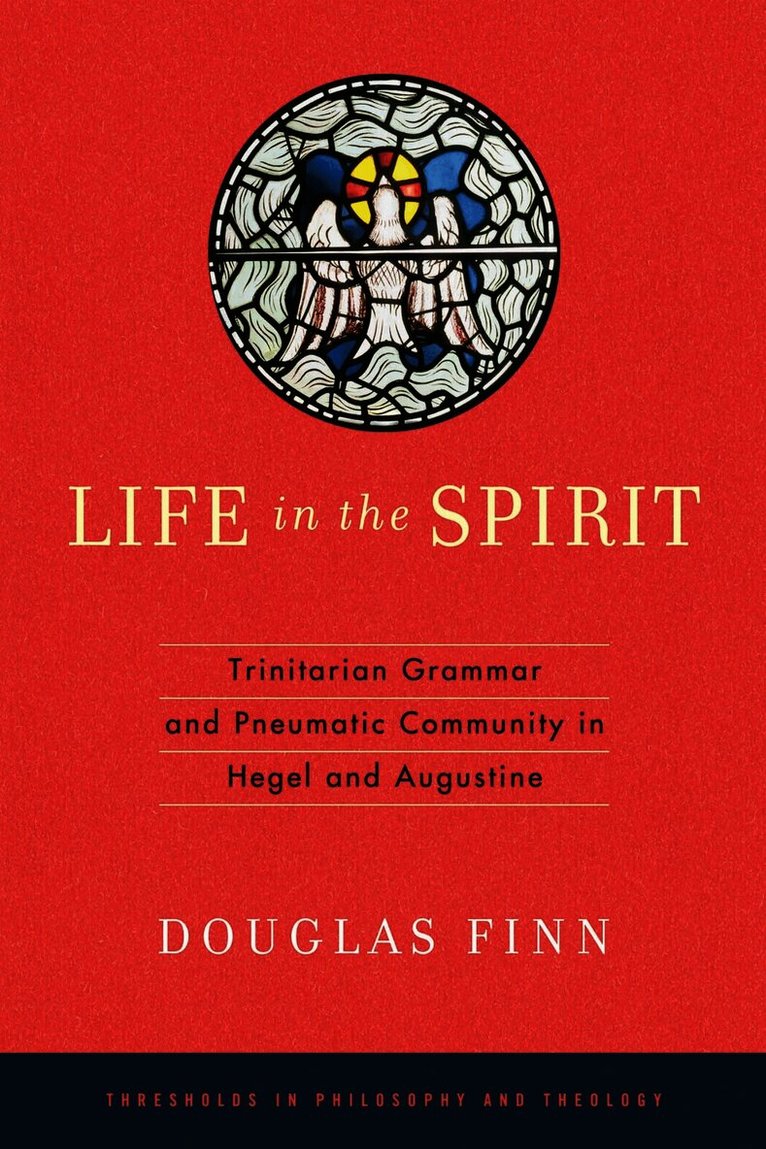
Since the nineteenth century, many philosophical and theological commentators have sought to trace lines of continuity between the Trinitarian thought of Augustine of Hippo (354–430) and G. W. F. Hegel (1770–1831). Many contemporary Christian theologians have also criticized Augustine's Trinitarian theology generally and his doctrine of the Holy Spirit more specifically through this historical lens. At the same time, Hegelian Trinitarian conceptual dynamics have come to exert a strong influence over contemporary Trinitarian theology.In Life in the Spirit, Douglas Finn seeks to redress several imbalances with respect to Augustine, imbalances that have one of their hermeneutic causes in a Hegelian-influenced theological tradition. Finn argues that common readings of Augustine focus too much on his De Trinitate, books 8–15, betraying a modern—and to some extent Hegelian—prejudice against considering sermons and biblical commentaries serious theological work. This broadening of Augustinian texts allows Finn to critique readings of Augustine that, on the one hand, narrow his Trinitarian theology to the so-called psychological analogy and thus chart him on a path to Descartes and Hegel, or, on the other hand, suggest he sacrifices a theology of the Trinitarian persons on the altar of divine substance. Augustine's Trinitarian theology on Finn's reading is one fully engaged with God's work in history.With this renewed understanding of Augustine's Trinitarianism, Finn allows Augustine to interrogate Hegel with his concerns rather than only the other way around. In this ambitious study, Finn shows that Hegel's rendition of Christianity systematically obviates whole swaths of Christian prayer and practice. He does this nonpolemically, carefully, and with meticulous attention to the texts of both great thinkers.
328 kr
Skickas inom 5-8 vardagar
In Conventional and Ultimate Truth, Joseph Stephen O'Leary completes his trilogy on contemporary fundamental theology, which began with the volumes Questioning Back (1985) and Religious Pluralism and Christian Truth (1996). Common to all three works are dialogues with European philosophers Martin Heidegger, Jacques Derrida, G. W. F. Hegel, and the Madhyamaka school of Buddhism. In the current volume, O'Leary deals with the nature of theological rationality today, recommending the practice of reflective judgment, as opposed to systematic determinative judgment.Inspired by the Buddhist notion of conventional truth, O'Leary claims that if we fully accept the fragility and conventionality of religious language, we can find a secure basis for a critical, reflective theology. This proposal is fleshed out in a dialogue with classical negative theology and with the implications of twentieth-century art and literature for religious epistemology. Embracing conventionality does not mean that the dimension of ultimacy is lost. The two are intimately conjoined in the Buddhist two-truths doctrine. Revisiting traditional sites of theological ultimacy, such as the authority of scripture and Christian dogma and the appeal to religious experience, O'Leary argues that we do justice to them only when we fully accept the conventionality of their historical articulation. By relating these traditions of thought to one another, O'Leary produces a new model for contemporary fundamental theology, one that will positively refocus and revitalize the field.
498 kr
Skickas inom 10-15 vardagar
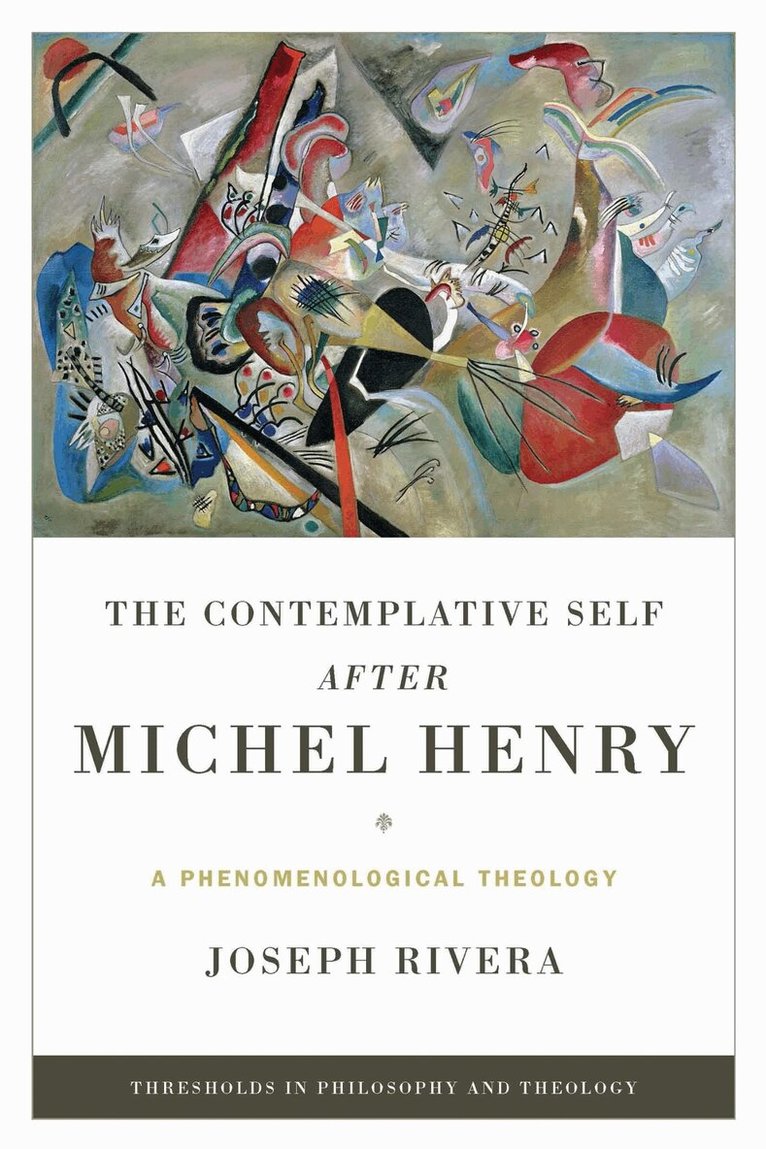
In The Contemplative Self after Michel Henry: A Phenomenological Theology, Joseph Rivera provides a close and critical reconstruction of the philosophical anthropology of Michel Henry (1922–2002) while also addressing the question of how theology contributes to Henry's phenomenology. In conversation with other French figures such as Derrida, Marion, Lacoste, and Barbaras, Rivera undertakes a global thematic study of Henry's work. He shows how, for Henry, the theological debate is shifted onto a phenomenological problem, with a coincident will to pursue the epistemological efforts of Husserl and Heidegger.The chapters tackle some of the most pressing debates in contemporary Continental philosophy, such as the "modern ego," the nature and experience of temporality, and the constitution of the body and otherness, and how a theological discourse may illumine those anthropological structures. The book expands on the modern narrative of the self from Descartes to Nietzsche, opens up the particular lines of inquiry Henry advances in dialogue with those figures and phenomenology in particular, and highlights the surprising theological turns in Henry's late work on Christianity.Because Henry's work is difficult, it is often misunderstood; Rivera's own vision of the self, one that is shaped by Henry but not in full agreement with him, advances insights internal to Henry but also brings into sharp focus many problematic points in Henry's phenomenological theology. An array of classical theological voices appear in the final chapters, such as St. Augustine, Tertullian, Irenaeus, Pseudo-Dionysius, and Gregory of Nyssa, all of whom are set in dialogue with Henry. A fresh and creative articulation of contemplation and selfhood, the volume is a valuable addition to the continuing conversation that seeks to build bridges between phenomenology and theology.
Life in the Spirit
Trinitarian Grammar and Pneumatic Community in Hegel and Augustine
Inbunden, Engelska, 2015
1 333 kr
Skickas inom 10-15 vardagar
Since the nineteenth century, many philosophical and theological commentators have sought to trace lines of continuity between the Trinitarian thought of Augustine of Hippo (354–430) and G. W. F. Hegel (1770–1831). Many contemporary Christian theologians have also criticized Augustine's Trinitarian theology generally and his doctrine of the Holy Spirit more specifically through this historical lens. At the same time, Hegelian Trinitarian conceptual dynamics have come to exert a strong influence over contemporary Trinitarian theology.In Life in the Spirit, Douglas Finn seeks to redress several imbalances with respect to Augustine, imbalances that have one of their hermeneutic causes in a Hegelian-influenced theological tradition. Finn argues that common readings of Augustine focus too much on his De Trinitate, books 8–15, betraying a modern—and to some extent Hegelian—prejudice against considering sermons and biblical commentaries serious theological work. This broadening of Augustinian texts allows Finn to critique readings of Augustine that, on the one hand, narrow his Trinitarian theology to the so-called psychological analogy and thus chart him on a path to Descartes and Hegel, or, on the other hand, suggest he sacrifices a theology of the Trinitarian persons on the altar of divine substance. Augustine's Trinitarian theology on Finn's reading is one fully engaged with God's work in history.With this renewed understanding of Augustine's Trinitarianism, Finn allows Augustine to interrogate Hegel with his concerns rather than only the other way around. In this ambitious study, Finn shows that Hegel's rendition of Christianity systematically obviates whole swaths of Christian prayer and practice. He does this nonpolemically, carefully, and with meticulous attention to the texts of both great thinkers.
431 kr
Skickas inom 10-15 vardagar
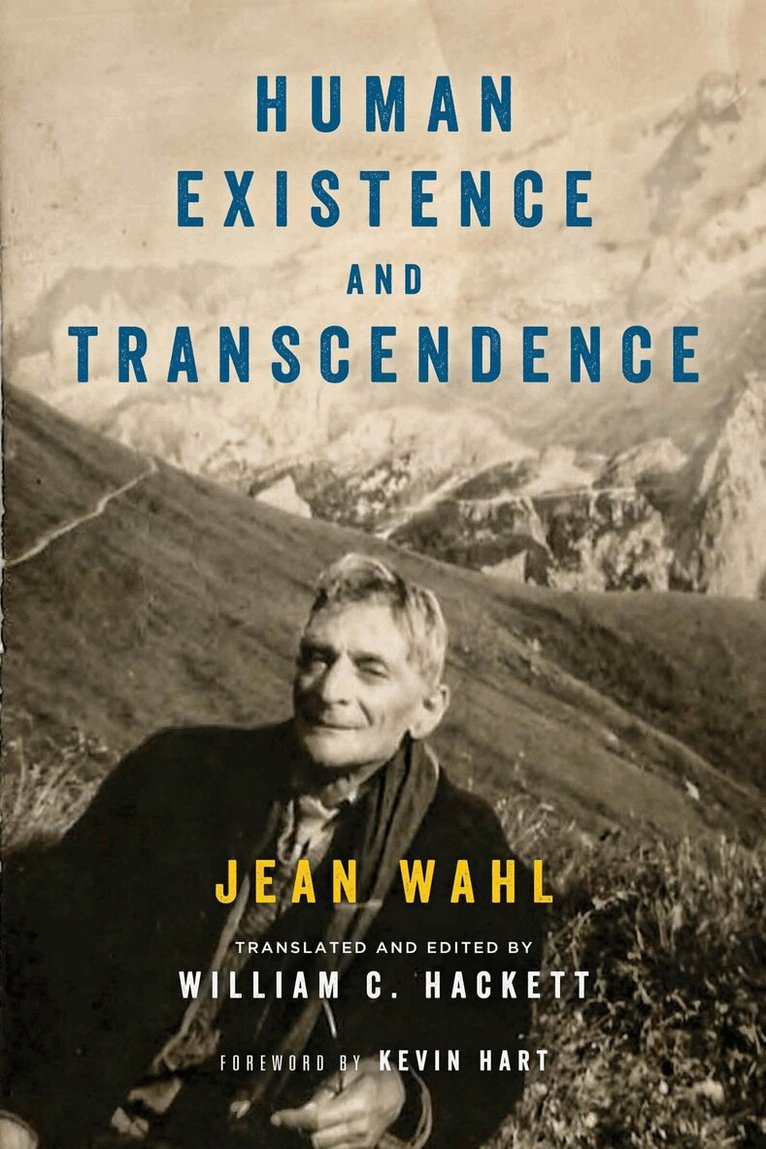
William C. Hackett's English translation of Jean Wahl's Existence humaine et transcendence (1944) brings back to life an all-but-forgotten book that provocatively explores the philosophical concept of transcendence. Based on what Emmanuel Levinas called "Wahl's famous lecture" from 1937, Existence humaine et transcendence captured a watershed moment of European philosophy. Included in the book are Wahl's remarkable original lecture and the debate that ensued, with significant contributions by Gabriel Marcel and Nicolai Berdyaev, as well as letters submitted on the occasion by Heidegger, Levinas, Jaspers, and other famous figures from that era. Concerned above all with the ineradicable felt value of human experience by which any philosophical thesis is measured, Wahl makes a daring clarification of the concept of transcendence and explores its repercussions through a masterly appeal to many (often surprising) places within the entire history of Western thought. Apart from its intrinsic philosophical significance as a discussion of the concepts of being, the absolute, and transcendence, Wahl's work is valuable insofar as it became a focal point for a great many other European intellectuals. Hackett has provided an annotated introduction to orient readers to this influential work of twentieth-century French philosophy and to one of its key figures.
591 kr
Skickas inom 10-15 vardagar
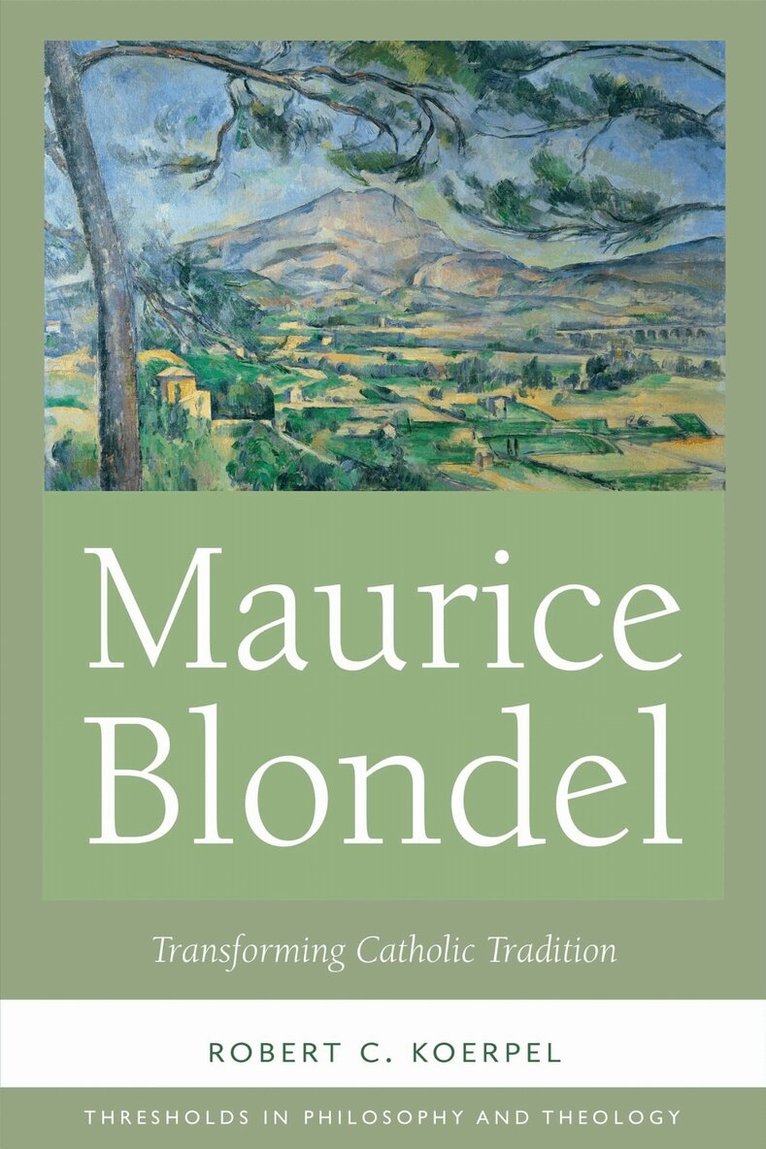
During the past few decades there has been renewed interest in the twentieth-century French Catholic philosopher Maurice Blondel (1861–1949) and his influence on modern and contemporary theology, but little scholarship has been published in the English-speaking world. In Maurice Blondel: Transforming Catholic Tradition, Robert Koerpel examines Blondel's work, the historical and theological development of the idea of tradition in modern Catholicism, tradition's relation to reason and revelation, and Blondel's influence on Catholicism's understanding of tradition. The book presents aspects of Blondel's thought that deserve to be more widely known and contributes to important debates in current theology on modern French Catholic thought and the emerging conversations surrounding them. Koerpel looks to the cultural context from which Blondel's thought emerges by situating it within the broader conceptual, historical, and theological developments of modernity. He examines the problem of reason and revelation in modern Catholicism, the role and nature of tradition, and the relationships between theology and history, truth and change, nature and grace, and scripture and the development of doctrine.This book provides readers with an appreciation of Blondel's conceptually creative answer to how tradition represents the Word of God in human history and why it is one of his most important contributions to modern and contemporary theology. They will discover how his contribution restores the animated vitality between the institutional and liturgical dimensions of tradition essential to the living, dynamic nature of Catholicism.
1 599 kr
Skickas inom 10-15 vardagar
In The Contemplative Self after Michel Henry: A Phenomenological Theology, Joseph Rivera provides a close and critical reconstruction of the philosophical anthropology of Michel Henry (1922–2002) while also addressing the question of how theology contributes to Henry's phenomenology. In conversation with other French figures such as Derrida, Marion, Lacoste, and Barbaras, Rivera undertakes a global thematic study of Henry's work. He shows how, for Henry, the theological debate is shifted onto a phenomenological problem, with a coincident will to pursue the epistemological efforts of Husserl and Heidegger.The chapters tackle some of the most pressing debates in contemporary Continental philosophy, such as the "modern ego," the nature and experience of temporality, and the constitution of the body and otherness, and how a theological discourse may illumine those anthropological structures. The book expands on the modern narrative of the self from Descartes to Nietzsche, opens up the particular lines of inquiry Henry advances in dialogue with those figures and phenomenology in particular, and highlights the surprising theological turns in Henry's late work on Christianity.Because Henry's work is difficult, it is often misunderstood; Rivera's own vision of the self, one that is shaped by Henry but not in full agreement with him, advances insights internal to Henry but also brings into sharp focus many problematic points in Henry's phenomenological theology. An array of classical theological voices appear in the final chapters, such as St. Augustine, Tertullian, Irenaeus, Pseudo-Dionysius, and Gregory of Nyssa, all of whom are set in dialogue with Henry. A fresh and creative articulation of contemplation and selfhood, the volume is a valuable addition to the continuing conversation that seeks to build bridges between phenomenology and theology.
1 068 kr
Skickas inom 10-15 vardagar
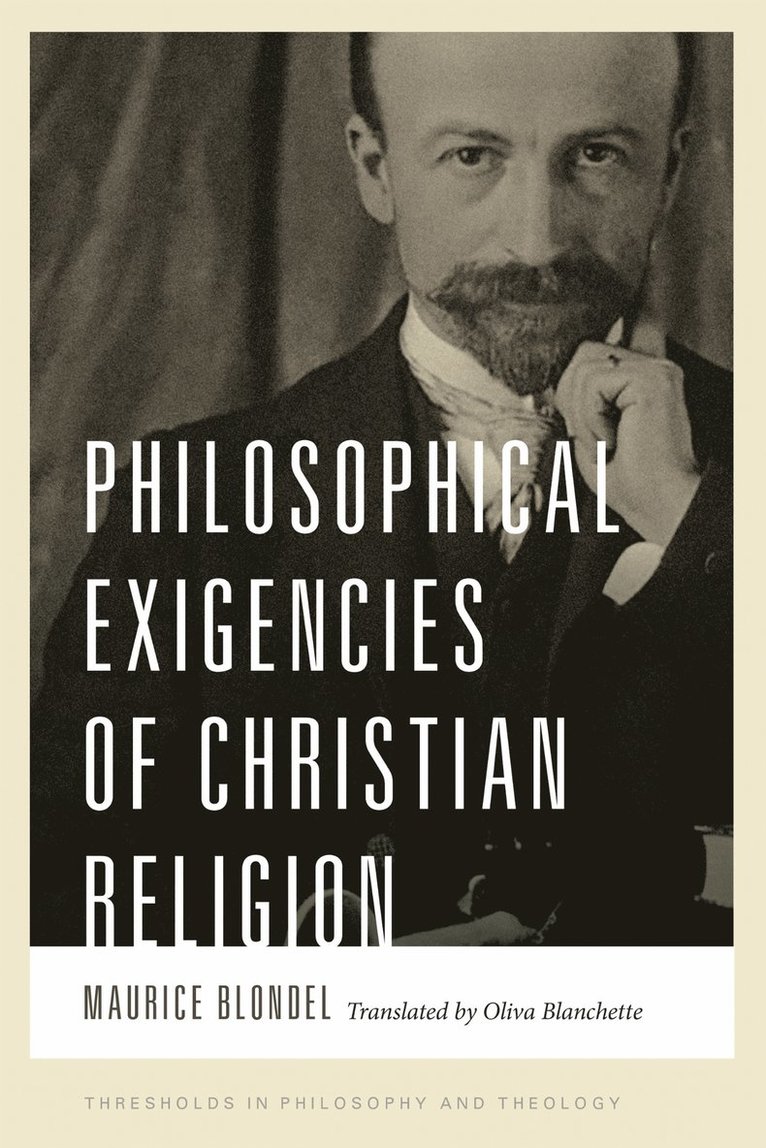
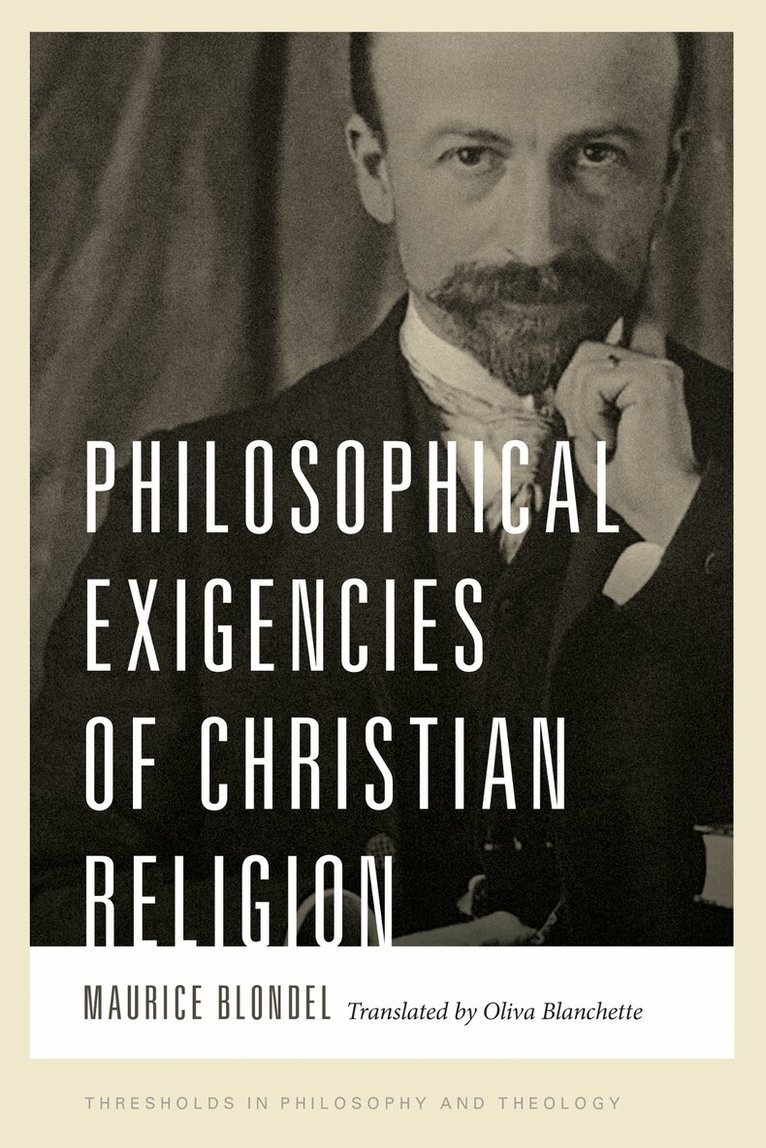
Philosophical Exigencies of Christian Religion is a translation of two of Maurice Blondel's essays. Blondel's thinking played a significant role in the deliberations and arguments of the Second Vatican Council.Although a towering figure in the history of twentieth-century Catholic thought, the later systematic works of Maurice Blondel have been largely inaccessible in the English-speaking world. Oliva Blanchette, who previously translated Blondel's early groundbreaking work Action (1893), now offers the first English translation of the final work Blondel himself signed off on the day before he died, Philosophical Exigencies of Christian Religion. This work of transition from mere philosophy to a consideration of Christian religion consists of two main essays, The Christian Sense and the shorter On Assimilation, followed by a Reconsideration and Global View and an Appendix: Clarifications and Admonitions written in answer to an inquiry by a young scholar about method.The first essay explores the Christian sense of the spiritual life and how Christian religion, even as supernatural, can come under the purview of critical philosophy. The second essay examines the move from analogy to assimilation in speaking of the Christian life. Blondel tackles the question: How does the human spirit combine with the divine spirit in such a way that neither is lost in the process?Philosophical Exigencies of Christian Religion is critical for understanding Blondel's thought. This high-quality translation and Blanchette's concise preface will appeal not only to philosophers and theologians but also to spiritual writers and directors of spiritual retreats in the Ignatian and Jesuit traditions.
418 kr
Skickas inom 10-15 vardagar
Philosophical Exigencies of Christian Religion is a translation of two of Maurice Blondel's essays. Blondel's thinking played a significant role in the deliberations and arguments of the Second Vatican Council.Although a towering figure in the history of twentieth-century Catholic thought, the later systematic works of Maurice Blondel have been largely inaccessible in the English-speaking world. Oliva Blanchette, who previously translated Blondel's early groundbreaking work Action (1893), now offers the first English translation of the final work Blondel himself signed off on the day before he died, Philosophical Exigencies of Christian Religion. This work of transition from mere philosophy to a consideration of Christian religion consists of two main essays, The Christian Sense and the shorter On Assimilation, followed by a Reconsideration and Global View and an Appendix: Clarifications and Admonitions written in answer to an inquiry by a young scholar about method.The first essay explores the Christian sense of the spiritual life and how Christian religion, even as supernatural, can come under the purview of critical philosophy. The second essay examines the move from analogy to assimilation in speaking of the Christian life. Blondel tackles the question: How does the human spirit combine with the divine spirit in such a way that neither is lost in the process?Philosophical Exigencies of Christian Religion is critical for understanding Blondel's thought. This high-quality translation and Blanchette's concise preface will appeal not only to philosophers and theologians but also to spiritual writers and directors of spiritual retreats in the Ignatian and Jesuit traditions.