Topics in Contemporary Buddhism – serie
Visar alla böcker i serien Topics in Contemporary Buddhism. Handla med fri frakt och snabb leverans.
13 produkter
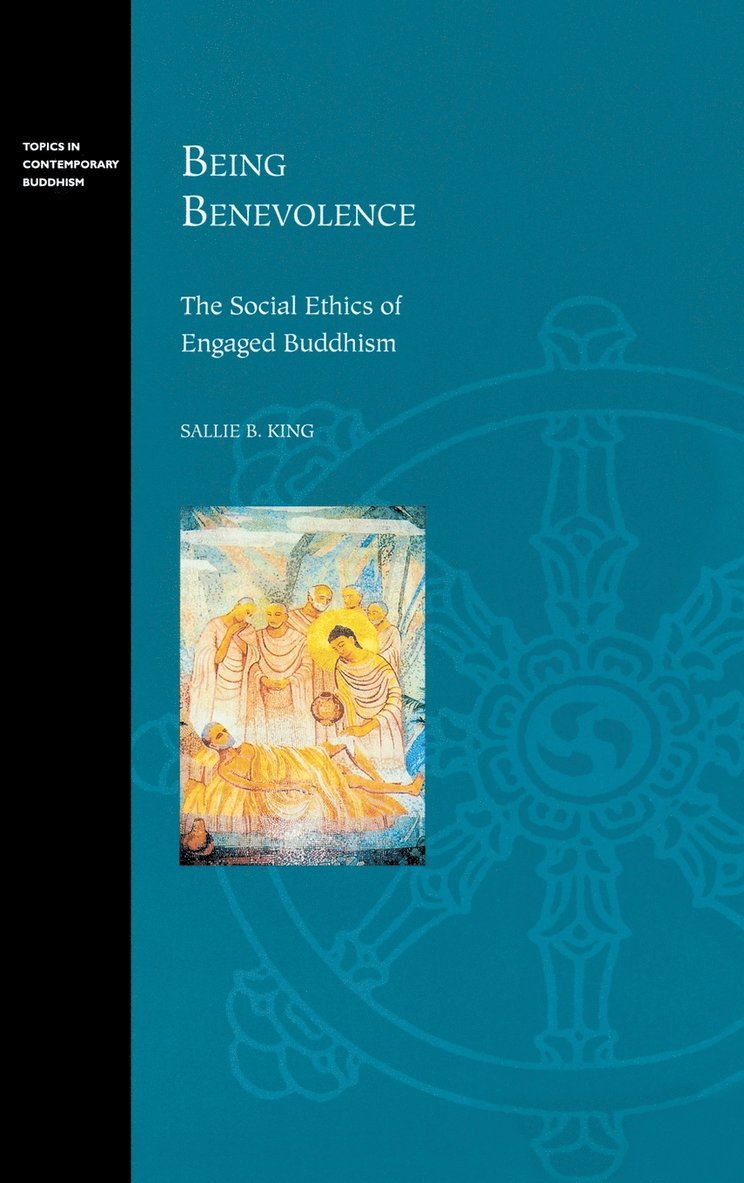
Being Benevolence
The Social Ethics of Engaged Buddhism
Inbunden, 2005
1021 kr
Lägg i varukorg
Engaged Buddhism is the contemporary movement of nonviolent social and political activism found throughout the Buddhist world. Its ethical theory sees the world in terms of cause and effect, a view that discourages its practitioners from becoming adversaries, blaming or condemning the other. Its …
Being Benevolence
The Social Ethics of Engaged Buddhism
Häftad, 2005
331 kr
Lägg i varukorg
Engaged Buddhist leaders make some of the most important contributions in the Buddhist world to thinking about issues in political theory, human rights, nonviolence, and social justice. ""Being Benevolence"" provides for the first time a rich overview of the main ideas and arguments of prominent …
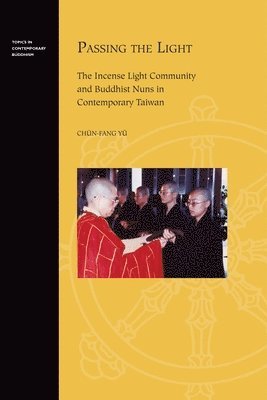
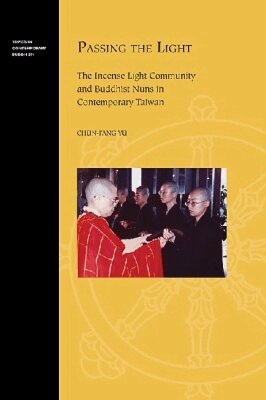
Passing the Light
The Incense Light Community and Buddhist Nuns in Contemporary Taiwan
Av Chün-fang Yü, Jr. Tanabe, George
Inbunden, 2013
655 kr
Lägg i varukorg
The term “revival” has been used to describe the resurgent vitality of Buddhism in Taiwan. Scholars have particularly been impressed by the quality and size of the nun’s order: Taiwanese nuns today are highly educated and greatly outnumber monks. Both characteristics are unprecedented in the …
Experimental Buddhism
Innovation and Activism in Contemporary Japan
Av John K. Nelson, Jr. Tanabe, George
Inbunden, 2013
683 kr
Lägg i varukorg
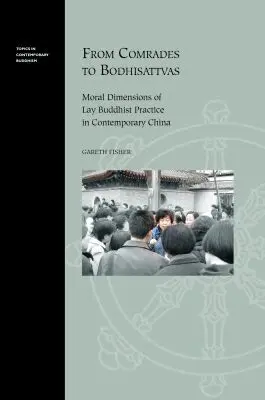
From Comrades to Bodhisattvas
Moral Dimensions of Lay Buddhist Practice in Contemporary China
Inbunden, 2014
565 kr
Lägg i varukorg
From Comrades to Bodhisattvas is the first book-length study of Han Chinese Buddhism in post-Mao China. Using an ethnographic approach supported by over a decade of field research, it provides an intimate portrait of lay Buddhist practitioners in Beijing who have recently embraced a religion that …
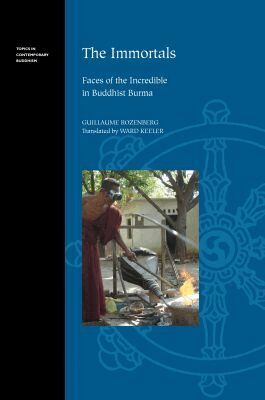
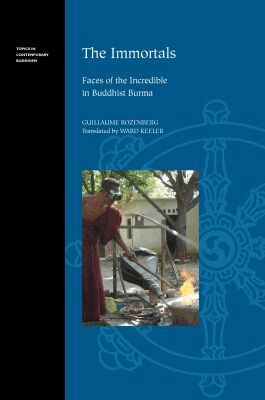
Immortals
Faces of the Incredible in Buddhist Burma
Av Guillaume Rozenberg, George Tanabe
Häftad, 2015
384 kr
Lägg i varukorg
In 1952 a twenty-six-year-old man living in a village in Central Burma was possessed by weikza - humans with extraordinary powers, including immortality. Key figures inBurmese Buddhism, weikza do not die but live on in an invisible realm. From there they re-enter the world through possession to …
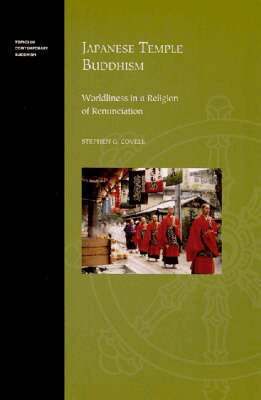
Japanese Temple Buddhism
Worldliness in a Religion of Renunciation
Häftad, 2005
300 kr
Tillfälligt slut
There have been many studies that focus on aspects of the history of Japanese Buddhism. Until now, none have addressed important questions of organization and practice in contemporary Buddhism, questions such as how Japanese Buddhism came to be seen as a religion of funeral practices; how Buddhist …
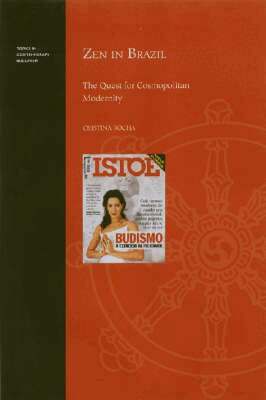
Zen in Brazil
The Quest for Cosmopolitan Modernity
Inbunden, 2005
453 kr
Tillfälligt slut
Widely perceived as an overwhelmingly Catholic nation, Brazil has experienced in recent years a growth in the popularity of Buddhism among the urban, cosmopolitan upper classes. In the 1990s, Buddhism in general and Zen in particular were adopted by national elites, the media, and popular culture …
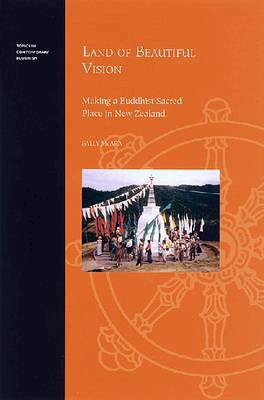
Land of Beautiful Vision
Making a Buddhist Sacred Space in New Zealand
Av Sally McAra
Inbunden, 2007
537 kr
Tillfälligt slut
Land of Beautiful Vision is the first book-length ethnography to address the role of material culture in contemporary adaptations of Buddhism and the first to focus on convert Buddhists in New Zealand. Sally McAra takes as her subject a fascinating instance of an ongoing creative process whereby a …
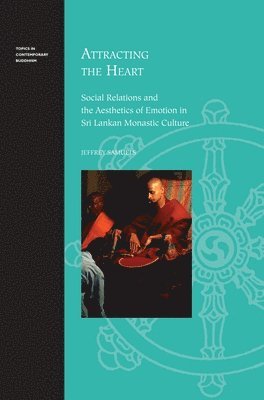
Attracting the Heart
Social Relations and the Aesthetics of Emotion in Sri Lankan Monastic Culture
Inbunden, 2010
412 kr
Tillfälligt slut
An idealized view of the lifestyle of a Buddhist monk might be described according to the doctrinal demand for emotional detachment and, ultimately, the cessation of all desire. Yet monks are also enjoined to practice compassion, a powerful emotion and equally lofty ideal, and live with every other …
Passing the Light
The Incense Light Community and Buddhist Nuns in Contemporary Taiwan
Av Chün-fang Yü, Jr. Tanabe, George m. fl.
Häftad, 2013
314 kr
Tillfälligt slut
The term “revival” has been used to describe the resurgent vitality of Buddhism in Taiwan. Particularly impressive is the quality and size of the nun’s order: Taiwanese nuns today are highly educated and greatly outnumber monks. Both characteristics are unprecedented in the history of Chinese …
Experimental Buddhism
Innovation and Activism in Contemporary Japan
Av John K. Nelson, Jr. Tanabe, George m. fl.
Häftad, 2013
356 kr
Tillfälligt slut
Highlights the complex and often wrenching interactions between long-established religious traditions and rapid social, cultural, and economic change. Based on ethnographic fieldwork and archival research, it is one of the first studies to give readers a sense of what is happening on the front …
Immortals
Faces of the Incredible in Buddhist Burma
Av Guillaume Rozenberg, George Tanabe
Inbunden, 2015
844 kr
Tillfälligt slut
In 1952 a twenty-six-year-old man living in a village in Central Burma was possessed by weikza - humans with extraordinary powers, including immortality. Key figures inBurmese Buddhism, weikza do not die but live on in an invisible realm. From there they re-enter the world through possession to …