Triangulations: Lesbian/Gay/Queer Theater/Drama/Performance – serie
Visar alla böcker i serien Triangulations: Lesbian/Gay/Queer Theater/Drama/Performance. Handla med fri frakt och snabb leverans.
14 produkter
14 produkter
346 kr
Skickas inom 5-8 vardagar
"With classic butch finesse---that handsome combination of vulnerability and toughness---Peggy Shaw pieces together the challenges of growing up butch in the 1950s. Shaw is an engaging performer and inspired writer."---Gay Community NewsObie-award-winning performer and writer Peggy Shaw has been playing her gender-bending performances on Off Broadway, regional, and international stages for three decades. Co-founder of the renowned troupe Split Britches, Shaw has gone on to create memorable solo performances that mix achingly honest introspection with campy humor, reflecting on everything from her Irish-American working-class roots to her aging butch body. This collection of Shaw's solo performance scripts evokes a 54-year-old grandmother who looks like a 35-year-old man (in her classic Menopausal Gentleman); a mother's ambivalent ministrations to a daughter she treated like a son (in the raw You're Just Like My Father); Shaw's love for her biracial grandson, for whom she models masculinity (in the musically punctuated To My Chagrin); and a mapping of her body's long, bittersweet history (in the lyrical Must: The Inside Story, a collaboration with the UK's Clod Ensemble). The book also includes a selection of Shaw's other classic monologues and an extensive introduction by Jill Dolan, Professor of English and Theater and Dance at Princeton University and the blogger behind The Feminist Spectator website.A volume in the series Triangulations: Lesbian/Gay/Queer Theater/Drama/PerformanceCover photos by Eva Weiss (top) and Robin Holland/robinholland.com (bottom).
Bulldaggers, Pansies, and Chocolate Babies
Performance, Race, and Sexuality in the Harlem Renaissance
Häftad, Engelska, 2011
376 kr
Skickas inom 5-8 vardagar
"James F. Wilson uncovers fascinating new material on the Harlem Renaissance, shedding light on the oft-forgotten gay and lesbian contributions to the era's creativity and Civil Rights. Extremely well researched, compellingly written, and highly informative."---David Krasner, author of A Beautiful Pageant: African American Theatre, Drama, and Performance in the Harlem Renaissance, 1910-1927Bulldaggers, Pansies, and Chocolate Babies shines the spotlight on historically neglected plays and performances that challenged early twentieth-century notions of the stratification of race, gender, class, and sexual orientation. On Broadway stages, in Harlem nightclubs and dance halls, and within private homes sponsoring rent parties, African American performers of the 1920s and early 1930s teased the limits of white middle-class morality. Blues-singing lesbians, popularly known as "bulldaggers," performed bawdy songs; cross-dressing men vied for the top prizes in lavish drag balls; and black and white women flaunted their sexuality in scandalous melodramas and musical revues. Race leaders, preachers, and theater critics spoke out against these performances that threatened to undermine social and political progress, but to no avail: mainstream audiences could not get enough of the riotous entertainment.Many of the plays and performances explored here, central to the cultural debates of their time, had been previously overlooked by theater historians. Among the performances discussed are David Belasco's controversial production of Edward Sheldon and Charles MacArthur's Lulu Belle (1926), with its raucous, libidinous view of Harlem. The title character, as performed by a white woman in blackface, became a symbol of defiance for the gay subculture and was simultaneously held up as a symbol of supposedly immoral black women. African Americans Florence Mills and Ethel Waters, two of the most famous performers of the 1920s, countered the Lulu Belle stereotype in written statements and through parody, thereby reflecting the powerful effect this fictional character had on the popular imagination. Bulldaggers, Pansies, and Chocolate Babies is based on historical archival research including readings of eyewitness accounts, newspaper reports, songs, and playscripts. Employing a cultural studies framework that incorporates queer and critical race theory, it argues against the widely held belief that the stereotypical forms of black, lesbian, and gay show business of the 1920s prohibited the emergence of distinctive new voices. Specialists in American studies, performance studies, African American studies, and gay and lesbian studies will find the book appealing, as will general readers interested in the vivid personalities and performances of the singers and actors introduced in the book. James F. Wilson is Professor of English and Theatre at LaGuardia Community College and the Graduate Center of the City University of New York.
376 kr
Skickas inom 5-8 vardagar
Acts of Gaiety explores the mirthful modes of political performance by LGBT artists, activists, and collectives that have inspired and sustained deadly serious struggles for revolutionary change. The book explores antics such as camp, kitsch, drag, guerrilla theater, zap actions, rallies, manifestos, pageants, and parades alongside more familiar forms of "legitimate theater." Against queer theory's long-suffering romance with mourning and melancholia and a national agenda that urges homosexuals to renounce pleasure if they want to be taken seriously by mainstream society, Acts of Gaiety seeks to reanimate notions of "gaiety" as a political value for LGBT activism. The book mines the archives of lesbian-feminist activism of the 1960s-70s, highlighting the outrageous gaiety that lay at the center of the social and theatrical performances of the era and uncovering original documents long thought to be lost. Juxtaposing historical figures such as Valerie Solanas and Jill Johnston with more recent performers and activists (including Hothead Paisan, Bitch & Animal, and the Five Lesbian Brothers), Warner shows how reclaiming this largely discarded and disavowed past elucidates possibilities for being and belonging. Acts of Gaiety explores the mutually informing histories of gayness as politics and as joie de vivre, along with the centrality of liveliness to queer performance and protest.
Lady Dicks and Lesbian Brothers
Staging the Unimaginable at the WOW Café Theatre
Häftad, Engelska, 2011
361 kr
Skickas inom 5-8 vardagar
"A rich and detailed picture of a particular historical moment that has now passed . . . I found myself immersed in the world of the East Village theatre scene and its connections to the larger world of feminism, theatre, and politics. Davy's long-standing association with this world pays off handsomely---it is impossible to imagine that anyone could write a more informative portrait."---Charlotte Canning, University of Texas at Austin"After hosting two annual international women's performance festivals in 1980 and '81, Peggy Shaw, Lois Weaver, and comrades put on such extravaganzas as the Freudian Slip party and the Debutante Ball (a coming-out party if ever there was one) to raise the first several months' rent for a narrow vestibule on East 11th Street, where they could keep the creativity going year-round. There, on a stage no bigger than a queen-sized mattress, . . . artists honed their craft, giving birth to a celebratory feminist-and-tinsel-tinged queer aesthetic. By the mid '80s . . . the rent quadrupled, and WOW moved to a city-owned building on East 4th Street, where it has flourished ever since, presenting hundreds---if not thousands---of plays, solo shows, concerts, dance pieces, cabarets, and sundry performances that defy classification." ---Alisa Solomon, Village VoiceOut of a small, hand-to-mouth, women's theater collective called the WOW Café located on the lower east side of Manhattan, there emerged some of the most important theater troupes and performance artists of the 1980s and 1990s, including the Split Britches Company, the Five Lesbian Brothers, Carmelita Tropicana, Holly Hughes, Lisa Kron, Deb Margolin, Reno, Peggy Shaw, and Lois Weaver. The WOW (Women's One World) Café Theatre appeared on the cultural scene at a critical turning point in both the women's movement and feminist theory, putting a witty, hilarious, gender-bending and erotically charged aesthetic on the stage for women in general and lesbians in particular. The storefront that became the WOW Café Theatre saw dozens of excitingly original and enormously funny performances created, performed, and turned over at lightning speed---a kind of "hit and run" theater. As the demands on the space increased, the women behind WOW organized as a collective and moved their theater to an abandoned doll factory where it continues to operate today. For three decades the WOW Café has nurtured fledgling women writers, designers, and performers who continue to create important performance work. Lady Dicks and Lesbian Brothers provides a critical history of this avant-garde venture whose ongoing "system of anarchy" has been largely responsible for its thirty-year staying power, after dozens of other women's theaters have collapsed. WOW artists were creating a wholly original cultural landscape across which women could represent themselves on their own terms. Parody, cross-dressing, zany comedy, and an unbridled eroticism are hallmarks of WOW's aesthetic, combined---importantly and powerfully---with a presumptive address to the audience as if everyone onstage, in the audience, and in the world is lesbian. Author Kate Davy's extensive research included in-depth interviews with WOW veterans; newspaper reviews of the earliest productions; and rare, unpublished photographs. The book also includes a chronology of productions that have highlighted WOW's performance schedule since the early '80s. Kate Davy is currently Provost and Vice Chancellor for Academic Affairs at the University of Michigan-Dearborn. Her previous books include Richard Foreman: Plays and Manifestos and Richard Foreman and the Ontological-Hysteric Theatre.
406 kr
Skickas inom 5-8 vardagar
Butch Queens Up in Pumps examines Ballroom culture, in which inner-city LGBT individuals dress, dance, and vogue to compete for prizes and trophies. Participants are affiliated with a house, an alternative family structure typically named after haute couture designers and providing support to this diverse community. Marlon M. Bailey’s rich first-person performance ethnography of the Ballroom scene in Detroit examines Ballroom as a queer cultural formation that upsets dominant notions of gender, sexuality, kinship, and community.
435 kr
Skickas inom 5-8 vardagar
The “villainous homosexual” has long stalked America’s cultural imagination, most explicitly in the figure of the queer murderer, a character in dozens of plays. But as society’s understanding of homosexuality has changed, so has the significance of these controversial characters, especially when employed by LGBT theater artists themselves to explore darker fears and desires. Murder Most Queer examines the shifting meanings of murderous LGBT characters in American theater over a century, showing how these representations wrestle with and ultimately subvert notions of gay villainy. Murder Most Queer works to expose the forces that create the homophobic paradigm that imagines sexual and gender nonconformity as dangerous and destructive and to show how theater artists—and for the most part LGBT theater artists—have rewritten and radically altered the significance of the homicidal homosexual. Jordan Schildcrout argues that these figures, far from being simple reiterations of a homophobic archetype, are complex and challenging characters who enact trenchant fantasies of empowerment, replacing the shame and stigma of the abject with the defiance and freedom of the outlaw, giving voice to rage and resistance. These bold characters also probe the darker anxieties and fears that can affect queer lives and relationships. Instead of sentencing them to the prison of negative representations, this book analyzes the meanings in their acts of murder, confronting the real fears and desires condensed in those dramatic acts.
Charles Ludlam Lives!
Charles Busch, Bradford Louryk, Taylor Mac, and the Queer Legacy of the Ridiculous Theatrical Company
Häftad, Engelska, 2017
317 kr
Skickas inom 5-8 vardagar
Playwright, actor and director Charles Ludlam (1943–1987) helped to galvanize the Ridiculous style of theater in New York City starting in the 1960s. Decades after his death, his place in the chronicle of American theater has remained constant, but his influence has changed. Although his Ridiculous Theatrical Company shut its doors, the Ludlamesque Ridiculous has continued to thrive and remain a groundbreaking genre, maintaining its relevance and potency by metamorphosing along with changes in the LGBTQ community. Author Sean F. Edgecomb focuses on the neo-Ridiculous artists Charles Busch, Bradford Louryk, and Taylor Mac to trace the connections between Ludlam’s legacy and their performances, using alternative queer models such as kinetic kinship, lateral historiography, and a new approach to camp. Charles Ludlam Lives! demonstrates that the queer legacy of Ludlam is one of distinct transformation—one where artists can reject faithful interpretations in order to move in new interpretive directions.
435 kr
Skickas inom 5-8 vardagar
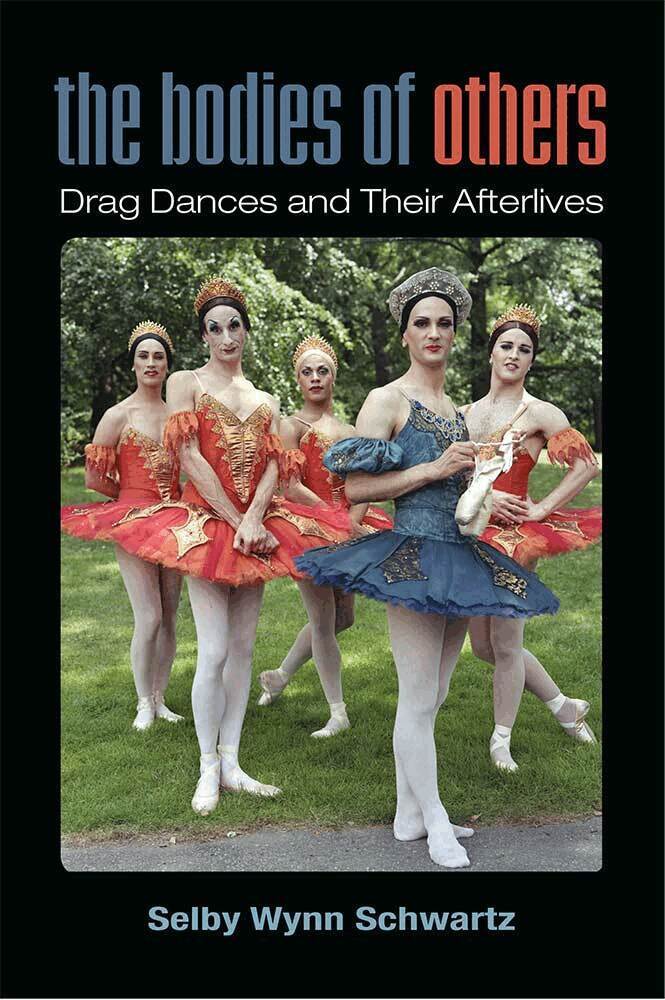
The Bodies of Others explores the politics of gender in motion. From drag ballerinas to faux queens, and from butoh divas to the club mothers of modern dance, the book delves into four decades of drag dances on American stages. Drag dances take us beyond glittery one-liners and into the spaces between gender norms. In these backstage histories, dancers give their bodies over to other selves, opening up the category of realness. The book maps out a drag politics of embodiment, connecting drag dances to queer hope, memory, and mourning. There are aging étoiles, midnight shows, mystical séances, and all of the dust and velvet of divas in their dressing-rooms. But these forty years of drag dances are also a cultural history, including Mark Morris dancing the death of Dido in the shadow of AIDS, and the swans of Les Ballets Trockadero de Monte Carlo sketching an antiracist vision for ballet. Drawing on queer theory, dance history, and the embodied practices of dancers themselves, The Bodies of Others examines the ways in which drag dances undertake the work of a shared queer and trans politics.
376 kr
Skickas inom 5-8 vardagar
Translocas focuses on drag and transgender performance and activism in Puerto Rico and its diaspora. Arguing for its political potential, Lawrence La Fountain-Stokes explores the social and cultural disruptions caused by Latin American and Latinx “locas” (effeminate men, drag queens, transgender performers, and unruly women) and the various forms of violence to which queer individuals in Puerto Rico and the U.S. are subjected. This interdisciplinary, auto-ethnographic, queer-of-color performance studies book explores the lives and work of contemporary performers and activists including Sylvia Rivera, Nina Flowers, Freddie Mercado, Javier Cardona, Jorge Merced, Erika Lopez, Holly Woodlawn, Monica Beverly Hillz, Lady Catiria, and Barbra Herr; television programs such as RuPaul’s Drag Race; films such as Paris Is Burning, The Salt Mines, and Mala Mala; and literary works by authors such as Mayra Santos-Febres and Manuel Ramos Otero. Lawrence La Fountain-Stokes, a drag performer himself, demonstrates how each destabilizes (and sometimes reifies) dominant notions of gender and sexuality through drag and their embodied transgender expression. These performances provide a means to explore and critique issues of race, class, poverty, national identity, and migratory displacement while they posit a relationship between audiences and performers that has a ritual-like, communal dimension. The book also analyzes the murders of Jorge Steven López Mercado and Kevin Fret in Puerto Rico, and invites readers to challenge, question, and expand their knowledge about queer life, drag, trans performance, and Puerto Rican identity in the Caribbean and the diaspora. The author also pays careful attention to transgender experience, highlighting how trans activists and performers mold their bodies, promote social change, and create community in a context that oscillates between glamour and abjection.
494 kr
Skickas inom 5-8 vardagar
The mass shooting at a queer Latin Night in Orlando in July 2016 sparked a public conversation about access to pleasure and selfhood within conditions of colonization, violence, and negation. Queer Nightlife joins this conversation by centering queer and trans people of color who apprehend the risky medium of the night to explore, know, and stage their bodies, genders, and sexualities in the face of systemic and social negation. The book focuses on house parties, nightclubs, and bars that offer improvisatory conditions and possibilities for “stranger intimacies,” and that privilege music, dance, and sexual/gender expressions. Queer Nightlife extends the breadth of research on “everynight life” through twenty-five essays and interviews by leading scholars and artists. The book’s four sections move temporally from preparing for the night (how do DJs source their sounds, what does it take to travel there, who promotes nightlife, what do people wear?); to the socialities of nightclubs (how are social dance practices introduced and taught, how is the price for sex negotiated, what styles do people adopt to feel and present as desirable?); to the staging and spectacle of the night (how do drag artists confound and celebrate gender, how are spaces designed to create the sensation of spectacularity, whose bodies become a spectacle already?); and finally, how the night continues beyond the club and after sunrise (what kinds of intimacies and gestures remain, how do we go back to the club after Orlando?).
346 kr
Skickas inom 5-8 vardagar
Subverting assumptions that American musical theater is steeped in nostalgia, cheap sentiment, misogyny, and homophobia, this book shows how musicals of the 1950s and early 1960s celebrated strong women characters who defied the era's gender expectations. A Problem Like Maria reexamines the roles, careers, and performances of four of musical theater's greatest stars-Mary Martin, Ethel Merman, Julie Andrews, and Barbra Streisand-through a lesbian feminist lens. Focusing on both star persona and performance, Stacy Wolf argues that each of her subjects deftly crafted characters (both on and offstage) whose defiance of the norms of mid-twentiethcentury femininity had immediate appeal to spectators on the ideological and sexual margins, yet could still play in Peoria.Chapter by chapter, the book analyzes the stars' best-known and best-loved roles, including Martin as Nellie in South Pacific, Merman as Momma Rose in GypsyAndrews as Eliza in My Fair Lady and Guinevere in Camelot, and Streisand as Fanny Brice in Funny Girl. The final chapter scrutinizes the Broadway and film versions of The Sound of Music, illuminating its place in the hearts of lesbian spectators and the "delicious queerness" of Andrews's troublesome nun. As the first feminist and lesbian study of the American Broadway musical, A Problem Like Maria is a groundbreaking contribution to feminist studies, queer studies, and American studies and a delight for fans of musical theater.Stacy Wolf is Associate Professor of Theatre and Dance, University of Texas, Austin.
376 kr
Skickas inom 5-8 vardagar
In engaging, accessible prose, leading theater critic and cultural commentator David Savran explores the intersections between art and culture, offering smart, compelling interpretations of the economic and social contexts of theatrical texts and practices. Acknowledging theater's marginal status in U.S. culture, A Queer Sort of Materialism takes on "the trouble-makers--the ghost, closeted homosexual, masochist, drag king, Third World laborer, even the white male as victim"--who figure more prominently in theater than in other cultural forms. In impeccably researched and argued essays that range in subject matter from Rodgers and Hammerstein to Paula Vogel, from Suddenly Last Summer to Iron John, Savran uncovers the ways that such troublemakers both challenge and reinforce orthodox social practices. The selections presented here are by turns entertaining, informative, sophisticated, and polemical, reflecting the author's dual citizenship as rigorous scholar and engaging theater critic. This book also provides a model for a kind of queer historical materialism that will prove useful to a wide range of disciplines, including theater and performance, gender and sexuality, queer/gay/lesbian/transgender studies, American studies, and popular culture. David Savran is Professor of Theater, the Graduate Center, the City University of New York, and author of Cowboys, Communists, and Queers and Taking It Like a Man.
435 kr
Skickas inom 5-8 vardagar
The women’s experimental theater space called the WOW Café (Women’s One World) has been a vital part of New York’s downtown theater scene since 1980. Since that time, WOW has provided a place for feminist and particularly lesbian theater artists to create, perform, and witness a cultural revolution. Its renowned alumnae include playwright and actor Lisa Kron, performance artists Holly Hughes and Carmelita Tropicana, the theater troupe the Five Lesbian Brothers, and actors/playwrights Peggy Shaw, Lois Weaver, and Deb Margolin, among others. Memories of the Revolution collects scripts, interviews, and commentary to trace the riotous first decade of WOW. While the histories of other experimental theater collectives have been well documented, WOW’s history has only begun to be told. The anthology also includes photographs of and reminiscences by Café veterans, capturing the history and artistic flowering of the first ten years of this countercultural haven.
1 104 kr
Skickas inom 5-8 vardagar
The Bodies of Others explores the politics of gender in motion. From drag ballerinas to faux queens, and from butoh divas to the club mothers of modern dance, the book delves into four decades of drag dances on American stages. Drag dances take us beyond glittery one-liners and into the spaces between gender norms. In these backstage histories, dancers give their bodies over to other selves, opening up the category of realness. The book maps out a drag politics of embodiment, connecting drag dances to queer hope, memory, and mourning. There are aging étoiles, midnight shows, mystical séances, and all of the dust and velvet of divas in their dressing-rooms. But these forty years of drag dances are also a cultural history, including Mark Morris dancing the death of Dido in the shadow of AIDS, and the swans of Les Ballets Trockadero de Monte Carlo sketching an antiracist vision for ballet. Drawing on queer theory, dance history, and the embodied practices of dancers themselves, The Bodies of Others examines the ways in which drag dances undertake the work of a shared queer and trans politics.