Twentieth Century Architects - Böcker
Visar alla böcker i serien Twentieth Century Architects. Handla med fri frakt och snabb leverans.
16 produkter
16 produkter
488 kr
Skickas inom 7-10 vardagar
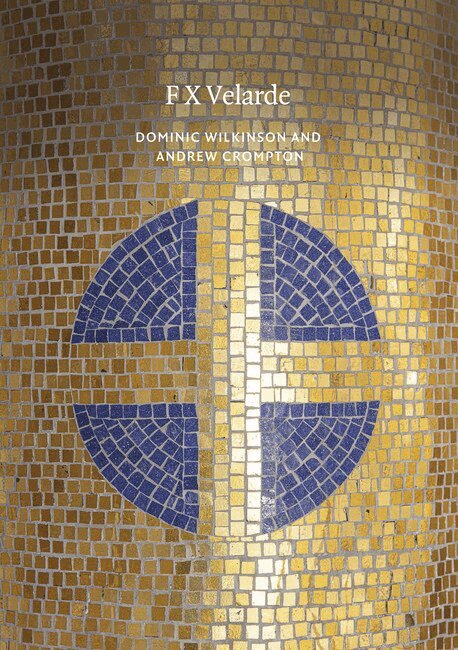
Notable undiscovered architects, like undiscovered composers, are implausible, yet Frances Xavier Velarde OBE, 1897-1960, could be just such a person hiding in plain sight. A stylish architect who took a road less travelled then died as he was getting into his stride. There have been no followers. Yet whenever enthusiasts gather to discuss modern church architecture his name will be mentioned. He was no earnest modernist; instead he loved patterns, bold colour and gold. The Catholic churches he built in Liverpool and London are closer to European Expressionism than International Modernism; many of them have a toy like quality and come with a campanile like a rocket. Today his buildings seem fresh and playful, but also poignant as they evoke the 1950s, brightening the drab parts in which they are to be found and serving to make both spiritually and architecturally aware those who visit. Many are threatened and have been published here for the first time. Dominic Wilkinson and Andrew Crompton have combined Velarde’s papers with interviews and archive images, including many by his friend and famous photographer Edward Chambré Hardman. Their book, lavishly illustrated with new photography by Historic England, is a must for architects, students and connoisseurs wanting to discover a different route that modernism could have taken.
488 kr
Skickas inom 7-10 vardagar
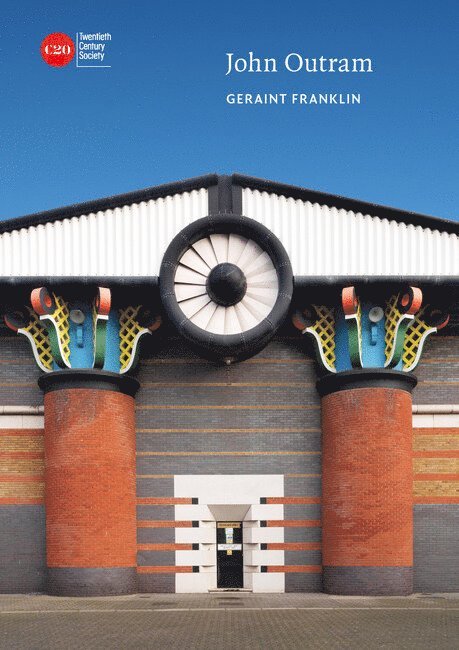
This is the first major study of John Outram, whose decorative yet elemental architecture has captured the popular imagination. Outram launched his own architectural practice in 1974, soon securing a reputation for innovative, creative and monumental buildings. Their brilliant colours and exuberant gestures earned him a reputation as a post-modernist, but this book explores their deeper background in architectural history, metaphysics and mythology.In addition to the major buildings – including The New House at Wadhurst, the Isle of Dogs Pumping Station and the Judge Institute – the book examines unrealised projects, including Bracken House and Ludgate in the City of London. Running through them all is a storytelling approach that draws upon the mythologies and architectures of the ancient world. This book shows how Outram’s work reconciles iconography with a creative approach to building technology, posing questions about the recovery of architecture’s traditional role of communicating shared values.Geraint Franklin draws on interviews and archival research to shed new light on this important architect. Richly illustrated with previously unpublished images from the practice archive and stunning new photography, the book will delight architects, students and anyone interested in learning more about this significant figure in late 20th century architecture.
488 kr
Skickas inom 7-10 vardagar
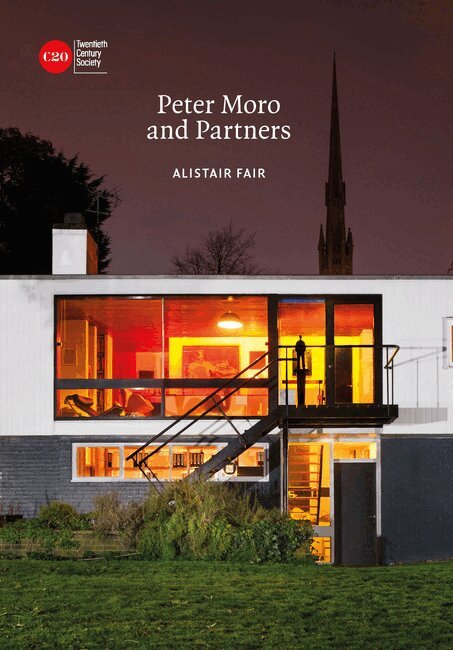
Peter Moro is the forgotten co-designer of the Royal Festival Hall. A German émigré who had worked with Berthold Lubetkin’s famed practice, Tecton, in the 1930s, Moro was drafted in to help realise the Festival Hall in just two short years, in time for the Festival of Britain in 1951. With a team of his former students, he created many of the interiors we see today. For Moro, the Festival Hall was a stepping-stone to a career designing many of Britain’s finest post-war theatres, particularly Nottingham Playhouse, Plymouth Theatre Royal, and the renovated Bristol Old Vic. He and his colleagues also designed some exceptional one-off houses, as well as exhibitions, university buildings, schools, and council housing, collaborating with leading talents such as the designer Robin Day. Based on detailed archival research and with stunning new photography, this is the first book devoted to the work of Peter Moro and his colleagues in architectural practice. Ranging from the 1930s to the 1980s, it explores Moro’s belief in a rigorous modern architecture which was both functionally sound and aesthetically rich. It sheds new light on this important body of work, and enriches our understanding of the experience and diversity of modernism in Britain.
445 kr
Skickas inom 7-10 vardagar
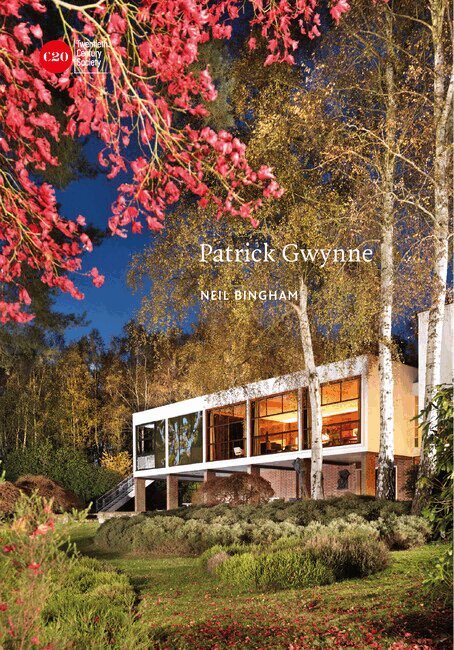
A comprehensive and intimate study of the high modernist Patrick Gwynne, his architecture and interiors. In 1938, the young Patrick Gwynne burst upon the architectural scene with The Homewood, Surrey, the early modern movement country house now open to the public by the National Trust. Gwynne lived in the house until his death in 2003, over the years enriching it with contemporary features and furniture of his own design, and creating the beautiful woodland garden.Gwynne’s small and very personal architectural practice focussed mainly on sophisticated shops, restaurants and innovative private houses. All his clients, which included famous film stars, were excited by the new modernism and in Gwynne they found a progressive architect with stylish and innovative designs solutions that made for distinctive buildings and interiors. In a career spanning sixty years, Gwynne’s designs brilliantly reflected the major architectural styles. In the 1930s, The Homewood and his interiors for ‘bachelor friends’ made him a leading proponent of the new modernism; his mid-century modern works of the post-war period sparkled with glamour and fascinating geometric plans, like the octagonally-shaped Dell Restaurant in London’s Hyde Park; and to the concrete and glass of Brutalism, Gwynne bestowed a welcoming elegance as with his extension to the Theatre Royal, York. Neil Bingham draws on his extensive interviews and correspondence with the architect and clients. The book is richly illustrated with historic photographs by famous architectural photographers of the period, newly commissioned images as well as drawings of Gwynne’s ingenious plans.
445 kr
Skickas inom 7-10 vardagar
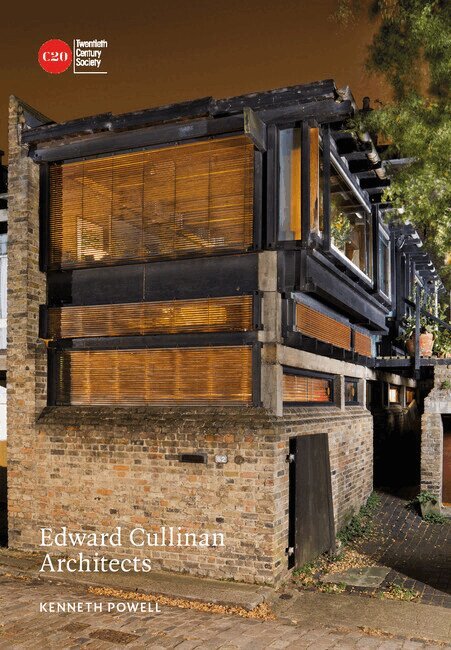
Edward (Ted) Cullinan set up his practice in 1965 as a cooperative in the belief that architecture needed commitment from the whole team. He was inspired by a year at Berkeley in 1956, and had worked closely with Denys Lasdun – notably at the University of East Anglia. He started with highly inventive low-cost houses, building his own upside-down passive solar home in north London where he lived until his death in 2019.The practice and the projects grew with major local authority housing, public and private buildings before embarking on a sequence of university buildings and master plans in the UK and abroad. Ted composed his buildings, drawing by hand the section, plan and elevation simultaneously. His integration of low-energy and environmental design matured as a team effort of architects and engineers. You did not have to be an architect to be captivated by the drawings he made when giving lectures.With some classic and many new photographs and a selection of his drawings, this is the first complete account of the practice that Ted led for over 50 years. Never more than 45 members strong, the practice morphed into Cullinan Studio with his insistence on thinking and behaving differently for architecture and the greater good.Edward Cullinan Architects is part of the series Twentieth Century Architects, produced in collaboration with the Twentieth Century Society and Historic England.
445 kr
Skickas inom 7-10 vardagar
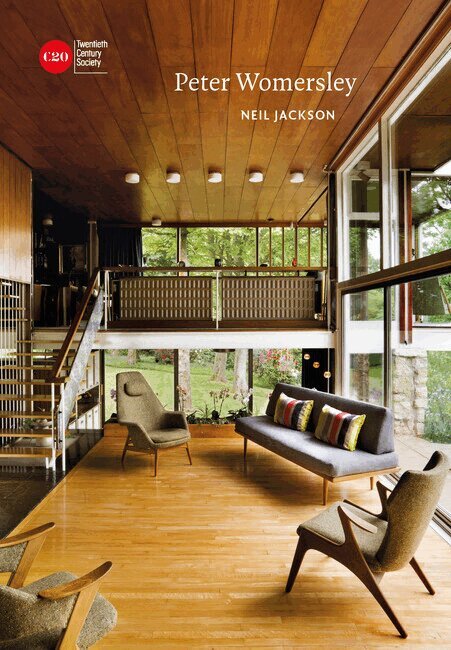
Published in his centenary year, this book celebrates the life and work of the British architect Peter Womersley (1923-1993). From Farnley Hey near Huddersfield, his award-winning first building completed in 1954, to the angular, look-no-hands concrete structure of the Fairydean football stand in Galashiels, Womersley continuously pushed the frontiers of architectural design. Working from a small office in the remote Scottish Borders village of Gattonside, he claimed a place on the world stage: nowhere was this more apparent than in the California-inspired High Sunderland near Selkirk, the ‘See-Through House’ built for Bernat Klein. Six of Womersley’s buildings in Scotland are now listed, three at the top-rate of Category A, while Farnley Hey is listed Grade II.Yet, despite such success, Womersley’s work is at risk: the Category A Bernat Klein studio is derelict while the Category B Garlton Admissions Unit at Haddington, is boarded-up and the site deserted. The intention of this new book is to draw attention to the significance of his work, placing it in its national and international context. With plans and illustrations of all his buildings and projects, as well as a catalogue raisonné including a bibliography by buildings, this book will secure Womersley’s reputation.
445 kr
Skickas inom 7-10 vardagar
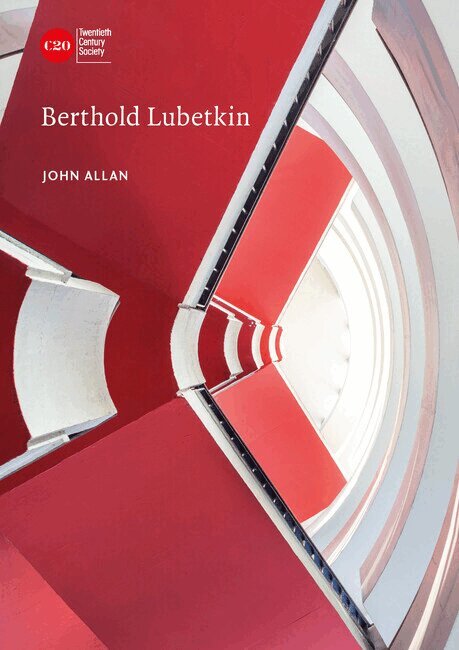
This book presents a compact and compelling account of the life and work of Berthold Lubetkin (1901-1990), widely regarded as the outstanding architect of his generation to practise in England. It explores the key themes, achievements and setbacks of his career, drawing from the author’s twenty-year personal friendship with Lubetkin himself, from discussions with former colleagues, and from his direct experience of working with many of Lubetkin’s buildings as a conservation architect.The study reveals the significance of Lubetkin’s Russian origins and European travels, re-assesses his prime work of the 1930s and charts the extensive output of his often-overlooked post-war career. It also considers Lubetkin’s legacy in the later work of his key associates, several of whom became significant architects in their own right.Lubetkin is a legendary figure in architectural circles, while still remaining slightly mysterious and misunderstood. The author shines new light on the man and his ideas, and assesses his unique place in modern architectural history. Illustrations include original black & white images as well as high-quality colour studies of the buildings as they are now. A complete List of Works and published commentaries also provide a valuable source of reference.
445 kr
Skickas inom 7-10 vardagar
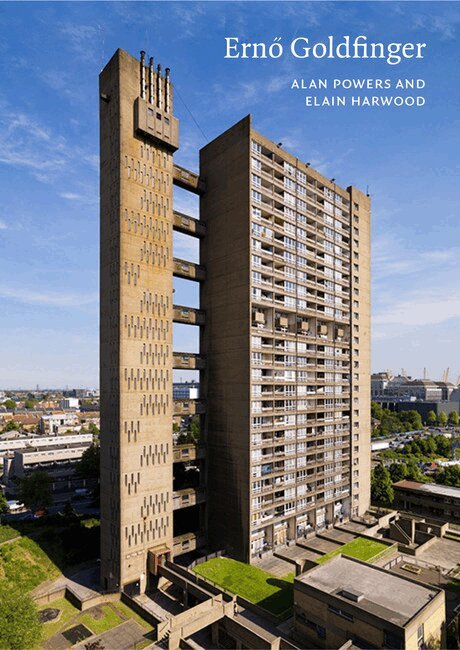
Ernö Goldfinger (1902-1987) is noted for his pre-war Hampstead house, preserved with all its contents by the National Trust, and for his high-rise housing of the late 1960s. These buildings bookend a long and varied career as a modernist who thought deeply about domestic space, cities and the constructional discipline of architecture. Inspired by his teacher Auguste Perret, he carried the spirit of 1920s Paris to enliven the English architectural scene.Goldfinger offered imaginative alternatives to standard solutions for post-war schools, housing and offices, and excelled at the composition of clusters of free-standing buildings as well as fitting neatly into existing streets. An unexpected aspect of his work was the collaboration with Paul and Marjorie Abbatt, founders of Britain’s first modernist toy business.Based on thorough research in Goldfinger’s extensive archive and close knowledge of the full range of his projects, this book provides an accessible and generously illustrated account of a fascinating figure.Having worked together over two decades on pioneering studies of twentieth century British architecture that contributed to long-term conservation, Alan Powers and Elain Harwood added Goldfinger to their list, but sadly, it is the last in the line, as Elain died in 2023, having delivered the completed text and images for publication.
474 kr
Skickas inom 7-10 vardagar
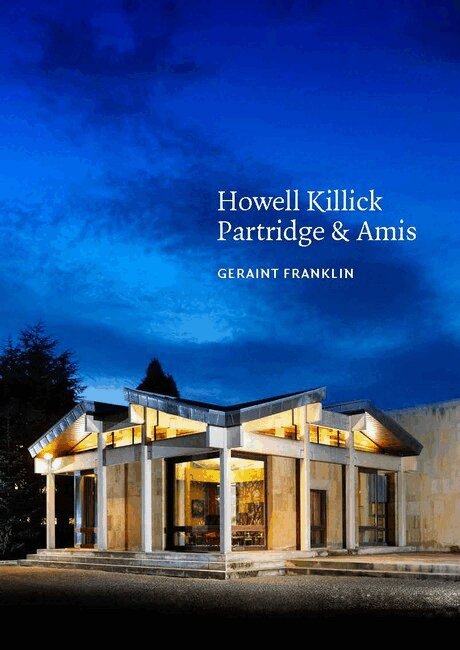
The Roehampton Lane (Alton West) estate is widely acclaimed as one of the seminal works of the Modern Movement in Britain. Less well known is the identity of its designers, four ambitious young architects in the employ of the London County Council: Bill Howell, John Killick, John Partridge and Stan Amis. Launched into practice with a maverick design for Churchill College, Cambridge, their output ranged from additions to Oxford and Cambridge colleges to theatres, houses and government buildings.Deriving a distinctive design language from revealed structure and highly modelled surfaces, HKPA developed a rich, allusive and extrovert architecture. Although a mastery of pre-cast concrete and a preference for raw finishes earned them an early reputation as Brutalists, their sensitivity to context, refined sense of light and materials and eye for the qualities of historic buildings transcends any single style.Geraint Franklin has combined interviews with archival research to tell the story of the individuals, collaborations and aspirations behind the built and unrealised projects. Lavishly illustrated with new photography by James O. Davies and images from the practice archive, this book is a must for architects, students and enthusiasts wanting to discover this key practice in British post-war architecture.
474 kr
Skickas inom 7-10 vardagar
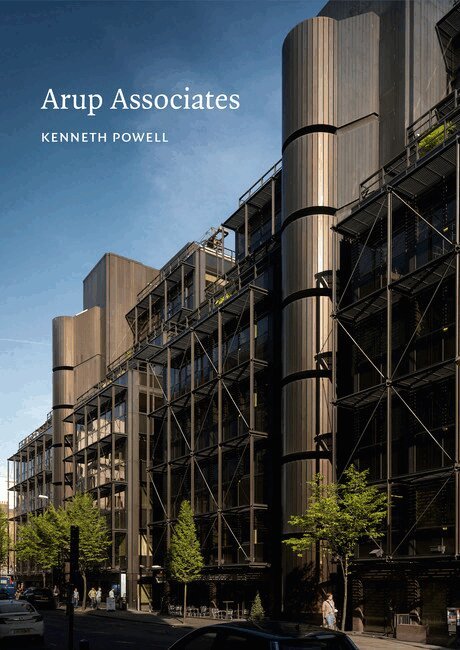
Arup Associates, a major presence on the British architectural scene for more than half a century, emerged from the famous engineering consultancy founded by Ove Arup in 1946 and reflected Arup’s own vision of “total design”, formed in the 1930s in his groundbreaking collaborations with Berthold Lubetkin. With architects, engineers and other professionals working in groups, it offered a uniquely interdisciplinary approach to the design of buildings. From early groundbreaking factories to a series of university commissions, innovative offices, and cultural projects, including the Snape Maltings concert hall, the practice moved on to become a major player on the London development scene with its projects at Finsbury Avenue and Broadgate. This book, the first monograph on Arup Associates for more than 30 years, discusses the work of the firm from the years of the Arup Building Group in the 1950s to the 1990s and assesses the contribution of its leading designers, including Sir Philip Dowson, Derek Sugden and Peter Foggo. The text is based on interviews with many former and current members of the practice. The book is fully illustrated with images from the Arup archive and stunning new photography offering a new perspective on an exceptional body of work.
474 kr
Skickas inom 7-10 vardagar
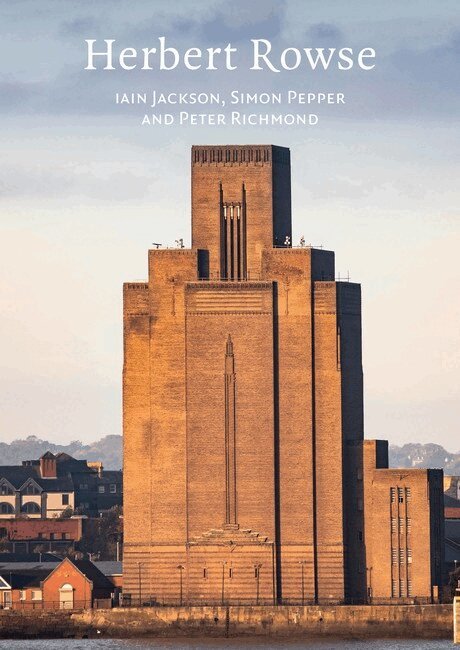
Herbert James Rowse (1887–1963) was an extraordinary architect who shaped the city of Liverpool with his array of exquisite buildings, plans, and infrastructure. Practicing in an eclectic manner that was influenced by American Beaux Arts and later using simpler geometries of monumental bare brick, his large body of work reveals a modernity that was concerned with luxurious materials, restrained but contemporary decoration and sculpture, and bold forms often with a sense of theatre and performance. His work has endured passing trends and fashions, retaining a seductive appeal and resonance with visitors and occupants alike, despite its often monumental massing and extraordinary scale. This book aims to discern not only the architectural merits and advances of his work, but also their wider significance. Through Rowse’s work we gain a glimpse into some of the broader agendas of the time and place, not least through the corporate and banking commissions that accompanied the large docks and shipping firms in Liverpool, where Rowse produced some of his most distinctive work. In addition to these commercial ventures Rowse contributed to the post-war housing debates through his proposals that looked to rows of cottages set around village greens, rather than high-rise living. Published in association with The Twentieth Century Society.
299 kr
Skickas inom 7-10 vardagar
Robert Maguire was still a student at the Architectural Association in London in the early 1950s when he designed his first church. A committed Christian and enthusiast for contemporary design, he was a leading figure in the liturgical reform movement that sought to find an appropriate, modern setting for worship. His design for St Paul, Bow Common in London’s East End was the first such church to be built in Britain, and was followed by a remarkable series of churches and other religious buildings in England in the 1960s and ‘70s designed together with the silversmith and designer Keith Murray, with whom he went into partnership in the late 1950s.The practice was famous for pursuing the intellectual and architectural toughness of the New Brutalism with the humanity and warmth of the Scandinavian tradition. They completely rethought the design of churches, and went on to reinvent the typology of both the school and of student accommodation. Bow Common school revolutionised open plan layouts, and Stag Hill Court student houses for the University of Surrey set new standards in communal living with its finely judged mix of privacy and community.Gerald Adler places this small but highly influential studio within the changing context of post-war architectural practice, where the Brutalism of the 1950s gave way to the more technologically oriented architecture of the 1970s, and the so-called Romantic Pragmatism of the 1980s. The book is richly illustrated with drawings from the office archive, in addition to new photographs.
328 kr
Skickas inom 7-10 vardagar
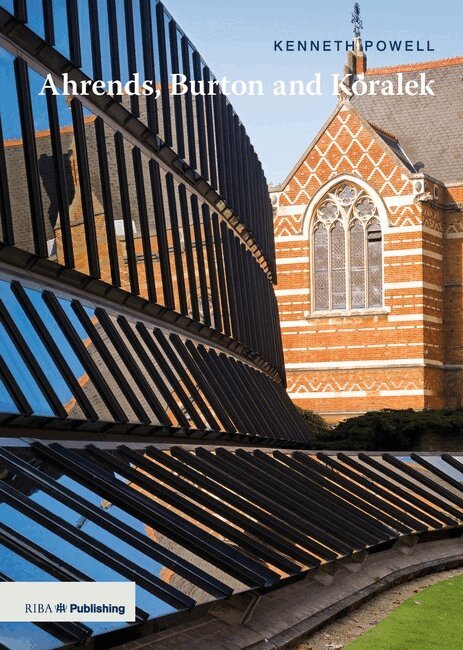
Ahrends, Burton and Koralek (ABK) was established in London in 1961 by three young AA graduates, Peter Ahrends, Richard Burton and Paul Koralek. By the 1970s, ABK was known as one of the most creative and versatile of Britain’s younger practices, its workload ranging from college buildings in Oxford and Chichester to housing, public libraries, retail and industrial buildings. While influenced by High-tech, their buildings were characterised by a concern for strong form and materiality. Major projects of the 1980s included stations for the Docklands Light Railway and the pioneering St Mary’s Hospital on the Isle of Wight, as well as buildings at Hooke Park in Dorset designed in collaboration with Frei Otto.ABK’s victory in the prestigious 1982 competition for an extension to the National Gallery in London reflected the firm’s standing but the scheme was abandoned following a controversial intervention by the Prince of Wales. Written by eminent architectural author and critic, Kenneth Powell, and lavishly illustrated with images from the practice’s archive and stunning new photography, this book is an essential read for architects, students, architectural historians and anyone who is interested in learning more about a key practice in British post-war architecture. This book has been commissioned as part of a series of books on Twentieth Century Architects by RIBA Publishing, English Heritage and The Twentieth Century Society.
328 kr
Skickas inom 7-10 vardagar
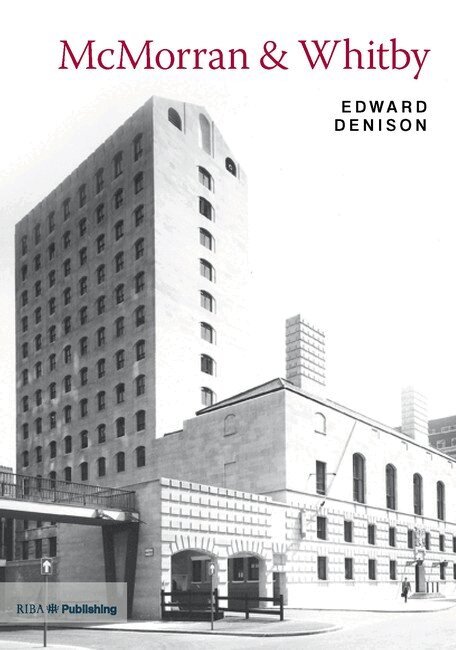
McMorran & Whitby are a secret presence in post-war British architecture. Led from the late 1950s by Donald McMorran and George Whitby, the practice represented an unbroken development from the monumental inter-war classicism represented by figures such as Charles Holden and Sir Edwin Lutyens. In seeking an alternative path for modern architecture, McMorran & Whitby produced durable buildings with a respect for context, but avoided any accusation of unimaginatively reproducing the past.Theirs was a progressive classicism full of invention and beauty. Being out of fashion, they suffered neglect but their work has increasingly won admirers and many of the buildings are now listed.This book is the first major publication on McMorran & Whitby’s work, with an inspiring combination of contemporary photography and previously unpublished archival material. It is an essential read for architects, students, and historians, not least because it uncovers and celebrates buildings outside the mainstream that we need to understand and cherish.This book has been commissioned as part of a series of books on 20th Century Architects by RIBA Publishing, English Heritage and The Twentieth Century Society.
328 kr
Skickas inom 7-10 vardagar
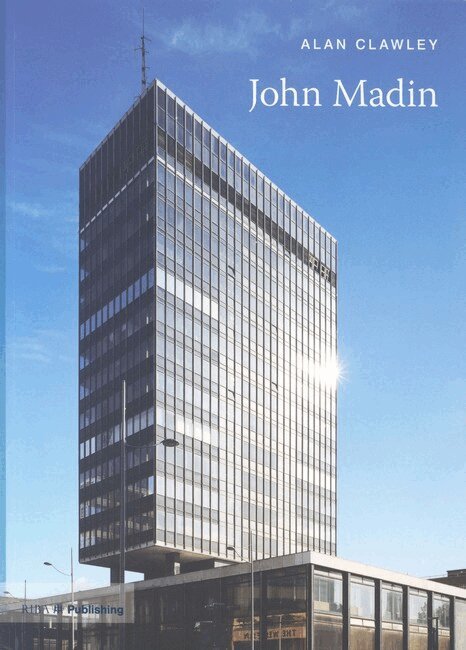
John Madin was the indisputable master of post-war architecture in Birmingham. The work of Madin and his associates had a profound influence on the reshaping of the city after the war, producing some of the most iconic buildings of that period, such as the Birmingham City Library, the Chamber of Commerce and the Post and Mail Building.Trained in the modernist style but too much of a craftsman to abandon decoration entirely, his work is characterised by attention to detail, a preference for natural materials and a desire for decoration and art in his buildings.Many have characterised Madin as a commercial architect, but as the author argues, there was another side to his work. His conservationist approach to the development plan for the Calthorpe Estate, his workman-like master-planning of Dawley, Telford and Corby new towns, his public service commissions, and his design and layout of housing schemes that are still lived-in and popular today, testify to his commitment to human values.Lavishly illustrated with images from Madin’s personal archive and stunning new photography, this book is an essential read for architects, students, architectural historians and modernist enthusiasts interested in learning more about a key figure in British post-war architecture. This book has been commissioned as part of a series of books on Twentieth Century Architects by RIBA Publishing, English Heritage and The Twentieth Century Society.
328 kr
Skickas inom 7-10 vardagar
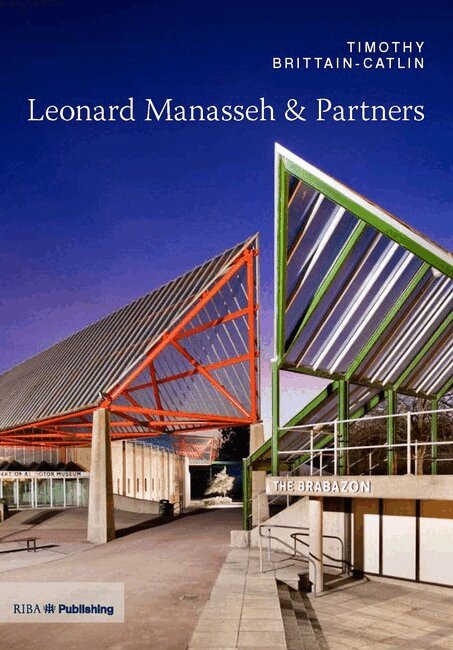
Leonard Manasseh was an ‘architect’s architect’, greatly admired by his contemporaries both on a personal and professional level. He came to prominence at the Festival of Britain and went on to be one of the leading British architects of the 1960s, designing private houses and offices as well as major public commissions. Timothy Brittain-Catlin, architect and architectural historian at the University of Kent, describes how the work of Leonard Manasseh and Partners expresses one of the central themes of the 1950s and 1960s – the apparent conflict between the architect as creative artist on one hand, and as rational technologist and scientist on the other. Leonard Manasseh and his partner Ian Baker were lauded for producing modernist designs that were in keeping with their historical settings or landscapes. Examples include industrial buildings in rural settings, a study for King’s Lynn, undertaken with architect-planner Elizabeth Chesterton, and the project that is most commonly associated with the practice, the National Motor Museum at Beaulieu.Lavishly illustrated with images from Manasseh’s private archive and stunning new photography, this book is an essential read for architects, students and enthusiasts for modernism wanting to learn more about a key practice in British post-war architecture.This book has been commissioned as part of a series of books on Twentieth Century Architects by RIBA Publishing, English Heritage and the Twentieth Century Society.