Women and the American West – Serie
Visar alla böcker i serien Women and the American West. Handla med fri frakt och snabb leverans.
5 produkter
5 produkter
231 kr
Skickas inom 5-8 vardagar
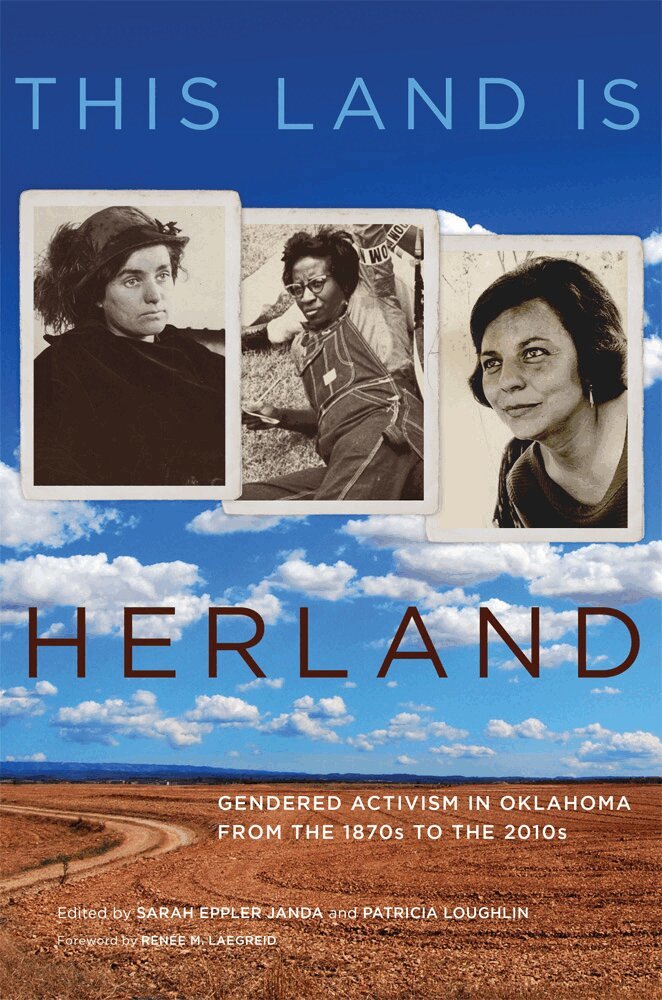
Since well before ratification of the Nineteenth Amendment in 1920 secured their right to vote, women in Oklahoma have sought to change and uplift their communities through political activism. This Land Is Herland brings together the stories of thirteen women activists and explores their varied experiences from the territorial period to the present. Organized chronologically, the essays discuss Progressive reformer Kate Barnard, educator and civil rights leader Clara Luper, and Comanche leader and activist LaDonna Harris, as well as lesser-known individuals such as Cherokee historian and educator Rachel Caroline Eaton, entrepreneur and NAACP organizer California M. Taylor, and Equal Rights Amendment (ERA) champion Wanda Jo Peltier Stapleton.Edited by Sarah Eppler Janda and Patricia Loughlin, the collection connects Oklahoma women’s individual and collective endeavors to the larger themes of intersectionality, suffrage, politics, motherhood, and civil rights in the American West and the United States. The historians explore how race, ethnicity, social class, gender, and political power shaped-and were shaped by-these women’s efforts to improve their local, state, and national communities.Underscoring the diversity of women’s experiences, the editors and contributors provide fresh and engaging perspectives on the western roots of gendered activism in Oklahoma. This volume expands and enhances our understanding of the complexities of western women’s history.
Amelia Stone Quinton and the Women's National Indian Association
A Legacy of Indian Reform
Inbunden, Engelska, 2022
613 kr
Skickas inom 10-15 vardagar
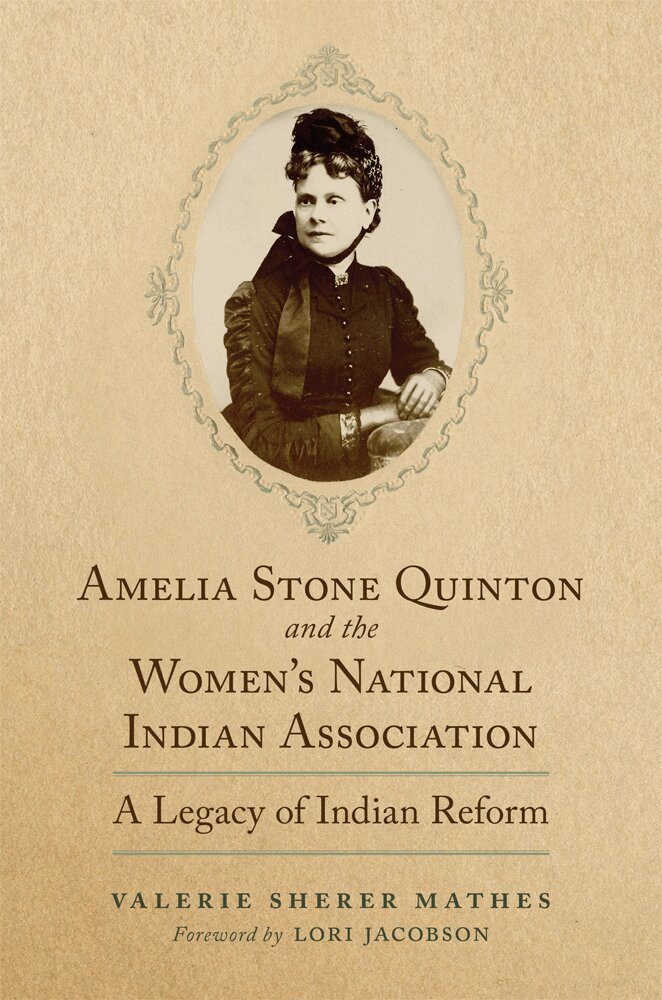
This first full account of Amelia Stone Quinton (1833–1926) and the organization she cofounded, the Women’s National Indian Association (WNIA), offers a nuanced insight into the intersection of gender, race, religion, and politics in our shared history. Author Valerie Sherer Mathes shows how Quinton, like Helen Hunt Jackson, was a true force for reform and progress who was nonetheless constrained by the assimilationist convictions of her time.The WNIA, which Quinton cofounded with Mary Lucinda Bonney in 1879, was organized expressly to press for a “more just, protective, and fostering Indian policy,” but also to promote the assimilation of the Indian through Christianization and “civilization.” Charismatic and indefatigable, Quinton garnered support for the WNIA’s work by creating strong working relationships with leaders of the main reform groups, successive commissioners of Indian affairs, secretaries of the interior, and prominent congressmen. The WNIA’s powerful network of friends formed a hybrid organization: religious in its missionary society origins but also political, using its powers to petition and actively address public opinion. Mathes follows the organization as it evolved from its initial focus on evangelizing Indian women—and promoting Victorian society’s ideals of “true womanhood”—through its return to its missionary roots, establishing over sixty missionary stations, supporting physicians and teachers, and building houses, chapels, schools, and hospitals.With reference to Quinton’s voluminous writings—including her letters, speeches, and newspaper articles—as well as to WNIA literature, Mathes draws a complex picture of an organization that at times ignored traditional Indian practices and denied individual agency, even as it provided dispossessed and impoverished people with health care and adequate housing. And at the center of this picture we find Quinton, a woman and reformer of her time.
277 kr
Skickas inom 10-15 vardagar
One January day in 1923, a young boy came across the dead body of a twenty-year-old woman on a San Diego beach. When the police arrived on the scene, they found the woman’s calling card, which read simply, “I am Fritzie Mann.” Yet Fritzie’s identity, as revealed in this compelling history, was anything but simple, and her death—eventually ruled a homicide—captured public attention for months. In Fritzie, historian Amy Absher reveals how broader cultural forces, including gendered violence, sexual liberation, and evolving urban conditions in the American West, shaped the course of Mann’s life and contributed to her tragic death.Frieda “Fritizie” Mann had several identities during her brief life, and the mysterious circumstances of her death raise as many questions as they do answers. She was born in 1903 near the present border between Poland and Ukraine. She and her family were Jewish immigrants who traveled to San Diego to find security and prosperity.In the last year of her life, Mann became locally famous. She had reinvented herself as a flapper and “Oriental” dancer. She claimed to have friends in Hollywood and a movie contract. On the night of her murder, she said she was going to a party to meet her Hollywood friends; instead she traveled to an isolated roadside hotel where she met her death. An autopsy revealed that she was four and a half months pregnant.Absher guides the reader through the intricacies of this true crime story as it unfolded, from the initial flawed investigation to the sensationalized press coverage and the ultimate failure of the legal system to ensure justice on Mann’s behalf. Like other “new women” of her era, Fritzie Mann adopted roles that promised liberation from the control of men. In the end, her life and early death suggest the opposite: she became the victim of a culture that consumed women even as it purported to celebrate them.
Amelia Stone Quinton and the Women's National Indian Association Volume 2
A Legacy of Indian Reform
Häftad, Engelska, 2026
315 kr
Kommande
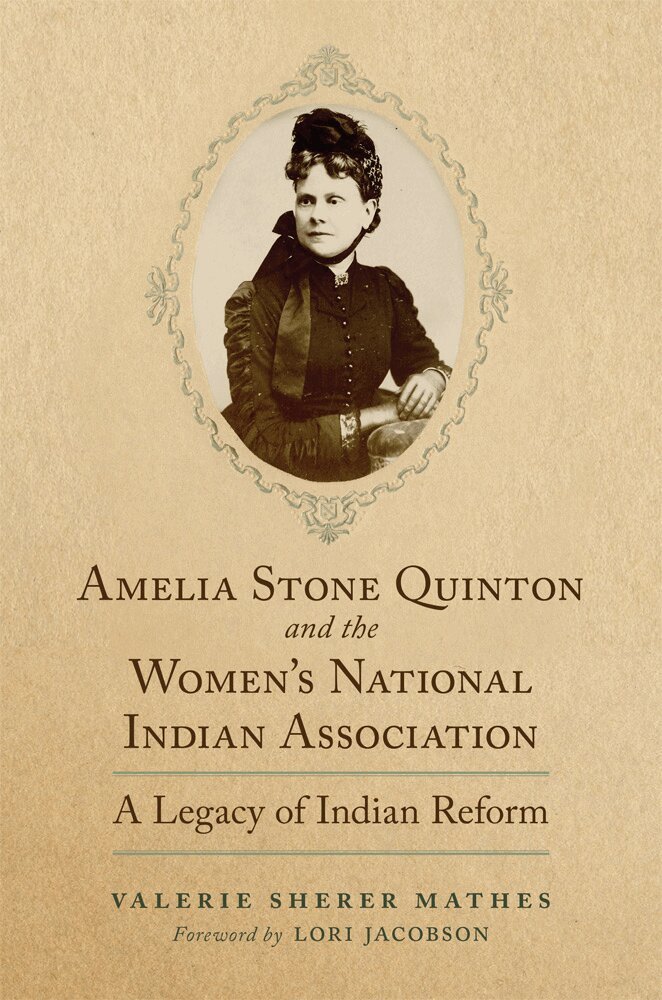
This first full account of Amelia Stone Quinton (1833–1926) and the organization she cofounded, the Women’s National Indian Association (WNIA), offers a nuanced insight into the intersection of gender, race, religion, and politics in our shared history. Author Valerie Sherer Mathes shows how Quinton, like Helen Hunt Jackson, was a true force for reform and progress who was nonetheless constrained by the assimilationist convictions of her time. The WNIA, which Quinton cofounded with Mary Lucinda Bonney in 1879, was organized expressly to press for a “more just, protective, and fostering Indian policy,” but also to promote the assimilation of the Indian through Christianization and “civilization.” Charismatic and indefatigable, Quinton garnered support for the WNIA’s work by creating strong working relationships with leaders of the main reform groups, successive commissioners of Indian affairs, secretaries of the interior, and prominent congressmen. The WNIA’s powerful network of friends formed a hybrid organization: religious in its missionary society origins but also political, using its powers to petition and actively address public opinion. Mathes follows the organization as it evolved from its initial focus on evangelizing Indian women—and promoting Victorian society’s ideals of “true womanhood”—through its return to its missionary roots, establishing over sixty missionary stations, supporting physicians and teachers, and building houses, chapels, schools, and hospitals. With reference to Quinton’s voluminous writings—including her letters, speeches, and newspaper articles—as well as to WNIA literature, Mathes draws a complex picture of an organization that at times ignored traditional Indian practices and denied individual agency, even as it provided dispossessed and impoverished people with health care and adequate housing. And at the center of this picture we find Quinton, a woman and reformer of her time.
Bridget's Gambit (Volume 4)
A Saga of Family Enterprise in Gold Rush California
Inbunden, Engelska, 2026
390 kr
Skickas inom 5-8 vardagar
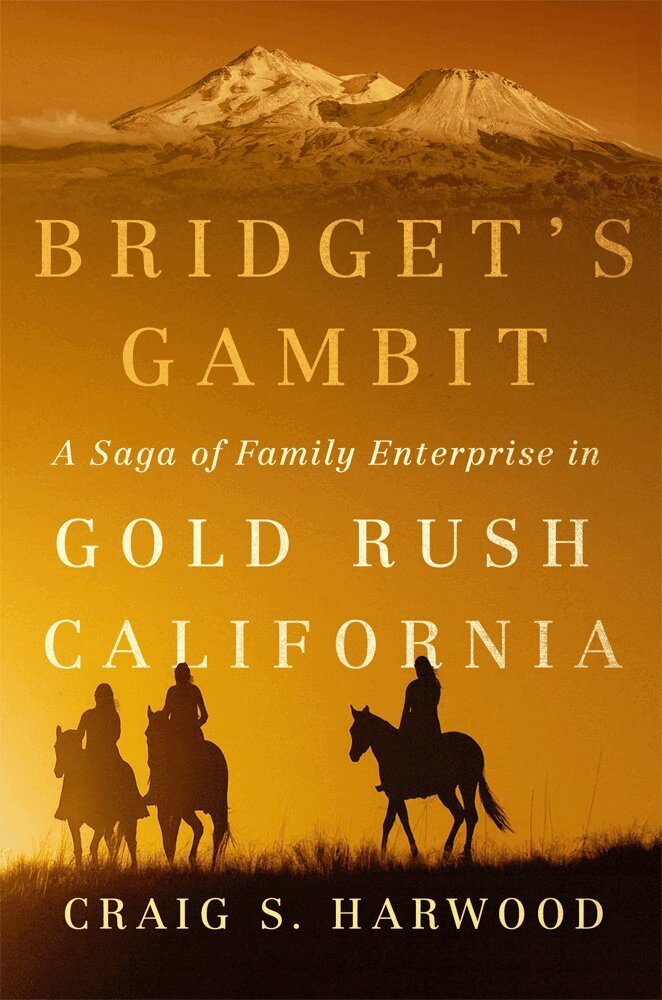
In 1828 Bridget Miranda Evoy escaped famine-stricken Ireland with her children for a better life in America. But the relief she desperately sought was elusive. Within two years, she was a widow and was left raising her five children after the untimely death of her husband. Finding herself in dire straits in “The Gateway to the West”, Bridget's Gambit tells the story of how this remarkable young widow managed to make her way to California and became an entrepreneur during the Gold Rush. In this engrossing family saga, Craig S. Harwood recounts the adventures and accomplishments of this singularly determined woman and her daughters, from a harrowing overland crossing in the winter of 1849 to innovative efforts to build an empire in defiance of the social and gender constraints of the Victorian Era. When Bridget and her family arrived in the California Territory, they saw opportunities where others did not, charting a path rooted in a prescient view of the rapidly evolving western economy. By pursuing commercial ventures that served emerging communities in Northern California, the family was able to ascend the social ladder and exert influence, doing business with many early shapers of California statehood. Bridget's Gambit captures the stark reality of the patriarchal world of business in the Old West—and the extraordinary lengths to which Bridget and her daughters went in creating a diverse web of financial enterprises that brought some of the most prominent American businessmen into her orbit. Harwood's spirited biography of an audacious, persistent woman brings to the forefront the largely unheralded contributions of women in the forming of California statehood—and restores a lost chapter to the history of the American West.