Yusko Ward-Phillips Lectures in English Language and Literature – Serie
Visar alla böcker i serien Yusko Ward-Phillips Lectures in English Language and Literature. Handla med fri frakt och snabb leverans.
8 produkter
8 produkter
1 238 kr
Skickas inom 10-15 vardagar
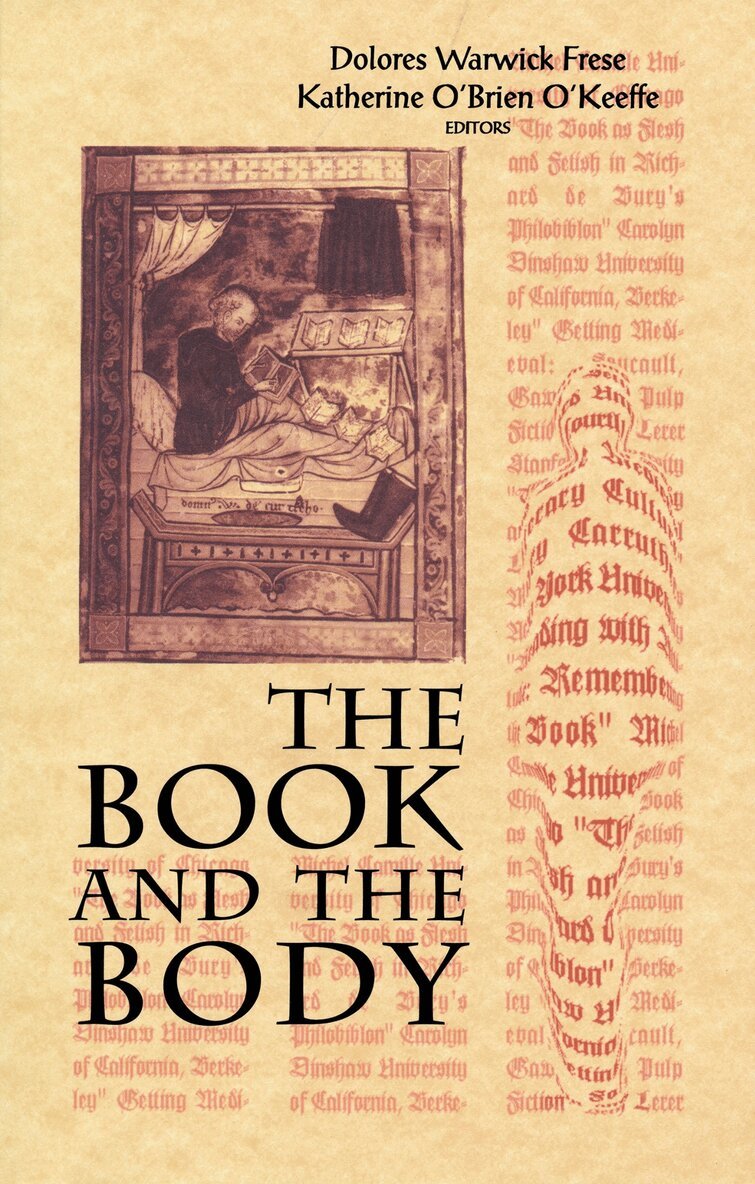
One of the most exciting developments in recent literary studies bases interpretation on a new understanding of bodily aspects of text. Contributors Mary Carruthers, Michael Camille, Seth Lerer, and Carolyn Dinshaw bring various disciplinary perspectives to this intriguing subject.The method employed here views the body as a text to be read. Though the approaches of these essays are widely varied, three concerns figure and refigure themselves throughout the book: the gendered body and the copied book as locus of pain, pleasure, and desire. They will be of immense interest to medievalists and other scholars of language, philosophy, history, art history, and gender studies.Frese and O'Keeffe explore the liminal areas between the book and the body from contemporary perspectives. Though the approaches of these essays are widely varied, three concerns figure throughout the book: the gendered body and the copied book as locus of pain, pleasure, and desire.
300 kr
Skickas inom 10-15 vardagar
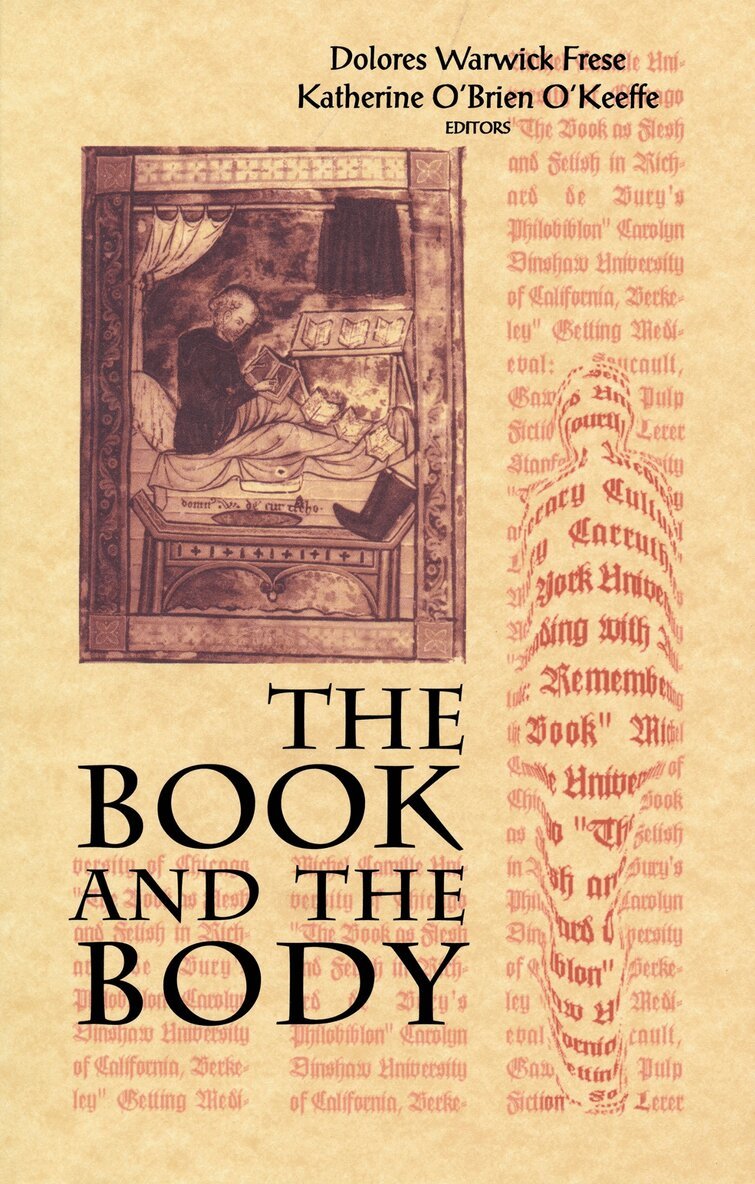
One of the most exciting developments in recent literary studies bases interpretation on a new understanding of bodily aspects of text. Contributors Mary Carruthers, Michael Camille, Seth Lerer, and Carolyn Dinshaw bring various disciplinary perspectives to this intriguing subject.The method employed here views the body as a text to be read. Though the approaches of these essays are widely varied, three concerns figure and refigure themselves throughout the book: the gendered body and the copied book as locus of pain, pleasure, and desire. They will be of immense interest to medievalists and other scholars of language, philosophy, history, art history, and gender studies.Frese and O'Keeffe explore the liminal areas between the book and the body from contemporary perspectives. Though the approaches of these essays are widely varied, three concerns figure throughout the book: the gendered body and the copied book as locus of pain, pleasure, and desire.
1 143 kr
Skickas inom 10-15 vardagar
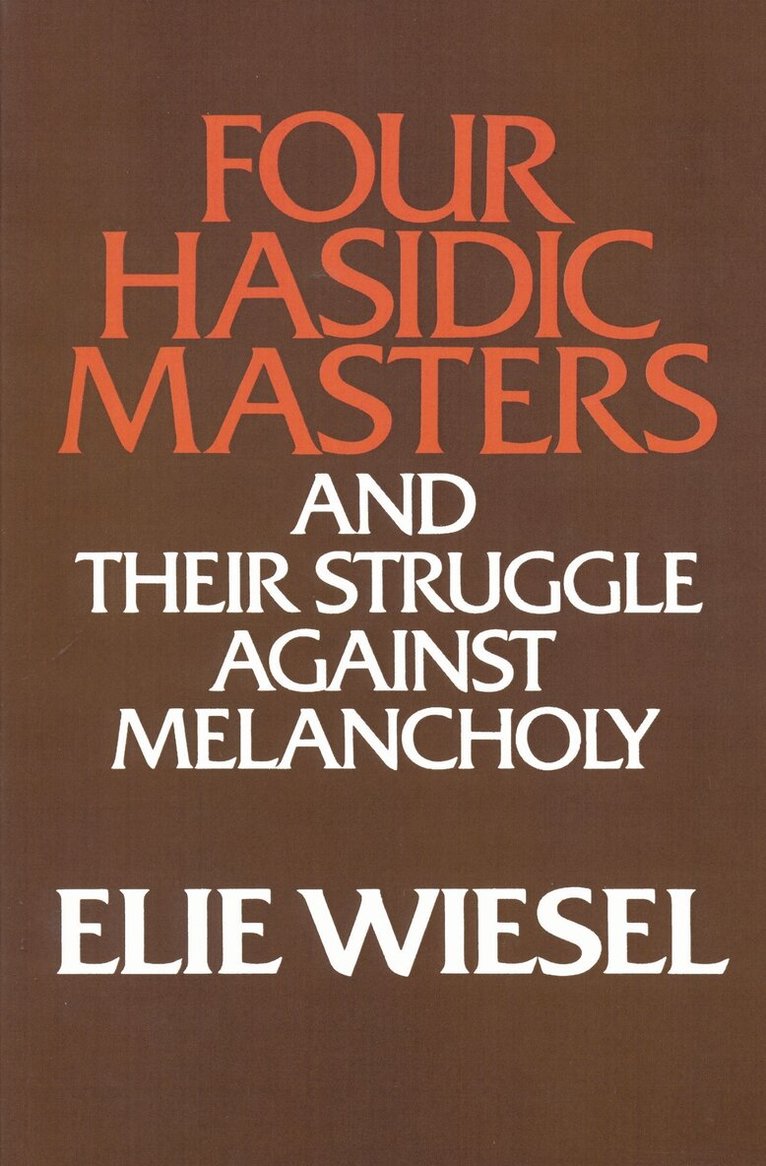
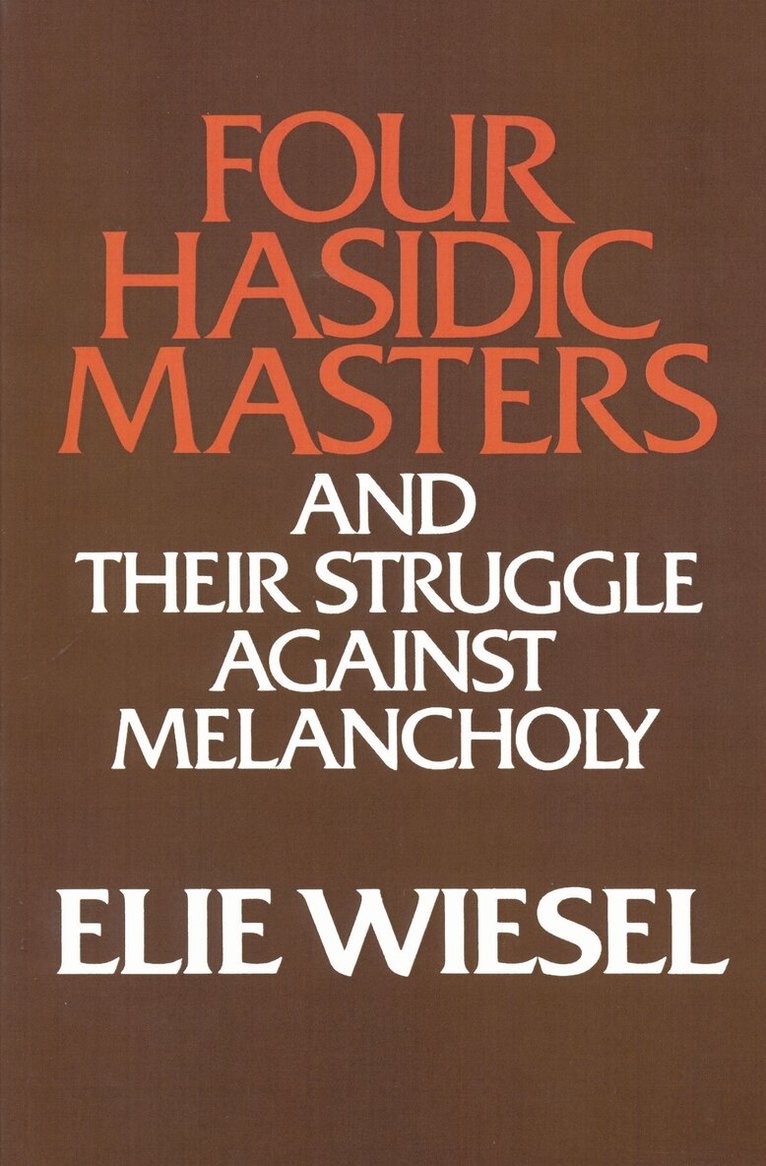
Portrays four charismatic leaders of the eighteenth and nineteenth-century Hasidic movement in Eastern Europe.
288 kr
Skickas inom 10-15 vardagar
Portrays four charismatic leaders of the eighteenth and nineteenth-century Hasidic movement in Eastern Europe.
500 kr
Skickas inom 10-15 vardagar
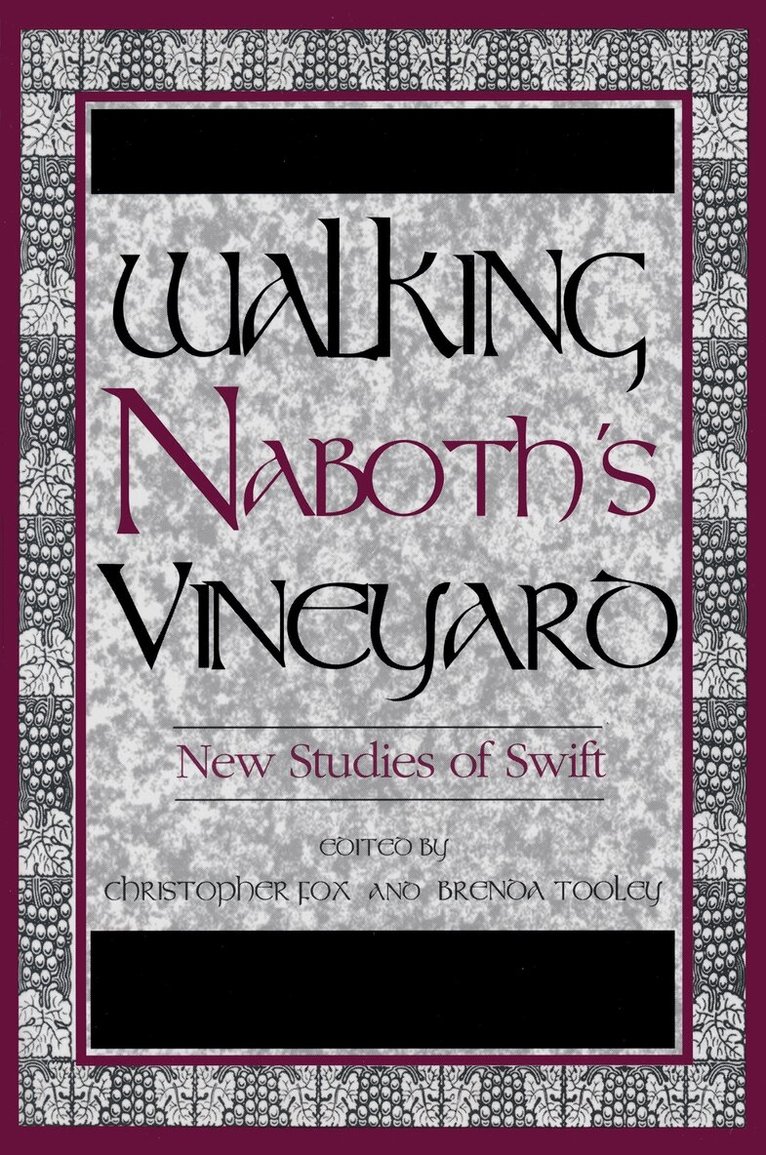
Walking Naboth's Vineyard brings together nine prominent scholars to present new and valuable perspectives on the work of Jonathan Swift. In recent years Swift has been increasingly reconsidered and recast as a distinctly Irish writer, and there is little doubt that his artistic career was shaped by Ireland's troubled political life. Literary critics and scholars, as well as scholars of Irish literature, will find this collection unique in that it explores Swift's life and writing in a distinctively Irish context and considers how Swift was influenced as a member of a population that was divided against itself, colonized by a neighboring kingdom, and politically and culturally marginalized. These essays demonstrate how, despite Swift's ambivalence about his Irish nationality, he found Ireland's worldly position a close parallel to his own complex position in the political and cultural worlds in which he lived.
1 238 kr
Skickas inom 10-15 vardagar
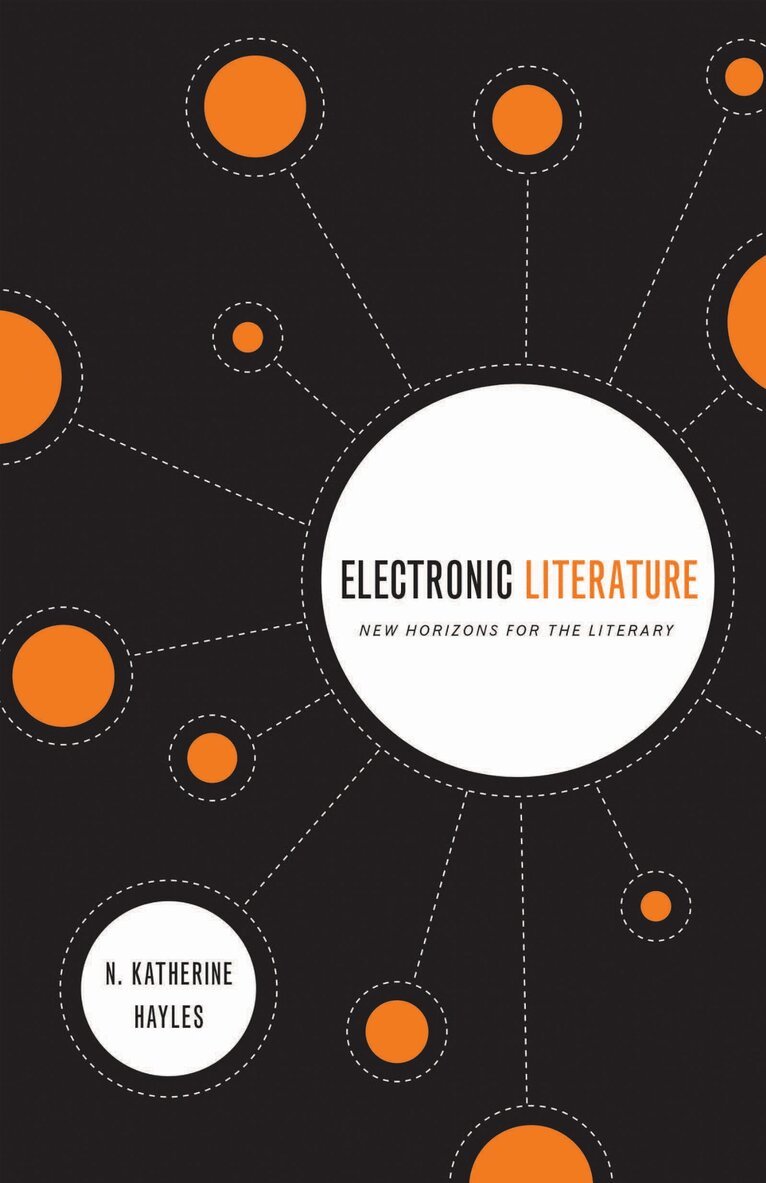
A visible presence for some two decades, electronic literature has already produced many works that deserve the rigorous scrutiny critics have long practiced with print literature. Only now, however, with Electronic Literature by N. Katherine Hayles, do we have the first systematic survey of the field and an analysis of its importance, breadth, and wide-ranging implications for literary study. Hayles's book is designed to help electronic literature move into the classroom. Her systematic survey of the field addresses its major genres, the challenges it poses to traditional literary theory, and the complex and compelling issues at stake. She develops a theoretical framework for understanding how electronic literature both draws on the print tradition and requires new reading and interpretive strategies. Grounding her approach in the evolutionary dynamic between humans and technology, Hayles argues that neither the body nor the machine should be given absolute theoretical priority. Rather, she focuses on the interconnections between embodied writers and users and the intelligent machines that perform electronic texts. Through close readings of important works, Hayles demonstrates that a new mode of narration is emerging that differs significantly from previous models. Key to her argument is the observation that almost all contemporary literature has its genesis as electronic files, so that print becomes a specific mode for electronic text rather than an entirely different medium. Hayles illustrates the implications of this condition with three contemporary novels that bear the mark of the digital.Included with the book is a companion website (https://newhorizons.eliterature.org/index.php) and an online resource, The Electronic Literature Collection, Volume 1 (https://collection.eliterature.org/1/). The companion website offers resources for teachers and students, including sample syllabi, original essays, author biographies, and useful links. The ELC contains sixty new and recent works of electronic literature with keyword index, authors' notes, and editorial headnotes. Representing multiple modalities of electronic writing—hypertext fiction, kinetic poetry, generative and combinatory forms, network writing, codework, 3D, narrative animations, installation pieces, and Flash poetry—the collection encompasses comparatively low-tech work alongside heavily coded pieces. Together, the book, companion website, and collection provide an exceptional pedagogical opportunity.
239 kr
Skickas inom 10-15 vardagar
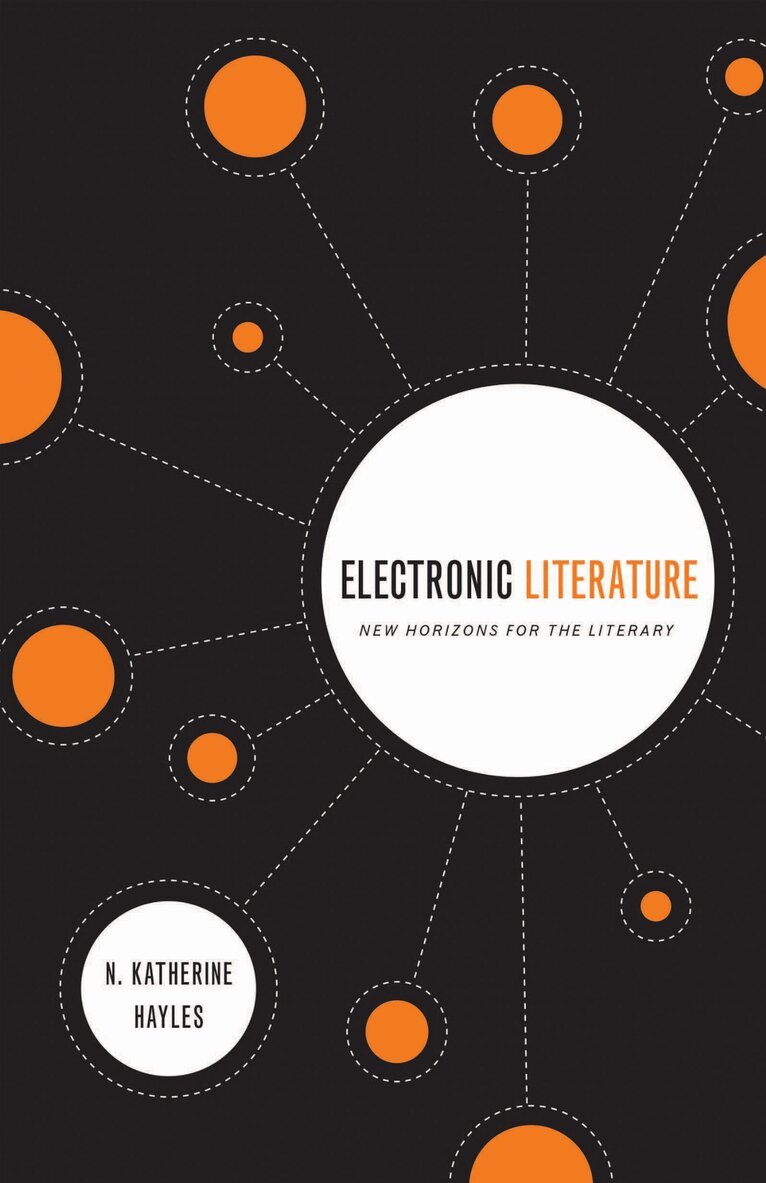
A visible presence for some two decades, electronic literature has already produced many works that deserve the rigorous scrutiny critics have long practiced with print literature. Only now, however, with Electronic Literature by N. Katherine Hayles, do we have the first systematic survey of the field and an analysis of its importance, breadth, and wide-ranging implications for literary study. Hayles's book is designed to help electronic literature move into the classroom. Her systematic survey of the field addresses its major genres, the challenges it poses to traditional literary theory, and the complex and compelling issues at stake. She develops a theoretical framework for understanding how electronic literature both draws on the print tradition and requires new reading and interpretive strategies. Grounding her approach in the evolutionary dynamic between humans and technology, Hayles argues that neither the body nor the machine should be given absolute theoretical priority. Rather, she focuses on the interconnections between embodied writers and users and the intelligent machines that perform electronic texts. Through close readings of important works, Hayles demonstrates that a new mode of narration is emerging that differs significantly from previous models. Key to her argument is the observation that almost all contemporary literature has its genesis as electronic files, so that print becomes a specific mode for electronic text rather than an entirely different medium. Hayles illustrates the implications of this condition with three contemporary novels that bear the mark of the digital.Included with the book is a companion website (https://newhorizons.eliterature.org/index.php) and an online resource, The Electronic Literature Collection, Volume 1 (https://collection.eliterature.org/1/). The companion website offers resources for teachers and students, including sample syllabi, original essays, author biographies, and useful links. The ELC contains sixty new and recent works of electronic literature with keyword index, authors' notes, and editorial headnotes. Representing multiple modalities of electronic writing—hypertext fiction, kinetic poetry, generative and combinatory forms, network writing, codework, 3D, narrative animations, installation pieces, and Flash poetry—the collection encompasses comparatively low-tech work alongside heavily coded pieces. Together, the book, companion website, and collection provide an exceptional pedagogical opportunity.
362 kr
Skickas inom 10-15 vardagar
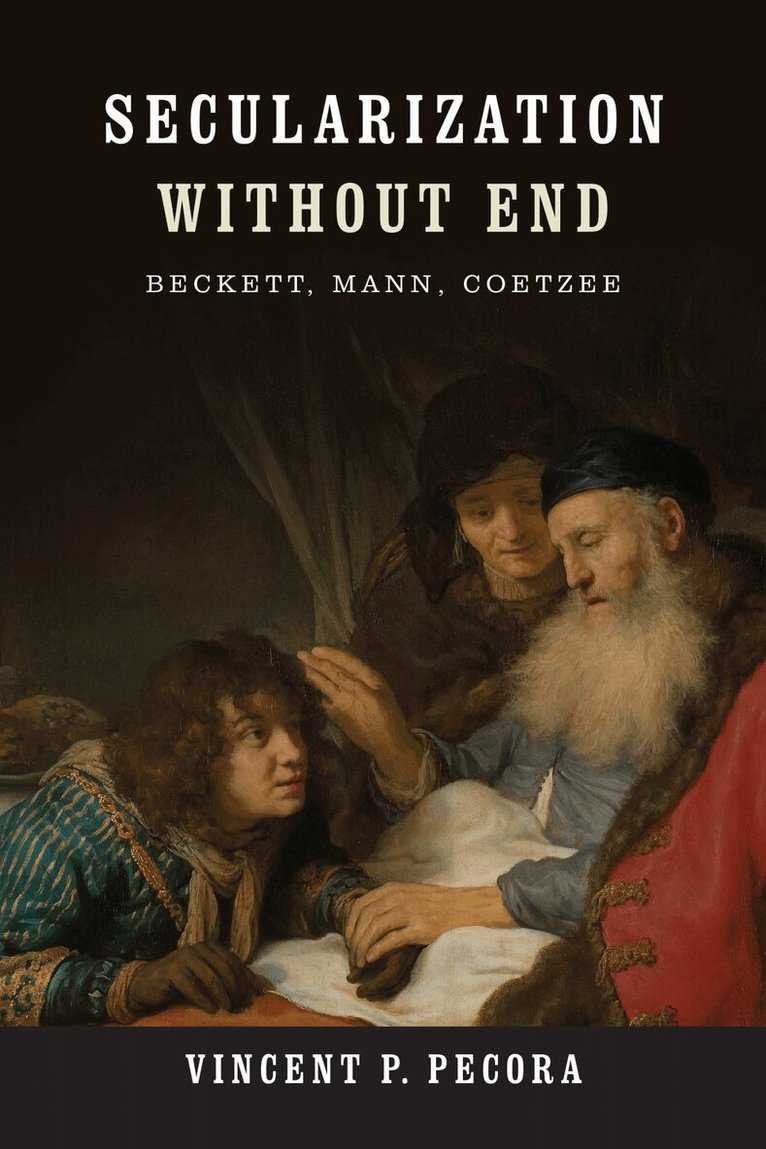
In Secularization without End: Beckett, Mann, Coetzee, Vincent P. Pecora elaborates an alternative history of the twentieth-century Western novel that explains the resurgence of Christian theological ideas. Standard accounts of secularization in the novel assume the gradual disappearance of religious themes through processes typically described as rationalization: philosophy and science replace faith. Pecora shows, however, that in the modern novels he examines, "secularization" ceases to mean emancipation from the prescientific ignorance or enchantment commonly associated with belief and signifies instead the shameful state of a humanity bereft of grace and undeserving of redemption.His book focuses on the unpredictable and paradoxical rediscovery of theological perspectives in otherwise secular novels after 1945. The narratives he analyzes are all seemingly godless in their overt points of view, from Samuel Beckett's Murphy to Thomas Mann's Doktor Faustus to J. M. Coetzee's The Childhood of Jesus. But, Pecora argues, these novels wind up producing varieties of religious doctrine drawn from Augustinian and Calvinist claims about primordial guilt and the impotence of human will. In the most artfully imaginative ways possible, Beckett, Mann, and Coetzee resist the apparently inevitable plot that so many others have constructed for the history of the novel, by which human existence is reduced to mundane and meaningless routines and nothing more. Instead, their writing invokes a religious past that turns secular modernity, and the novel itself, inside out.