Inbunden, Engelska, 2026
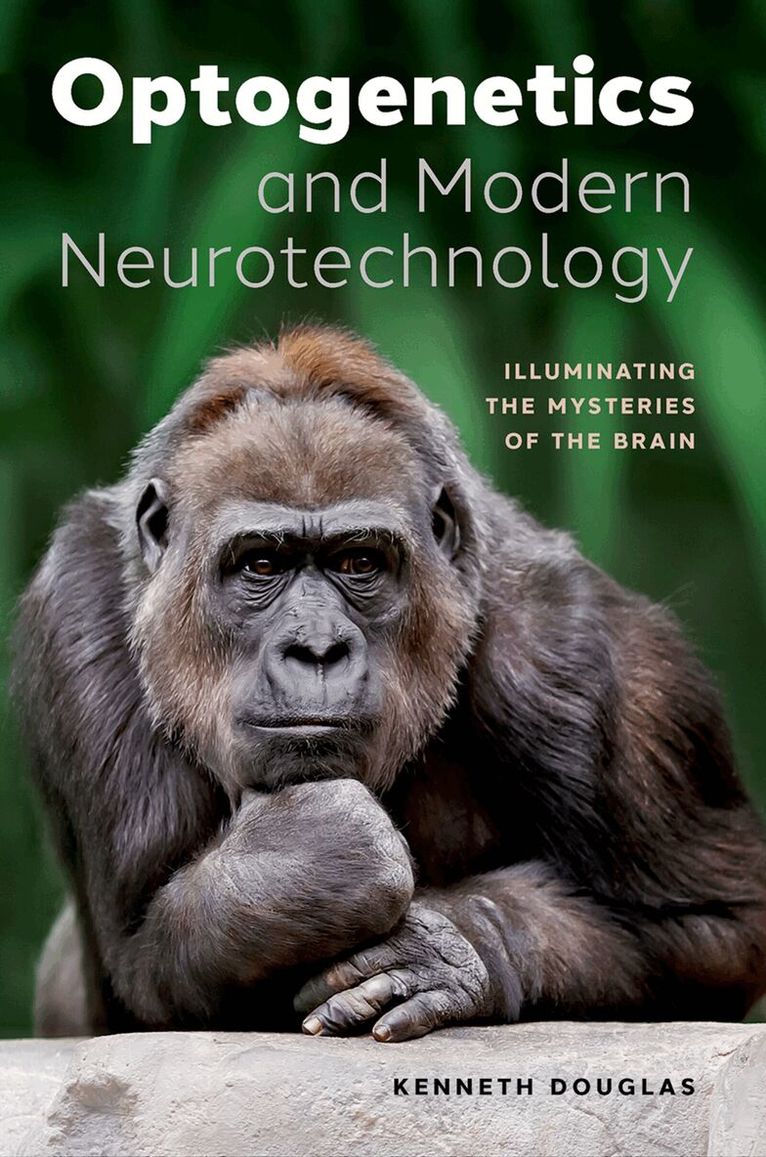
Optogenetics and Modern Neurotechnology
335 kr
Kommande
Beskrivning
What are the neural circuits that underpin behavior, both in psychiatric illness and in health? Can we understand what is going on in the brain of a person suffering depression, or who has an anxiety disorder, or is addicted to drugs? And what of our fundamental functions and survival drives: what are the connections between neurons that enable us to form, store, and retrieve memories, to feel empathy, to act as parents to our children? In the early years of the twenty-first century, a new technology in neuroscience has emerged to unveil the causal relationship between the activity of specific neurons and the behaviors they control. That technology is called optogenetics. Optogenetics is a combination of optics and genetics to control well-defined events within specific cells of living tissue, the better to understand the mechanistic origins of those events. The technique includes the insertion into cells of genes that bestow light responsiveness to the proteins they produce, the means for delivering light deep into living, freely moving mammals, the targeting of light-sensitivity only to cells of interest, and ways for evaluating the effects of this optical control on behavior.Optogenetics enables scientists to both “read” and “write” the neural code. Optogenetics empowers the control of well-defined events in neurons in real time by employing genes that confer light responsiveness. Most importantly, it is a transformational step toward causal neuroscience. Moving beyond a history of mostly observation and correlation, optogenetics now provides neuroscientists with the ability to switch neural function on and off with cell-specificity and millisecond accuracy. Because of conserved brain structure among species, optogenetic study of animal models has yielded invaluable insights into human problems such as anxiety, depression, addiction, autism, Alzheimer's disease and Parkinson's disease. It has revealed the brain circuits responsible for parenting behavior, how memory works (and malfunctions), how percepts are formed from our visual experience, and other feats not previously possible.
Produktinformation
- Utgivningsdatum: 2026-12-23
- Mått: 166 x 240 x 27 mm
- Vikt: 1 057 g
- Format: Inbunden
- Språk: Engelska
- Antal sidor: 456
- Förlag: OUP USA
- ISBN: 9780197767061
Utforska kategorier
Betyg & recensioner
0 recensioner
Inga recensioner tillgängliga.