Beställningsvara. Skickas inom 7-10 vardagar. Fri frakt över 249 kr.
Beskrivning
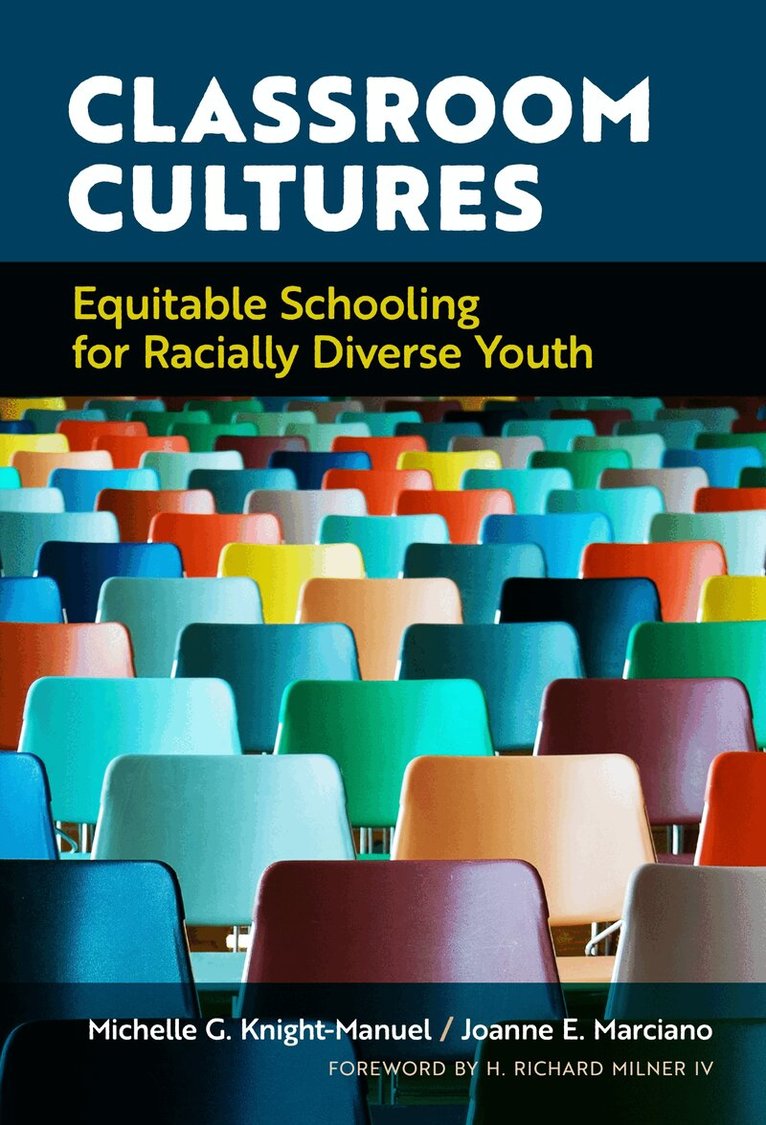
This practical resource will assist secondary educators in creating equitable schooling environments for racially diverse youth. The authors identify key aspects of successful strategies and offer recommendations for tackling the many challenges of implementing effective school change. Chapters include vignettes and questions to help readers reflect on their own experiences and perspectives.
Michelle G. Knight-Manuel is an associate dean and professor of education at Teachers College, Columbia University, and a former middle school teacher and high school college advisor. Joanne E. Marciano is an assistant professor in the Department of Teacher Education in the College of Education at Michigan State University. Joanne previously taught secondary English for 13 years at a New York City public high school. They are coauthors of College-Ready: Preparing Black and Latina/o Youth for Higher Education—A Culturally Relevant Approach.
Recensioner i media
" Classroom Cultures is an important and useful volume not only for classroom practitioners and school administrators but for all individuals and organizations looking to improve their understanding of CRE and combat the notion of professional volunteerism in the field of education."—Harvard Educational Review
Innehållsförteckning
ContentsForeword H. Richard Milner IV ixAcknowledgments xi1. Introduction 1Why Is Change Necessary? 3What Is Culturally Relevant Education? 4Moving to Shared Understandings of CRE and Culture 7Understanding Culture in Culturally Relevant Education 8Research Study 10Overview of the Contents—CRE: What Does It Look Like in Practice? 122. Understanding Teachers’ Racial Identities, Experiences, and Culturally Relevant Pedagogical Practices 14Everyday Practices in Context 19Inquiry Focus #1: Reflecting on Identities 20Inquiry Focus #2: Examining Experiences 24Connection to Classrooms, School Culture, and College Access 31Conclusion 343. Challenging Stereotypes, Supporting Students’ Strengths 36Everyday Practices in Context 37Inquiry Focus #1: Challenging Singular Notions About Culturally Diverse Youth 39Inquiry Focus #2: Challenging Stereotypes to Understand Assets 41Inquiry Focus #3: Creating More-Equitable Educational Practices 45Connecting to Classrooms, School Culture, and College Access 46Conclusion 494. Building Productive Teacher–Student Relationships: Constructing New Academic Practices 52Everyday Practices in Context 54Inquiry Focus #1: Reflecting on Relationships with Teachers 57Inquiry Focus #2: Learning from Multiple Identities 61Inquiry Focus #3: Examining Existing Pedagogical Practices 62Connecting to Classrooms, School Culture, and College Access 63Conclusion 675. Facilitating Culturally Relevant Peer Interactions: Building on Youth’s Relationships with Peers 69Everyday Practices in Context 70Inquiry Focus #1: Reconsidering Youth’s Interactions with Peers 72Inquiry Focus #2: Enacting Strengths-Based Perspectives of Youth Peer Groups 77Inquiry Focus #3: Facilitating Youth’s Culturally Relevant Peer Interactions 81Connecting to Classrooms, School Culture, and College Access 83Conclusion 866. College Talk: Challenging Racial Assumptions and Inequities 88Everyday Practices in Context 90Inquiry Focus #1: Examining College Talk 92Inquiry Focus #2: Enacting Culturally Relevant College Talk 95Connecting to Classrooms, School Culture, and College Access 102Conclusion 1057. Conclusion 107Recommendations for Educators 108Recommendations for School Leaders 114Looking Ahead 117Appendix A: Number and Roles of CRE-PD Participants 119Appendix B: CRE Indicators and College Readiness 125Appendix C: Methodology 127References 131Index 139About the Authors 147