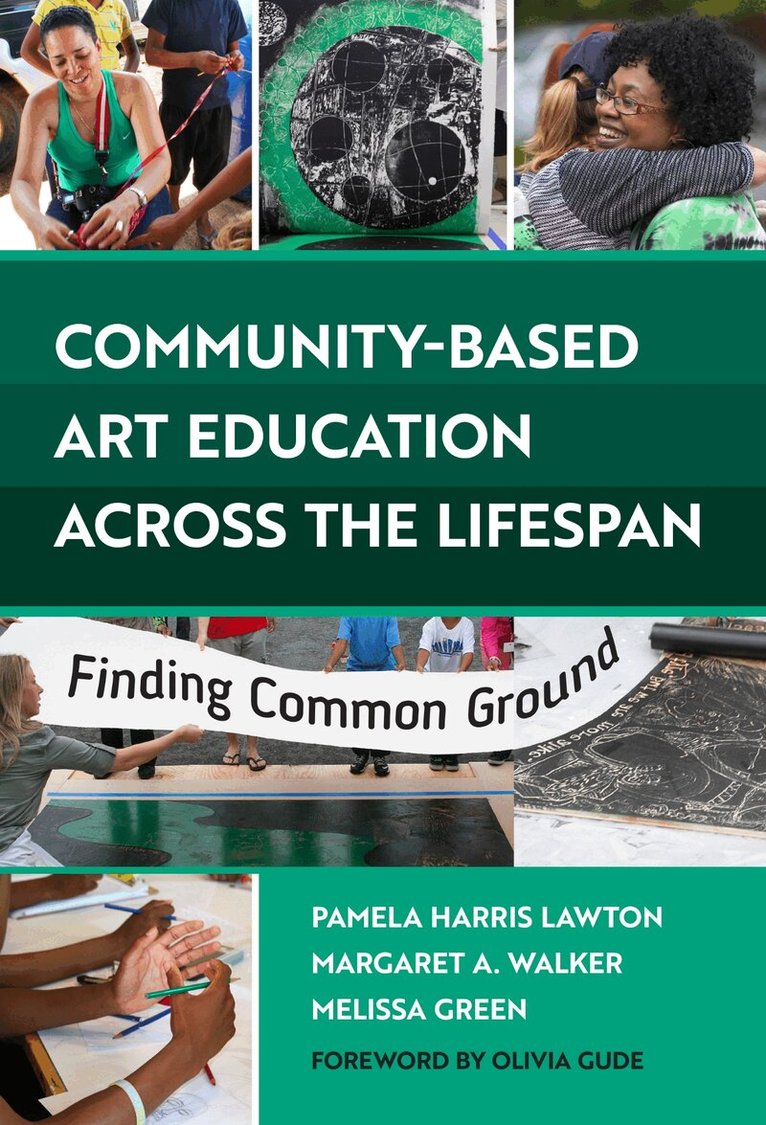
Written by and for visual art educators, this resource offers guidance on how to execute Community-Based Art Education (CBAE) in the pre-K–12 classroom and with adult learners, taking a broad view towards intergenerational art learning. Chapters include vignettes, exemplars of practice, and curriculum examples that incorporate the National Coalition of Core Arts Standards.
Pamela Harris Lawton is a practicing artist and associate professor of art education at Virginia Commonwealth University. Margaret A. Walker is a clinical associate professor of art education at the University of Maryland, College Park, and coordinates the master’s programs in Visual Arts and Arts Integration in UMD’s College of Education. Melissa Green is a museum educator, artist, and creative community engagement designer.
Recensioner i media
“Much has been said recently about the need to foster inclusivity and to build bridges between schools and the communities that they serve. However, few resources are available to guide educators who wish to take action. Through sharing their broad experience with CBAE and walking the reader through the steps they have used to create successful projects, Lawton, Walker, and Green are able to fill this void. They explain how they were able to establish common ground with diverse stakeholders while also offering transformative experiences to students. Artists and teachers who desire to promote greater community engagement, either by working with K-12 schools or by serving older learners, will find this book an inspirational and useful roadmap.”—Teachers College Record
Innehållsförteckning
ContentsForeword Olivia Gude xiAcknowledgments xiiiIntroduction 1What Is CBAE and Why Should We Get Involved? 2A Brief History of Community-Based (Visual) Art Education 3Summing Up, Looking Ahead 6Part I: Planning CBAE Projects1. Definitions, Frameworks, and Developmental Theories 9Terms and Definitions 9E.R.E.C.T.: Constructing a CBAE Conceptual Framework 11CBAE and Psychosocial, Cognitive, and Artistic Development 12CBAE and Creativity 21Summing Up, Looking Ahead 252. CBAE, Educational Theories, and Research 26Situated Learning and Legitimate Peripheral Participation 26Experiential Learning 27Transformative Learning 27CBAE as Engaged Pedagogy/Andragogy 30CBAE Research Paradigms 30Summing Up, Looking Ahead 383. Getting Started: Locating Stakeholders and Communities 40Why Community-Based? 40Navigating Privilege 44Getting Started 46Summing Up, Looking Ahead 544. Planning the Project: Setting Goals and Learning Outcomes 56Working Within Time Constraints 57Developing a Budget 59Setting Goals and Learning Outcomes: Scope and Sequence 59Summing Up, Looking Ahead 65Part II: Implementing, Celebrating, and Evaluating CBAE Projects5. Challenges and Opportunities: Fostering Transformative Experiences 69Examples of Opportunities and Challenges in CBAE Projects 70Mutual Growth for Community Participants, Artist-Educators, and the Larger Society 77Partnership Challenges and Opportunities 79Summing Up, Looking Ahead 856. Share/Publish/Exhibit/Celebrate: Generating Community and Developing Leaders 86Planning Celebratory Events 86Summing Up, Looking Ahead 897. Assessment and Evaluation: Learning Outcomes and Enduring Understandings 92Assessment 92Evaluating the Collaboration 98Summing Up, Looking Ahead 99Conclusion 102Appendix A: Community Asset Map Template 105Appendix B: Age-Integrated Curriculum Plan Template 106Appendix C: Sample Age-Integrated Curriculum Plan for Carving Out Freedom 108Appendix D: Online Resources 110Appendix E: CBAE Secondary Unit Plan by Samantha Strathearn 113Appendix F: CBAE Elementary Unit Plan by Adjoa Burrowes 140Appendix G: CBAE Proposal by Erin McArdle 158Appendix H: CBAE Proposal by Buffy Kirby 168References 171Index 179About the Authors 191