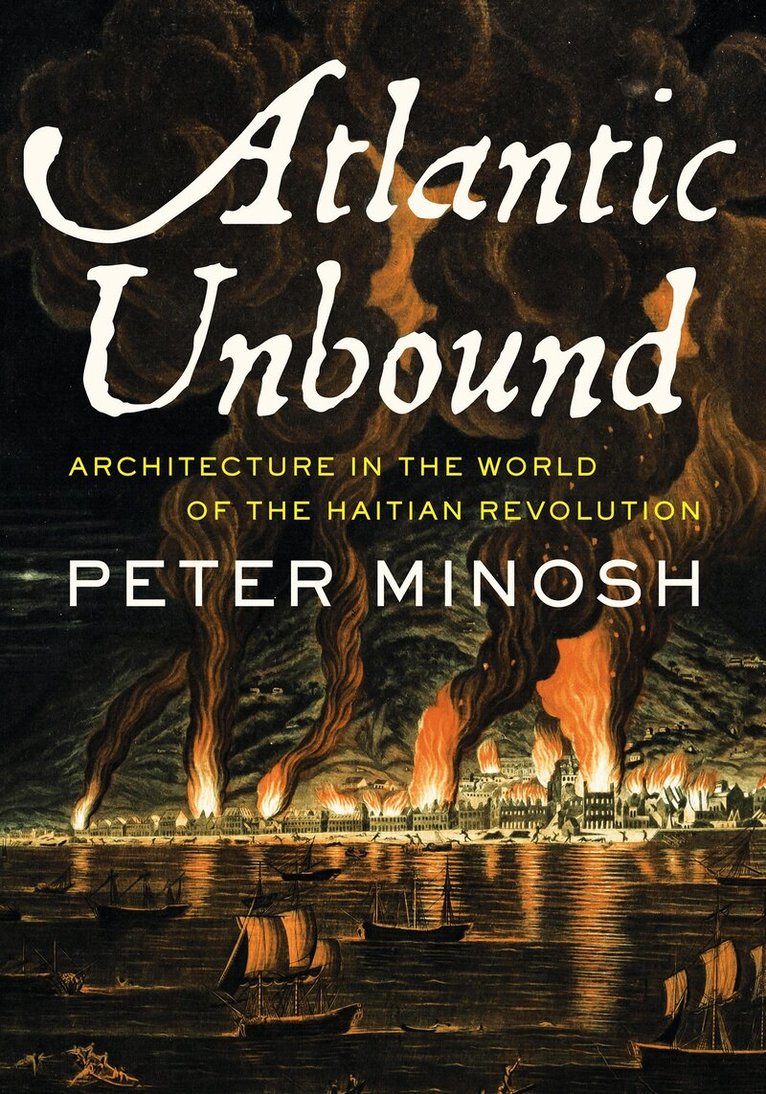
Häftad, Engelska, 2026
Atlantic Unbound
Av Peter Minosh
456 kr
Kommande
Beskrivning
In Atlantic Unbound, Peter Minosh examines neoclassical architecture within the Atlantic World—a site of colonialism, resource extraction, commodity circulation, capital, and slavery spanning Europe, North America, and the Caribbean in the eighteenth and nineteenth centuries. Minosh focuses on France during the expansion of its colonial empire and the French Revolution, Saint-Domingue during and after the Haitian Revolution, and the United States in the decade following the ratification of the Constitution. By analyzing architecture’s relationship to revolutionary politics, colonial practices, and Enlightenment discourse, this book reveals buildings, cities, and landscapes as products of transnational exchange and cross-cultural interaction that shaped the modern world. By positioning neoclassical architecture within colonialism and slavery and rethinking its role in Atlantic revolutions, Atlantic Unbound reorients neoclassicism as a globalized modernity—a negotiation of global systems and hybrid sovereignties.
Produktinformation
- Utgivningsdatum: 2026-12-01
- Mått: 178 x 254 x undefined mm
- Format: Häftad
- Språk: Engelska
- Serie: Culture Politics & the Built Environment
- Antal sidor: 232
- Förlag: University of Pittsburgh Press
- ISBN: 9780822968269
Utforska kategorier
Betyg & recensioner
0 recensioner
Inga recensioner tillgängliga.