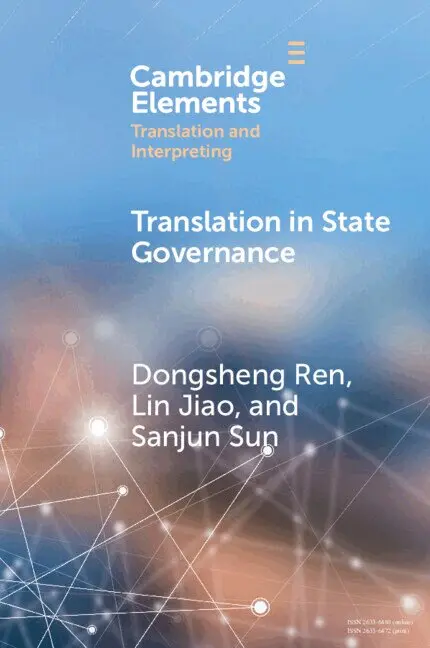
Häftad, Engelska, 2026
Translation in State Governance
Av Dongsheng Ren, Lin Jiao, Sanjun Sun
282 kr
Skickas onsdag 28/10. Fri frakt över 249 kr.
Beskrivning
Translation plays a consequential role in how states govern, manage multilingual affairs, and project influence, yet this role is rarely examined through a comparative, state-centred framework. This Element introduces the State Translation Programme (STP) to analyse translation as state-organised action. Comparing China with Japan, Türkiye, the United States, South Korea, Canada, and Poland, it identifies three strategic modes: Architects build national capacity and identity, Influencers project soft power and shape external narratives, and Administrators manage internal coordination and multilingual governance. China stands out in comparative perspective in seeking to combine all three modes, a pattern this Element terms 'sovereign maximalism'. Tracing these governance functions from imperial dynasties to the contemporary People's Republic, the Element offers a framework for comparative analysis across translation studies and political science.
Produktinformation
- Utgivningsdatum: 2026-07-23
- Mått: 229 x 151 x 7 mm
- Vikt: 128 g
- Format: Häftad
- Språk: Engelska
- Serie: Elements in Translation and Interpreting
- Antal sidor: 78
- Förlag: Cambridge University Press
- ISBN: 9781009659796
Utforska kategorier
Betyg & recensioner
0 recensioner
Inga recensioner tillgängliga.