Inbunden, Engelska, 2026
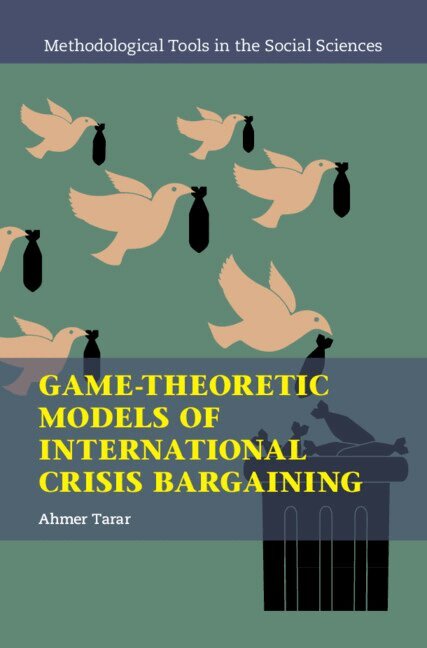
Game-Theoretic Models of International Crisis Bargaining
Av Ahmer Tarar
2047 kr
Kommande
Beskrivning
In recent decades, game theory has been extensively used in academic research throughout the social sciences, including international relations. The typical format of applied game theoretic journal articles is theorem-proof, but while the proof demonstrates that the theorem is true, it doesn't typically show how the researcher actually "discovered" the theorem. Ahmer Tarar's Game-Theoretic Models of International Crisis Bargaining explains how to derive the equilibria of (sometimes complicated) game-theoretic models. Examining central results on international crisis bargaining, using a unified modeling framework, he presents simplified versions of important published game-theoretic models in international conflict to demonstrate how to construct and solve game-theoretic models for academic research. He provides detailed derivations for each result, presenting a proposition summarizing the entire equilibrium strategy profile. With over 300 exercises, ranging from easy to difficult, Tarar provides readers with extensive practice for honing their skills and becoming skilled modelers.
Produktinformation
- Utgivningsdatum: 2026-10-31
- Format: Inbunden
- Språk: Engelska
- Serie: Methodological Tools in the Social Sciences
- Antal sidor: 250
- Förlag: Cambridge University Press
- ISBN: 9781009781275
Utforska kategorier
Betyg & recensioner
0 recensioner
Inga recensioner tillgängliga.