• Fri frakt över 249 kr
  • •
  • Snabba leveranser
  • •
  • Billiga böcker
Kundservice

Du är på sajten för privatpersoner.

Företag, bibliotek eller offentlig verksamhet?

Du handlar på classic.bokus.com, där alla dina funktioner finns intakta.
Till classic.bokus.com
Bokus logotyp. Gå till startsidan.
  • Erbjudanden
  • Nyheter
  • Student
  • Topplistor
  • Barn & ungdom
  • Bokus Play
  • E-böcker
  • Pocketböcker
  • Spel & pussel

10% rabatt på allt med kod: NYSTART10 →

Sidfot

Mina sidor

    Hjälp

    • Kundservice
    • Vanliga frågor och svar
    • Frakt och leverans
    • Retur vid ångerrätt
    • Reklamera vara
    • Betalning
    • Köpvillkor
    • Allmänna villkor
    • Information om webbplatsens tillgänglighet

    Om Bokus

    • Om oss
    • Pressrum
    • För studenter
    • För företag
    • För bibliotek och offentlig verksamhet
    • För leverantörer
    • Hållbarhet

    Populärt

    • Aktuella erbjudanden
    • Presentkort
    • Studentlitteratur
    • Nya böcker
    • Topplistor
    • Signerade böcker
    • Engelska böcker

    Inspiration

    • Boktips
    • BookTok
    • Populära bokserier
    • Barnbokskaraktärer
    • Populära författare
    Logotyp för Bokus
    Följ oss på Facebook (extern länk)Följ oss på Instagram (extern länk)Följ oss på YouTube (extern länk)Följ oss på TikTok (extern länk)
    bokus @ CookiesAnpassa cookiesIntegritetspolicyKöpvillkor
    Till Citymail hemsida (extern länk)Till Budbee hemsida (extern länk)Till Postnord hemsida (extern länk)Till Schenker hemsida (extern länk)Till Early Bird hemsida (extern länk)Till Walleys hemsida (extern länk)
    1. Samhälle och politik
    2. Sociologi och antropologi
    3. Sociologi

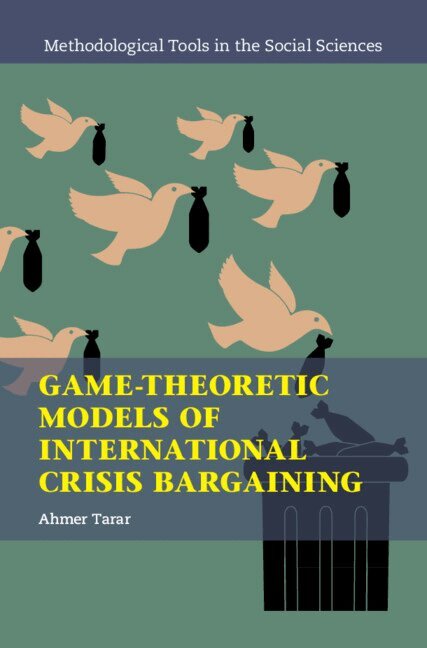
    Game-Theoretic Models of International Crisis Bargaining

    AvAhmer Tarar

    Häftad, Engelska, 2026

    Del i serien Methodological Tools in the Social Sciences

    417 kr

    Kommande

    Fler format och utgåvor

    Inbunden

    Kommande

    Beskrivning

    In recent decades, game theory has been extensively used in academic research throughout the social sciences, including international relations. The typical format of applied game theoretic journal articles is theorem-proof, but while the proof demonstrates that the theorem is true, it doesn't typically show how the researcher actually "discovered" the theorem. Ahmer Tarar's Game-Theoretic Models of International Crisis Bargaining explains how to derive the equilibria of (sometimes complicated) game-theoretic models. Examining central results on international crisis bargaining, using a unified modeling framework, he presents simplified versions of important published game-theoretic models in international conflict to demonstrate how to construct and solve game-theoretic models for academic research. He provides detailed derivations for each result, presenting a proposition summarizing the entire equilibrium strategy profile. With over 300 exercises, ranging from easy to difficult, Tarar provides readers with extensive practice for honing their skills and becoming skilled modelers.

    Produktinformation

    • Utgivningsdatum:2026-10-31
    • Format:Häftad
    • Språk:Engelska
    • Serie:Methodological Tools in the Social Sciences
    • Antal sidor:250
    • Förlag:Cambridge University Press
    • ISBN:9781009781299

    Utforska kategorier

    • Sociologi inom Samhälle och politik
    • Internationella relationer inom Samhälle och politik
    • Optimering inom Naturvetenskap och teknik

    Mer om författaren

    Ahmer Tarar is an associate professor in the Department of Political Science at Texas A & M University. He teaches courses on international relations and game theory, and his research combining these areas has been published in the discipline's top journals, including American Political Science Review and American Journal of Political Science.

    Innehållsförteckning

    • Preface; 1. Extended deterrence; 2. Crisis bargaining under complete information; 3. Crisis bargaining under incomplete information; 4. Credible signaling in crisis bargaining; 5. Shifting power and commitment problems; 6. Variants of crisis bargaining.