2 096 kr
Beställningsvara. Skickas inom 10-15 vardagar. Fri frakt över 249 kr.
Fler format och utgåvor
Beskrivning
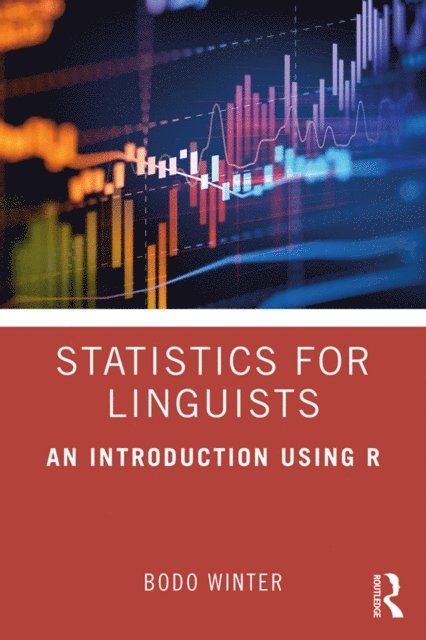
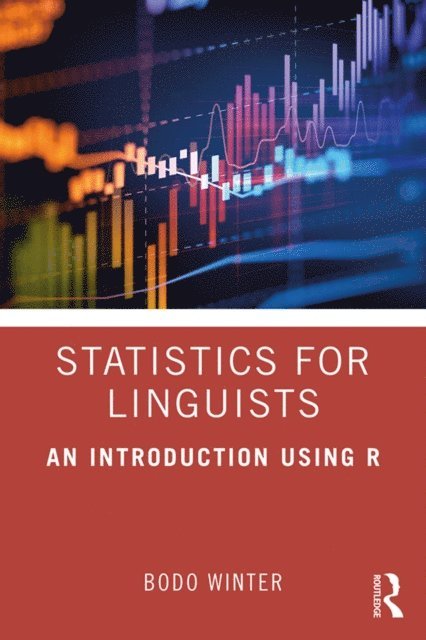
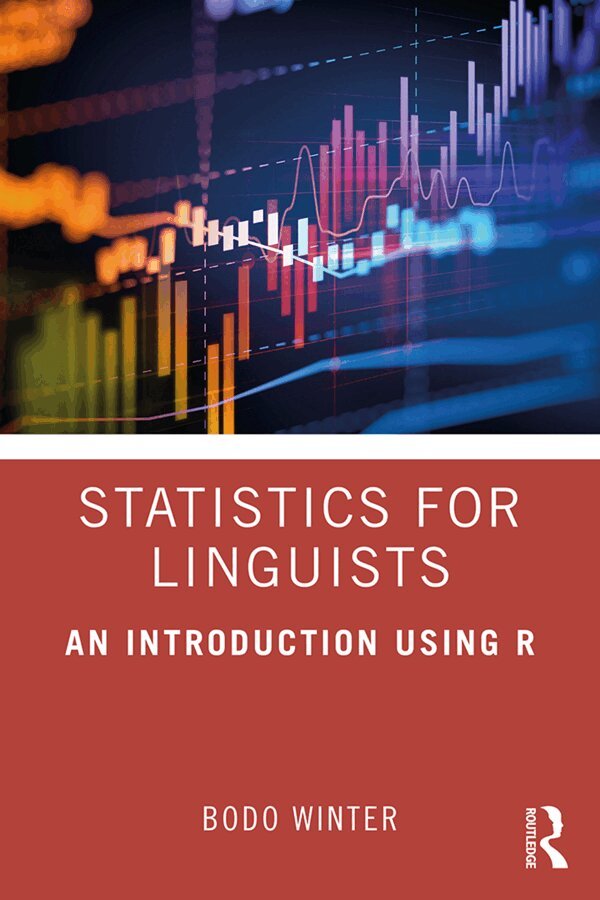
Statistics for Linguists: An Introduction Using R is the first statistics textbook on linear models for linguistics. The book covers simple uses of linear models through generalized models to more advanced approaches, maintaining its focus on conceptual issues and avoiding excessive mathematical details. It contains many applied examples using the R statistical programming environment. Written in an accessible tone and style, this text is the ideal main resource for graduate and advanced undergraduate students of Linguistics statistics courses as well as those in other fields, including Psychology, Cognitive Science, and Data Science.
Produktinformation
- Utgivningsdatum:2019-11-14
- Mått:152 x 229 x 22 mm
- Vikt:562 g
- Format:Inbunden
- Språk:Engelska
- Antal sidor:310
- Förlag:Taylor & Francis Ltd
- ISBN:9781138056084
Utforska kategorier
Mer om författaren
Bodo Winter is Lecturer in Cognitive Linguistics in the Department of English Language and Applied Linguistics at the University of Birmingham, UK.
Innehållsförteckning
- Table of contents0. Preface: Approach and how to use this book0.1. Strategy of the book0.2. Why R?0.3. Why the tidyverse?0.4. R packages required for this book0.5. What this book is not0.6. How to use this book0.7. Information for teachers1. Introduction to base R1.1. Introduction1.2. Baby steps: simple math with R1.3. Your first R script1.4. Assigning variables1.5. Numeric vectors1.6. Indexing1.7. Logical vectors1.8. Character vectors1.9. Factor vectors1.10. Data frames1.11. Loading in files1.12. Plotting1.13. Installing, loading, and citing packages1.14. Seeking help1.15. A note on keyboard shortcuts1.16. Your R journey: The road ahead2. Tidy functions and reproducible R workflows2.1. Introduction2.2. tibble and readr2.3. dplyr2.4. ggplot22.5. Piping with magrittr2.6. A more extensive example: iconicity and the senses2.7. R markdown2.8. Folder structure for analysis projects2.9. Readme files and more markdown2.10. Open and reproducible research3. Models and distributions3.1. Models3.2. Distributions3.3. The normal distribution3.4. Thinking of the mean as a model3.5. Other summary statistics: median and range3.6. Boxplots and the interquartile range3.7. Summary statistics in R3.8. Exploring the emotional valence ratings3.9. Chapter conclusions4. Introduction to the linear model: Simple linear regression4.1. Word frequency effects4.2. Intercepts and slopes4.3. Fitted values and residuals4.4. Assumptions: Normality and constant variance4.5. Measuring model fit with 4.6. A simple linear model in R4.7. Linear models with tidyverse functions4.8. Model formula notation: Intercept placeholders4.9. Chapter conclusions5. Correlation, linear, and nonlinear transformations5.1. Centering5.2. Standardizing5.3. Correlation5.4. Using logarithms to describe magnitudes5.5. Example: Response durations and word frequency5.6. Centering and standardization in R5.7. Terminological note on the term ‘normalizing’5.8. Chapter conclusions6. Multiple regression6.1. Regression with more than one predictor6.2. Multiple regression with standardized coefficients6.3. Assessing assumptions6.4. Collinearity6.5. Adjusted 6.6. Chapter conclusions7. Categorical predictors7.1. Introduction7.2. Modeling the emotional valence of taste and smell words7.3. Processing the taste and smell data7.4. Treatment coding in R7.5. Doing dummy coding ‘by hand’7.6. Changing the reference level7.7. Sum coding in R7.8. Categorical predictors with more than two levels7.9. Assumptions again7.10. Other coding schemes7.11. Chapter conclusions8. Interactions and nonlinear effects8.1. Introduction8.2. Categorical * continuous interactions8.3. Categorical * categorical interactions8.4. Continuous * continuous interactions8.5. Continuous interactions and regression planes8.6. Higher-order interactions8.7. Chapter conclusions9. Inferential statistics 1: Significance testing9.1. Introduction9.2. Effect size: Cohen’s 9.3. Cohen’s in R9.4. Standard errors and confidence intervals9.5. Null hypotheses9.6. Using to measure the incompatibility with the null hypothesis9.7. Using the -distribution to compute -values9.8. Chapter conclusions10. Inferential statistics 2: Issues in significance testing10.1. Common misinterpretations of -values10.2. Statistical power and Type I, II, M, and S errors10.3. Multiple testing10.4. Stopping rules10.5. Chapter conclusions11. Inferential statistics 3: Significance testing in a regression context11.1. Introduction11.2. Standard errors and confidence intervals for regression coefficients11.3. Significance tests with multi-level categorical predictors11.4. Another example: the absolute valence of taste and smell words11.5. Communicating uncertainty for categorical predictors11.6. Communicating uncertainty for continuous predictors11.7. Chapter conclusions12. Generalized linear models: Logistic regression12.1. Motivating generalized linear models12.2. Theoretical background: Data-generating processes12.3. The log odd function and interpreting logits12.4. Speech errors and blood alcohol concentration12.5. Predicting the dative alternation12.6. Analyzing gesture perception: Hassemer & Winter (2016)12.6.1. Exploring the dataset12.6.2. Logistic regression analysis12.7. Chapter conclusions13. Generalized linear models 2: Poisson regression13.1. Motivating Poisson regression13.2. The Poisson distribution13.3. Analyzing linguistic diversity using Poisson regression13.4. Adding exposure variables13.5. Negative binomial regression for overdispersed count data13.6. Overview and summary of the generalized linear model framework13.7. Chapter conclusions14. Mixed models 1: Conceptual introduction14.1. Introduction14.2. The independence assumption14.3. Dealing with non-independence via experimental design and averaging14.4. Mixed models: Varying intercepts and varying slopes14.5. More on varying intercepts and varying slopes14.6. Interpreting random effects and random effect correlations14.7. Specifying mixed effects models: lme4 syntax14.8. Reasoning about your mixed model: The importance of varying slopes14.9. Chapter conclusions15. Mixed models 2: Extended example, significance testing, convergence issues15.1. Introduction15.2. Simulating vowel durations for a mixed model analysis15.3. Analyzing the simulated vowel durations with mixed models15.4. Extracting information out of lme4 objects15.5. Messing up the model15.6. Likelihood ratio tests15.7. Remaining issues15.7.1. -squared for mixed models15.7.2. Predictions from mixed models15.7.3. Convergence issues15.8. Mixed logistic regression: Ugly selfies15.9. Shrinkage and individual differences15.10. Chapter conclusions16. Outlook and strategies for model building16.1. What you have learned so far16.2. Model choice16.3. The cookbook approach16.4. Stepwise regression16.5. A plea for subjective and theory-driven statistical modeling16.6. Reproducible research16.7. Closing wordsReferencesAppendix A. Correspondences between significance tests and linear modelsAppendix B. Reading recommendations
Hoppa över listan


Du kanske också är intresserad av
- Signerad!
Del 11
- Signerad!
- Nyhet
Hjärnans akilleshälar : hur din hjärna lurar dig, och vad du kan göra åt det
Anders Hansen
Inbunden
289 kr
- Nyhet
- Nyhet
- -30%
- Nyhet
Burgare : så gör du världens bästa burgare hemma
Linus Josephson, Toby Lee, Selin Safer
Inbunden
279 kr