209 kr
Beställningsvara. Skickas inom 7-10 vardagar. Fri frakt över 249 kr.
Beskrivning
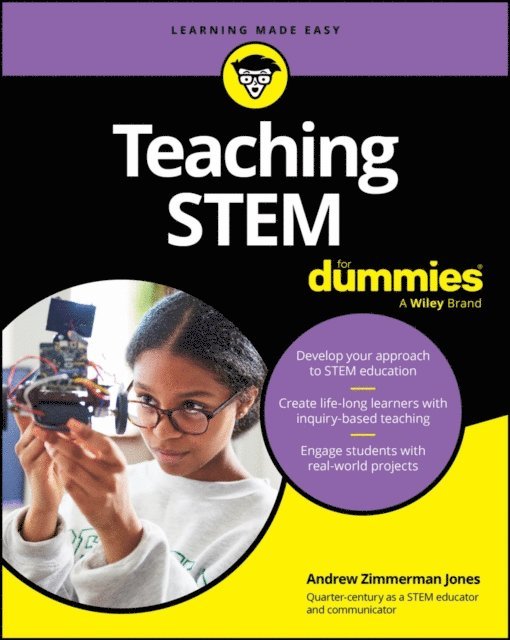
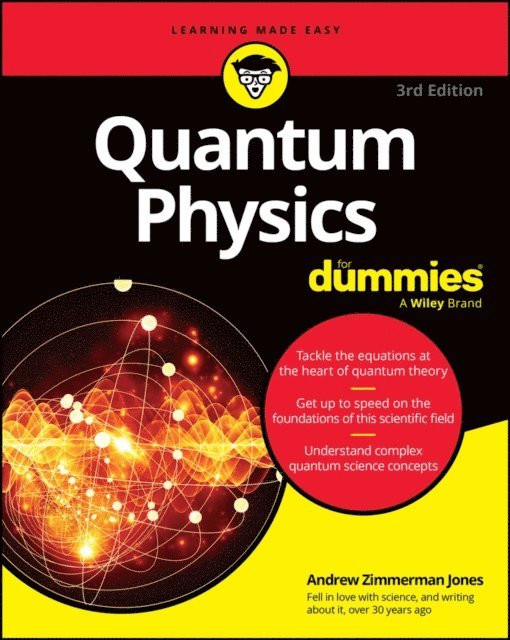
Spark a passion for STEM Teaching STEM For Dummies is an easy-to-read and exciting new guide for teachers who want to inspire their students with engaging lessons and thoughtful discussions about science, technology, engineering, and mathematics. This practical roadmap to developing hands-on classroom material relevant to the real world shows you how to define STEM topics and overcome the most common challenges to teaching these complex subjects to younger students. You'll learn how you can make STEM more welcoming—using inclusion, scaffolding, and differentiation—and discover resources for STEM teachers you can deploy immediately in your classroom. Inside the book: Understand the STEM concepts students are expected to learn at different grades and how to connect those ideas together in engaging lessonsTeach your students the inquisitive mindsets, logical reasoning, and collaboration skills they'll need to succeed in STEM fieldsIncrease STEM inclusivity in both the classroom and the industry by engaging all students in STEM from early agesDiscover resources to educate students on the problem-solving concepts at the core of STEM subjectsPerfect for teachers, homeschooling parents, tutors, and other educators, Teaching STEM For Dummies is a can't-miss read for anyone who wants to open young minds to the wonders of STEM.
Produktinformation
- Utgivningsdatum:2025-05-01
- Mått:185 x 234 x 20 mm
- Vikt:408 g
- Format:Häftad
- Språk:Engelska
- Antal sidor:304
- Förlag:John Wiley & Sons Inc
- ISBN:9781394313464
Utforska kategorier
Mer om författaren
Andrew Zimmerman Jones is the author of String Theory For Dummies and Quantum Physics For Dummies. He is the STEM Coordinator for Anderson Community School Corporation and has taught and written about STEM topics for more than 20 years.
Innehållsförteckning
- Introduction 1About This Book 1Foolish Assumptions 2Icons Used in This Book 3Beyond the Book 4Where to Go from Here 4Part 1: Getting Started with Teaching Stem 5Chapter 1: The Nuts and Bolts of STEM Education 7Thinking about the Meaning of STEM. 8Core STEM subjects 8What different people mean when they say STEM 9Helping Students Acquire Necessary Skills 10Academic skills 11Collaboration and employability skills 12Embracing the Challenge (and Promise) of STEM Education 13Establish a culture of learning 13Motivate students with engaging lessons 15Throwing Out the Old Rulebook 15Chapter 2: What STEM Is (and Why It Matters) 17Describing Core STEM Concepts 18Science: How the world works 19Technology: Tools of the trade 20Engineering: Make it so 21Mathematics: By the numbers 22Adopting the Major Principles of STEM Education 23Inquiry and project-based learning 23Mistakes as cornerstones of learning 24Integrating concepts across content 24Centering the student 25Equity and access in STEM 26Iterations and reflection 27Reaping the Benefits of STEM 28Mirroring natural learning 28Engaging hands and minds 28Learning through play 31Empowering through problem-solving and creativity 32Developing collaboration and employability skills 33Instilling digital and technological literacy 34Chapter 3: Teaching STEM, Then and Now 35Casting a Brief Look Back at U.S STEM Education 36Teaching apprenticeships and early education 36Looking at the rise of public education 37Understanding the modern education policy 38Digging into National Science and Engineering Standards 41Describing desired outcomes 42Process and practices: Discerning how you know 43Connections and crosscutting concepts: Understanding how you think 44Content and core ideas: Figuring out what you know 45Bringing together the three dimensions 50Exploring Math and Computer Science Standards 51Looking at Common Core standards in mathematics 52Looking at national standards for computer science 55Part 2: Gathering the Building Blocks Of Stem 59Chapter 4: Understanding the World with Science 61Splitting Science into Buckets 62Studying Matter and Energy 63Getting to the heart of matter 63Interacting with forces 67Getting an energy boost 69Catching the waves 71Getting to Know Living Things 72Processing the structure of life 73Exploring the ecosystems 75Passing along knowledge of heredity 76Evolving an understanding of unity and diversity 77Exploring the Planets (Including Earth) and Outer Space 80Understanding space stuff 80Catching up on the Earth 82Examining humanity’s impact 84Some Brief Thoughts on the Scientific Method 86Reviewing the scientific method steps 87Recognizing the shortcomings 87Needing more than memorized steps 88Behind the method: Science and engineering practices 90Mixing the Buckets Together 94Crosscutting concepts 94Integrating science into the real world 97Chapter 5: Leveraging Computing and Technology Tools 101Exploring Technology in the Classroom 102Embracing the overlap 103Focusing on computer-related technology 103Living and Learning in a Digital World 105This crazy little thing called the internet 105Communicating and working through technology 106Coding and Computer Science 110Understanding computer hardware and software 110Algorithms as the basis of coding 111Coding with visual blocks and text 115Incorporating Day-to-Day Technology 118Preparing for the Future 119Contextualizing modern technology 120Dreading (and anticipating) the artificial intelligence revolution 121Chapter 6: Encompassing Engineering Solutions 125Centering Innovation and Invention 126Embracing design principles 126Adopting the tools of building and fabrication 128Recognizing the main divisions: Mechanical and electrical engineering 130Engaging the Engineering Design Process 132Outlining design process steps 133Examining design process activities 134Focusing on Engineering Design Process Steps 135Ask: What are we doing? 135Imagine: What could we do? 137Plan: Okay, let’s do this! 138Create: Actually do this! 139Test: Did it work? 140Improve and repeat: Keep doing it 142Other Approaches to Engineering and Design Cycles 143PLTW design process 144Justin Gary’s Core Design Loop 144Physical Programming: Coding Meets Engineering 146Introducing programmable physical objects 146Robots and drones 147Microcontrollers and microcomputers 147Chapter 7: Crunching the Numbers with Mathematics 149Thinking About Why We Learn Math 149Knowing that Kids Will Use Math in the Future 150Math in science and computer science 151Psst, they know if you hate math 153The hard truths about the hard stuff 153Illuminating What We Talk About When We Talk About Math 156Beyond computation and memorization 157Organizing and representing data 158Critical thinking, reasoning, and logic 160Chapter 8: Mixing It Up: Integrating STEM Components 163Combining STEM Areas 164When using models and simulations 164When testing hypotheses and solutions 166Reading, Writing, and STEM 167The importance of STEM background knowledge 167Researching and writing with technology tools 170Reading as the basis of STEM 172Media Literacy as STEM 173Promoting Justice for All: STEM and Society 174STEAMing Up the Arts with STEM 175Visual arts 175Music, theater, and musical theater 176Part 3: Employing Approaches to Stem Education 179Chapter 9: Engaging Student Minds in a STEM Lesson 181Unpacking the Learning Brain 182Transitioning input into long-term memory 182Following through with repeated exposure 183Ensuring the connection of concepts 184Inspiring a STEM Lesson 185Starting points for STEM lessons 185Refining STEM project ideas 186Surface, deep, and transfer learning 188Studying Up on STEM Teaching 189POE model 1905E model 191OpenSciEd instructional model 195Getting Students to Ask Questions 197Guiding question boards 197Soliciting group feedback 198Including direct instruction 200Probing background knowledge 200Ensuring time for student feedback, iterations, and reflection 202Embracing Collaboration and Student Roles 203Chapter 10: Designing a STEM Curriculum 205Focusing on the Standards Through a New Lens 206Identifying key academic goals 206Designing with the end in mind 208Anticipating contingency plans 210Setting the Scope, Sequence, and Pacing 211Considering formal and informal requirements 211Using gaps to your advantage 212Revising and Iterating Your Curriculum 214Chapter 11: Measuring and Assessing STEM 217Knowing (and Assessing) What You’re Trying to Teach 218Assessing types of evidence and types of students 219Considering levels of knowledge, learning, and understanding 220Focusing on grade level skills 222Offering Formative Assessment as Feedback 224The Hard Skills: Assessing Content Knowledge 225Keeping science notebooks 225Focusing on the necessary academic goals 228Allowing practical knowledge and skills to count for something 228Letting students show their thinking 229The Soft Skills: Assessing Collaboration and Employability Skills 230Balancing teamwork and individual accomplishment 230Looking toward future career choices 231Trust the Experts: Students Evaluating Students 231Chapter 12: Taking STEM to the Next Level 233Letting Student Inquiry Lead the Way 233Letting go of the classroom reins 234Establishing trust going both ways 235Fostering STEM student leadership 236Learning Through Play 236Exploring flow states and engagement 237Highlighting the promise and peril of gamification 238Encouraging the STEM Hobbyist 240Forming clubs, organizations, and teams 240Prioritizing STEM labs and makerspaces 242Promoting maker fairs and entrepreneurship 243Encouraging school and community projects 243Part 4: Troubleshooting Stem Education 245Chapter 13: Planning the STEM Classroom 247Evaluating Your STEM Resources 247Physical resources 248Digital resources 249Societal and community resources 250Considering the Little Ones and the Big Ones 250Simplifying concepts for younger students 251Giving more autonomy to older students 252Preparing STEM Educational Teams 253Emphasizing the STEM approach 253Communicating STEM expectations 254Sending teachers to conferences 254Chapter 14: STEM at Home (and Homeschool) 257Personalizing Learning Goals 257Targeting unique goals for a learner 258Exploring depth as well as breadth 258Expanding Beyond Just Study Time 259Bonding over STEM Game Nights 261Optimizing the gameschooling process 261Examining the Terraforming Mars game 262Chapter 15: STEM for All 265Being a Voice for the Underrepresented 266Surveying Traditional STEM Barriers 267Incorporating Universal Design and Personalized Instruction 268Instilling universal design in lessons 268Adjusting lessons when needed 269Part 5: the Part of Tens 271Chapter 16: Ten STEM Lessons with Minimal Prep 273Providing Free Build Time 273Accessing an Hour of Code 274Designing Storage Solutions 274Making a Parachute 274Setting Up a Tallest Tower Competition 275Designing a Contraption 275Making Oobleck 275Building a Catapult 276Conducting a Remote Control Race 276Making an Egg Drop Challenge 276Chapter 17: Ten Key Resources for Every STEM Teacher 277Finding Online Interactive Simulations 277Accessing Coding Platforms 278Using Government Websites 278Using Open Education Resources 279Working with “Trash” STEM Building Supplies 279Discovering University, Nonprofit, and Corporate Websites 280Using the Calculator Application 280Finding Digital Editing Suites and Resources 281Locating Tinkercad and 3D Printing Websites 282Looking for Citizen Science Communities and Resources 282Index 283