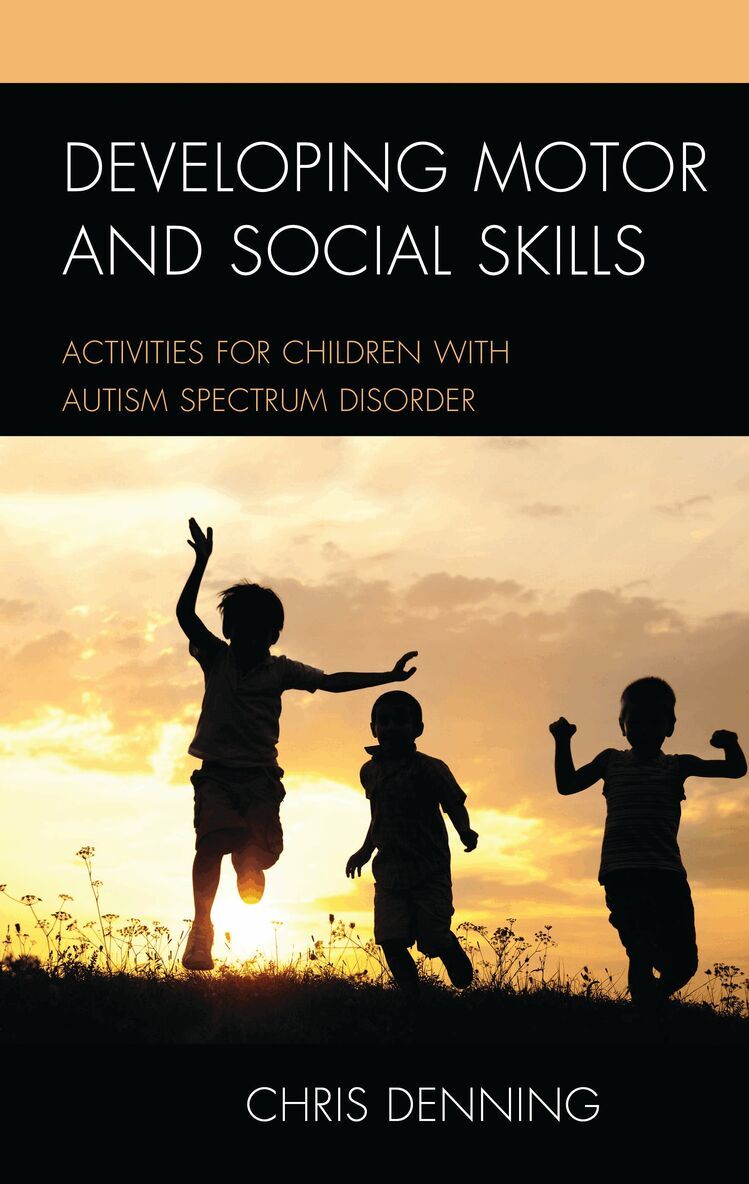
This book focuses on motor and social skills development for young children with autism spectrum disorder and is geared toward special education teachers, general education teachers, and related personnel. This book will outline what we now know about how physical activity impacts children with Autism and how classroom teachers can use physical activity programs in their classrooms.
Christopher Denning, PhD, is Assistant Professor of Special Education, Department of Curriculum and Instruction, College of Education and Human Development, University of Massachusetts, Boston.
Recensioner i media
A wonderful new resource for special education teams serving students with ASD. Includes a multitude of fundamental and sequentially developmental physical/motor activities to get kids moving, promote health and well being, encourage social skills, and provides a foundation for success in attaining more advanced skills. Detailed instructions and illustrations support occupational and physical therapy team goals and make it easy for teachers, paraprofessionals, and families to help incorporate and reinforce repetition of movement and skill acquisition into the daily classroom and home routine. This is a terrific resource for all team members!
Innehållsförteckning
DedicationTable of FiguresTable of TablesPrefaceAcknowledgementsIntroductionChapter 1Key questionsWhat do children with ASD need to succeed in school?Evidence-based strategies and supportsUniversal design for learningVisual supportsRoutines and proceduresPrimingChoice TakeawaysReferencesChapter 2Key questionsImportance of motor development and physical activityChallenge for children with ASDBenefits of increased motor development and physical activity Optimizing the effects of physical activity and exerciseTakeawaysReferencesChapter 3Key questionsLinks between motor and social developmentImplications for classroom performance and support TakeawaysReferencesChapter 4Key questionsKey ideas for organizationStructureSettingMaterialsFrequency and durationChild/adult ratioInstructional methodologiesUniversal design for learningActivity schedulesPrimingVisual supportsModeling and guided practiceRoutines and proceduresSocial narrativesOther considerationsReferencesChapter 5What does it look like?Aerobic exercise or physical activityHow can I do it?Aerobic exercise or physical activity?Activities for physical activity/aerobic exerciseMotor development and complex motor movementsActivities for motor development and complex motor movementsMeditation or calming activityActivities for meditation or calming activityWhere can I get more information?TakeawaysReferencesChapter 6Key questionsSelection of target skillsSupporting skills in the classroomEnvironmental modificationsPositive reinforcementPicture schedulesPriming or previewingModeling and role playScripts or cue cardsSocial narrativesPeer mediated interventionsTakeawaysReferencesChapter 7Key questionsCollaborating with familiesSupport CommunicationParticipationFeedbackIEP goalsCollaborating with other professionalsPhysical educationOccupational therapistsParaprofessionalsTakeawaysReferences