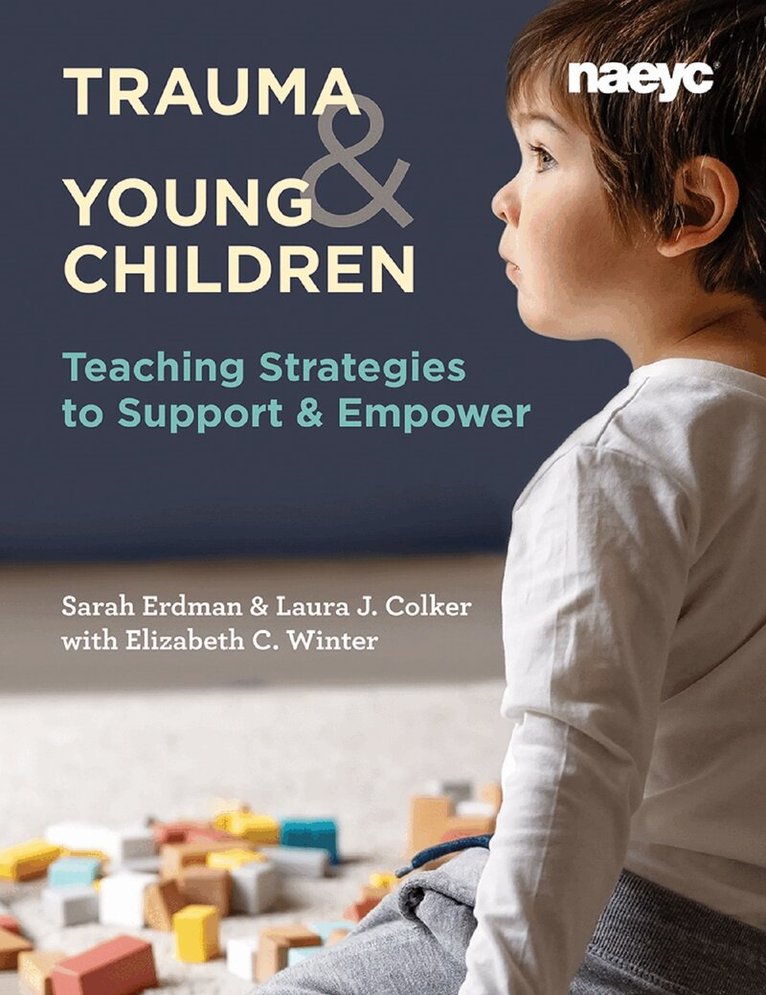
Trauma and Young Children
Teaching Strategies to Support and Empower
AvLaura J. Colker,Sarah Erdman
377 kr
Beställningsvara. Skickas inom 5-8 vardagar. Fri frakt över 249 kr.
Beskrivning
Produktinformation
- Utgivningsdatum:2020-10-29
- Mått:215 x 279 x 10 mm
- Vikt:474 g
- Format:Häftad
- Språk:Engelska
- Antal sidor:144
- Förlag:National Association for the Education of Young Children
- ISBN:9781938113673
Utforska kategorier
Mer om författaren
Sarah Erdman is an experienced early childhood educator and museum professional in Northern Virginia. Her research and professional practice explore how museums and educators can connect to make meaningful experiences for young children. Sarah teaches at FB Meekins Cooperative Preschool and serves on the board of the Northern Virginia Association for the Education of Young Children. She brings her experience as a mother and educator to all the work she does and is a committed advocate for educators and young children. She is a graduate of the University of Maine and earned a MAT in Museum Education from The George Washington University and an AAS in Early Childhood Development from the Northern Virginia Community College. Sarah founded Cabinet of Curiosities LLC and has served as the early childhood consultant for institutions such as the National Museum of American History, the LBJ Presidential Library and Museum and The Phillips Collection. She is also a skilled trainer working with both early childhood educators and museum professionals.Sarah was the creator and editor of The Care and Keeping of Museum Professionals, a collection of reflective essays on the state of the museum field. She has also published extensively in NAEYC’s Young Children and Teaching Young Children as well as contributing to publications of the American Alliance of Museums, the National Museum of American History and the National Science Teachers Association. Laura J. Colker , EdD, is the President of L.J. Colker & Associates in Washington, DC. She is an author, lecturer, and trainer in early childhood education with 40 years of experience. She has written or co-authored over 150 publications and contributed to the development of 45 educational videos and PBS programs. Dr. Colker is most widely known as a co-author of The Creative Curriculum for Preschool, now in its 6th edition. She is also a co-author of The Creative Curriculum for Family Child Care and the first edition of The Creative Curriculum for Infants, Toddlers, and Twos. Her two most recent books are High-Quality Early Childhood Programs: The What, Why, and How and Making Lemonade: Teaching Young Children How to Think Optimistically. Both books are co-authored with Derry Koralek. For nine years, Colker was a contributing editor to Teaching Young Children, NAEYC’s journal for preschool teachers. She has also been a consultant to Reading Is Fundamental (RIF), The Council for Professional Development, Zero to Three, WestEd, the Head Start Bureau, NACCRA (now Child Care Aware), the University of Minnesota, Sonoma State University, the Los Angeles Unified School District, all of the military services’ child development programs, the Department of Defense Education Activity, and numerous other education-related institutions and organizations.Elizabeth C. Winter, MD, is a board-certified psychiatrist living in Baltimore, MD. She is a Senior Physician with the Department of Veterans Affairs, Office of the Inspector General and a faculty member of the Johns Hopkins Hospital Department of Psychiatry and Behavioral Sciences. Dr. Winter began her career in private practice, providing medication management and psychotherapy. While in private practice, she became the co-director of the Johns Hopkins Anxiety Disorders Clinic, a tertiary consultation service providing in depth evaluations, formulations, and treatment recommendations. After leaving private practice, Dr. Winter was the medical director of a dual diagnosis facility in Maryland before joining the faculty of University of Maryland as an inpatient hospitalist. She joined the VA OIG in 2018.Dr. Winter has worked in medical student and resident education for over 10 years at Johns Hopkins and the University of Maryland. In addition to individual mentoring, clerkship lectures, and seminars, Dr. Winter developed a 6-month long curriculum on the diagnosis and management of anxiety disorders for third year psychiatry residents in the subspecialty clinic rotation. She has published extensively in academic journals, book chapters, and articles for the general public on issues related to psychiatry.
Recensioner i media
Early childhood educators are seeking to better understand the effects of trauma on the development of children and asking for concrete strategies to support them. This wonderfully written book addresses that need in a clear and compassionate way. —Whitcomb Hayslip, Early Childhood Education Consultant and former Assistant Superintendent for ECE, Los Angeles Unified School District
Innehållsförteckning
- PrefaceChapter 1: IntroductionWhy It Is Important to Understand TraumaPrevalence of TraumaTrauma-Informed CareEarly Childhood Educators MatterA Path ForwardChapter 2: Types of Trauma Experienced by Young ChildrenWhat Is Trauma?Key Concepts Related to TraumaAdverse Childhood ExperiencesCauses of TraumaCategory 1: Household and FamilyCategory 2: LossCategory 3: Family SeparationsCategory 4: Violence and DisastersPost-Traumatic Stress DisorderRole of Racism in Trauma and Child Well-BeingThe Influence of Other Factors on Children’s Experiences of TraumaResponses to Trauma Are IndividualA Path ForwardChapter 3: How Trauma Impacts Young Children’s Brains and Their Ability to LearnBrain Circuits and ConnectionsExperience and Brain ConnectionsResponding to StressThe Impact of Trauma on Development and LearningWhat Toxic Stress Looks Like in Early Childhood ProgramsA Path ForwardChapter 4: Guiding Principles for Teaching Children with TraumaPrinciple 1: Recognize that All Children Will Benefit from a Trauma-Informed ApproachPrinciple 2: Use a Strengths-Based Approach to TeachingPrinciple 3: Recognize, Appreciate, and Address Differing Influences on Children’s Experiences with TraumaPrinciple 4: Embrace Resilience as a Goal for Every ChildPrinciple 5: Help Children Learn to Regulate Their EmotionsPrinciple 6: Use Positive Guidance When Dealing with Children’s Challenging BehaviorsPrinciple 7: Be a Role Model to Children on How to Act and Approach LearningPrinciple 8: Help Children Turn Negative Thinking AroundPrinciple 9: Enrich the Children’s Lives with Art, Music, and DancePrinciple 10: Look Beyond Children’s Traumas and Celebrate the Joys in LifePrinciple 11: Remember that You Don’t Have to Have All the AnswersA Path ForwardChapter 5: Establishing a Safe and Inviting Environment for LearningDesign a Physical Environment that Supports Children’s Emotional, Social, Physical, and Learning NeedsProvide Materials that Support Learning and HealingBring Structure to the Environment Through the Daily ScheduleTips for the Physical EnvironmentA Path ForwardChapter 6: Connecting with ChildrenHow to Foster Relationships When Children Have Experienced TraumaHelp Children Form Strong Friendships with Their PeersMindfulness As a Tool For Building Relationships and Other Needed SkillsTips for Interacting with ChildrenA Path ForwardChapter 7: The Healing Power of PlayBenefits of Play When There Is TraumaA Right to Play?The Impact of Trauma on PlayUsing Play to Address Trauma’s Negative EffectsUsing Playful Learning with Children Who Are DistressedWhen Violence Is a Part of PlayTips for Using Children’s Play as a Healing AgentA Path ForwardChapter 8: Partnering with FamiliesWhat Is a Family?What Is Engagement?Special Considerations in Working with Families of Children Who Have Experienced TraumaConnecting with Families to Benefit ChildrenA Path ForwardChapter 9: Trauma-Informed Care in Schools and CommunitiesTIC and the School CommunityThe Four Rs Framework and Six Principles of TICWhat TIC Looks Like in ActionWorking with Your AdministratorAdvocacyA Path ForwardChapter 10: Caring for YourselfYour Own Compounding StressDefining Teaching-Related StressUsing Self-Care to Overcome Secondary TraumaA Path ForwardAppendix One: Resources for EducatorsAppendix Two: Picture Books About TraumaAppendix Three: Handouts for FamiliesReferencesIndexAcknowledgmentsAbout the Authors
Du kanske också är intresserad av
Welcoming Young Children into the Museum
Sarah Erdman, Nhi Nguyen, Margaret Middleton
Inbunden, 2021
2 364 kr
Welcoming Young Children into the Museum
Sarah Erdman, Nhi Nguyen, Margaret Middleton
Häftad, 2021
541 kr
- Signerad!
- -19%
- -23%
- -19%
En sjunde brigad
Denise Rudberg
Inbunden, 2026
209 kr259 kr