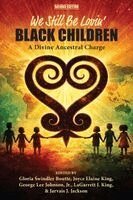
Dr. Gloria Swindler Boutte is a Carolina Distinguished Professor at the University of South Carolina. She is the author/editor of eight books: (1) Pro-Blackness in Early Childhood Education: Diversifying Curriculum and Pedagogy in K-3 Classrooms; (2) Revolutionary Love: Nurturing the Brilliance of Young Black Children; (3) Educating African American Students: And How Are the Children (2nd edition); (4) We Be Lovin' Black Children: Becoming Learning to Be Literate About the African Diaspora (2022 Society of Professors of Education Outstanding Book Award); (5) African Diaspora Literacy: The Heart of Transformation in K-12 Schools and Teacher Education (2019 AESA Critics Choice Award); (6) Educating African American Students: And How Are the Children; (7) Resounding Voices: School Experiences of People From Diverse Ethnic Backgrounds; and (8) Multicultural Education: Raising Consciousness. She has more than 100 publications and presents nationally and internationally. She has received prestigious awards such as the Fulbright Scholar; Fulbright Specialist; National Council of Teachers of English (NCTE) Outstanding Educator in the English Language Arts—Elementary Section; an AERA Division K Legacy Award; AERA 2022-23 Fellow Award; and an American Educational Research Association (AERA) Social Justice in Education Award. She was the founder and Executive Director of the Center for the Education and Equity of African American Students (CEEAAS). She has served as a Visiting Scholar and presented her work internationally on every continent except for Antarctica. She has led/co-led Fulbright Hays Groups projects in Ghana, Nigeria, Sierra Leone, Cameroon, and Barbados. She has been a Visiting Scholar in Australia (twice), South Africa, Jamaica, Guyana, and Colombia. She has traveled to nine countries in Africa (at least one country in each region) and lived in Nigeria for a year and taught at the University of Uyo as a Fulbright Scholar.Dr. Joyce E. King holds the Benjamin E. Mays Endowed Chair for Urban Teaching, Learning and Leadership at Georgia State University (GSU) in the Department of Educational Policy Studies. She holds affiliated faculty status in the Department of African American Studies, the Women's and Gender Studies Institute, the Partnership for Urban Health Research, and the Urban Studies Institute. Her publications in the Harvard Educational Review, the Journal of Negro Education, International Journal of Qualitative Studies in Education, and the Journal of African American History focus on a transformative role for culture in curriculum and urban teacher effectiveness, morally engaged, community-mediated inquiry and Black education research and policy. Her most recent book is Heritage Knowledge in the Curriculum: Retrieving an African Episteme (with E. Swartz). Dr. King is past president of the American Educational Research Association, President of the Board of Directors of the Institute for Food and Development Policy (FoodFirst.org), a member of the National African American Reparations Commission and a recipient of the Stanford University School of Education Alumni Excellence Award (2018). A recent essay, "To Create a More Perfect Union, We the People Need Reparations to Heal Our Wounded Souls," is published on the American Civil Liberties Union website: https://www.aclu.org/issues/create-more-perfect-union-we-people-need-reparations-heal-our-wounded-soulsDr. LaGarrett J. King is a Professor and Founding Director for the Center for K-12 Black History and Racial Literacy Education at the University at Buffalo. With over 60 publications, Dr. King is a sought after speaker and leader in Black history education. He is a former classroom teacher who researches the teaching and learning of Black history in schools and society, teacher education and professional development, and the history of Black education.Dr. George L. Johnson is Professor and Academic Program Coordinator of Special Education at South Carolina State University. For more than two decades, Dr. Johnson's scholarship, teaching, and service has focused on equity pedagogies, teaching for social justice, and critical race theory in education with an emphasis on culturally and linguistically diverse students. He has taught and presented nationally and internationally on special education, diversity, and disproportionality, community, and equity issues. Dr. Johnson has numerous publications and has received $300,000 in grants. He has presented his work in Nigeria, Australia, New Zealand, England, Botswana, South Africa, and Sierra Leone. He is the co-author (with Gloria Boutte) of Drs. Diaspora Curriculum-a curriculum that teaches P-12 students about African and African American history.Dr. Jarvais J. Jackson is a former elementary teacher and current Assistant Professor of Elementary Literacy Education at Indiana University Indianapolis. His work is grounded in pro-Blackness, culturally sustaining pedagogy, and the educational wellness of Black students and teachers. Drawing on qualitative and community-based research, Dr. Jackson partners with schools and families to prepare educators who center Black children's lived experiences and affirm their brilliance. His scholarship explores family engagement, African Diaspora Literacy, and school-university partnerships that move beyond transactional involvement toward shared power and co-creation. As a scholar-practitioner, Dr. Jackson actively collaborates and publishes with classroom teachers as part of his research, ensuring their voices remain central in efforts to transform education. Before joining IUI, he served as a Program Director and Assistant Professor at Georgia Southern University, where he led innovative teacher preparation efforts and built strong partnerships with local schools. He also directed statewide equity-focused initiatives through the Center for the Education and Equity of African American Students (CEEAAS). Dr. Jackson currently serves on the Board of Directors for the National Association for School-University Partnerships (NASUP). His work has been published by Teachers College Press, and in The Urban Review and The Reading Teacher, and presented at AERA, NCTE, and the Black Doctoral Network. Across his teaching, research, and service, he remains committed to sustaining liberatory educational spaces where Black children and their communities can thrive.