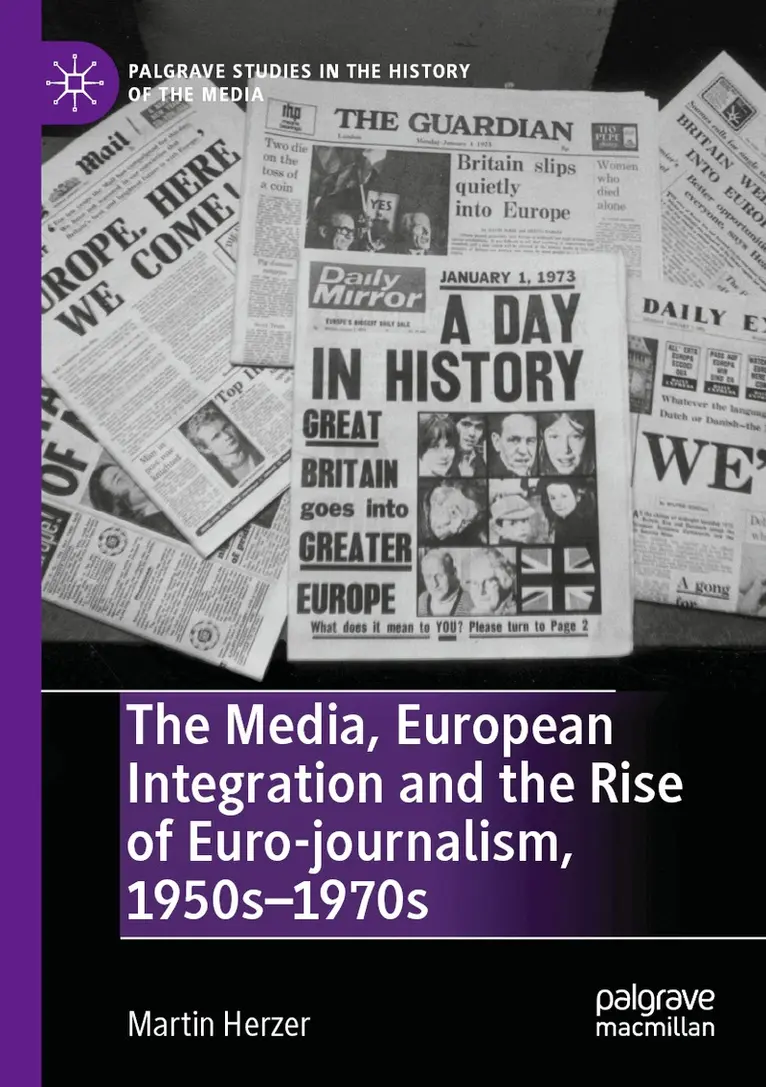
Häftad, Engelska, 2021
Media, European Integration and the Rise of Euro-journalism, 1950s–1970s
960 kr
Beställningsvara. Skickas inom 10-15 vardagar. Fri frakt över 249 kr.
Beskrivning
This book explains how the media helped to invent the European Union as the supranational polity that we know today. Against normative EU scholarship, it tells the story of the rise of the Euro-journalists – pro-European advocacy journalists – within the post-war Western European media. The Euro-journalists pioneered a journalism which symbolically magnified the technocratic European Community as the embodiment of Europe. Normative research on the media and European integration has focused on how the media might help to construct a democratic and legitimate European Union. In contrast, this book aims to deconstruct how journalists – as part of Western European elites – played a key role in elite European identity building campaigns.
Produktinformation
- Utgivningsdatum: 2021-08-26
- Mått: 148 x 210 x 27 mm
- Vikt: 498 g
- Format: Häftad
- Språk: Engelska
- Serie: Palgrave Studies in the History of the Media
- Antal sidor: 357
- Förlag: Springer Nature Switzerland AG
- ISBN: 9783030287801
Utforska kategorier
Betyg & recensioner
0 recensioner
Inga recensioner tillgängliga.