Inbunden, Engelska, 2020
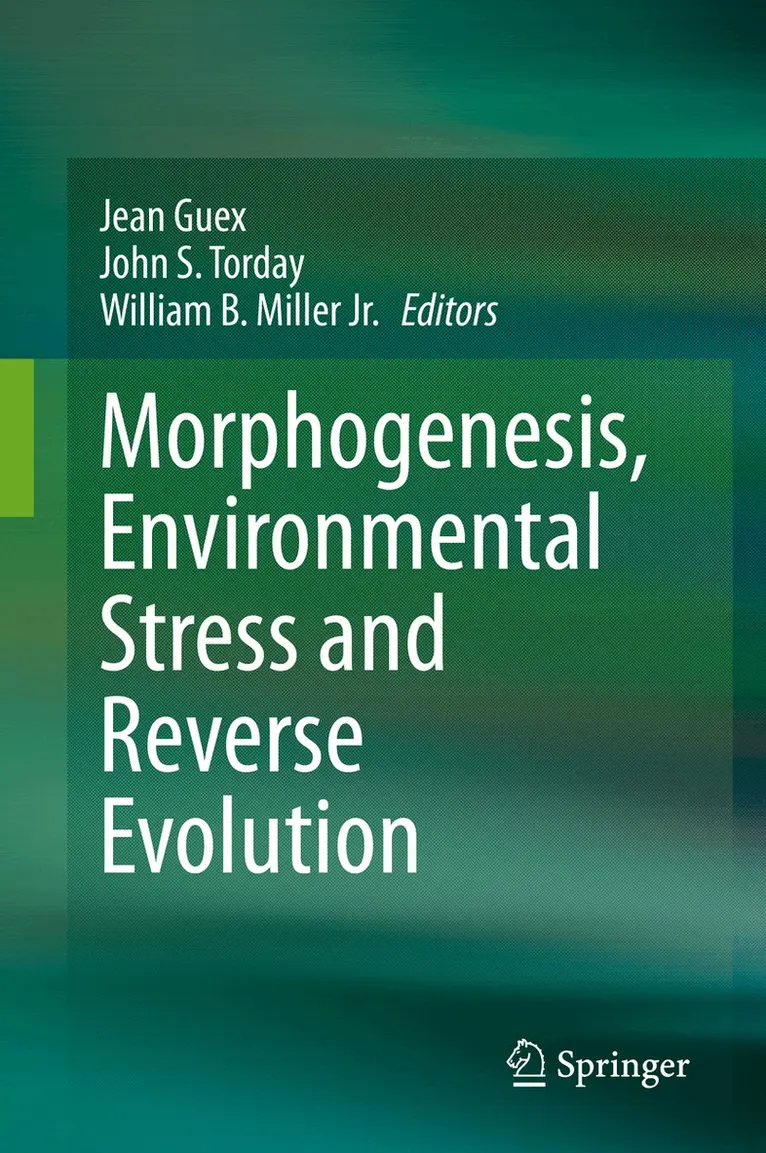
Morphogenesis, Environmental Stress and Reverse Evolution
Av Jean Guex, John S. Torday, William B. Miller Jr.
2207 kr
Skickas inom 10-15 vardagar
Beskrivning
It is widely acknowledged that life has adapted to its environment, but the precise mechanism remains unknown since Natural Selection, Descent with Modification and Survival of the Fittest are metaphors that cannot be scientifically tested. In this unique text, invertebrate and vertebrate biologists illuminate the effects of physiologic stress on epigenetic responses in the process of evolutionary adaptation from unicellular organisms to invertebrates and vertebrates, respectively. This book offers a novel perspective on the mechanisms underlying evolution.Capacities for morphologic alterations and epigenetic adaptations subject to environmental stresses are demonstrated in both unicellular and multicellular organisms. Furthermore, the underlying cellular-molecular mechanisms that mediate stress for adaptation will be elucidated wherever possible. These include examples of ‘reverse evolution’ by Professor Guex for Ammonites and for mammals by Professor Torday and Dr. Miller. This provides empiric evidence that the conventional way of thinking about evolution as unidirectional is incorrect, leaving open the possibility that it is determined by cell-cell interactions, not sexual selection and reproductive strategy. Rather, the process of evolution can be productively traced through the conservation of an identifiable set of First Principles of Physiology that began with the unicellular form and have been consistently maintained, as reflected by the return to the unicellular state over the course of the life cycle.
Produktinformation
- Utgivningsdatum: 2020-07-24
- Mått: 155 x 235 x 24 mm
- Vikt: 658 g
- Format: Inbunden
- Språk: Engelska
- Antal sidor: 322
- Förlag: Springer Nature Switzerland AG
- ISBN: 9783030472788
Utforska kategorier
Betyg & recensioner
0 recensioner
Inga recensioner tillgängliga.