Inbunden, Engelska, 2021
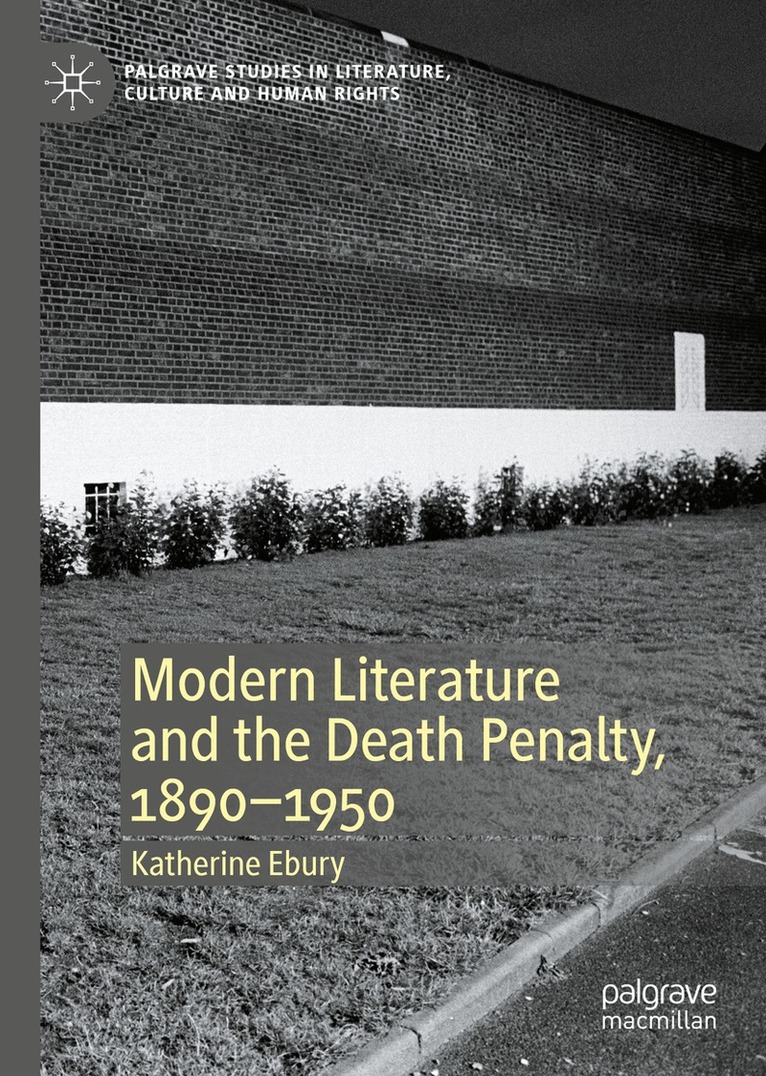
Modern Literature and the Death Penalty, 1890-1950
Del i serien Palgrave Studies in Literature, Culture and Human Rights
950 kr
Beställningsvara. Skickas inom 10-15 vardagar. Fri frakt över 249 kr.
Beskrivning
Produktinformation
- Utgivningsdatum: 2021-02-24
- Mått: 148 x 210 x 21 mm
- Vikt: 482 g
- Format: Inbunden
- Språk: Engelska
- Serie: Palgrave Studies in Literature, Culture and Human Rights
- Antal sidor: 282
- Upplaga: 21001
- Förlag: Springer Nature Switzerland AG
- ISBN: 9783030527495
Utforska kategorier
Mer om författaren
Katherine Ebury is Senior Lecturer in Modern Literature at the University of Sheffield, UK. Her previous publications include Modernism and Cosmology (2014) and Joyce’s Non-Fiction Writings (2018), as well as several articles and chapters. The present volume has been generously supported by an AHRC Leadership Fellowship.
Recensioner i media
“Ebury’s book is a rich archive of sources, suggestive connections, and strong readings of interest to scholars of modern literature. … Ebury’s book will be of interest to scholars of modern literature, psychoanalysis, and law, for it effectively makes the case that reading the ways these discourses are braided together in the history of capital punishment is not just generative but necessary.” (Ariela Freedman, James Joyce Quarterly, Vol. 59 (3), 2022)
Betyg & recensioner
0 recensioner
Inga recensioner tillgängliga.