Inbunden, Engelska, 2022
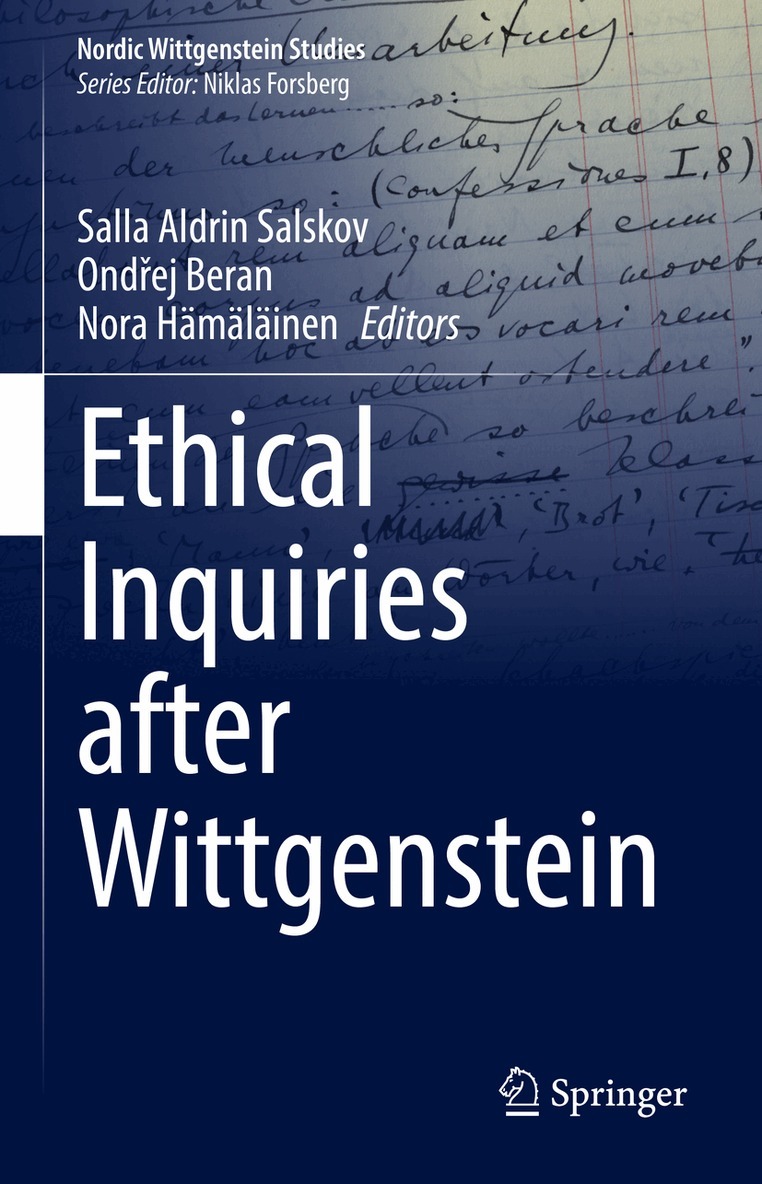
Ethical Inquiries after Wittgenstein
Av Salla Aldrin Salskov, Ondřej Beran, Nora Hämäläinen
1419 kr
Beställningsvara. Skickas inom 10-15 vardagar. Fri frakt över 249 kr.
Beskrivning
This volume showcases contemporary, ground-up ethical essays in the tradition of Wittgenstein’s broader philosophy and Wittgenstein-inspired ethical reflection. It takes the ethical relevance of Wittgenstein as a substantial and solid starting point for a broad range of ongoing thinking about contemporary ethical issues.The texts are organised in two sections. The first consists of chapters exploring questions around what could be called the “grammar” of our moral forms of life, and thus represents a more traditional approach in ethics after Wittgenstein. The second part represents a recent turn in the tradition towards investigating moral conceptions, perspectives and concepts that are undergoing change, either because the world itself is changing (for instance with new technologies) or because human agency, such as social movements, has brought us to reconsider previously unquestioned ideas and structures.Within the book, the authors’ contributions are inspired, in their ways of working with ethical questions, by Wittgenstein’s conceptions of language, understanding and the nature of philosophical inquiry. This book is of interest to philosophers influenced by Wittgenstein, as well as to all ethicists seeking ideas for how to do philosophy in a manner close to lived experience and practice.
Produktinformation
- Utgivningsdatum: 2022-05-19
- Mått: 155 x 235 x 20 mm
- Vikt: 596 g
- Format: Inbunden
- Språk: Engelska
- Serie: Nordic Wittgenstein Studies
- Antal sidor: 272
- Förlag: Springer Nature Switzerland AG
- ISBN: 9783030980832
Utforska kategorier
Betyg & recensioner
0 recensioner
Inga recensioner tillgängliga.