Ondřej Beran - Böcker
Visar alla böcker från författaren Ondřej Beran. Handla med fri frakt och snabb leverans.
10 produkter
10 produkter
657 kr
Skickas inom 10-15 vardagar
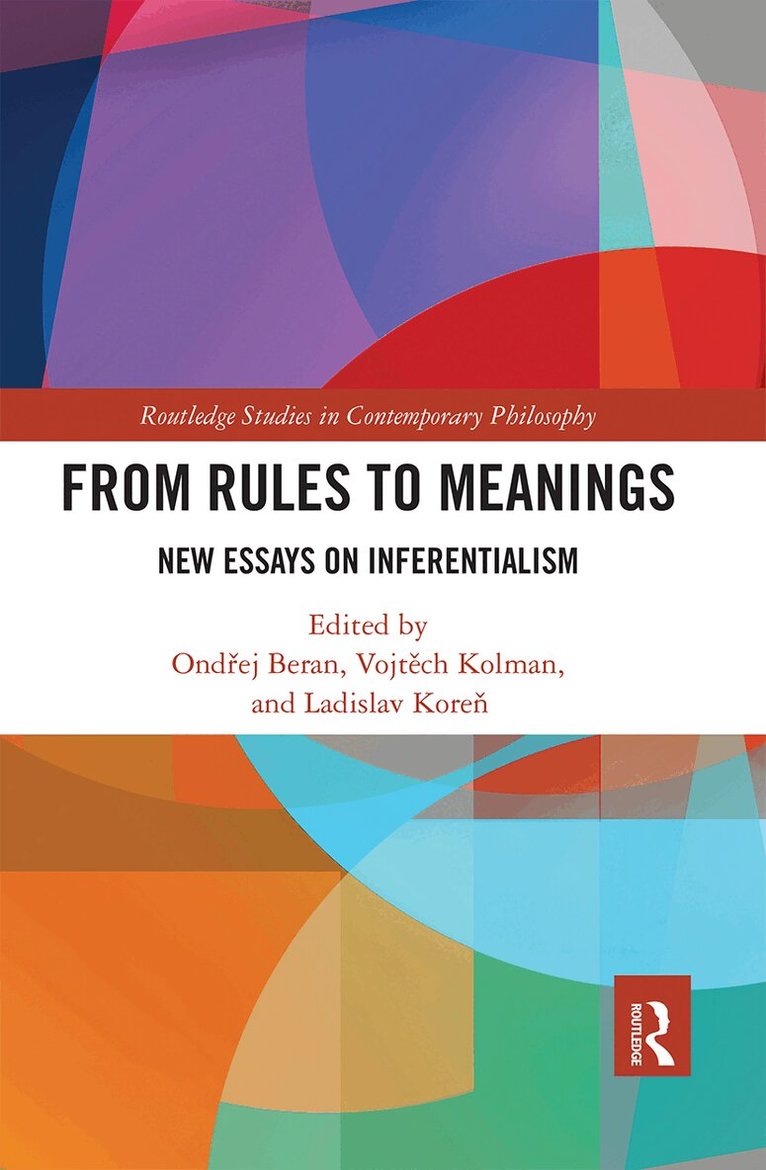
Inferentialism is a philosophical approach premised on the claim that an item of language (or thought) acquires meaning (or content) in virtue of being embedded in an intricate set of social practices normatively governed by inferential rules. Inferentialism found its paradigmatic formulation in Robert Brandom’s landmark book Making it Explicit, and over the last two decades it has established itself as one of the leading research programs in the philosophy of language and the philosophy of logic. While Brandom’s version of inferentialism has received wide attention in the philosophical literature, thinkers friendly to inferentialism have proposed and developed new lines of inquiry that merit wider recognition and critical appraisal.From Rules to Meaning brings together new essays that systematically develop, compare, assess and critically react to some of the most pertinent recent trends in inferentialism. The book’s four thematic sections seek to apply inferentialism to a number of core issues, including the nature of meaning and content, reconstructing semantics, rule-oriented models and explanations of social practices and inferentialism’s historical influence and dialogue with other philosophical traditions. With contributions from a number of distinguished philosophers—including Robert Brandom and Jaroslav Peregrin—this volume is a major contribution to the philosophical literature on the foundations of logic and language.
2 088 kr
Skickas inom 10-15 vardagar
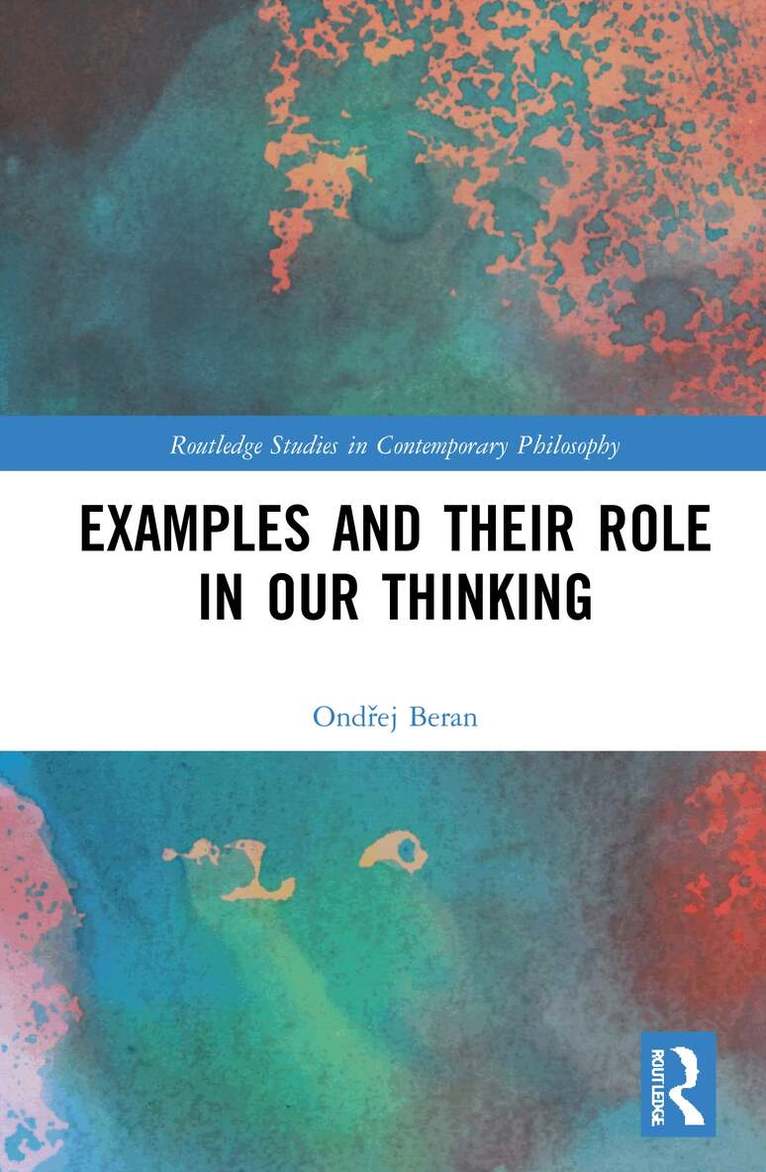
This book investigates the role and significance that examples play in shaping arguments and thought, both in philosophy and in everyday life. It addresses questions about how our moral thinking is informed by our conceptual practices, especially in ways related to the relationship between ethics and literature, post-Wittgensteinian ethics, or meta-philosophical concerns about the style of philosophical writing.Written in an accessible and non-technical style, the book uses examples from real-life events or pieces of well-known fictional stories to introduce its discussions. In doing so, it demonstrates the complex way examples, rather than exemplifying philosophical points, inform and condition how we approach the points for which we want to argue. The author shows how examples guide or block our understanding in certain directions, how they do this by stressing morally relevant aspects or dimensions of the terms, and how the sense of moral seriousness allows us to learn from examples. The final chapter explores whether these kinds of engagement with examples can be understood as "thinking primarily through examples."Examples and Their Role in Our Thinking will be of interest to scholars and graduate students working in ethics and moral philosophy, philosophy of language, and philosophy of literature.
576 kr
Skickas inom 10-15 vardagar
This book investigates the role and significance that examples play in shaping arguments and thought, both in philosophy and in everyday life. It addresses questions about how our moral thinking is informed by our conceptual practices, especially in ways related to the relationship between ethics and literature, post-Wittgensteinian ethics, or meta-philosophical concerns about the style of philosophical writing.Written in an accessible and non-technical style, the book uses examples from real-life events or pieces of well-known fictional stories to introduce its discussions. In doing so, it demonstrates the complex way examples, rather than exemplifying philosophical points, inform and condition how we approach the points for which we want to argue. The author shows how examples guide or block our understanding in certain directions, how they do this by stressing morally relevant aspects or dimensions of the terms, and how the sense of moral seriousness allows us to learn from examples. The final chapter explores whether these kinds of engagement with examples can be understood as "thinking primarily through examples."Examples and Their Role in Our Thinking will be of interest to scholars and graduate students working in ethics and moral philosophy, philosophy of language, and philosophy of literature.
675 kr
Kommande
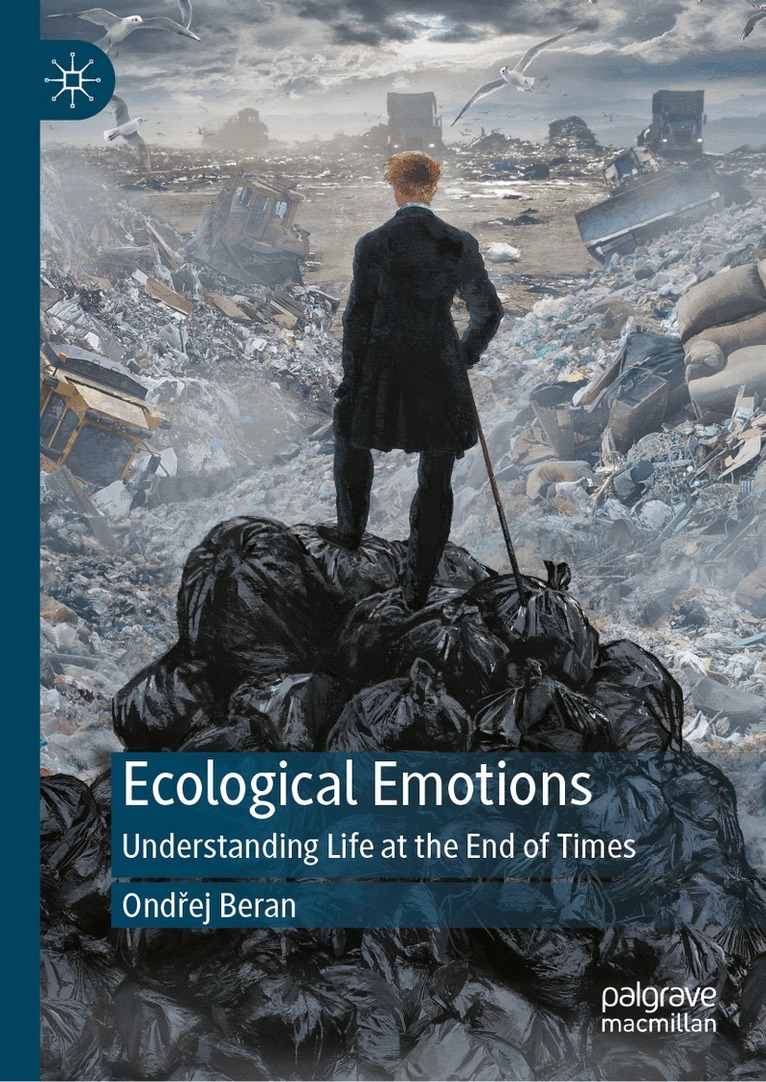
This volume presents new philosophical perspectives on environmental emotions. It explores the motivating nature of emotions such as anger, grief, and hope in relation to the current climate crisis.Many of our emotional responses to the climate crisis take a distressed form like anxiety, despair, or grief. However, these emotions almost always coexist with hope, a drive toward action, or a strengthened sense of relationality and belonging. This book explores the different levels at which these tensions take place. Part I discusses the conceptual and linguistic notions we use to make sense of our ecological predicament. Part II looks at the embedded dimension of our emotions: how we feel about the climate crisis as members of our communities and how our emotions are interconnected with what we do and how we work in and for our communities. Several chapters in this section explicitly discuss hope. Finally, Part III has a phenomenological and existential focus: it explores the nature of the rootedness and how it shapes our emotional experiences during the climate crisis.The Philosophy of Environmental Emotions will appeal to scholars and graduate students working in environmental philosophy, philosophy of emotion, and environmental psychology.
1 953 kr
Skickas inom 10-15 vardagar
This volume presents new philosophical perspectives on environmental emotions. It explores the motivating nature of emotions such as anger, grief, and hope in relation to the current climate crisis.Many of our emotional responses to the climate crisis take a distressed form like anxiety, despair, or grief. However, these emotions almost always coexist with hope, a drive toward action, or a strengthened sense of relationality and belonging. This book explores the different levels at which these tensions take place. Part I discusses the conceptual and linguistic notions we use to make sense of our ecological predicament. Part II looks at the embedded dimension of our emotions: how we feel about the climate crisis as members of our communities and how our emotions are interconnected with what we do and how we work in and for our communities. Several chapters in this section explicitly discuss hope. Finally, Part III has a phenomenological and existential focus: it explores the nature of the rootedness and how it shapes our emotional experiences during the climate crisis.The Philosophy of Environmental Emotions will appeal to scholars and graduate students working in environmental philosophy, philosophy of emotion, and environmental psychology.
2 222 kr
Skickas inom 10-15 vardagar
Inferentialism is a philosophical approach premised on the claim that an item of language (or thought) acquires meaning (or content) in virtue of being embedded in an intricate set of social practices normatively governed by inferential rules. Inferentialism found its paradigmatic formulation in Robert Brandom’s landmark book Making it Explicit, and over the last two decades it has established itself as one of the leading research programs in the philosophy of language and the philosophy of logic. While Brandom’s version of inferentialism has received wide attention in the philosophical literature, thinkers friendly to inferentialism have proposed and developed new lines of inquiry that merit wider recognition and critical appraisal. From Rules to Meaning brings together new essays that systematically develop, compare, assess and critically react to some of the most pertinent recent trends in inferentialism. The book’s four thematic sections seek to apply inferentialism to a number of core issues, including the nature of meaning and content, reconstructing semantics, rule-oriented models and explanations of social practices and inferentialism’s historical influence and dialogue with other philosophical traditions. With contributions from a number of distinguished philosophers—including Robert Brandom and Jaroslav Peregrin—this volume is a major contribution to the philosophical literature on the foundations of logic and language.
1 381 kr
Skickas inom 10-15 vardagar
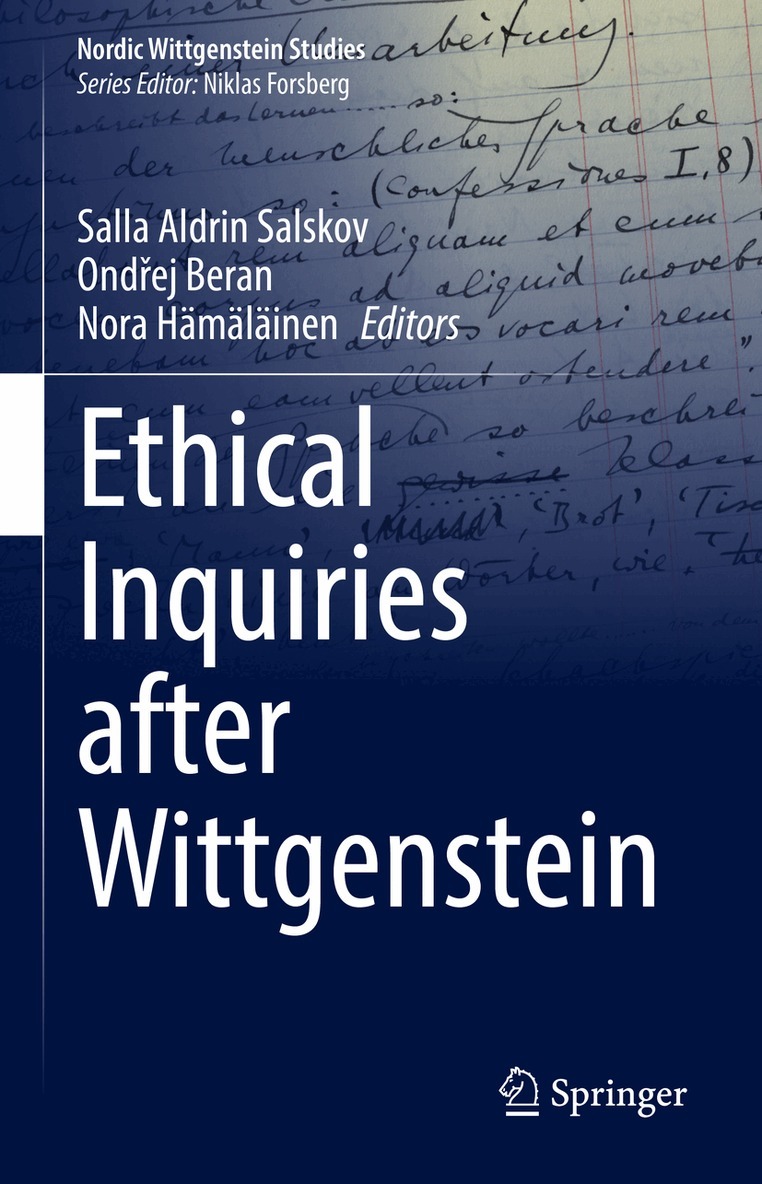
This volume showcases contemporary, ground-up ethical essays in the tradition of Wittgenstein’s broader philosophy and Wittgenstein-inspired ethical reflection.
1 381 kr
Skickas inom 10-15 vardagar
This volume showcases contemporary, ground-up ethical essays in the tradition of Wittgenstein’s broader philosophy and Wittgenstein-inspired ethical reflection. It takes the ethical relevance of Wittgenstein as a substantial and solid starting point for a broad range of ongoing thinking about contemporary ethical issues.The texts are organised in two sections. The first consists of chapters exploring questions around what could be called the “grammar” of our moral forms of life, and thus represents a more traditional approach in ethics after Wittgenstein. The second part represents a recent turn in the tradition towards investigating moral conceptions, perspectives and concepts that are undergoing change, either because the world itself is changing (for instance with new technologies) or because human agency, such as social movements, has brought us to reconsider previously unquestioned ideas and structures.Within the book, the authors’ contributions are inspired, in their ways of working with ethical questions, by Wittgenstein’s conceptions of language, understanding and the nature of philosophical inquiry. This book is of interest to philosophers influenced by Wittgenstein, as well as to all ethicists seeking ideas for how to do philosophy in a manner close to lived experience and practice.
1 381 kr
Skickas inom 10-15 vardagar
721 kr
Skickas inom 5-8 vardagar
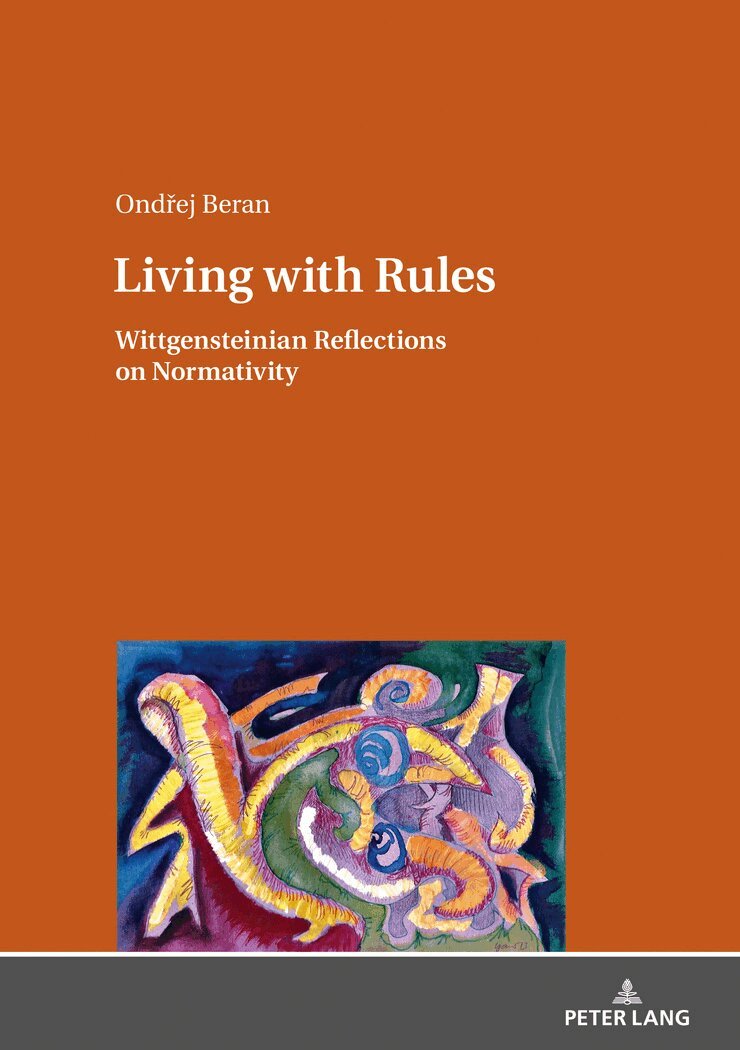
The book proposes to see the talk about rules-following as a way of giving an account of particular people’s characters and their lives. This focus on understanding others as variously coping with the claims of particular rules attempts to specify the variety of "attitudes towards a soul" as discussed in the Wittgensteinian tradition. The book derives from the philosophical tradition that considers human beings as rule-following creatures. It suggests that rules followed by other people allow for understanding and sympathising with them. Coping with rules is explored as a complicated lived practice, with respect to: particularised rules holding in relation to a context or to individual people, the variety of our responses to rules we are subject to, or our failure in coping with them.