Nora Hamalainen – författare
784 kr
Läs direkt efter köp
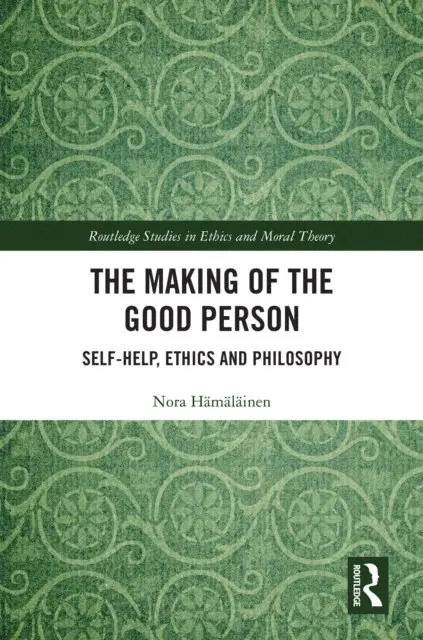
This book provides a philosophical assessment of the idea of personhood advanced in popular self-help literature. It also traces, within academic philosophy and philosophical scholarship, a self-help culture where the self is brought forth as an object of improvement and a key to meaning, progress, and profundity.
Unlike other academic treatments of the topic of self-help, this book is not primarily concerned with providing a critique of popular self-help and self-transformative practices. Rather, it is concerned with how they work to shape contemporary forms and ideals of moral personhood and are conducive to moral renegotiation and change. The book consists of two parts with somewhat different argumentative strategies. Part 1 consists of an overview and reassessment of popular self-help literature and its sociological and journalistic critics, written from a moral philosophical perspective. Part 2 opens with discussion of the current attraction, among a range of philosophers, to self-transformative themes. The chapters assess the strand of self-transformative philosophy found in the work of Ludwig Wittgenstein, Michel Foucault, Pierre Hadot, Stanley Cavell, and Iris Murdoch. Finally, the book concludes with a discussion of the theme of social change and moral renegotiation in contemporary societies, which is a central but underestimated undercurrent in discussions on contemporary self-transformative practices. The book’s dual perspective—on both popular self-help and self-transformative currents in philosophy—enables a cultural and moral philosophical analysis of contemporary ethical ideals of personhood, as well as reflection on the literatures available for its development.
The Making of the Good Person will be of interest to scholars and advanced students working in moral philosophy, history of philosophy, psychology, sociology, and literary studies.
784 kr
Läs direkt efter köp
This book provides a philosophical assessment of the idea of personhood advanced in popular self-help literature. It also traces, within academic philosophy and philosophical scholarship, a self-help culture where the self is brought forth as an object of improvement and a key to meaning, progress, and profundity.
Unlike other academic treatments of the topic of self-help, this book is not primarily concerned with providing a critique of popular self-help and self-transformative practices. Rather, it is concerned with how they work to shape contemporary forms and ideals of moral personhood and are conducive to moral renegotiation and change. The book consists of two parts with somewhat different argumentative strategies. Part 1 consists of an overview and reassessment of popular self-help literature and its sociological and journalistic critics, written from a moral philosophical perspective. Part 2 opens with discussion of the current attraction, among a range of philosophers, to self-transformative themes. The chapters assess the strand of self-transformative philosophy found in the work of Ludwig Wittgenstein, Michel Foucault, Pierre Hadot, Stanley Cavell, and Iris Murdoch. Finally, the book concludes with a discussion of the theme of social change and moral renegotiation in contemporary societies, which is a central but underestimated undercurrent in discussions on contemporary self-transformative practices. The book’s dual perspective—on both popular self-help and self-transformative currents in philosophy—enables a cultural and moral philosophical analysis of contemporary ethical ideals of personhood, as well as reflection on the literatures available for its development.
The Making of the Good Person will be of interest to scholars and advanced students working in moral philosophy, history of philosophy, psychology, sociology, and literary studies.
840 kr
Läs direkt efter köp
1 848 kr
Läs direkt efter köp
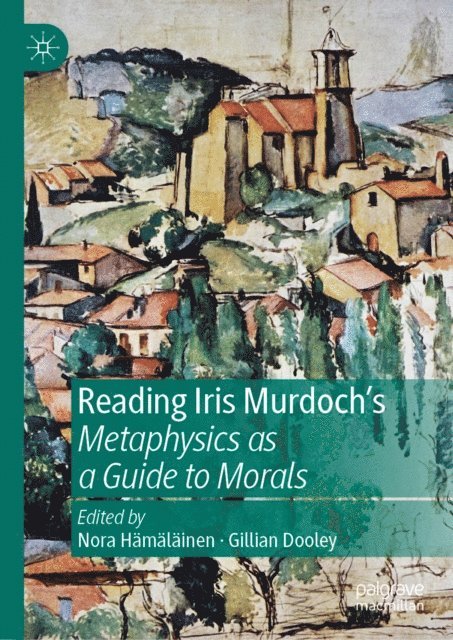
Metaphysics as a Guide to Morals was Iris Murdoch’s major philosophical testament and a highly original and ambitious attempt to talk about our time. Yet in the scholarship on her philosophical work thus far it has often been left in the shade of her earlier work. This volume brings together 16 scholars who offer accessible readings of chapters and themes in the book, connecting them to Murdoch’s larger oeuvre, as well as to central themes in 20th century and contemporary thought. The essays bring forth the strength, originality, and continuing relevance of Murdoch’s late thought, addressing, among other matters, her thinking about the Good, the role and nature of metaphysics in the contemporary world, the roles of art in human understanding, questions of unity and plurality in thinking, the possibilities of spiritual life without God, and questions of style and sensibility in intellectual work.
1 687 kr
Läs direkt efter köp
This volume showcases contemporary, ground-up ethical essays in the tradition of Wittgenstein’s broader philosophy and Wittgenstein-inspired ethical reflection. It takes the ethical relevance of Wittgenstein as a substantial and solid starting point for a broad range of ongoing thinking about contemporary ethical issues.
The texts are organised in two sections. The first consists of chapters exploring questions around what could be called the “grammar” of our moral forms of life, and thus represents a more traditional approach in ethics after Wittgenstein. The second part represents a recent turn in the tradition towards investigating moral conceptions, perspectives and concepts that are undergoing change, either because the world itself is changing (for instance with new technologies) or because human agency, such as social movements, has brought us to reconsider previously unquestioned ideas and structures.
Within the book, the authors’ contributions are inspired, in their ways of working with ethical questions, by Wittgenstein’s conceptions of language, understanding and the nature of philosophical inquiry. This book is of interest to philosophers influenced by Wittgenstein, as well as to all ethicists seeking ideas for how to do philosophy in a manner close to lived experience and practice.