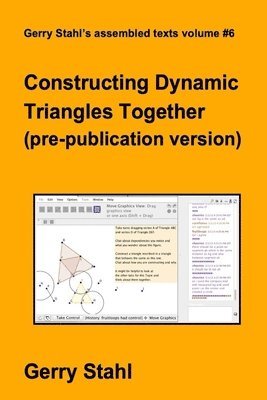
My life began when I first encountered geometry in high school. From that moment on, I devoured books on mathematics, physics, and cosmology. I wondered, like Pythagoras, about the place of mathematical objects in the universe. This led me (via the logicians) to philosophy. I could not wait to explore these topics as an undergrad at MIT. Once there, however, I became discouraged about the contemporary approach to math and physics education, as well as the militaristic uses being made of them. I turned increasingly to philosophy, moving away from positivism to its critique by 20th century continental thought. Upon graduation, I went to Heidelberg for a year to study German philosophy during the exhilarating 1960s, later spending two years at the Frankfurt School. Meanwhile, I completed a doctoral dissertation on Marx and Heidegger at Northwestern. Back in Philadelphia, I briefly tried my hand at teaching remedial high school math at an urban public school. However, I soon found systemsprogramming to be a less frustrating way to earn a living. I also engaged in union and community organizing, learning how to bring federal grants into the neighborhoods for local development. When the first personal computers appeared, I ran a service to help non-profit organizations computerize. Eventually, I decided to fill in my computer science background at the University of Colorado in Boulder, where I earned a doctorate in artificial intelligence and cognitive science. My research work after graduation is documented in Group Cognition (MIT Press, 2006). Following a year abroad at a CSCW lab outside Bonn, I went to the College of Information Science at Drexel to teach HCI and CSCL in 2002. In collaboration with many colleagues, I started the VMT Project, which is reported on in Studying Virtual Math Teams (Springer, 2009). My specialty is Computer-Supported Collaborative Learning. I founded the International Journal of CSCL and have been active in the CSCL Conference series. My most recent ideas, discoveries, and wonderings are brought together in Translating Euclid.