Häftad, Engelska, 2024
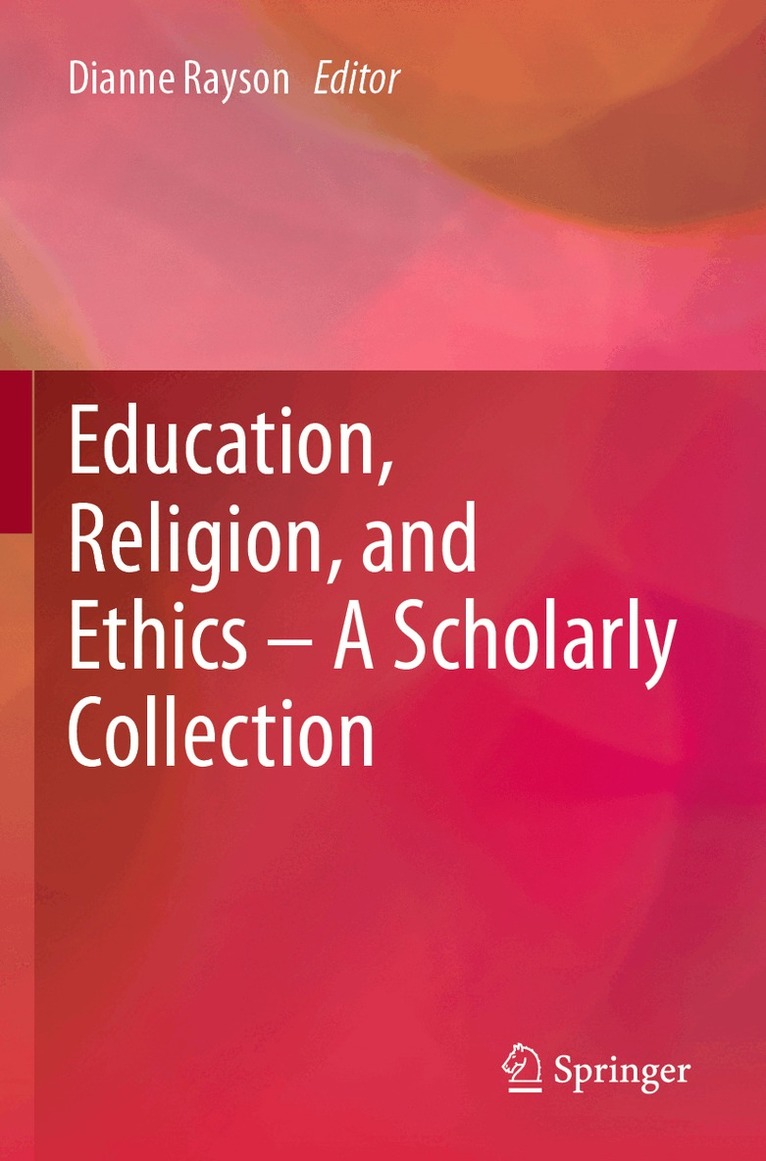
Education, Religion, and Ethics – A Scholarly Collection
1748 kr
Beställningsvara. Skickas inom 10-15 vardagar. Fri frakt över 249 kr.
Beskrivning
This collection draws on research in educational areas displaying best practice pedagogy, theoretical and practical, underpinned by philosophy, empirical science, and neuroscience, among other disciplines. It focusses especially on implications for higher education, school education, professional ethics, and religion. Higher education exploration is on the diminution of the humanities and implications for the range of knowledge needed for future citizenship. The work includes a revisioning of higher education’s purpose, especially the changing role of the doctorate and its examination. The focus on school education takes the same pedagogical lens to humanities and social sciences, examining values education and religious studies. Ethical issues include colonisation and decolonisation, especially around the concept of land and ramifications for intercultural studies. The ethics and practice of teaching about life and death issues in medical education are explored in lightof research in dialogic consensus. The religion section includes research on interfaith education, especially concerning Islam, and eco-theological education, especially focussed on climate change. Contributors are academic colleagues or former doctoral students of Terence J. Lovat (University Professor, Australia, UK, and Canada) whose internationally acclaimed research straddles these areas. Many of the contributors hold positions of influence in the academic or professional world, while others bring their newly minted doctoral research to the content.The intended readership includes academics and doctoral students across education, ethics, religion, social studies, ecology, health and medicine, indigenous studies, and international affairs.This collection, published in honour of Emeritus Professor Terence Lovat, provides rich insights into the scope and multidisciplinary depth of his scholarship. A philosopher of education whose main work has centred on curriculum theory and values education and ethics in education, Lovat’s scholarship reminds us that the education of children and young people must be concerned with more than academic attainment. In emphasising education as a holistic and moral endeavour—one involving hearts and minds—Lovat has consistently advocated for the provision of opportunities for young people to extend their horizons beyond the school environment to engage with issues in society that go beyond academic learning. Professor Lovat has also made a major and longstanding contribution to the development of Studies of Religion in schools and to the theology and history of Islam and Islamic Education. In traversing Lovat’s significant and remarkable contributions to education, religion and ethics, and the links between them, this book serves as a testament to a highly esteemed scholar.Associate Professor Deborah Henderson, Queensland University of Technology, Australia
Produktinformation
- Utgivningsdatum: 2024-04-20
- Mått: 155 x 235 x 18 mm
- Vikt: 482 g
- Format: Häftad
- Språk: Engelska
- Antal sidor: 297
- Förlag: Springer International Publishing AG
- ISBN: 9783031247217
Utforska kategorier
Betyg & recensioner
0 recensioner
Inga recensioner tillgängliga.