Häftad, Engelska, 2025
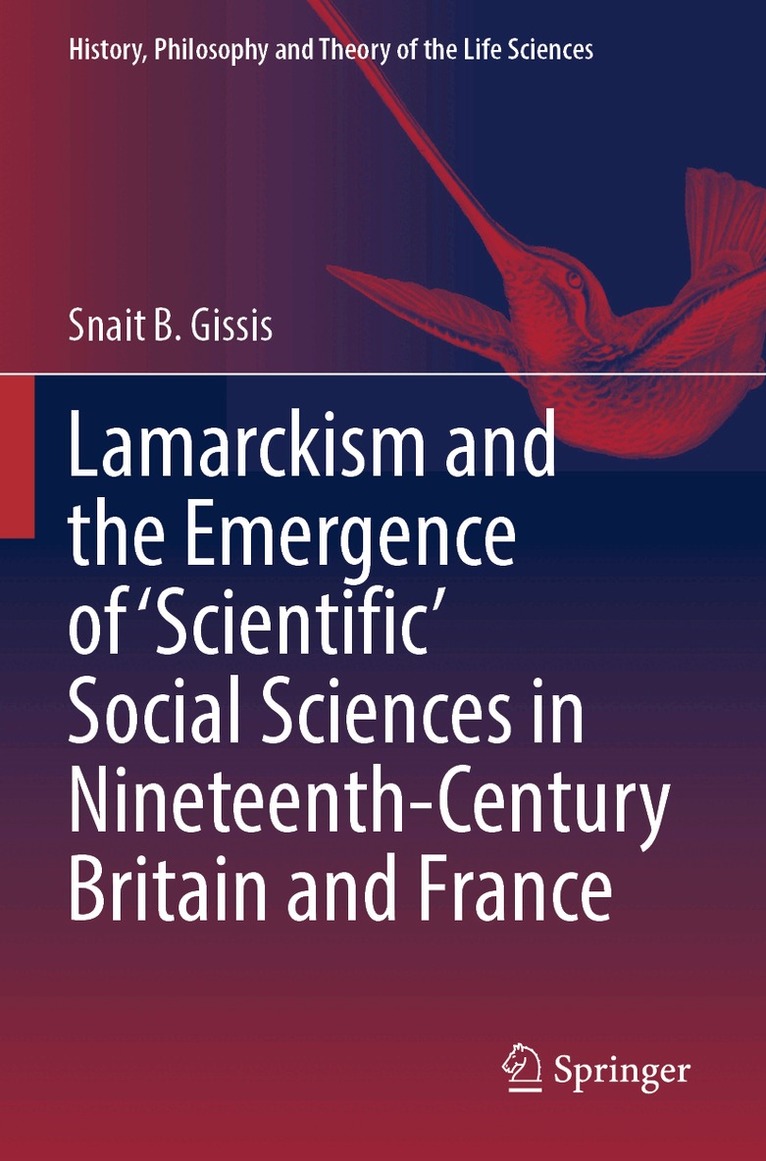
Lamarckism and the Emergence of 'Scientific' Social Sciences in Nineteenth-Century Britain and France
1313 kr
Beställningsvara. Skickas inom 10-15 vardagar. Fri frakt över 249 kr.
Beskrivning
The book presents an original synthesizing framework on the relations between ‘the biological’ and ‘the social’. Within these relations, the late nineteenth-century emergence of social sciences aspiring to be constituted as autonomous, as 'scientific' disciplines, is described, analyzed and explained. Through this framework, the author points to conceptual and constructive commonalities conjoining significant founding figures – Lamarck, Spencer, Hughlings Jackson, Ribot, Durkheim, Freud – who were not grouped nor analyzed in this manner before. Thus, the book offers a rather unique synthesis of the interactions of the social, the mental, and the evolutionary biological – Spencerian Lamarckism and/or Neo-Lamarckism – crystallizing into novel fields. It adds substantially to the understanding of the complexities of evolutionary debates during the last quarter of the nineteenth century. It will attract the attention of a wide spectrum of specialists, academics, and postgraduates in European history of the nineteenth century, history and philosophy of science, and history of biology and of the social sciences, including psychology.
Produktinformation
- Utgivningsdatum: 2025-04-11
- Mått: 155 x 235 x 19 mm
- Vikt: 528 g
- Format: Häftad
- Språk: Engelska
- Serie: History, Philosophy and Theory of the Life Sciences
- Antal sidor: 320
- Förlag: Springer International Publishing AG
- ISBN: 9783031527586
Utforska kategorier
Betyg & recensioner
0 recensioner
Inga recensioner tillgängliga.