Inbunden, Engelska, 2024
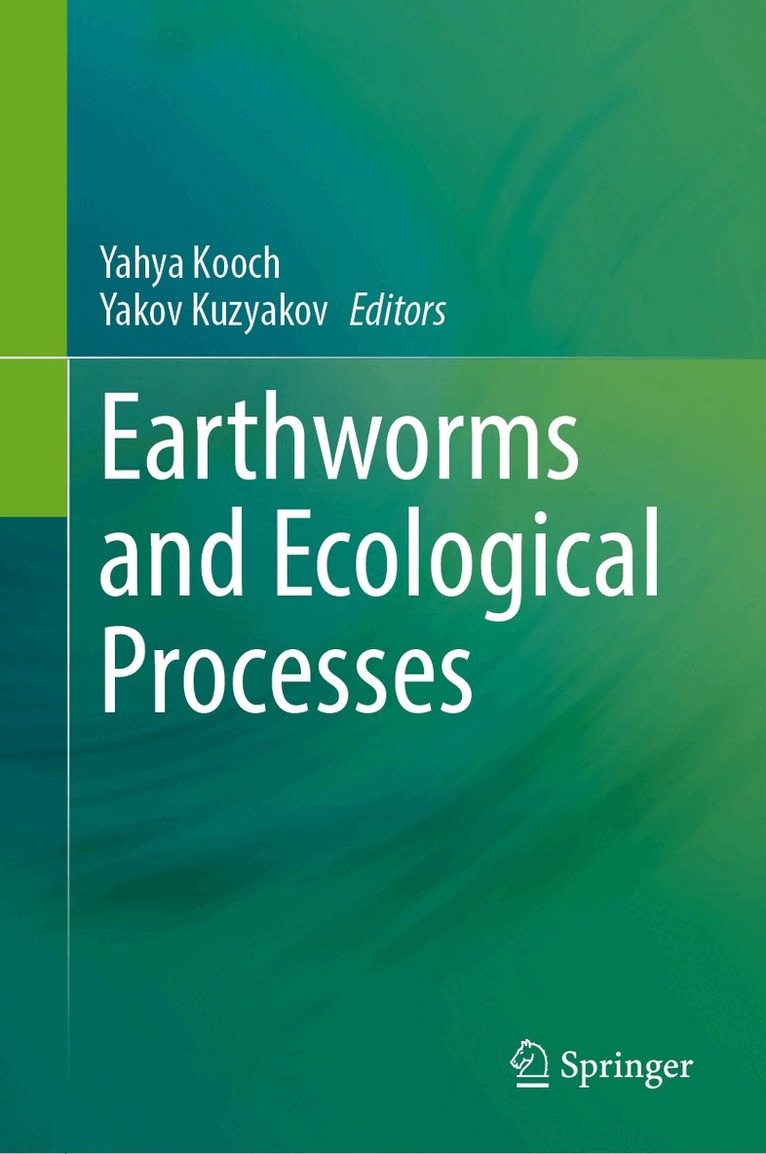
Earthworms and Ecological Processes
Av Yahya Kooch, Yakov Kuzyakov
2407 kr
Beställningsvara. Skickas inom 10-15 vardagar. Fri frakt över 249 kr.
Beskrivning
Earthworms are the most important members of the soil detritivore community and function as soil engineers because of their effects on soil properties and their influence on the availability of resources for other organisms, including microorganisms and plants. Soil productivity and plant growth are strongly affected by biological activities of earthworms. They act on soil structures through creation of burrows which facilitate water and gas transport, incorporation of litter into soil, mixing of soil minerals, organic materials and breaking down of soil organic matter, ejection of surface and or subsurface casts. Earthworms have positive effects on the soil fabric and on the decomposition and mineralization of litter by breaking down organic matter and producing large amounts of feaces, thereby mixing litter with the mineral soil. Therefore, they play an important part humus form changes according to the patterns of plant communities succession. Consequently, they are also good bio-indicators for soil and site quality, and are thus useful when planning ecosystem function improvements. Earthworm's populations are indicators in degraded regions and in soil reclamations. Aristole called them "intestines of the earth" and the eminent nineteenth century biologist, Charles Darwin, spent many years observing their major influence on humus formation and soil transport . However, the links between their impacts on the soil environment and the resulting modification of natural selection pressures on engineers as well as on other organisms have received little attention. Based on papers recently published in the Science journal, Phillips et al. (2019) document an impressive group effort by 141 researchers from 35 countries to develop a global-scale atlas of earthworms. In addition, Fierer (2019) described the earthworms’ place on earth. So, Darwin’s legacy continues. Despite the vast increase in scientific literature on earthworms in recent years, much remains to be known of their basic biology, ecology and functioning. In this book we summarized the current knowledge in relation to ecological processes involved with earthworms in croplands, rangelands, forests and urban soils.
Produktinformation
- Utgivningsdatum: 2024-11-19
- Mått: 156 x 234 x 32 mm
- Vikt: 962 g
- Format: Inbunden
- Språk: Engelska
- Antal sidor: 556
- Förlag: Springer International Publishing AG
- ISBN: 9783031645099
Utforska kategorier
Betyg & recensioner
0 recensioner
Inga recensioner tillgängliga.