Inbunden, Engelska, 2026
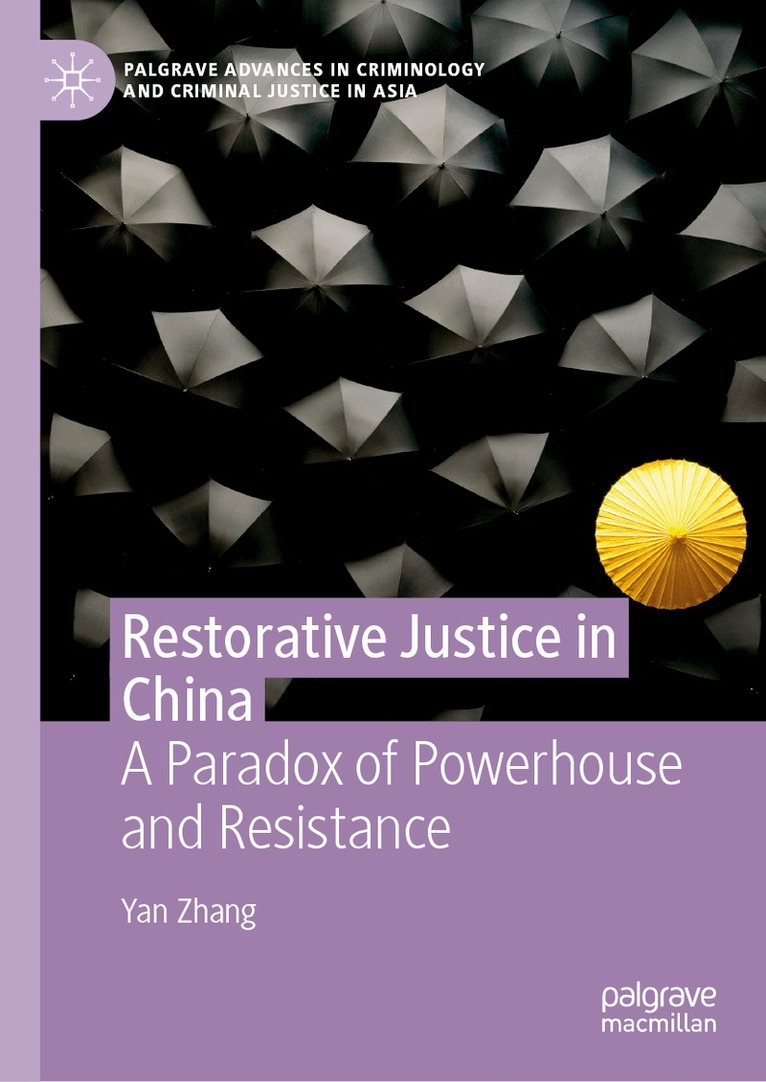
Restorative Justice in China
Av Yan Zhang
1388 kr
Kommande
Beskrivning
This monograph provides an empirical and theoretical exploration of restorative justice (RJ) in China, the world’s largest and most diverse RJ system, yet one that remains underexplored in global socio-legal and criminological scholarship. Based on extensive fieldwork—including semi-structured interviews with legal professionals and community mediators, observations of mediation sessions across urban and Indigenous sites, and archival analysis—the book examines four key RJ programs: people’s mediation (community-based dispute resolution), public order mediation (police-led interventions for minor offenses), criminal reconciliation (state-mandated settlements in criminal cases, universally implemented across China), and De Gu mediation (an Indigenous practice among the Yi ethnic minority in Liangshan Prefecture).Aimed at socio-legal scholars, criminologists, political scientists, anthropologists, and policymakers interested in comparative justice systems, authoritarian governance, legal pluralism, and Indigenous justice, the book reveals how RJ operates within China’s party-state regime—often as a “thin but broad” form of justice shaped by political imperatives for social harmony and stability maintenance—while challenging Western-centric RJ models through a multi-layered analysis of macro-ideologies (e.g., Confucian harmony and Maoist dialectics), meso-institutional reforms (e.g., 2010 People’s Mediation Law and 2012 Criminal Procedural Law amendments), and micro-practices (e.g., frontline discretion and hybrid state-Indigenous interactions). It highlights RJ’s potential for healing, empowerment, and mutual constitution amid domination, thereby contributing to the decolonization of socio-legal theory by integrating Chinese and Indigenous Yi perspectives.
Produktinformation
- Utgivningsdatum: 2026-12-10
- Mått: 148 x 210 x undefined mm
- Format: Inbunden
- Språk: Engelska
- Serie: Palgrave Advances in Criminology and Criminal Justice in Asia
- Antal sidor: 242
- Förlag: Springer Nature Switzerland AG
- ISBN: 9783032280664
Utforska kategorier
Betyg & recensioner
0 recensioner
Inga recensioner tillgängliga.