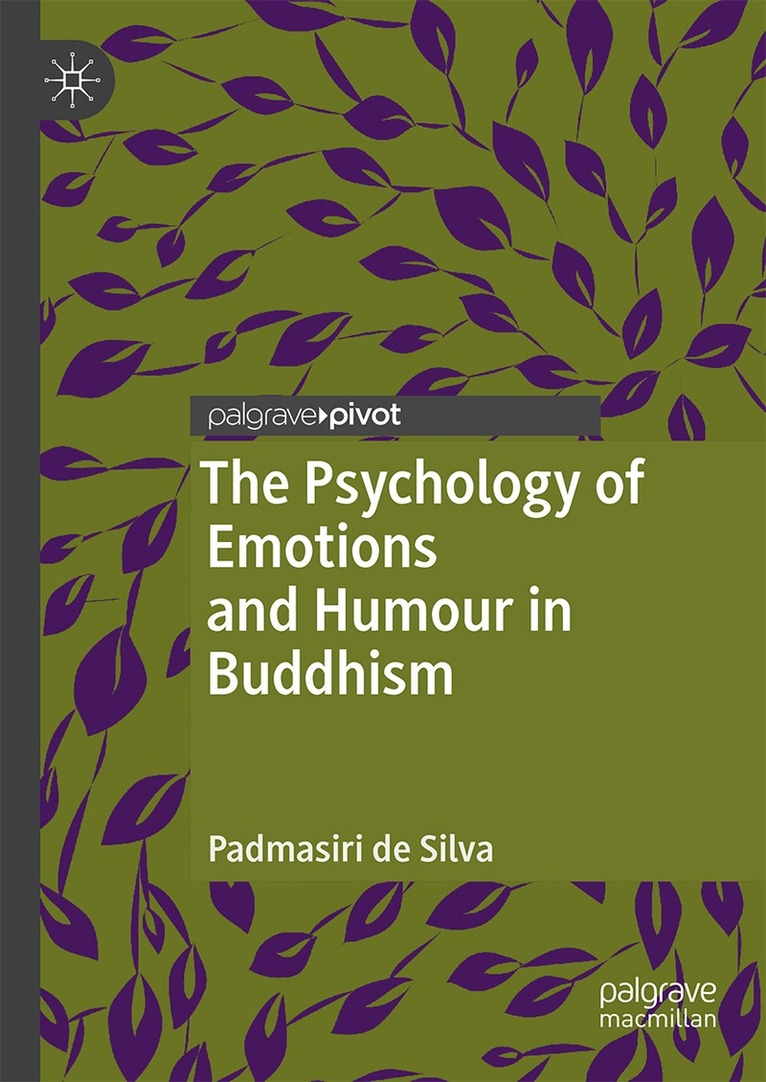
Inbunden, Engelska, 2018
Psychology of Emotions and Humour in Buddhism
607 kr
Beställningsvara. Skickas inom 10-15 vardagar. Fri frakt över 249 kr.
Beskrivning
This book examines the psychological dimensions of emotions and humour in Buddhism. While there is a wealth of material concerning human emotions related to humour and the mindful management of negative emotions, very little has been written on the theory of Buddhist humour. Uniting both Buddhist and Western philosophy, the author draws upon the theory of ‘incongruity humour’, espoused by figures such as Kierkegaard, Kant and Hegel and absorbed into the interpretation of humour by the Buddhist monk and former Western philosopher, Ñāṇavīra Thero. The author makes extensive use of rich primary sources such as the parables used by Ajahn Brahm while interweaving Western theories and philosophies to illuminate this original study of humour and emotion. This pioneering work will be of interest and value to students and scholars of humour, Buddhist traditions and existentialism more widely.
Produktinformation
- Utgivningsdatum: 2018-09-28
- Mått: 148 x 210 x 14 mm
- Vikt: 274 g
- Format: Inbunden
- Språk: Engelska
- Antal sidor: 80
- Upplaga: 18001
- Förlag: Springer International Publishing AG
- ISBN: 9783319975139
Utforska kategorier
Betyg & recensioner
0 recensioner
Inga recensioner tillgängliga.