Inbunden, Engelska, 2012
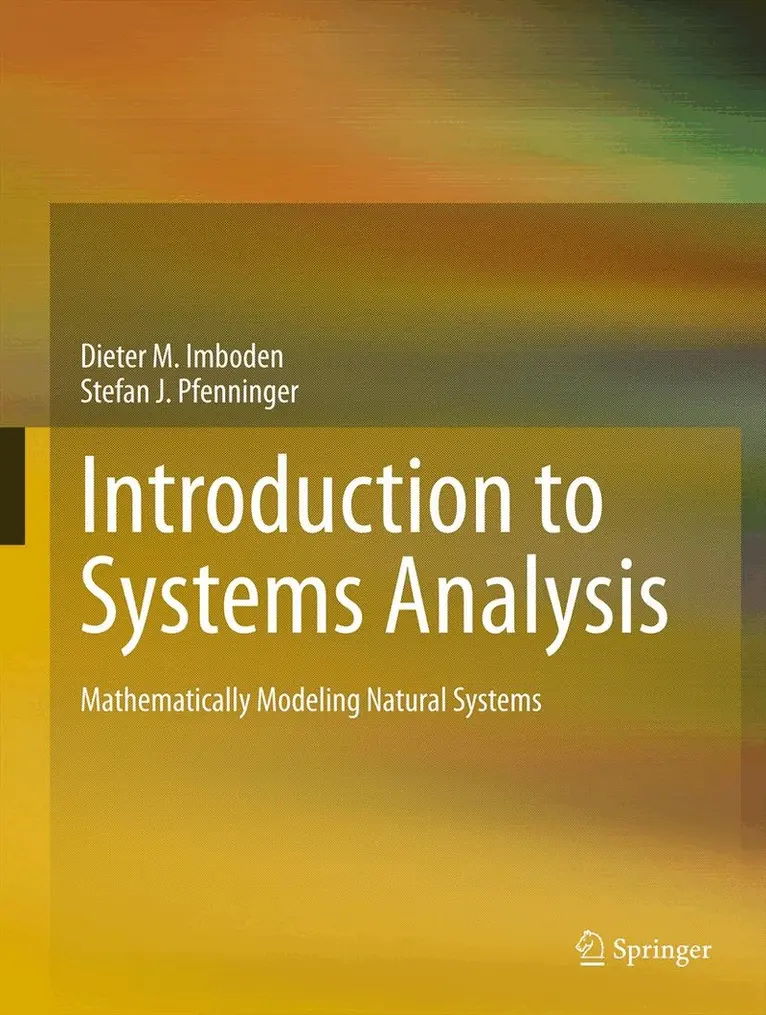
Introduction to Systems Analysis
Av Dieter M. Imboden, Stefan Pfenninger
552 kr
Beställningsvara. Skickas inom 10-15 vardagar. Fri frakt över 249 kr.
Beskrivning
Systems and their mathematical description play an important role in all branches of science. This book offers an introduction to mathematical modeling techniques. It is intended for undergrad students in applied natural science, in particular earth and environmental science, environmental engineering, as well as ecology, environmental chemistry, chemical engineering, agronomy, and forestry.The focus is on developing the basic methods of modeling. Students will learn how to build mathematical models of their own, but also how to analyze the properties of existing models. The book neither derives mathematical formulae, nor does it describe modeling software, instead focusing on the fundamental concepts behind mathematical models. A formulary in the appendix summarizes the necessary mathematical knowledge. To support independent learners, numerous examples and problems from various scientific disciplines are provided throughout the book. Thanks in no small part to the cartoons by Nikolas Stürchler, this introduction to the colorful world of modeling is both entertaining and rich in content
Produktinformation
- Utgivningsdatum: 2012-12-14
- Mått: 210 x 279 x 17 mm
- Vikt: 926 g
- Format: Inbunden
- Språk: Engelska
- Antal sidor: 252
- Upplaga: 2013
- Förlag: Springer-Verlag Berlin and Heidelberg GmbH & Co. KG
- ISBN: 9783642306389
Utforska kategorier
Betyg & recensioner
0 recensioner
Inga recensioner tillgängliga.