Inbunden, Engelska, 2022
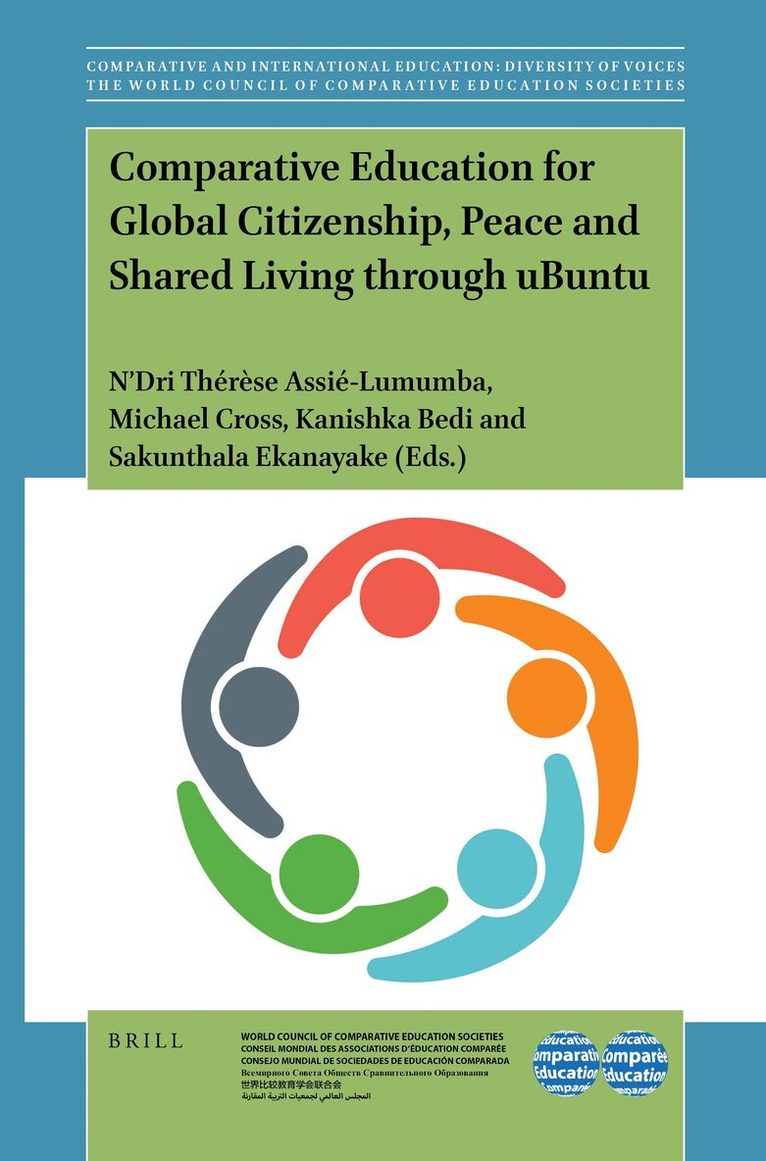
Comparative Education for Global Citizenship, Peace and Shared Living through uBuntu
Av N'Dri Thérèse Assié-Lumumba
2282 kr
Beställningsvara. Skickas inom 5-8 vardagar. Fri frakt över 249 kr.
Beskrivning
There is a dire need today to create spaces in which people can make meaning of their existence in the world, abiding by cultural frameworks and practices that acknowledge and validate a meaningful existence for all. People are not just isolated individuals but are connected in diverse ways with other persons within our natural and social environment which is part of the whole universe. The African philosophy of uBuntu or humaneness is re-emerging for its timely relevance and potential as indispensable in our quest for global citizenship, peace, and mutual understanding in securing sustainable human development in the broader ecosystem. Comparative educationists have the challenge to devise theoretical frameworks, epistemological and pedagogical constructs as well as pragmatic, useful and effective ways of promoting the virtues of compassion and recognition of our common humanity in eliminating the ills of domination and control that are guided by greed, hatred, jealousy, and intolerance. Comparative Education for Global Citizenship, Peace and Shared Living through Ubuntu paves the way for a better understanding of the critical importance of the collective search and endeavor towards achieving the virtues of nonviolence, peace, shared values of living together, global citizenship, improved quality of life for all and a better appreciation of the positive implications of interdependence.
Produktinformation
- Utgivningsdatum: 2022-06-02
- Mått: 155 x 235 x 18 mm
- Vikt: 607 g
- Format: Inbunden
- Språk: Engelska
- Serie: World Council of Comparative Education Societies
- Antal sidor: 262
- Förlag: Brill
- ISBN: 9789004518803
Utforska kategorier
Betyg & recensioner
0 recensioner
Inga recensioner tillgängliga.