Bo Stråth - Böcker
Visar alla böcker från författaren Bo Stråth. Handla med fri frakt och snabb leverans.
17 produkter
17 produkter
Nordic Narratives of the Second World War : national historiographies revisited
Inbunden, Engelska, 2011
222 kr
»Sammantaget är Nordic Narratives of the Second World War en viktig bok, som en introduktion till de nordiska ländernas historiska berättelser om andra världskriget. Boken inbjuder till en stimulerande diskussion.« H-Soz-u-Kult»Nordic Narratives of the Second World War is a solid starting point for those outside the Scandinavian field looking to include Nordic perspectives on World War II, national narratives, and memory construction. The book raises larger questions about nation-states and twentieth-century national myths, and individual essays to varying degrees seek to push historical interpretations to larger questions of the role of national histories in current historical writing. Given the ongoing concerns about the threat to professional historians' authority in an age when access to archival and historical texts is expanding with digitization and Internet access, readers may find the underlying question of who has the authority to present and interpret the past as another way to engage with this text.« H-Net, Humanities & Social Sciences OnlineHow have the dramatic events of the Second World War been viewed in the Nordic countries? In Nordic Narratives of the Second World War, leading Nordic historians analyse post-war memory and historiography. They explore the relationship between scholarly and public understandings of the war. How have national interpretations been shaped by official security-policy doctrines? And in what way has the end of the Cold War affected the Nordic narratives? The authors not only present the overarching themes that set the Nordic experience of the Second World War apart from other European narratives, but also describe the distinctive postwar characteristics of Denmark, Norway, Finland, Iceland, and Sweden. Key concepts such as national identity, memory culture, and the moral turn are placed in their Nordic context.Bringing new nuance to the post-war history of Europe, this is the first work to focus on Nordic narratives of the war, and is valuable reading for students, academics, and all who have an interest in the historiography of the Second World War or modern European history.
Political History of European Integration
The Hypocrisy of Democracy-Through-Market
Häftad, Engelska, 2012
696 kr
Skickas inom 10-15 vardagar
The Maastricht Treaty in 1992 was based on neoliberal ideas of a market-driven European economy and democracy, and continues to be seen as a step towards a new stage of unification: towards a more federal Europe based on market integration. The authors demonstrate that European integration as a federal project actually came to an end around 1970. The European Economic Community (EEC) - the precursor of EU - was never thought of as a democracy. The authors locate a shift in thinking about legitimacy and further integration in the 1980s when the idea of a European democracy was connected with a plan for the internal market: the market would pave the way for democracy. Since then, there has been a growing tension between the official line about a democratic EU and the institutional capacity to carry it through. This tension undermined integration. The book suggests that, instead of democracy-through-market, there are signs of increasing social disintegration, political extremism and populism in the wake of economic integration. Providing a more realistic historical understanding of European integration, this book will be of interest to students and scholars of political science, history and European studies.
Political History of European Integration
The Hypocrisy of Democracy-Through-Market
Inbunden, Engelska, 2010
2 235 kr
Skickas inom 10-15 vardagar
The Maastricht Treaty in 1992 was based on neoliberal ideas of a market-driven European economy and democracy, and continues to be seen as a step towards a new stage of unification: towards a more federal Europe based on market integration. The authors demonstrate that European integration as a federal project actually came to an end around 1970. The European Economic Community (EEC) - the precursor of EU - was never thought of as a democracy. The authors locate a shift in thinking about legitimacy and further integration in the 1980s when the idea of a European democracy was connected with a plan for the internal market: the market would pave the way for democracy. Since then, there has been a growing tension between the official line about a democratic EU and the institutional capacity to carry it through. This tension undermined integration. The book suggests that, instead of democracy-through-market, there are signs of increasing social disintegration, political extremism and populism in the wake of economic integration. Providing a more realistic historical understanding of European integration, this book will be of interest to students and scholars of political science, history and European studies.
511 kr
Skickas inom 3-6 vardagar
An examination of the role of history and memory is vital in order to better understand why the grand design of a United Europe—with a common foreign policy and market yet enough diversity to allow for cultural and social differences—was overwhelmingly turned down by its citizens. The authors argue that this rejection of the European constitution was to a certain extent a challenge to the current historical grounding used for further integration and further demonstrates the lack of understanding by European bureaucrats of the historical complexity and divisiveness of Europe’s past. A critical European history is therefore urgently needed to confront and re-imagine Europe, not as a harmonious continent but as the outcome of violent and bloody conflicts, both within Europe as well as with its Others. As the authors show, these dark shadows of Europe’s past must be integrated, and the fact that memories of Europe are contested must be accepted if any new attempts at a United Europe are to be successful.
1 957 kr
Skickas inom 10-15 vardagar
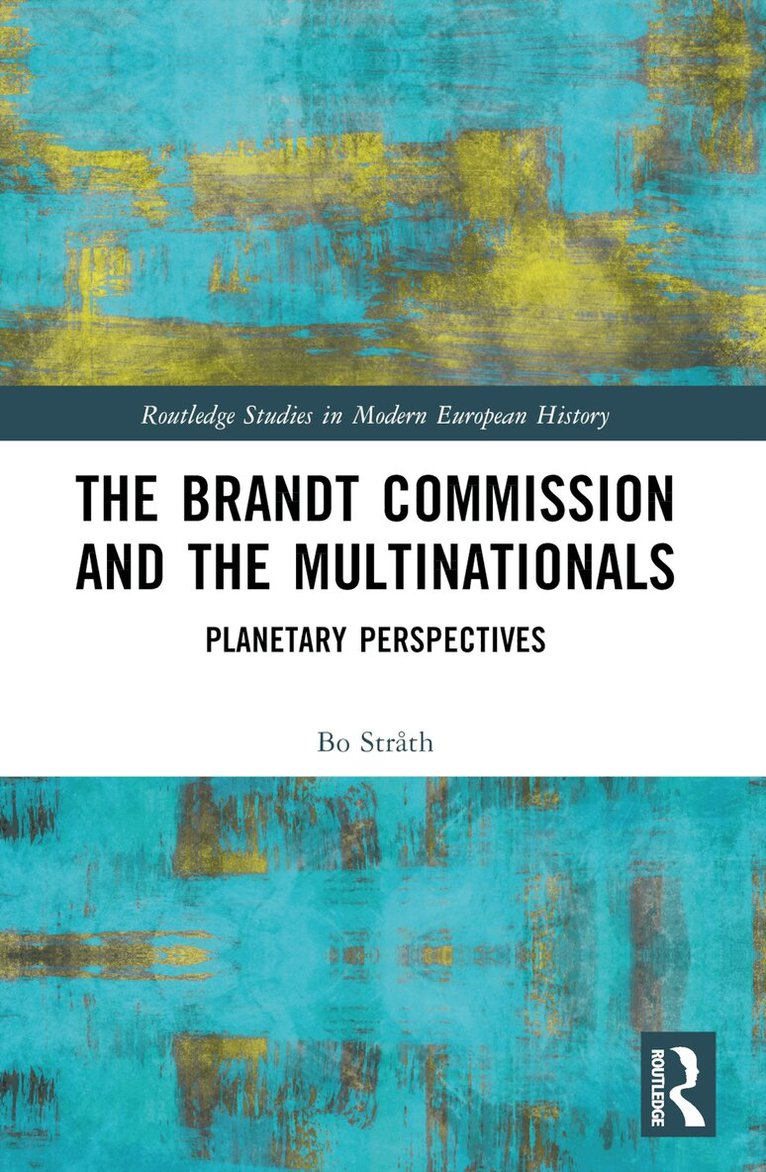
Set against the backdrop of dramatic world order transformations across the 1970s and 1980s, this book examines the competing planetary perspectives of the Brandt Commission and the multinationals, arguing that the missed opportunities of these decades created a path for contemporary political and economic crises.At the Global South’s request for a New International Economic Order, the Brandt Commission, chaired by Willy Brandt, was appointed in 1977. The commission, with a goal to formulate arguments on how to close the gap between the North and South, developed a planetary perspective grounded in economic redistribution, ecological considerations, and disarmament. The multinationals, at that time, a new kind of business corporation, repressed Brandt’s vision by seeking freedom from political monitoring. This book discusses the ways that global corporations created facts that changed the world and the preconditions of politics. It moves beyond existing research that considers the competition merely a theoretical clash between Keynesianism and neoliberalism.Featuring a thorough analysis of the decades’ trends and a new interview with Shridath Ramphal, the Commission’s unofficial vice chair, this is a timely volume for students and researchers of international relations, political science, and contemporary history.
598 kr
Skickas inom 10-15 vardagar
Set against the backdrop of dramatic world order transformations across the 1970s and 1980s, this book examines the competing planetary perspectives of the Brandt Commission and the multinationals, arguing that the missed opportunities of these decades created a path for contemporary political and economic crises.At the Global South’s request for a New International Economic Order, the Brandt Commission, chaired by Willy Brandt, was appointed in 1977. The commission, with a goal to formulate arguments on how to close the gap between the North and South, developed a planetary perspective grounded in economic redistribution, ecological considerations, and disarmament. The multinationals, at that time, a new kind of business corporation, repressed Brandt’s vision by seeking freedom from political monitoring. This book discusses the ways that global corporations created facts that changed the world and the preconditions of politics. It moves beyond existing research that considers the competition merely a theoretical clash between Keynesianism and neoliberalism.Featuring a thorough analysis of the decades’ trends and a new interview with Shridath Ramphal, the Commission’s unofficial vice chair, this is a timely volume for students and researchers of international relations, political science, and contemporary history.
823 kr
Skickas inom 10-15 vardagar
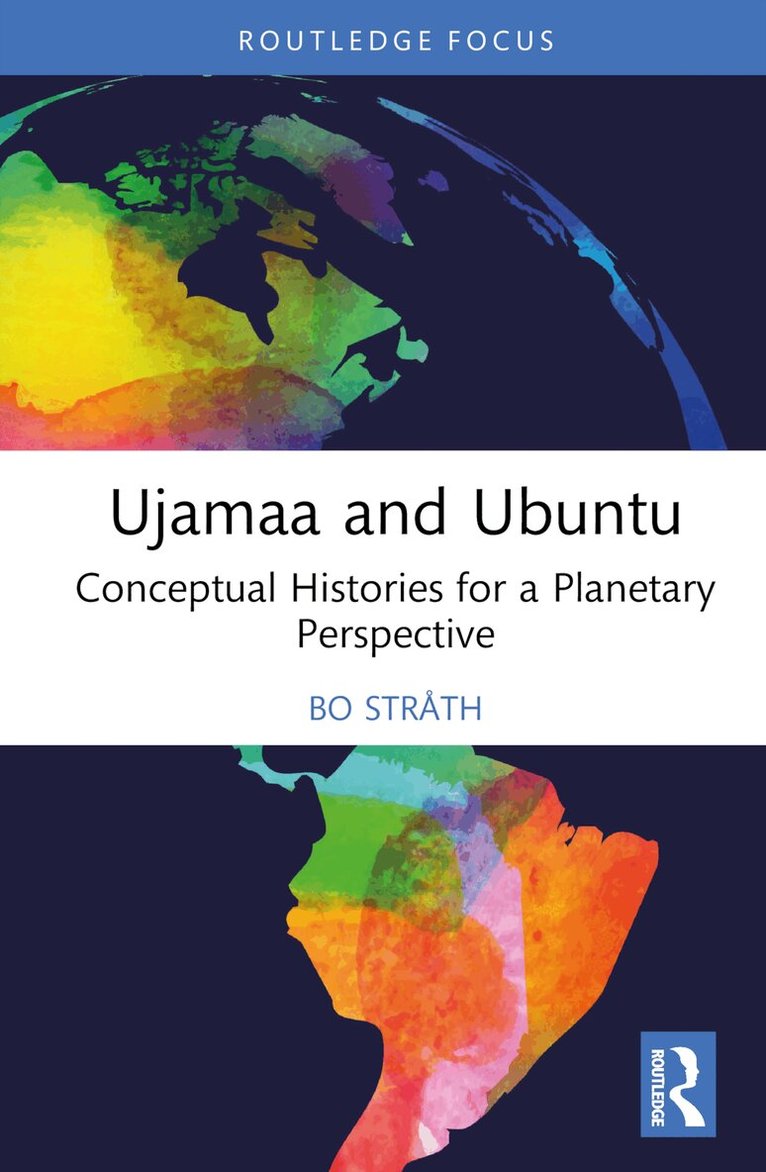
For over a decade, the world has experienced an accelerating erosion of a language that took hundreds of years to emerge. It is a language ordering time and space with words, such as enlightenment, reason, rationality, modernization, and the most recent by-word, globalization. However, it is a language that has been accompanied by colonialism, imperialism, racism, the exploitation of people and nature, an unequal distribution of the world’s resources, pogroms, genocides, and world wars. There has been a gap between assumptions underlying a visionary ambition and the often-brutal practices that have accompanied it. Moreover, it is a language that expresses European values, with the implicit or explicit suggestion that they pertain to the whole world, a civilizing mission from a European centre. Although the established narrative argued that there was continuous progress, it was a conclusion reached through hindsight. The idea of progress had to be repeatedly recreated through new visionary projects that attempted to live up to the high ideals their predecessors failed to achieve.Against the backdrop of this meta-normative point of departure, the book argues that a convincing grand narrative has failed to materialize since the discrediting of globalization. In the search for a new narrative, it argues at a meta-normative level for a reformulation of the term ‘global’ away from its close connection to the globe as an unbounded self-propelling market that exists beyond human influence. ‘Global’ should no longer be reduced to auto-playing market fiction but instead be connected to the planet, Terra, the Earth. With reference to Latour and Chakrabarty, ‘global’ and ‘planetary’ mean cohabitation; life on earth is seen as an infinite symbiotic system, nurtured, and protected, but also destroyed, by human action.The book argues that a new conceptualization of ‘the global’ and ‘the planet’ requires input from African and Asian language cultures. The book explores in depth the history of the two political African key concepts of ujamaa and ubuntu and argues that they are cases showing how work on a new global/planetary narrative might look. The investigation of the two concepts demonstrate that translations are juxtapositions that point up what is shared and what isn’t between concepts in two or more languages. The point of comparison is not to develop a uniform, global perspective, even if that were possible, but to develop a global understanding of difference and, through that, to begin to look for a common ground. Translations of political key concepts are the source of a growing understanding of difference.
345 kr
Skickas inom 10-15 vardagar
For over a decade, the world has experienced an accelerating erosion of a language that took hundreds of years to emerge. It is a language ordering time and space with words, such as enlightenment, reason, rationality, modernization, and the most recent by-word, globalization. However, it is a language that has been accompanied by colonialism, imperialism, racism, the exploitation of people and nature, an unequal distribution of the world’s resources, pogroms, genocides, and world wars. There has been a gap between assumptions underlying a visionary ambition and the often-brutal practices that have accompanied it. Moreover, it is a language that expresses European values, with the implicit or explicit suggestion that they pertain to the whole world, a civilizing mission from a European centre. Although the established narrative argued that there was continuous progress, it was a conclusion reached through hindsight. The idea of progress had to be repeatedly recreated through new visionary projects that attempted to live up to the high ideals their predecessors failed to achieve.Against the backdrop of this meta-normative point of departure, the book argues that a convincing grand narrative has failed to materialize since the discrediting of globalization. In the search for a new narrative, it argues at a meta-normative level for a reformulation of the term ‘global’ away from its close connection to the globe as an unbounded self-propelling market that exists beyond human influence. ‘Global’ should no longer be reduced to auto-playing market fiction but instead be connected to the planet, Terra, the Earth. With reference to Latour and Chakrabarty, ‘global’ and ‘planetary’ mean cohabitation; life on earth is seen as an infinite symbiotic system, nurtured, and protected, but also destroyed, by human action.The book argues that a new conceptualization of ‘the global’ and ‘the planet’ requires input from African and Asian language cultures. The book explores in depth the history of the two political African key concepts of ujamaa and ubuntu and argues that they are cases showing how work on a new global/planetary narrative might look. The investigation of the two concepts demonstrate that translations are juxtapositions that point up what is shared and what isn’t between concepts in two or more languages. The point of comparison is not to develop a uniform, global perspective, even if that were possible, but to develop a global understanding of difference and, through that, to begin to look for a common ground. Translations of political key concepts are the source of a growing understanding of difference.
392 kr
Skickas inom 10-15 vardagar
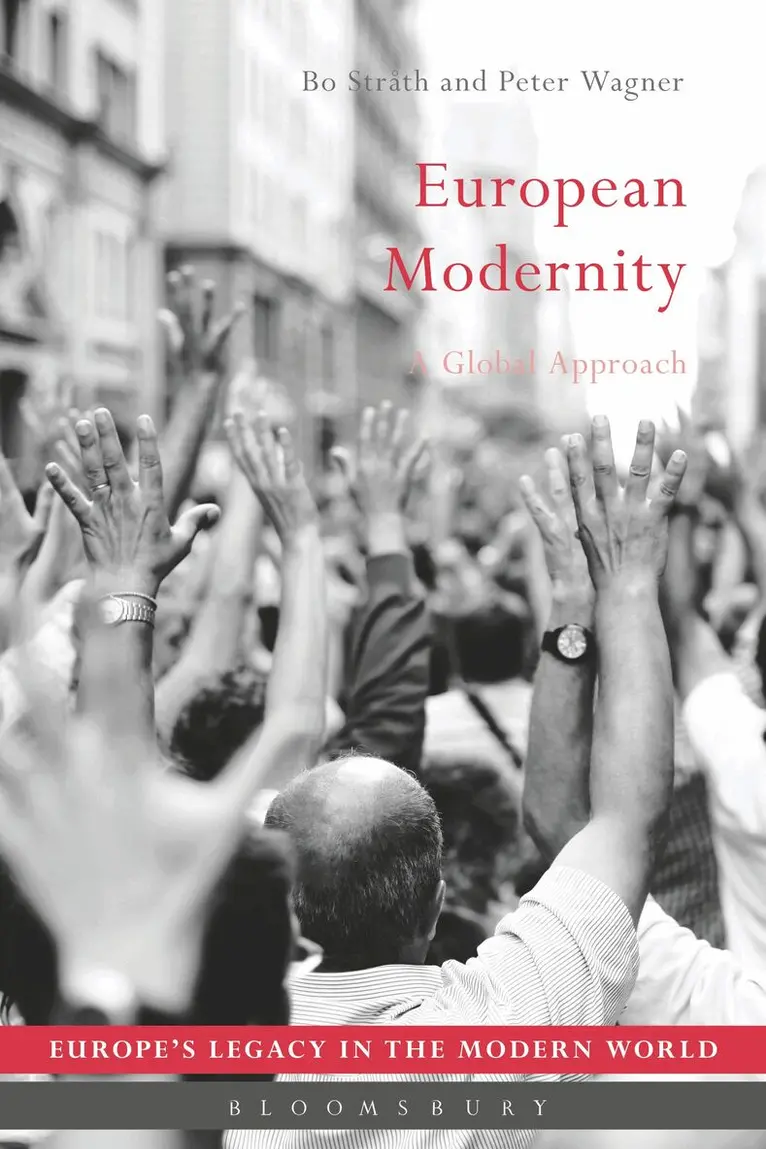
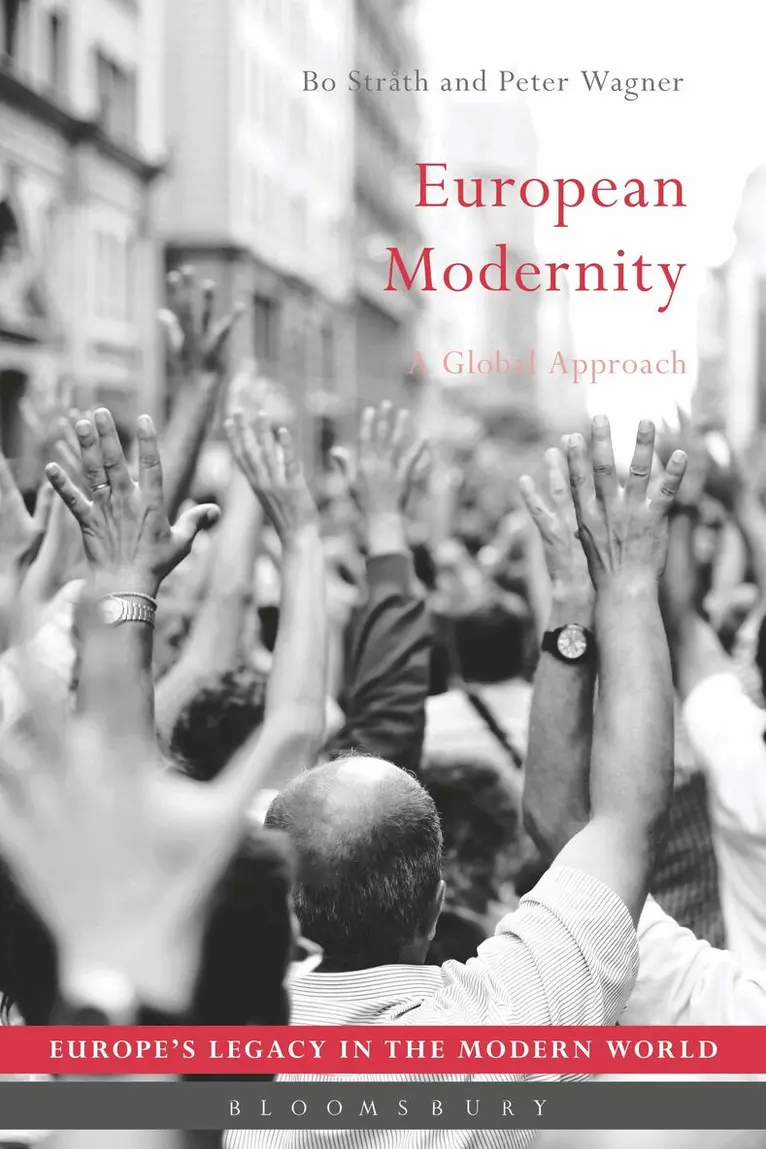
It is often taken for granted that modernity emerged in Europe and diffused from there across the world. This book questions that assumption and re-examines the question of European modernity in the light of world history. Bo Stråth and Peter Wagner re-position Europe in the global context of the 19th and 20thcenturies. They show that Europe is less modern than has been assumed, and modernity less European and thus decentre Europe in a way that makes room for a wider historical perspective. Adopting a thematic structure, the authors reconceive the idea of European modernity in relation to key topics such as democracy, capitalism and market society, individual autonomy, religion and politics. European Modernity is an important addition to the literature that will be of interest to all students and scholars of modern European history.
1 314 kr
Skickas inom 10-15 vardagar
It is often taken for granted that modernity emerged in Europe and diffused from there across the world. This book questions that assumption and re-examines the question of European modernity in the light of world history. Bo Stråth and Peter Wagner re-position Europe in the global context of the 19th and 20thcenturies. They show that Europe is less modern than has been assumed, and modernity less European and thus decentre Europe in a way that makes room for a wider historical perspective. Adopting a thematic structure, the authors reconceive the idea of European modernity in relation to key topics such as democracy, capitalism and market society, individual autonomy, religion and politics. European Modernity is an important addition to the literature that will be of interest to all students and scholars of modern European history.
544 kr
Skickas inom 10-15 vardagar
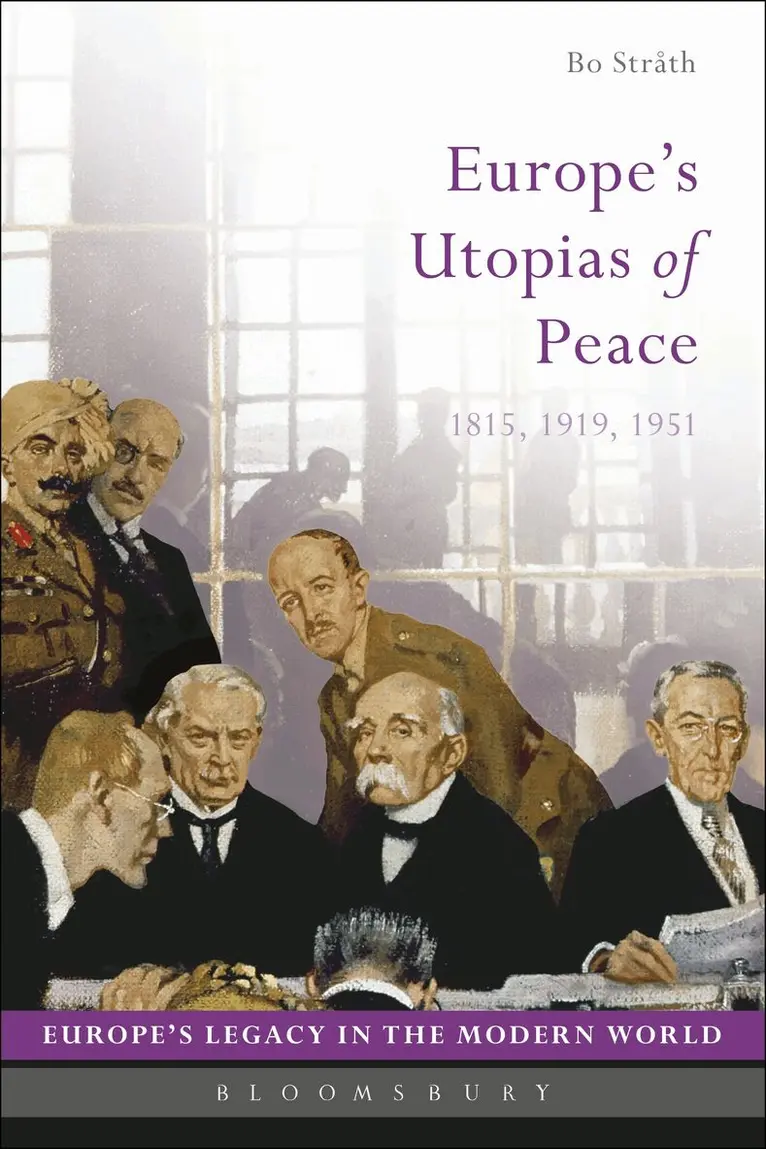
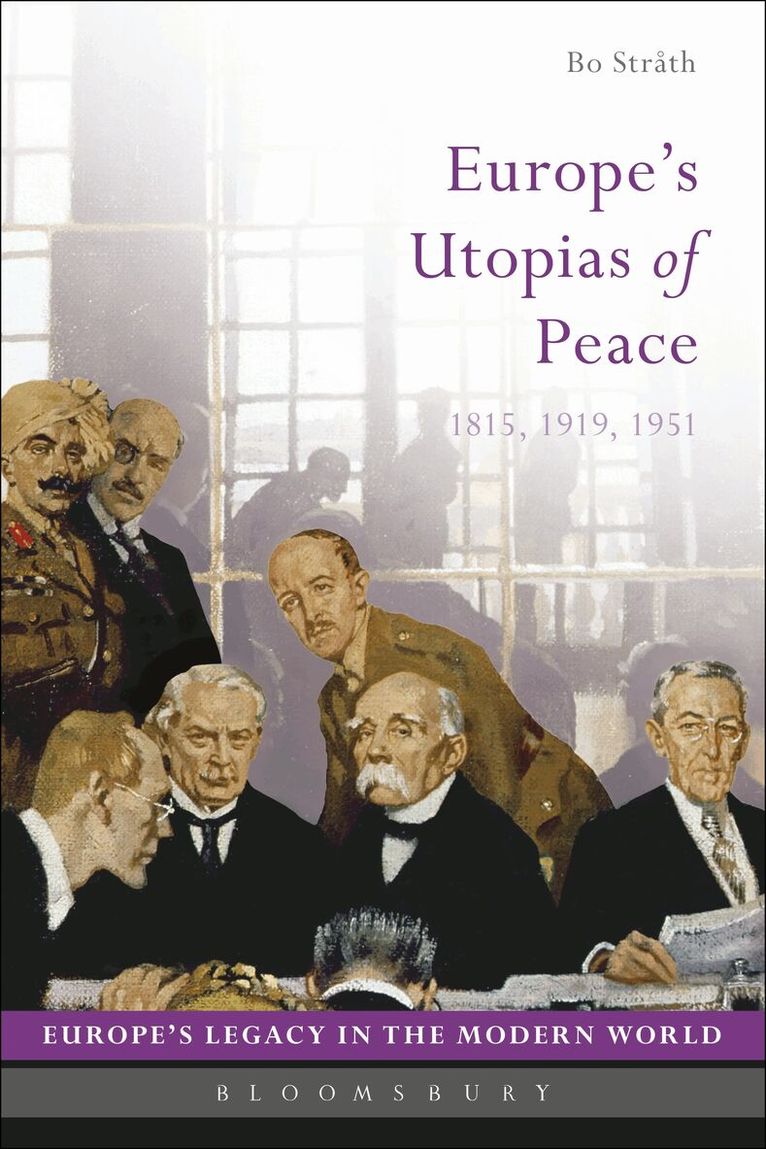
Europe’s Utopias of Peace explores attempts to create a lasting European peace in the aftermath of the Napoleonic wars and the two world wars. The book charts the 250 year cycle of violent European conflicts followed by new utopian formulations for peace. The utopian illusion was that future was predictable and rules could prescribe behaviour in conflicts to come.Bo Stråth examines the reiterative bicentenary cycle since 1815, where each new postwar period built on a design for a project for European unification. He sets out the key historical events and the continuous struggle with nationalism, linking them to legal, political and economic thought. Biographical sketches of the most prominent thinkers and actors provide the human element to this narrative.Europe’s Utopias of Peace presents a new perspective on the ideological, legal, economic and intellectual conditions that shaped Europe since the 19th century and presents this in a global context. It challenges the conventional narrative on Europe’s past as a progressive enlightenment heritage, highlighting the ambiguities of the legacies that pervade the institutional structures of contemporary Europe. Its long-term historical perspective will be invaluable for students of contemporary Europe or modern European history.
1 888 kr
Skickas inom 10-15 vardagar
Europe’s Utopias of Peace explores attempts to create a lasting European peace in the aftermath of the Napoleonic wars and the two world wars. The book charts the 250 year cycle of violent European conflicts followed by new utopian formulations for peace. The utopian illusion was that future was predictable and rules could prescribe behaviour in conflicts to come.Bo Stråth examines the reiterative bicentenary cycle since 1815, where each new postwar period built on a design for a project for European unification. He sets out the key historical events and the continuous struggle with nationalism, linking them to legal, political and economic thought. Biographical sketches of the most prominent thinkers and actors provide the human element to this narrative.Europe’s Utopias of Peace presents a new perspective on the ideological, legal, economic and intellectual conditions that shaped Europe since the 19th century and presents this in a global context. It challenges the conventional narrative on Europe’s past as a progressive enlightenment heritage, highlighting the ambiguities of the legacies that pervade the institutional structures of contemporary Europe. Its long-term historical perspective will be invaluable for students of contemporary Europe or modern European history.
1 644 kr
Skickas inom 7-10 vardagar
This book examines the three historical master tales and questions their validity and relevance in today's moment of global disorientation and lack of convincing and dominant economic narrative. Investigating the ideological dimension and exploring the continued impact of Marx, Keynes and Hayek, the authors demonstrate how these three economic narratives became entangled over time and under increasing complexity, overlapping and competing with each other. The book reflects on the meaning of the historical legacy of the three narratives and investigates their significance today. All three outlined the prospects of a better and more economically efficient world with increased social justice, Magnusson and Strath argue that they constitute a legacy on which a new economic tale must be based, a legacy to draw on or confront. A concise and engaging work, this is an ideal resource for students and academics interested in economics, political science, history and global studies. A Brief History of Political Economy presents a powerful economic history of the last 170 years as a basis for economic reconsideration.
2 120 kr
Skickas inom 3-6 vardagar
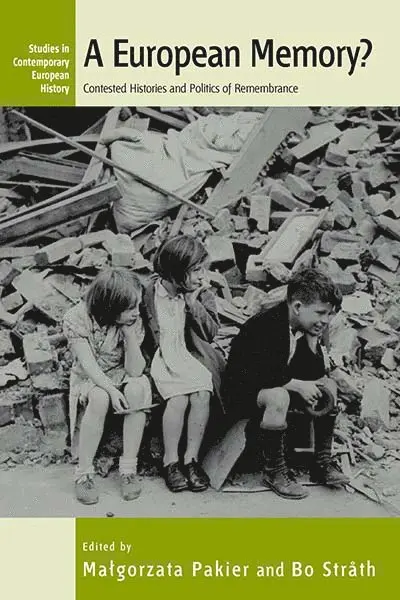
"As the most comprehensive scholarly venture to use the memory concept for a broad assessment of the dark legacies of Nazism, Communism, and World War II for a common European identity, the volume has no equal. It overwhelms the reader with a plethora of both new and well established information and reflection...The overall direction coincides with the current trend towards internationalization of national histories. It can be considered a strong contribution to this important and worthwhile trend." * Frank Trommler, University of Pennsylvania An examination of the role of history and memory is vital in order to better understand why the grand design of a United Europe-with a common foreign policy and market yet enough diversity to allow for cultural and social differences-was overwhelmingly turned down by its citizens. The authors argue that this rejection of the European constitution was to a certain extent a challenge to the current historical grounding used for further integration and further demonstrates the lack of understanding by European bureaucrats of the historical complexity and divisiveness of Europe's past.A critical European history is therefore urgently needed to confront and re-imagine Europe, not as a harmonious continent but as the outcome of violent and bloody conflicts, both within Europe as well as with its Others. As the authors show, these dark shadows of Europe's past must be integrated, and the fact that memories of Europe are contested must be accepted if any new attempts at a United Europe are to be successful. MaACgorzata Pakier has recently received a PhD from the European University Institute in Florence, Department of History and Civilization. She has published articles in Polish and English on discourses and images of the Holocaust in popular culture and film. Bo Strath was Professor of Contemporary History at the European University Institute in Florence (1997-2007) and is currently Academy of Finland Distinguished Professor of Nordic, European and World History at Helsinki University. His research concentrates on questions of modernity and the use of history in a European and global perspective.
1 754 kr
Skickas inom 10-15 vardagar
Mention the word Europe in today's society and you are greeted with a range of responses, from impassioned debate, to scepticism and outright hostility. Yet long before the emergence of the modern European Union, the concept of Europe played a vital role in the creation of national identity. This book considers the wealth of contemporary and historical attitudes towards Europe and how these vary both within and between nation-states. Why are some countries 'Europhiles' whilst others are 'Europhobic'? How has Europe alternately been perceived as a threat to local culture and identity or as the core of nation-building? Why are individual responses to Europe so diverse? Comparing and contrasting experiences from twelve very different countries, the authors explore the multitude of ways in which established national discourses are reconciled with an emerging identity within the EU. In doing so, this book makes an important contribution to what has proved to be one of the most controversial and heated debates of our time.
489 kr
Skickas inom 10-15 vardagar
Mention the word Europe in today's society and you are greeted with a range of responses, from impassioned debate, to scepticism and outright hostility. Yet long before the emergence of the modern European Union, the concept of Europe played a vital role in the creation of national identity. This book considers the wealth of contemporary and historical attitudes towards Europe and how these vary both within and between nation-states. Why are some countries 'Europhiles' whilst others are 'Europhobic'? How has Europe alternately been perceived as a threat to local culture and identity or as the core of nation-building? Why are individual responses to Europe so diverse? Comparing and contrasting experiences from twelve very different countries, the authors explore the multitude of ways in which established national discourses are reconciled with an emerging identity within the EU. In doing so, this book makes an important contribution to what has proved to be one of the most controversial and heated debates of our time.
210 kr
Skickas
Westfaliska freden år 1648 är ett av den europeiska och svenska historiens mest välkända årtal. Slutet på trettioåriga kriget och de fördrag som beseglade uppgörelsen har tolkats, framförallt inom statsvetenskapen, som början på den moderna eran inom internationell politik och som ett dramatiskt brott mot det förmoderna sättet att bedriva politik.I 1648 - Den westfaliska freden introducerar författarna en nytolkning av fredsfördragen som betonar hur dokumenten befäster och utgör en fortsättning på äldre tiders politiska former. Detta nya perspektiv står i stark kontrast mot den traditionella synen på freden. I boken hävdar skribenterna att den tidigare statsvetenskapliga tolkningen är förlegad och bygger på missuppfattningar av centrala delar av de westfaliska avtalen. För studiet av internationell politik bör det nyare synsättet anläggas.Författarna, som är historiker och statsvetare, ger goda grunder för sin reviderade syn på avtalen, och belyser fördragen i sina verkliga sammanhang. Boken kompletteras av den första moderna svenska översättningen av fredstraktaten. För första gången någonsin publiceras också på svenska det kompletta fredsfördraget i Osnabrück mellan den svenska drottningen och den tysk-romerske kejsaren.