Gudmundur Halfdanarson - Böcker
Visar alla böcker från författaren Gudmundur Halfdanarson. Handla med fri frakt och snabb leverans.
5 produkter
5 produkter
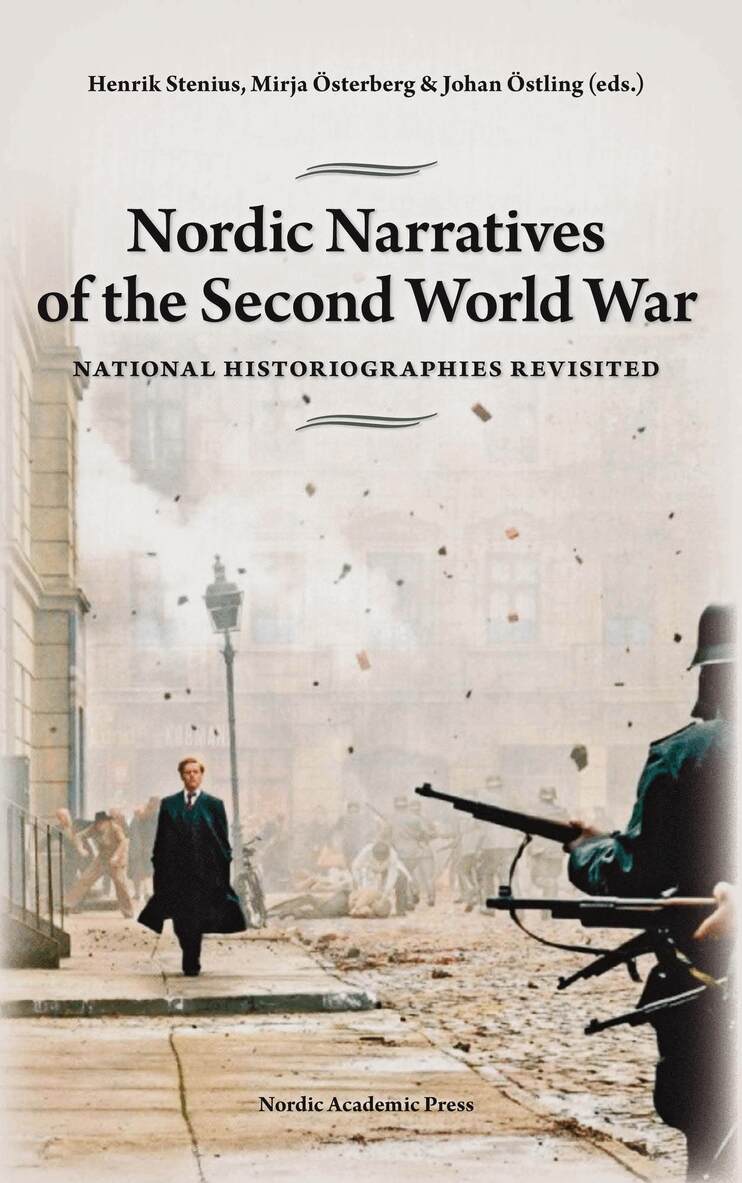
Nordic Narratives of the Second World War : national historiographies revisited
Inbunden, Engelska, 2011
222 kr
»Sammantaget är Nordic Narratives of the Second World War en viktig bok, som en introduktion till de nordiska ländernas historiska berättelser om andra världskriget. Boken inbjuder till en stimulerande diskussion.« H-Soz-u-Kult»Nordic Narratives of the Second World War is a solid starting point for those outside the Scandinavian field looking to include Nordic perspectives on World War II, national narratives, and memory construction. The book raises larger questions about nation-states and twentieth-century national myths, and individual essays to varying degrees seek to push historical interpretations to larger questions of the role of national histories in current historical writing. Given the ongoing concerns about the threat to professional historians' authority in an age when access to archival and historical texts is expanding with digitization and Internet access, readers may find the underlying question of who has the authority to present and interpret the past as another way to engage with this text.« H-Net, Humanities & Social Sciences OnlineHow have the dramatic events of the Second World War been viewed in the Nordic countries? In Nordic Narratives of the Second World War, leading Nordic historians analyse post-war memory and historiography. They explore the relationship between scholarly and public understandings of the war. How have national interpretations been shaped by official security-policy doctrines? And in what way has the end of the Cold War affected the Nordic narratives? The authors not only present the overarching themes that set the Nordic experience of the Second World War apart from other European narratives, but also describe the distinctive postwar characteristics of Denmark, Norway, Finland, Iceland, and Sweden. Key concepts such as national identity, memory culture, and the moral turn are placed in their Nordic context.Bringing new nuance to the post-war history of Europe, this is the first work to focus on Nordic narratives of the war, and is valuable reading for students, academics, and all who have an interest in the historiography of the Second World War or modern European history.
695 kr
Skickas inom 10-15 vardagar
While Iceland is the second largest inhabited island in Europe, with only 313,000 inhabitants in 2007, the Icelanders form one of the smallest independent nations in the world. Around two-thirds of the population lives in the capital, Reykjavík, and its suburbs, while the rest is spread around the inhabitable area of the country. Until fairly recently the Icelandic nation was unusually homogeneous, both in cultural and religious terms; in 1981, around 98 percent of the nation was born in Iceland and 96 percent belonged to the Lutheran state church or other Lutheran religious sects. In 2007, these numbers were down to 89 and 86 percent respectively, reflecting the rapidly growing multicultural nature of Icelandic society.The A to Z of Iceland traces Iceland's history and provides a compass for the direction the country is heading. This is done through its chronology, introductory essays, appendixes, map, bibliography, and hundreds of cross-referenced dictionary entries on important persons, places, events, and institutions and significant political, economic, social, and cultural aspects.
1 619 kr
Skickas inom 10-15 vardagar
Iceland demonstrates most of the characteristics of a modern liberal democracy. It has maintained political stability through a democratic process which enjoys universal legitimacy. Rapid economic modernization has also secured its inhabitants one of the highest living standards in the world, and a comprehensive and highly developed health system has ensured them longevity and one of the lowest rates of infant mortality in the world. Icelanders face, however, formidable challenges in maintaining their status as an independent nation. First, the Icelandic economy is fairly fragile, as overexploitation threatens the fish stocks that remain among Iceland’s principal economic resources. Second, the country is rich in unused energy resources, because many of its rivers are still not harnessed, and geothermal power is abundant. But using these resources will necessarily damage the pristine nature of the country, forcing the politicians and the Icelandic public to choose between environmental protection and industrial expansion. Finally, it remains to be seen if a country with just over 329.740 inhabitants will be able to manage its foreign relations in a complex and constantly changing world.This third edition of Historical Dictionary of Iceland contains a chronology, an introduction, and an extensive bibliography. The dictionary section has over 200 cross-referenced entries on important personalities, politics, economy, foreign relations, religion, and culture. This book is an excellent access point for students, researchers, and anyone wanting to know more about Iceland.
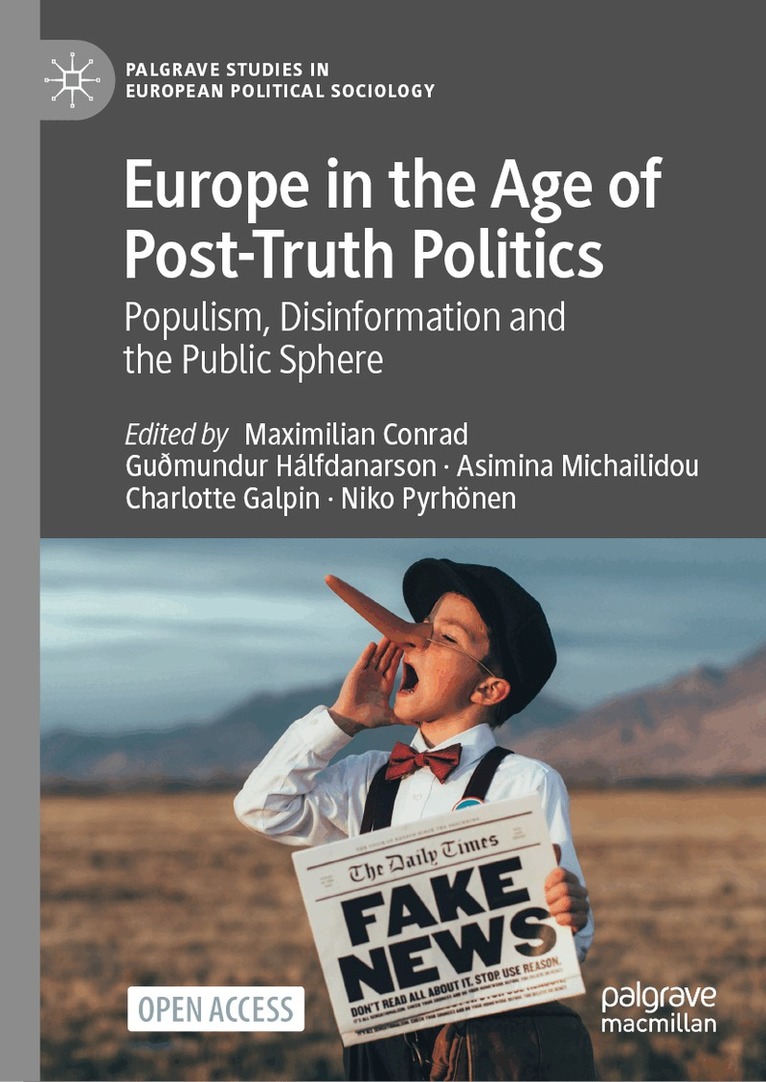
Europe in the Age of Post-Truth Politics
Populism, Disinformation and the Public Sphere
Inbunden, Engelska, 2022
535 kr
Skickas inom 10-15 vardagar
This open access book is the product of three years of academic research that has been carried out in the EU-funded Jean Monnet Network on “Post-Truth Politics, Nationalism and the Delegitimation of European Integration” since 2019.
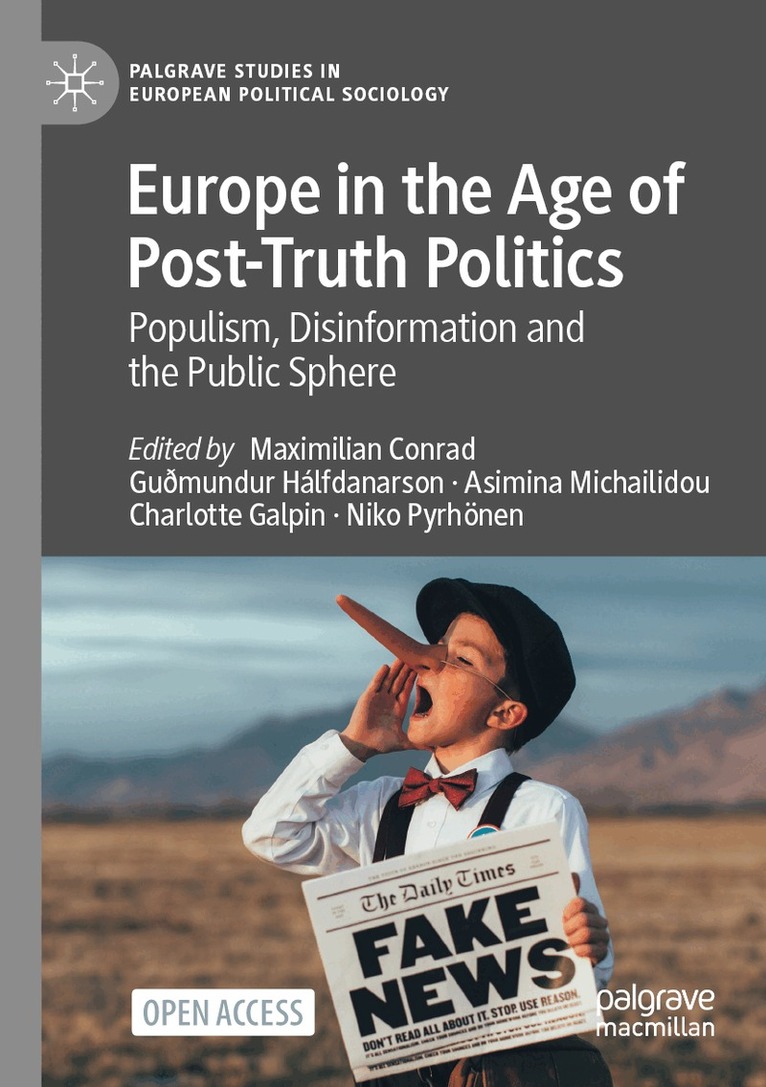
Europe in the Age of Post-Truth Politics
Populism, Disinformation and the Public Sphere
Häftad, Engelska, 2022
430 kr
Skickas inom 10-15 vardagar
This open access book is the product of three years of academic research that has been carried out in the EU-funded Jean Monnet Network on “Post-Truth Politics, Nationalism and the Delegitimation of European Integration” since 2019.