• Fri frakt över 249 kr
  • •
  • Snabba leveranser
  • •
  • Billiga böcker
Kundservice

Du är på sajten för privatpersoner.

Företag, bibliotek eller offentlig verksamhet?

Du handlar på classic.bokus.com, där alla dina funktioner finns intakta.
Till classic.bokus.com
Bokus logotyp. Gå till startsidan.
  • Erbjudanden
  • Nyheter
  • Student
  • Topplistor
  • Barn & ungdom
  • Bokus Play
  • E-böcker
  • Pocketböcker
  • Spel & pussel

10% rabatt på allt med kod NYSTART10 →

Sidfot

Mina sidor

    Hjälp

    • Kundservice
    • Vanliga frågor och svar
    • Frakt och leverans
    • Retur vid ångerrätt
    • Reklamera vara
    • Betalning
    • Köpvillkor
    • Allmänna villkor
    • Information om webbplatsens tillgänglighet

    Om Bokus

    • Om oss
    • Pressrum
    • För studenter
    • För företag
    • För bibliotek och offentlig verksamhet
    • För leverantörer
    • Hållbarhet

    Populärt

    • Aktuella erbjudanden
    • Presentkort
    • Studentlitteratur
    • Nya böcker
    • Topplistor
    • Signerade böcker
    • Engelska böcker

    Inspiration

    • Boktips
    • BookTok
    • Populära bokserier
    • Barnbokskaraktärer
    • Populära författare
    Logotyp för Bokus
    Följ oss på Facebook (extern länk)Följ oss på Instagram (extern länk)Följ oss på YouTube (extern länk)Följ oss på TikTok (extern länk)
    bokus @ CookiesAnpassa cookiesIntegritetspolicyKöpvillkor
    Till Citymail hemsida (extern länk)Till Budbee hemsida (extern länk)Till Postnord hemsida (extern länk)Till Schenker hemsida (extern länk)Till Early Bird hemsida (extern länk)Till Walleys hemsida (extern länk)
    1. Historia och arkeologi
    2. Historia
    3. Europas historia

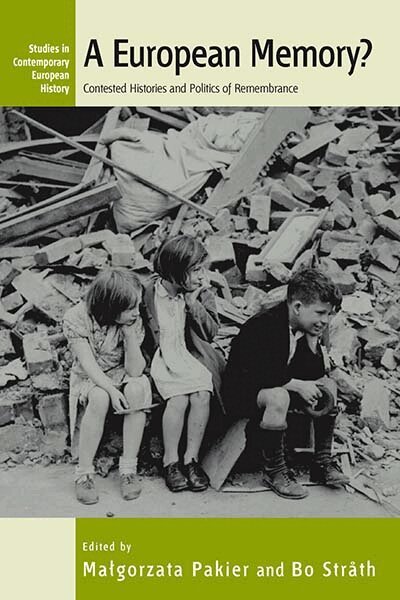
    European Memory?

    Contested Histories and Politics of Remembrance

    AvMałgorzata Pakier,Bo Stråth

    Häftad, Engelska, 2012

    Del i serien Studies in Contemporary European History

    453 kr

    Beställningsvara. Skickas inom 5-8 vardagar. Fri frakt över 249 kr.

    Beskrivning

    An examination of the role of history and memory is vital in order to better understand why the grand design of a United Europe—with a common foreign policy and market yet enough diversity to allow for cultural and social differences—was overwhelmingly turned down by its citizens. The authors argue that this rejection of the European constitution was to a certain extent a challenge to the current historical grounding used for further integration and further demonstrates the lack of understanding by European bureaucrats of the historical complexity and divisiveness of Europe’s past. A critical European history is therefore urgently needed to confront and re-imagine Europe, not as a harmonious continent but as the outcome of violent and bloody conflicts, both within Europe as well as with its Others. As the authors show, these dark shadows of Europe’s past must be integrated, and the fact that memories of Europe are contested must be accepted if any new attempts at a United Europe are to be successful.

    Produktinformation

    • Utgivningsdatum:2012-01-01
    • Mått:152 x 229 x 20 mm
    • Vikt:499 g
    • Format:Häftad
    • Språk:Engelska
    • Serie:Studies in Contemporary European History
    • Antal sidor:372
    • Förlag:Berghahn Books
    • ISBN:9780857454300

    Utforska kategorier

    • Europas historia inom Historia och arkeologi
    • Internationella relationer inom Samhälle och politik

    Mer om författaren

    Małgorzata Pakier is Assistant Professor at the Institute of Sociology, Warsaw School of Social Sciences and Humanities, and is also active in planning the Museum of the History of Polish Jews. She received her PhD from the European University Institute in Florence, Department of History and Civilization. Her research interests include the media of memory, especially film, museum, and city spaces, and Holocaust memory and representation.

    Recensioner i media

    “Editors Malgorzata Pakier and Bo Strath and the score of contributing scholars deserve commendation for a collection of ambitious essays, many of which represent bold attempts at explaining and synthesizing complex concepts and processes.”  ·  Journal of Cold War Studies“The book provides an extremely useful guide through the labyrinth of issues concerning Europeans and the politics of remembrance. The editors deserve great credit for taking on and attempting to represent the multiplicity of debates that characterize contemporary European visions of and debates about the past.”  ·  Central European History“This work assembles the most recent reflections on the cultural unification of Europe as well as…proposes a serious interdisciplinary discussion of practices of memory. A work that is useful for whoever wishes to have an overview of the questions arising from the internationalization of national memoirs and to reflect on the role of the historian in the context of the multiple discourses on the past.”  ·  Histoire sociale/Social History“An anthology of impressive and seminal scholarly research, ‘A European Memory?’ is a welcome addition to the Berghahn Books' outstanding 'Studies in Contemporary European History' series and highly recommended for academic library European History reference collections and supplemental reading lists.”  ·  Bookwatch“[This timely volume] comes as a worthy and insightful reader on one of the core fields of debate in European social and human sciences, with its focus on the representations of the most deplorable parts of European twentieth-century history…Many of its articles offer interesting thoughts and useful introductions, highlighting both actors and structures of ‘memory production’…It will no doubt be a handy companion in classes on politics and history in contemporary Europe.”  ·  H-Soz-u-Kult“As the most comprehensive scholarly venture to use the memory concept for a broad assessment of the dark legacies of Nazism, Communism, and World War II for a common European identity, the volume has no equal. It overwhelms the reader with a plethora of both new and well established information and reflection…The overall direction coincides with the current trend towards internationalization of national histories. It can be considered a strong contribution to this important and worthwhile trend.”  ·  Frank Trommler, University of Pennsylvania

    Innehållsförteckning

    • List of IllustrationsAcknowledgementsNotes on ContributorsIntroduction: A European Memory?Małgorzata Pakier and Bo StråthPart I. Europe, Memory, Politics, and History. Uneasy Relationships Chapter 1. On ‘European Memory’: Some Conceptual and Normative RemarksJan –Werner Müller Chapter 2. The Uses of History and the Third Wave of EuropeanizationKlas-Göran Karlsson Chapter 3. Halecki Revisited: Europe’s Conflicting Cultures of RemembranceStefan TroebstChapter 4. Iconic Remembering and Religious Icons: Fundamentalist Strategies in European Memory Politics?Wolfgang KaschubaChapter 5. Culture, Politics, Palimpsest. Theses on Memory and SocietyHeidemarie Uhl Chapter 6. Damnatio Memoriae and the Power of Remembrance. Reflections on Memory and HistoryFrederick WhitlingChapter 7. Seeing Dark and Writing Light: Photography Approaching Dark and Obscure HistoriesJames KayePart II. Remembering Europe’s Dark Pasts Section 1. Remembering the Second World War:Chapter 8. Remembering the Second World War in Western Europe 1945 – 2005Stefan BergerChapter 9. Practices and Politics of Second World War Remembrance. (Trans-)National Perspectives from Eastern and South-eastern EuropeHeike Karge Chapter 10. A Victory Celebrated. Danish and Norwegian Celebrations of the LiberationClemens MaierSection 2. Towards a Europeanization of the Commemoration of the Holocaust:Chapter 11. Remembering Europe’s Heart of Darkness - Legacies of the Holocaust in Post-war European SocietiesCecilie Felicia Stokholm BankeChapter 12. Holocaust Remembrance and Restitution of Jewish Property in the Czech Republic and Poland after 1989Stanisław Tyszka Chapter 13. A Europeanization of the Holocaust Memory? German and Polish Reception of Europa, Europa (1990) by Agnieszka HollandMałgorzata PakierChapter 14. Italian Commemoration of the Shoah. The Construction of a Survivor-oriented Narrative and its Impact on Italian Politics and Practices of RemembranceRuth NattermannSection 3. Coming to Terms with Europe’s Communist Past:Chapter 15. Managing the History of the Past in the Former Communist StatesArfon Rees Chapter 16. Eurocommunism. Commemorating Communism in Contemporary Eastern EuropePéter Apor Chapter 17. The Memory of the Dead BodySenadin Musabegović Chapter 18. Neither Help nor Pardon? Communist Pasts in Western EuropeKevin MorganSection 4. Coming to Terms with Europe’s Colonial Past: Chapter 19. Politics of Remembrance, Colonialism, and the Algerian War in FranceJan JansenChapter 20. Memory Politics and the Use of History: Finnish-speaking Minorities at the North CalotteLars EleniusConclusion: Nightmares or Daydreams? A Postscript on the Europeanization of MemoriesKonrad H. JarauschBibliography