Daniel Russell – författare
Visar alla böcker från författaren Daniel Russell. Handla med fri frakt och snabb leverans.
8 produkter
8 produkter
686 kr
Skickas inom 5-8 vardagar
Daniel Russell examines Plato's subtle and insightful analysis of pleasure and explores its intimate connections with his discussions of value and human psychology. Russell offers a fresh perspective on how good things bear on happiness in Plato's ethics, and shows that, for Plato, pleasure cannot determine happiness because pleasure lacks a direction of its own. Plato presents wisdom as a skill of living that determines happiness by directing one's life as a whole, bringing about goodness in all areas of one's life, as a skill brings about order in its materials. The 'materials' of the skill of living are, in the first instance, not things like money or health, but one's attitudes, emotions, and desires where things like money and health are concerned. Plato recognizes that these 'materials' of the psyche are inchoate, ethically speaking, and in need of direction from wisdom. Among them is pleasure, which Plato treats not as a sensation but as an attitude with which one ascribes value to its object. However, Plato also views pleasure, once shaped and directed by wisdom, as a crucial part of a virtuous character as a whole. Consequently, Plato rejects all forms of hedonism, which allows happiness to be determined by a part of the psyche that does not direct one's life but is among the materials to be directed. At the same time, Plato is also able to hold both that virtue is sufficient for happiness, and that pleasure is necessary for happiness, not as an addition to one's virtue, but as a constituent of one's whole virtuous character itself. Plato therefore offers an illuminating role for pleasure in ethics and psychology, one to which we may be unaccustomed: pleasure emerges not as a sensation or even a mode of activity, but as an attitude - one of the ways in which we construe our world - and as such, a central part of every character.
1 456 kr
Skickas inom 3-6 vardagar
Daniel Russell examines Plato's subtle and insightful analysis of pleasure and explores its intimate connections with his discussions of value and human psychology. Russell offers a fresh perspective on how good things bear on happiness in Plato's ethics, and shows that, for Plato, pleasure cannot determine happiness because pleasure lacks a direction of its own. Plato presents wisdom as a skill of living that determines happiness by directing one's life as a whole, bringing about goodness in all areas of one's life, as a skill brings about order in its materials. The 'materials' of the skill of living are, in the first instance, not things like money or health, but one's attitudes, emotions, and desires where things like money and health are concerned. Plato recognizes that these 'materials' of the psyche are inchoate, ethically speaking, and in need of direction from wisdom. Among them is pleasure, which Plato treats not as a sensation but as an attitude with which one ascribes value to its object. However, Plato also views pleasure, once shaped and directed by wisdom, as a crucial part of a virtuous character as a whole. Consequently, Plato rejects all forms of hedonism, which allows happiness to be determined by a part of the psyche that does not direct one's life but is among the materials to be directed. At the same time, Plato is also able to hold both that virtue is sufficient for happiness, and that pleasure is necessary for happiness, not as an addition to one's virtue, but as a constituent of one's whole virtuous character itself. Plato therefore offers an illuminating role for pleasure in ethics and psychology, one to which we may be unaccustomed: pleasure emerges not as a sensation or even a mode of activity, but as an attitude - one of the ways in which we construe our world - and as such, a central part of every character.
346 kr
Skickas inom 3-6 vardagar
The articles in this collection focus on politics in the widest sense and its influence and visibility in translations from the early Middle Ages to the late Renaissance - from Eusbius' translations of "Virgil" to Shakespeare's adaptation of the story of Titus Andronicus. No translation, this collection argues, is an innocent, transparent rendering of the original; translation is always carried out in a certain cultural and political ambience.
1 921 kr
Kommande
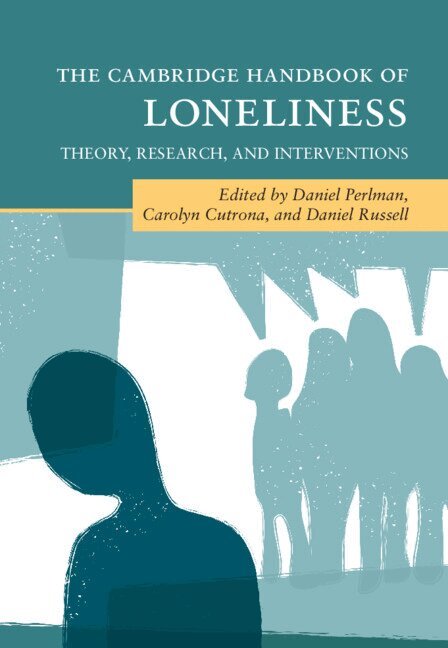
Everyone has experienced loneliness - perhaps briefly - perhaps for many years. This handbook explores why people of all ages can become lonely, and features steps that can be taken by individuals, communities, and entire societies to prevent and alleviate loneliness. Chapters present rigorous scientific research drawn from psychology, relationship science, neuroscience, physiology, sociology, public health, and gerontology to demystify the phenomenon of loneliness and its consequences. The volume investigates the significant risks that loneliness poses to health and the harmful physiological processes it can set in motion. It also details numerous approaches to help people overcome loneliness from multiple perspectives, including traditional and cognitive psychotherapy, online interventions, efforts to connect individuals to their communities, and designing communities as well as public health programs and policies to create a greater sense of social connection. Using accessible terminology understandable to a non-medical audience, it is an important work for social science scholars, students, policymakers, and practitioners.
605 kr
Kommande
Everyone has experienced loneliness - perhaps briefly - perhaps for many years. This handbook explores why people of all ages can become lonely, and features steps that can be taken by individuals, communities, and entire societies to prevent and alleviate loneliness. Chapters present rigorous scientific research drawn from psychology, relationship science, neuroscience, physiology, sociology, public health, and gerontology to demystify the phenomenon of loneliness and its consequences. The volume investigates the significant risks that loneliness poses to health and the harmful physiological processes it can set in motion. It also details numerous approaches to help people overcome loneliness from multiple perspectives, including traditional and cognitive psychotherapy, online interventions, efforts to connect individuals to their communities, and designing communities as well as public health programs and policies to create a greater sense of social connection. Using accessible terminology understandable to a non-medical audience, it is an important work for social science scholars, students, policymakers, and practitioners.
508 kr
Skickas inom 7-10 vardagar
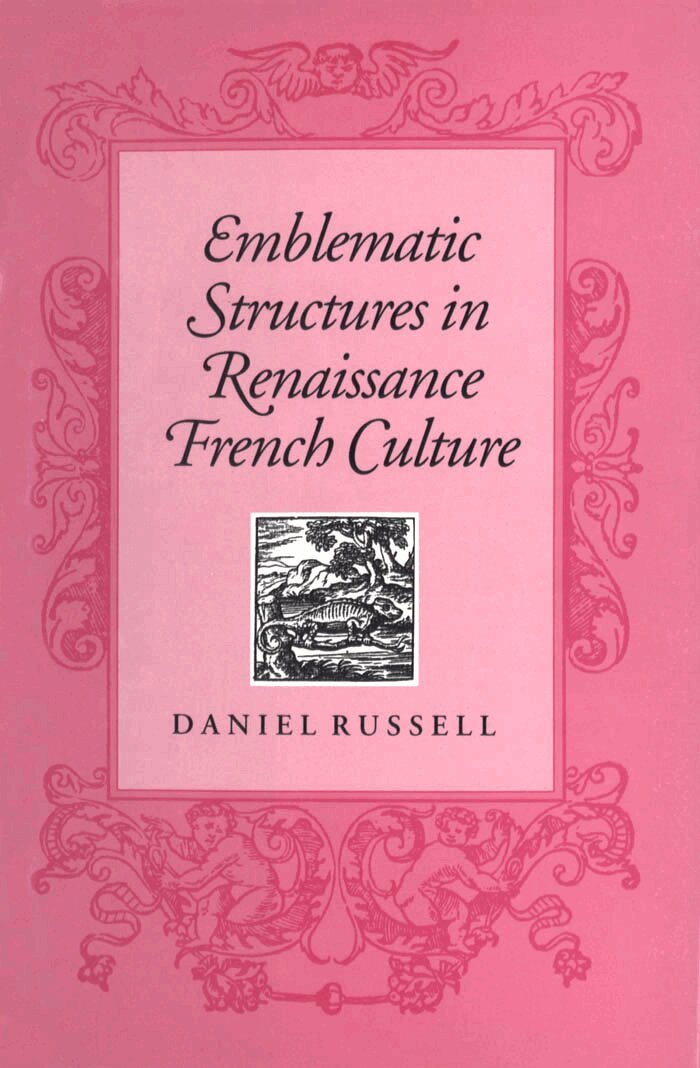
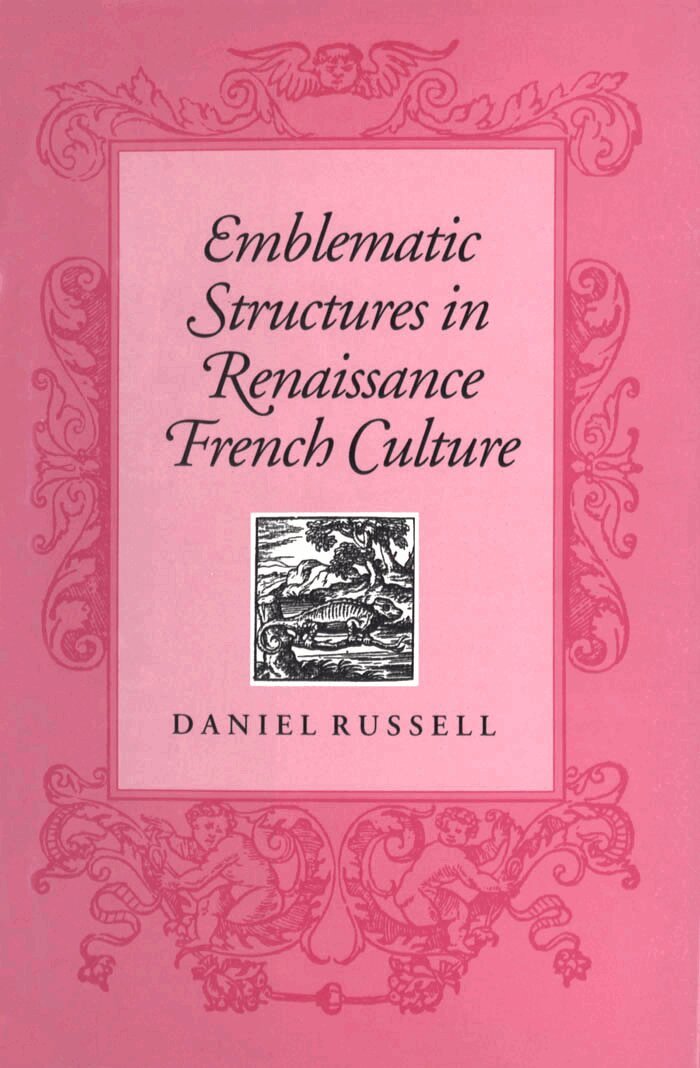
The emblem and the device (or impresa as it was called in Italy) were the most direct and telling manifestations of a mentality that played a significant role in the discourse and art in Western Europe between the late Middle Ages and the mid-eighteenth century. In the history of Western symbolism, the emblematic sign forms a bridge between late medieval allegory and the Romantic metaphor. These intricate combinations of picture and text, where the picture completes the ellipses of an epigrammatic text, and where the text fixes the intention of the pictured signs, provide useful clues to the way pictures in general were read and textual descriptions visualized in early modern Europe.Daniel Russell demonstrates how the emblematic forms emerged from the way illustrations were used in late medieval French manuscript culture, how the forms were later disseminated in France, and how they functioned within early modern French culture and society. He also attempts to show how the guiding principles behind the composition of emblems influenced the production of courtly decoration, ceremony, and propaganda, as well as the composition of literary texts as different as Maurice Sc¦ve's Delie, Montaigne's Essais, and Du Bartas's Sepmaine.
536 kr
Skickas inom 3-6 vardagar
192 kr
Skickas inom 5-8 vardagar