• Fri frakt över 249 kr
  • •
  • Snabba leveranser
  • •
  • Billiga böcker
Kundservice

Du är på sajten för privatpersoner.

Företag, bibliotek eller offentlig verksamhet?

Du handlar på classic.bokus.com, där alla dina funktioner finns intakta.
Till classic.bokus.com
Bokus logotyp. Gå till startsidan.
  • Erbjudanden
  • Nyheter
  • Student
  • Topplistor
  • Barn & ungdom
  • Bokus Play
  • E-böcker
  • Pocketböcker
  • Spel & pussel

10% rabatt på allt med kod: NYSTART10 →

Sidfot

Mina sidor

    Hjälp

    • Kundservice
    • Vanliga frågor och svar
    • Frakt och leverans
    • Retur vid ångerrätt
    • Reklamera vara
    • Betalning
    • Köpvillkor
    • Allmänna villkor
    • Information om webbplatsens tillgänglighet

    Om Bokus

    • Om oss
    • Pressrum
    • För studenter
    • För företag
    • För bibliotek och offentlig verksamhet
    • För leverantörer
    • Hållbarhet

    Populärt

    • Aktuella erbjudanden
    • Presentkort
    • Studentlitteratur
    • Nya böcker
    • Topplistor
    • Signerade böcker
    • Engelska böcker

    Inspiration

    • Boktips
    • BookTok
    • Populära bokserier
    • Barnbokskaraktärer
    • Populära författare
    Logotyp för Bokus
    Följ oss på Facebook (extern länk)Följ oss på Instagram (extern länk)Följ oss på YouTube (extern länk)Följ oss på TikTok (extern länk)
    bokus @ CookiesAnpassa cookiesIntegritetspolicyKöpvillkor
    Till Citymail hemsida (extern länk)Till Budbee hemsida (extern länk)Till Postnord hemsida (extern länk)Till Schenker hemsida (extern länk)Till Early Bird hemsida (extern länk)Till Walleys hemsida (extern länk)
    1. Samhälle och politik
    2. Sociologi och antropologi
    3. Sociologi
    • 10% rabatt på allt
    • Nyhet

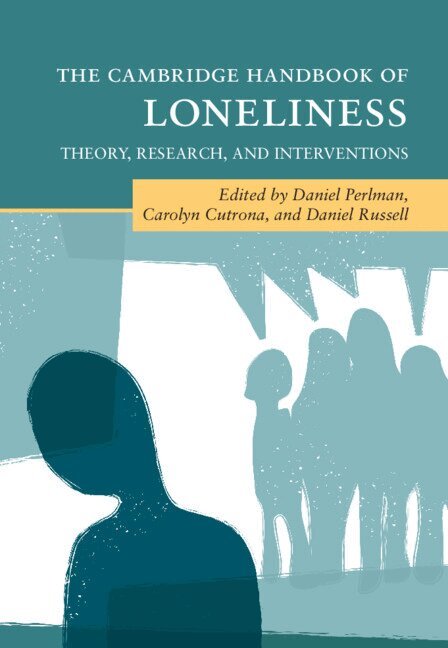
    The Cambridge Handbook of Loneliness

    Theory, Research, and Interventions

    AvDaniel Perlman,Carolyn Cutrona

    Häftad, Engelska, 2026

    Del i serien Cambridge Handbooks in Psychology

    1 064 kr

    Beställningsvara. Skickas inom 10-15 vardagar. Fri frakt över 249 kr.

    Beskrivning

    Everyone has experienced loneliness - perhaps briefly - perhaps for many years. This handbook explores why people of all ages can become lonely, and features steps that can be taken by individuals, communities, and entire societies to prevent and alleviate loneliness. Chapters present rigorous scientific research drawn from psychology, relationship science, neuroscience, physiology, sociology, public health, and gerontology to demystify the phenomenon of loneliness and its consequences. The volume investigates the significant risks that loneliness poses to health and the harmful physiological processes it can set in motion. It also details numerous approaches to help people overcome loneliness from multiple perspectives, including traditional and cognitive psychotherapy, online interventions, efforts to connect individuals to their communities, and designing communities as well as public health programs and policies to create a greater sense of social connection. Using accessible terminology understandable to a non-medical audience, it is an important work for social science scholars, students, policymakers, and practitioners.

    Produktinformation

    • Utgivningsdatum:2026-08-13
    • Mått:250 x 55 x 160 mm
    • Vikt:2 185 g
    • Format:Häftad
    • Språk:Engelska
    • Serie:Cambridge Handbooks in Psychology
    • Antal sidor:1 088
    • Förlag:Cambridge University Press
    • ISBN:9781009389136

    Ingår i kampanjer

    10% rabatt på allt

    Utforska kategorier

    • Sociologi inom Samhälle och politik
    • Socialpsykologi och gruppsykologi inom Psykologi och pedagogik
    • Folkhälsa och hälsopedagogik inom Medicin

    Mer om författaren

    Daniel Perlman is Professor Emeritus at the University of British Columbia and University of North Carolina at Greensboro. He has been president of four academic associations including the International Society for the Study of Personal Relationships and the International Association for Relationship Research and has been editor or co-editor of five journals including Personal Relationships, and the Journal of Social and Personal Relationships. Carolyn Cutrona is Distinguished Professor Emerita of Psychology at Iowa State University. She has published over 120 articles, mostly in the area of social support. Carolyn is the author of Social Support in Couples, Marriage as a Resource in Times of Stress and co-developed the Social Provisions Scale and the UCLA Loneliness Scale. Daniel W. Russell is Professor of Human Development and Family Studies at Iowa State University. He is well known for his contributions toward developing the UCLA Loneliness Scale and has published over 160 peer-reviewed papers, being cited over 66,000 times. Daniel's research interests are in the areas of social support, stress, and loneliness. Over his career, he has received over $15 million in research funding.

    Recensioner i media

    'Written by a global roster of experts, this timely collection is bursting with deep insights and practical guidance about today's epidemic of loneliness. It's a must-have resource for scholars, policymakers, and applied practitioners who want to know what loneliness is, where it comes from, what its effects are, and what to do about it.' Harry T. Reis, Dean's Professor in Arts and Sciences and Professor of Psychology, University of Rochester, UK

    Innehållsförteckning

    • List of figures; List of tables; List of contributors; Forward by Letitia Anne Peplau; Acknowledgements; Dedication; 1. An introduction: Loneliness theories, research, and interventions in today's changing world; Part I. Foundations for Studying Loneliness: 2. Measuring loneliness among adults: An evaluation of current models; 3. An evolutionary perspective on loneliness; 4. Non evolutionary theories and models for explaining loneliness; 5. A Sociological perspective on loneliness; 6. A public health perspective on loneliness – Prevent, protect and promote; Part II. Loneliness Across the Lifecourse: 7. Loneliness in childhood; 8. Loneliness in adolescence; 9. Loneliness in mid-life and older adults; 10. Life transitions and loneliness; Part III. Individual Differences in Loneliness: 11. What difference? a critical evaluation of theories and empirical evidence on gender differences in loneliness; 12. To be or not to be (a core trait): Personality factors and loneliness; 13. Disabilities and loneliness: Risk and protective factors; 14. Loneliness among sexual and gender minorities; Part IV. Interpersonal Aspects of Loneliness: 15. Social isolation and loneliness; 16. A nuanced view on loneliness by marital status: The importance of past experience and diversity; 17. Communication, interaction patterns, and loneliness; 18. Social support and loneliness; 19. Networks and loneliness; Part V. Contextual Influences: 20. Urban planning and loneliness: The impact of objective and perceived built environment factors; 21. Stigma and loneliness: Moving from individual deficits to community responsibility; 22. Work loneliness: A review of literature and intervention strategies; 23. Loneliness and immigration; 24. Social media use and loneliness; 25. Connected by loneliness: Loneliness across different cultures; Part VI. Physical Health, Mental Health and Loneliness: 25. Loneliness and human gene expression; 27. The neuroscience of loneliness; 28. Physical health, mortality and loneliness; 29. COVID-19 and loneliness: The context of social restrictions; 30. Loneliness and dementia risk in older adulthood; 31. Loneliness and mental health; Part VII. Combatting Loneliness: 32. Interventions with adolescents; 33. Interventions to reduce loneliness in people with mental health problems; 34. Remotely delivered, technology-supported interventions; 35. The role of psychological treatments in addressing loneliness; 36. Social prescribing: An overview; 37. The economics of loneliness; 38. A national strategy for loneliness: The end of the road or the start of the journey?