Haidee Wasson - Böcker
Visar alla böcker från författaren Haidee Wasson. Handla med fri frakt och snabb leverans.
11 produkter
11 produkter
2 504 kr
Skickas inom 3-6 vardagar
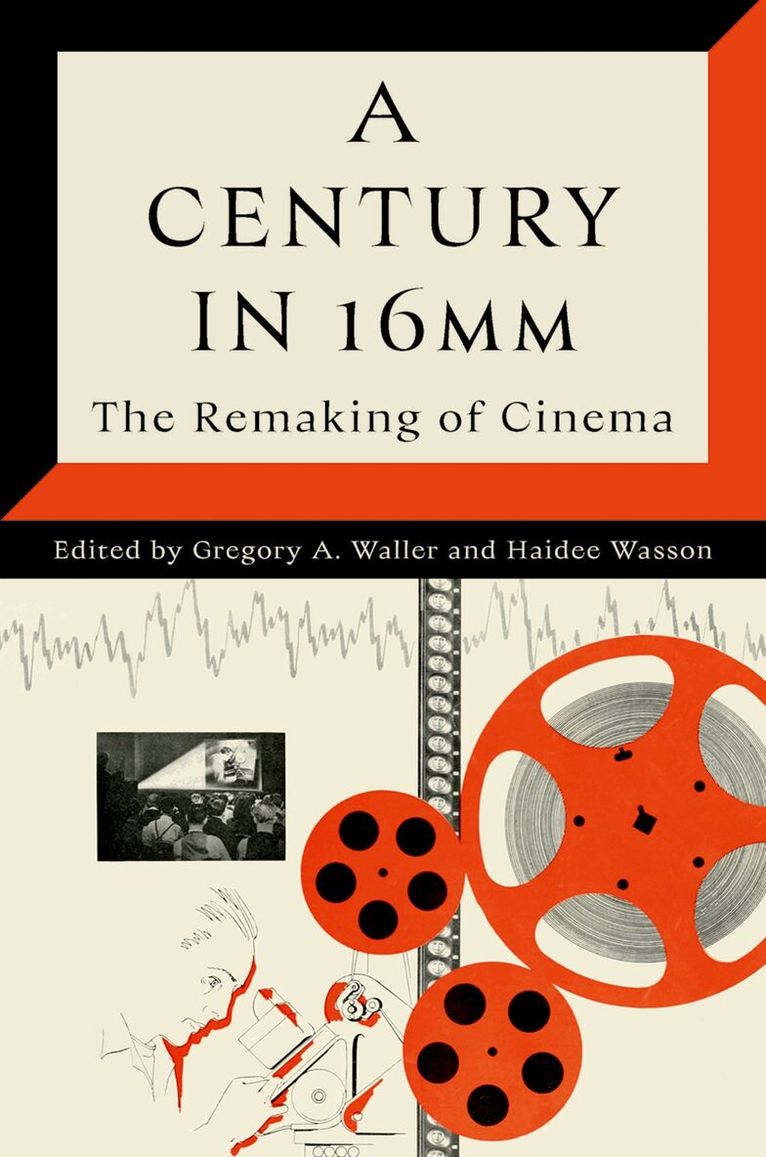
When the small cameras and portable projectors that used 16mm film stock emerged in 1923, they allowed--for the first time in history--the possibility that anyone could make, show, and watch movies. A foundational but largely forgotten film format that offered a suite of technologies, 16mm was a democratic alternative to the larger and more expensive 35mm technology used by the commercial film industries around the world. With the remarkable ubiquity and utility of 16mm, moving images came to be integral to the way we play, learn, fight, work, and document the world, seeding the path to our current world of portable technologies and personal media.To mark 16mm's first 100 years, the essays in this book consolidate and catalyse considerations of the uniquely important--but still surprisingly underestimated and understudied--role that 16mm has played in film and media theory, history, and practice. It has long been known that artists and activists relied on 16mm cameras and projectors as tools of experimentation, organization, upheaval, and advocacy. Chapters here revisit these assumptions but also survey its many varied and additional uses: delivering public service messages, promoting corporate public relations, boosting church attendance, preaching good hygiene, instilling efficiency, popularizing political candidates, spreading propaganda, exploring sexuality, and encouraging community dialogue. In short, tis innovative film format facilitated new forms of hobby, play, work, learning and creativity. From the local to the transnational, small gauge filmmaking and showing also became integral to colonialist, imperialist, nationalist, and multi-nationalist institutions and efforts. In effect, for 100 years now, this uniquely important film format upended and shaped creative, political, governmental, juridical, sexual, educational, recreational, informational, televisual, industrial, promotional, and experimental practices and activities. It was integral to the expansion and evolution of the audio-visual languages that are a common-sense element of our mediated world. Its histories serve as a crucial and telling bridge from past media practices to our present wherein mobile, adaptable, and flexible moving image and sounds continue to thrive.
749 kr
Skickas inom 3-6 vardagar
When the small cameras and portable projectors that used 16mm film stock emerged in 1923, they allowed--for the first time in history--the possibility that anyone could make, show, and watch movies. A foundational but largely forgotten film format that offered a suite of technologies, 16mm was a democratic alternative to the larger and more expensive 35mm technology used by the commercial film industries around the world. With the remarkable ubiquity and utility of 16mm, moving images came to be integral to the way we play, learn, fight, work, and document the world, seeding the path to our current world of portable technologies and personal media.To mark 16mm's first 100 years, the essays in this book consolidate and catalyse considerations of the uniquely important--but still surprisingly underestimated and understudied--role that 16mm has played in film and media theory, history, and practice. It has long been known that artists and activists relied on 16mm cameras and projectors as tools of experimentation, organization, upheaval, and advocacy. Chapters here revisit these assumptions but also survey its many varied and additional uses: delivering public service messages, promoting corporate public relations, boosting church attendance, preaching good hygiene, instilling efficiency, popularizing political candidates, spreading propaganda, exploring sexuality, and encouraging community dialogue. In short, tis innovative film format facilitated new forms of hobby, play, work, learning and creativity. From the local to the transnational, small gauge filmmaking and showing also became integral to colonialist, imperialist, nationalist, and multi-nationalist institutions and efforts. In effect, for 100 years now, this uniquely important film format upended and shaped creative, political, governmental, juridical, sexual, educational, recreational, informational, televisual, industrial, promotional, and experimental practices and activities. It was integral to the expansion and evolution of the audio-visual languages that are a common-sense element of our mediated world. Its histories serve as a crucial and telling bridge from past media practices to our present wherein mobile, adaptable, and flexible moving image and sounds continue to thrive.
628 kr
Skickas inom 3-6 vardagar
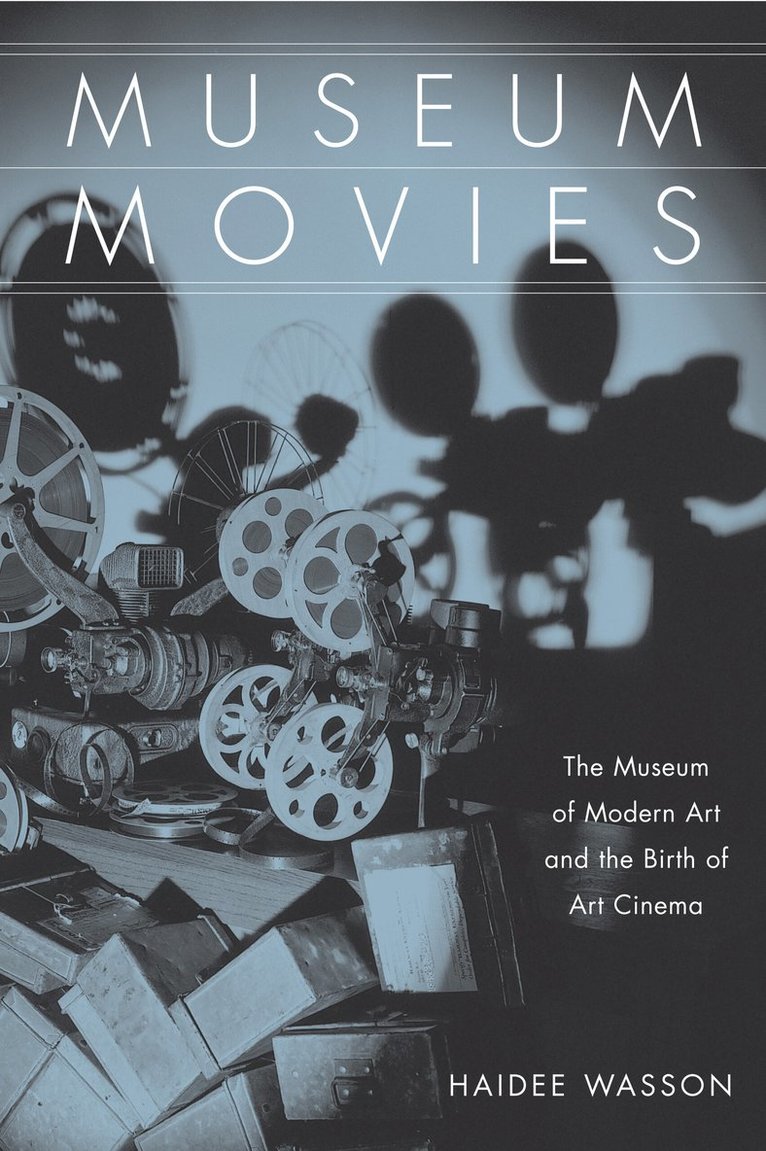
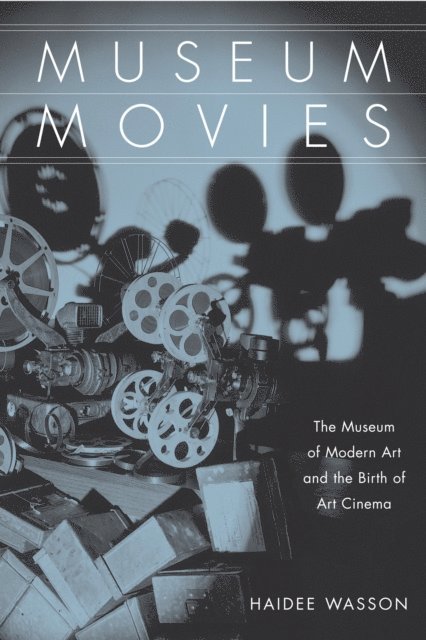
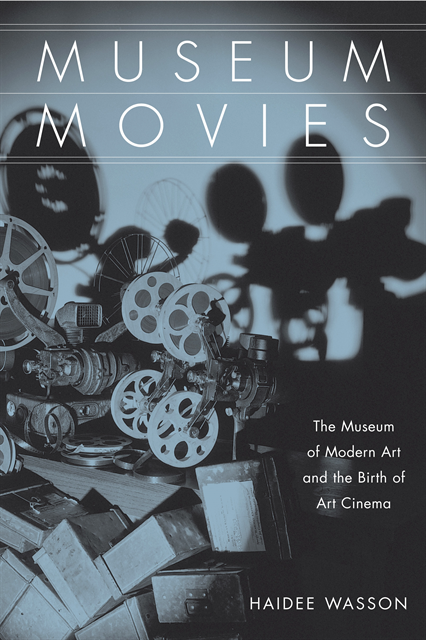
Haidee Wasson provides a rich cultural history of cinema's transformation from a passing amusement to an enduring art form by mapping the creation of the Film Library of the Museum of Modern Art (MoMA), New York, established in 1935. The first North American film archive and museum, the film library pioneered an expansive moving image network, comprising popular, abstract, animated, American, Canadian, and European films. More than a repository, MoMA circulated these films nationally and internationally, connecting the modern art museum to universities, libraries, women's clubs, unions, archives, and department stores. Under the aegis of the museum, cinema also changed. Like books, paintings, and photographs, films became discrete objects, integral to thinking about art, history, and the politics of modern life.
1 560 kr
Skickas inom 3-6 vardagar
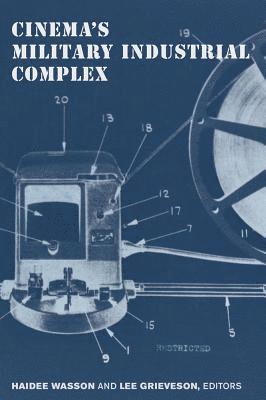
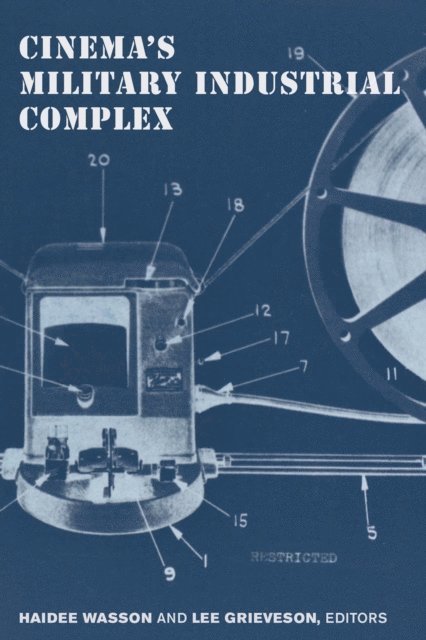
The vast, and vastly influential, American military machine has been aided and abetted by cinema since the earliest days of the medium. The US military realized very quickly that film could be used in myriad ways: training, testing, surveying and mapping, surveillance, medical and psychological management of soldiers, and of course, propaganda. Bringing together a collection of new essays, based on archival research, Wasson and Grieveson seek to cover the complex history of how the military deployed cinema for varied purposes across the the long twentieth century, from the incipient wars of US imperialism in the late nineteenth century to the ongoing War on Terror. This engagement includes cinema created and used by and for the military itself (such as training films), the codevelopment of technologies (chemical, mechanical, and digital), and the use of film (and related mass media) as a key aspect of American "soft power," at home and around the world. A rich and timely set of essays, this volume will become a go-to for scholars interested in all aspects of how the military creates and uses moving-image media.
299 kr
Skickas inom 7-10 vardagar
The vast, and vastly influential, American military machine has been aided and abetted by cinema since the earliest days of the medium. The US military realized very quickly that film could be used in myriad ways: training, testing, surveying and mapping, surveillance, medical and psychological management of soldiers, and of course, propaganda. Bringing together a collection of new essays, based on archival research, Wasson and Grieveson seek to cover the complex history of how the military deployed cinema for varied purposes across the the long twentieth century, from the incipient wars of US imperialism in the late nineteenth century to the ongoing War on Terror. This engagement includes cinema created and used by and for the military itself (such as training films), the codevelopment of technologies (chemical, mechanical, and digital), and the use of film (and related mass media) as a key aspect of American "soft power," at home and around the world. A rich and timely set of essays, this volume will become a go-to for scholars interested in all aspects of how the military creates and uses moving-image media.
Everyday Movies
Portable Film Projectors and the Transformation of American Culture
Inbunden, Engelska, 2020
1 469 kr
Skickas inom 3-6 vardagar
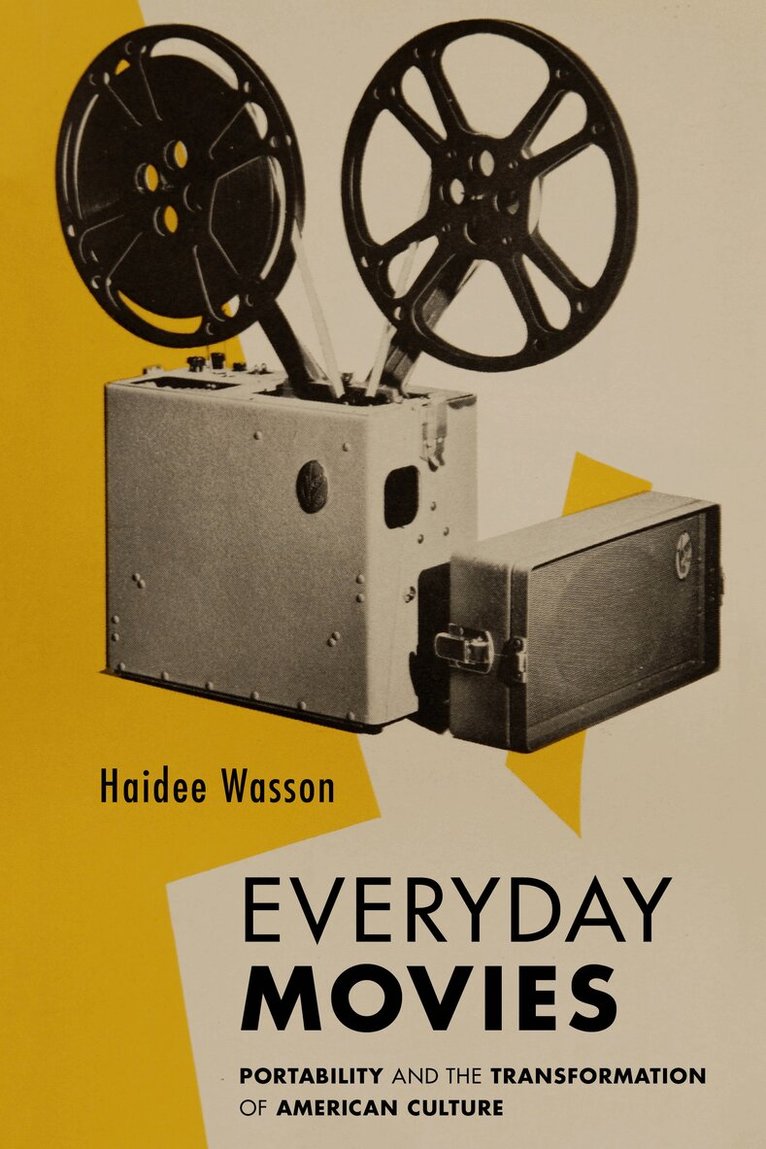
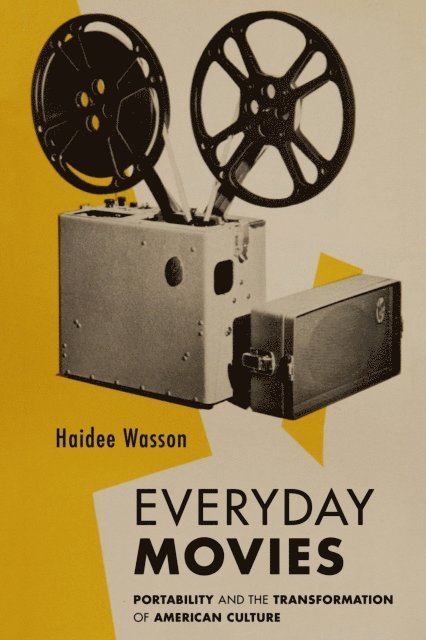
Everyday Movies documents the twentieth-century rise of portable film projectors. It demonstrates that since World War II, the vast majority of movie-watching did not happen in the glow of the large screen but rather took place alongside the glitches, distortions, and clickety-clack of small machines that transformed home, classroom, museum, community, government, industrial, and military venues into sites of moving-image display. Reorienting the history of cinema away from the magic of the movie theater, Haidee Wasson illustrates the remarkable persistence and proliferation of devices that fundamentally rejected the sleek, highly professionalized film show. She foregrounds instead another kind of apparatus, one that was accessible, affordable, adaptable, easy to use, and crucially, programmable. Revealing rich archival discoveries, this book charts a compelling and original history of film that brings to light new technologies and diverse forms of media engagement that continue to shape contemporary life.
Everyday Movies
Portable Film Projectors and the Transformation of American Culture
Häftad, Engelska, 2020
242 kr
Skickas inom 7-10 vardagar
Everyday Movies documents the twentieth-century rise of portable film projectors. It demonstrates that since World War II, the vast majority of movie-watching did not happen in the glow of the large screen but rather took place alongside the glitches, distortions, and clickety-clack of small machines that transformed home, classroom, museum, community, government, industrial, and military venues into sites of moving-image display. Reorienting the history of cinema away from the magic of the movie theater, Haidee Wasson illustrates the remarkable persistence and proliferation of devices that fundamentally rejected the sleek, highly professionalized film show. She foregrounds instead another kind of apparatus, one that was accessible, affordable, adaptable, easy to use, and crucially, programmable. Revealing rich archival discoveries, this book charts a compelling and original history of film that brings to light new technologies and diverse forms of media engagement that continue to shape contemporary life.
442 kr
Skickas inom 7-10 vardagar
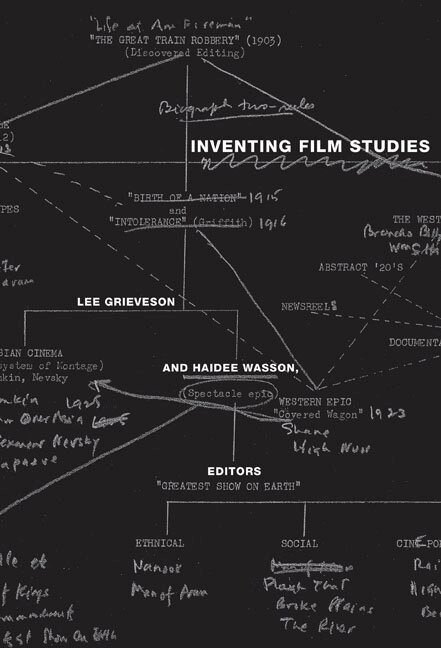
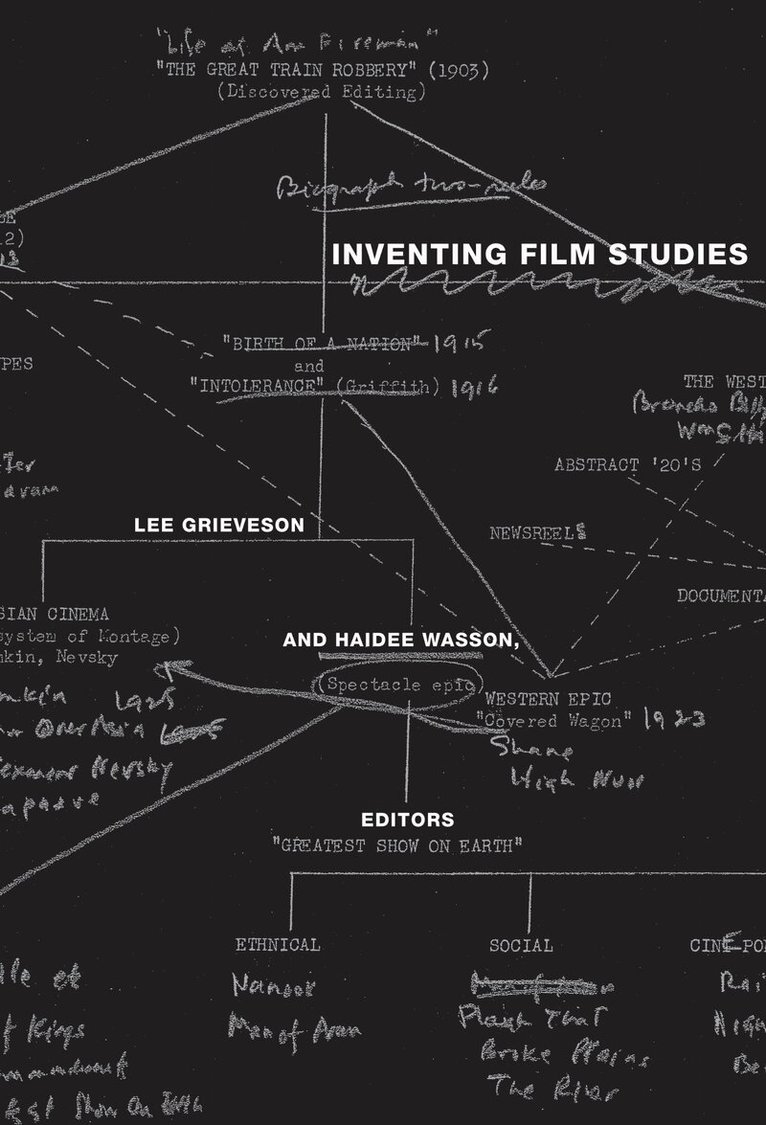
Inventing Film Studies offers original and provocative insights into the institutional and intellectual foundations of cinema studies. Many scholars have linked the origins of the discipline to late-1960s developments in the academy such as structuralist theory and student protest. Yet this collection reveals the broader material and institutional forces-both inside and outside of the university-that have long shaped the field. Beginning with the first investigations of cinema in the early twentieth century, this volume provides detailed examinations of the varied social, political, and intellectual milieus in which knowledge of cinema has been generated. The contributors explain how multiple instantiations of film study have had a tremendous influence on the methodologies, curricula, modes of publication, and professional organizations that now constitute the university-based discipline. Extending the historical insights into the present, contributors also consider the directions film study might take in changing technological and cultural environments.Inventing Film Studies shows how the study of cinema has developed in relation to a constellation of institutions, technologies, practices, individuals, films, books, government agencies, pedagogies, and theories. Contributors illuminate the connections between early cinema and the social sciences, between film programs and nation-building efforts, and between universities and U.S. avant-garde filmmakers. They analyze the evolution of film studies in relation to the Museum of Modern Art, the American Film Council movement of the 1940s and 1950s, the British Film Institute, influential journals, cinephilia, and technological innovations past and present. Taken together, the essays in this collection reveal the rich history and contemporary vitality of film studies. Contributors: Charles R. Acland, Mark Lynn Anderson, Mark Betz, ZoË Druick, Lee Grieveson, Stephen Groening, Haden Guest, Amelie Hastie, Lynne Joyrich, Laura Mulvey, Dana Polan, D. N. Rodowick, Philip Rosen, Alison Trope, Haidee Wasson, Patricia White, Sharon Willis, Peter Wollen, Michael Zryd
1 397 kr
Skickas inom 11-20 vardagar
By exploring the use of film in mid-twentieth-century institutions, including libraries, museums, classrooms, and professional organizations, the essays in Useful Cinema show how moving images became an ordinary feature of American life. In venues such as factories and community halls, people encountered industrial, educational, training, advertising, and other types of “useful cinema.” Screening these films transformed unlikely spaces, conveyed ideas, and produced subjects in the service of public and private aims. Such functional motion pictures helped to shape common sense about cinema’s place in contemporary life. Whether measured in terms of the number of films shown, the size of audiences, or the economic activity generated, the “non-theatrical sector” was a substantial and enduring parallel to the more spectacular realm of commercial film. In Useful Cinema, scholars examine organizations such as UNESCO, the YMCA, the Amateur Cinema League, and the Metropolitan Museum of Art. They also consider film exhibition sites in schools, businesses, and industries. As they expand understanding of this other American cinema, the contributors challenge preconceived notions about what cinema is. Contributors. Charles R. Acland, Joseph Clark, ZoË Druick, Ronald Walter Greene, Alison Griffiths, Stephen Groening, Jennifer Horne, Kirsten Ostherr, Eric Smoodin, Charles Tepperman, Gregory A. Waller, Haidee Wasson. Michael Zryd
643 kr
Skickas inom 3-6 vardagar
By exploring the use of film in mid-twentieth-century institutions, including libraries, museums, classrooms, and professional organizations, the essays in Useful Cinema show how moving images became an ordinary feature of American life. In venues such as factories and community halls, people encountered industrial, educational, training, advertising, and other types of “useful cinema.” Screening these films transformed unlikely spaces, conveyed ideas, and produced subjects in the service of public and private aims. Such functional motion pictures helped to shape common sense about cinema’s place in contemporary life. Whether measured in terms of the number of films shown, the size of audiences, or the economic activity generated, the “non-theatrical sector” was a substantial and enduring parallel to the more spectacular realm of commercial film. In Useful Cinema, scholars examine organizations such as UNESCO, the YMCA, the Amateur Cinema League, and the Metropolitan Museum of Art. They also consider film exhibition sites in schools, businesses, and industries. As they expand understanding of this other American cinema, the contributors challenge preconceived notions about what cinema is. Contributors. Charles R. Acland, Joseph Clark, ZoË Druick, Ronald Walter Greene, Alison Griffiths, Stephen Groening, Jennifer Horne, Kirsten Ostherr, Eric Smoodin, Charles Tepperman, Gregory A. Waller, Haidee Wasson. Michael Zryd
459 kr
Tillfälligt slut
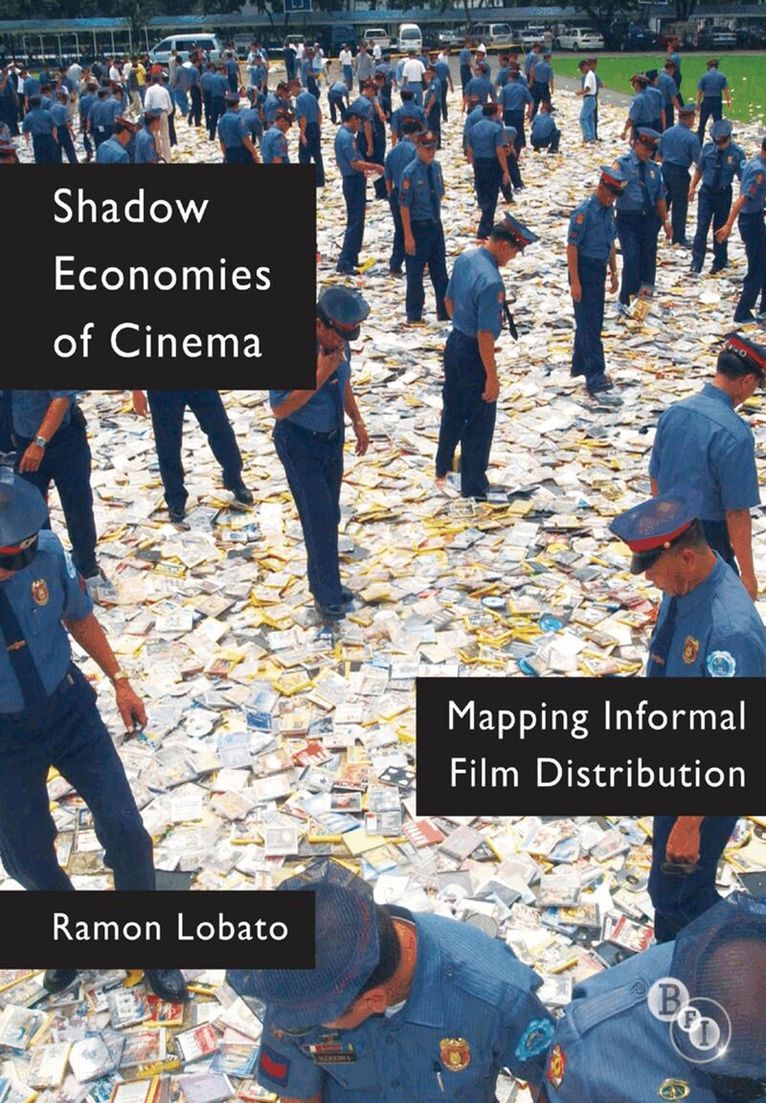
How do people access movies today? What are the most popular and powerful channels for media distribution on a global scale? How are film industries changing in the face of media convergence and digitisation? To answer questions such as these, argues Ramon Lobato, we must shift our gaze away from the legal film business and toward cinema's shadow economies. All around the world, films are bought from roadside stalls, local markets, and grocery stores; they are illegally downloaded and streamed; they are watched in makeshift video clubs, on street corners, and in restaurants, shops and bars. International film culture in its actually-existing forms is a messy affair, and it relies to a great extent on black and grey media markets. Examining the industrial dynamics of these subterranean film networks across a number of different sites – from Los Angeles to Lagos, Melbourne to Mexico City – this book shows how they constitute a central rather than marginal part of audiovisual culture and commerce. Combining film industry analysis with cultural theory, Shadow Economies of Cinema opens up a new area of inquiry for cinema studies, putting industry research into dialogue with wider debates about economic informality and commodity circulation. Written in an accessible style, this book offers an original 'bottom-up' perspective on the global cinema industry for researchers and students in film studies, cultural studies, and media and communications.