Leif Weatherby – författare
Visar alla böcker från författaren Leif Weatherby. Handla med fri frakt och snabb leverans.
11 produkter
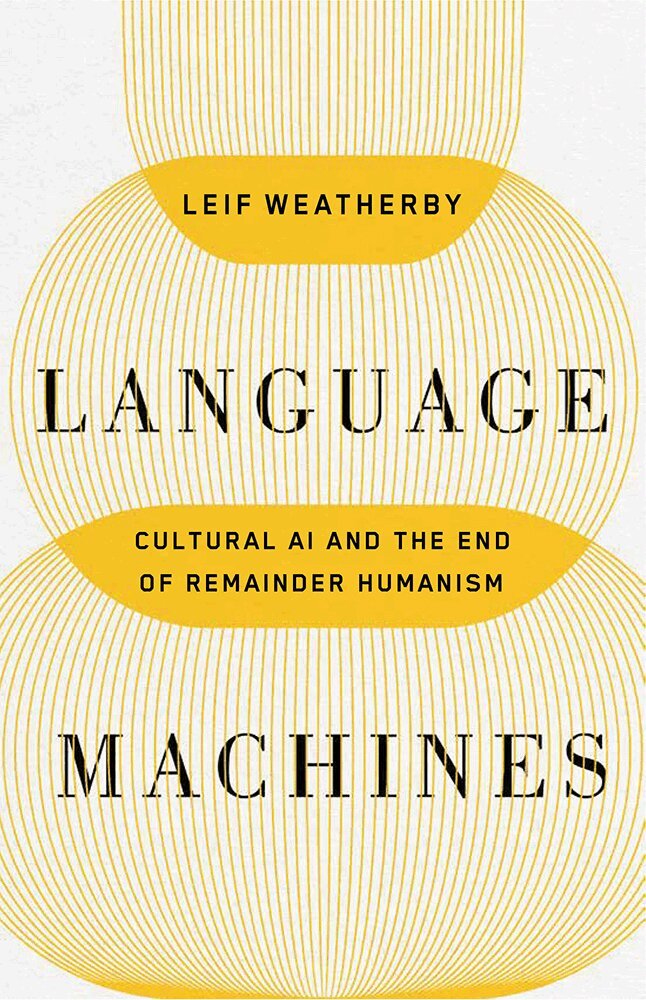
Language Machines Volume 74
Cultural AI and the End of Remainder Humanism
Häftad, 2025
305 kr
Lägg i varukorg
How generative AI systems capture a core function of languageLooking at the emergence of generative AI, Language Machines presents a new theory of meaning in language and computation, arguing that humanistic scholarship misconstrues how large language models (LLMs) function. Seeing LLMs as a …
Digital Theory
Av M. Beatrice Fazi, Alexander R. Galloway m. fl.
Häftad, 2025
203 kr
Lägg i varukorg
Proposes a powerful new theoretical approach to the concept of the digitalDigital Theory argues that the digital is theoretical and should be understood not uniquely in terms of consumer electronics but rather more broadly as a form of mediation using discrete units. Building on this definition, …
Transplanting the Metaphysical Organ
German Romanticism Between Leibniz and Marx
Häftad, 2016
473 kr
Lägg i varukorg
Around 1800, German romanticism developed a philosophy this study calls "Romantic organology." Scientific and philosophical notions of biological function and speculative thought converged to form the discourse that Transplanting the Metaphysical Organ reconstructs—a metaphysics meant to theorize, …
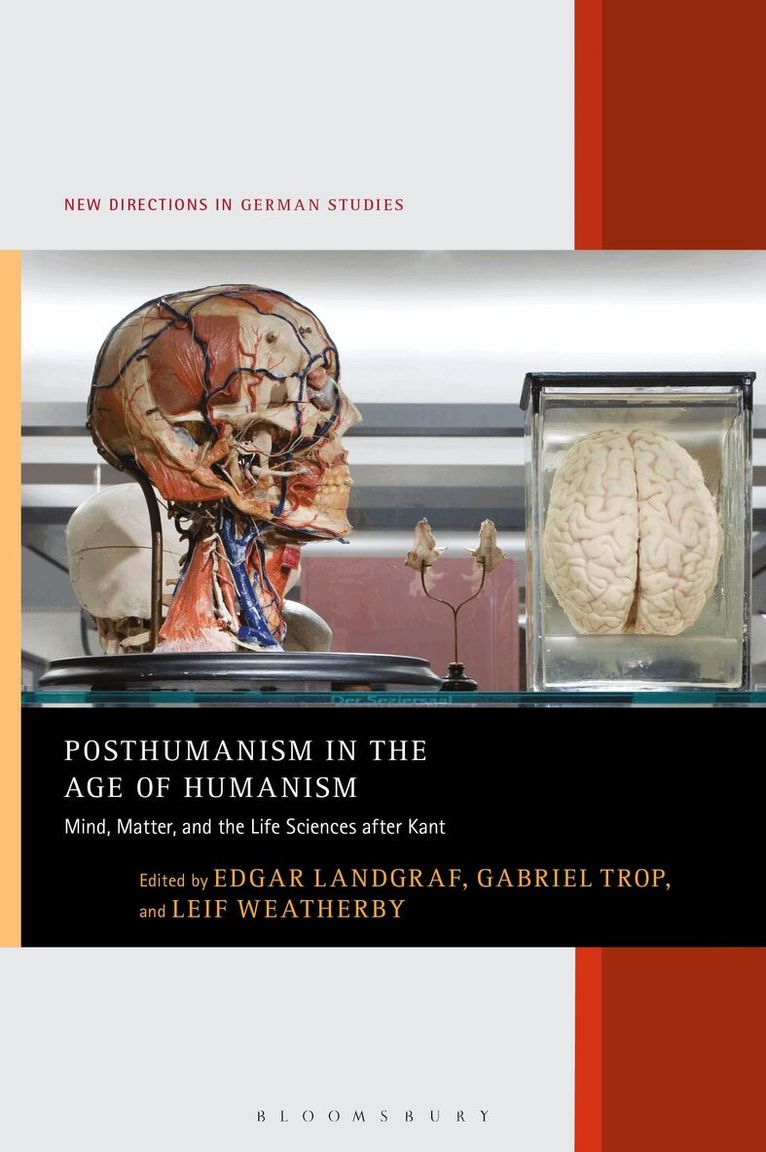
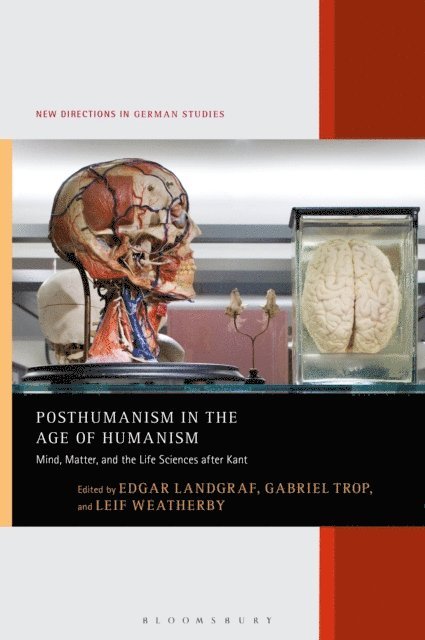
Posthumanism in the Age of Humanism
Mind, Matter, and the Life Sciences after Kant
Av Edgar Landgraf, Gabriel Trop m. fl.
Inbunden, 2018
2119 kr
Lägg i varukorg
The literary and scientific renaissance that struck Germany around 1800 is usually taken to be the cradle of contemporary humanism. Posthumanism in the Age of Humanism shows how figures like Immanuel Kant and Johann Wolfgang Goethe as well as scientists specializing in the emerging modern life and …
Posthumanism in the Age of Humanism
Mind, Matter, and the Life Sciences After Kant
Av Edgar Landgraf, Gabriel Trop m. fl.
E-bok, 2018
610 kr
Lägg i varukorg
The literary and scientific renaissance that struck Germany around 1800 is usually taken to be the cradle of contemporary humanism. Posthumanism in the Age of Humanism shows how figures like Immanuel Kant and Johann Wolfgang Goethe as well as scientists specializing in the emerging modern life and …
Posthumanism in the Age of Humanism
Mind, Matter, and the Life Sciences After Kant
Av Edgar Landgraf, Gabriel Trop m. fl.
E-bok, 2018
610 kr
Lägg i varukorg
The literary and scientific renaissance that struck Germany around 1800 is usually taken to be the cradle of contemporary humanism. Posthumanism in the Age of Humanism shows how figures like Immanuel Kant and Johann Wolfgang Goethe as well as scientists specializing in the emerging modern life and …
Posthumanism in the Age of Humanism
Mind, Matter, and the Life Sciences after Kant
Av Edgar Landgraf, Gabriel Trop m. fl.
Häftad, 2020
560 kr
Lägg i varukorg
The literary and scientific renaissance that struck Germany around 1800 is usually taken to be the cradle of contemporary humanism. Posthumanism in the Age of Humanism shows how figures like Immanuel Kant and Johann Wolfgang Goethe as well as scientists specializing in the emerging modern life and …
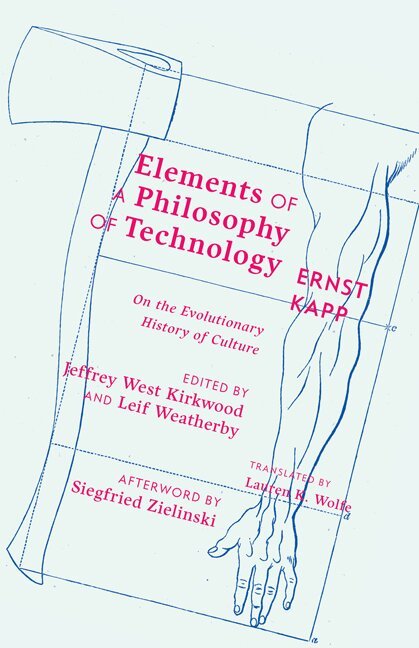
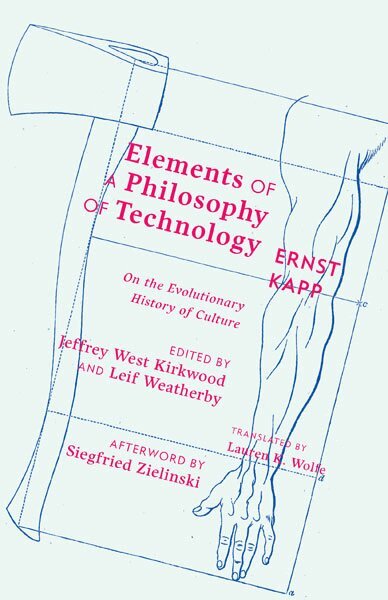
Elements of a Philosophy of Technology
On the Evolutionary History of Culture
Av Ernst Kapp, Jeffrey West Kirkwood m. fl.
Inbunden, 2018
1239 kr
Lägg i varukorg
The first philosophy of technology, constructing humans as technological and technology as an underpinning of all cultureErnst Kapp was a foundational scholar in the fields of media theory and philosophy of technology. His 1877 Elements of a Philosophy of Technology is a visionary study of the …
Elements of a Philosophy of Technology
On the Evolutionary History of Culture
Av Ernst Kapp, Jeffrey West Kirkwood m. fl.
Häftad, 2018
301 kr
Lägg i varukorg
The first philosophy of technology, constructing humans as technological and technology as an underpinning of all cultureErnst Kapp was a foundational scholar in the fields of media theory and philosophy of technology. His 1877 Elements of a Philosophy of Technology is a visionary study of the …
Language Machines Volume 74
Cultural AI and the End of Remainder Humanism
Inbunden, 2025
1303 kr
Lägg i varukorg
How generative AI systems capture a core function of languageLooking at the emergence of generative AI, Language Machines presents a new theory of meaning in language and computation, arguing that humanistic scholarship misconstrues how large language models (LLMs) function. Seeing LLMs as a …
Transplanting the Metaphysical Organ
German Romanticism Between Leibniz and Marx
Inbunden, 2016
1545 kr
Tillfälligt slut
Around 1800, German romanticism developed a philosophy this study calls "Romantic organology." Scientific and philosophical notions of biological function and speculative thought converged to form the discourse that Transplanting the Metaphysical Organ reconstructs—a metaphysics meant to theorize, …