Michael R. Waters - Böcker
Visar alla böcker från författaren Michael R. Waters. Handla med fri frakt och snabb leverans.
7 produkter
7 produkter
375 kr
Skickas inom 7-10 vardagar
Geoarchaeological studies can significantly enhance interpretations of human prehistory by allowing archaeologists to decipher from sediments and soils the effects of earth processes on the evidence of human activity. While a number of previous books have provided broad geographic and temporal treatments of geoarchaeology, this new volume presents a single author's view intended for North American archaeologists. Waters deals with those aspects of geoarchaeology—stratigraphy, site formation processes, and landscape reconstruction—most fundamental to archaeology, and he focuses on the late Quaternary of North America, permitting in-depth discussions of the concepts directly applicable to that research. Assuming no prior geologic knowledge on the part of the reader, Waters provides a background in fundamental geological processes and the basic tools of geoarchaeology. He then proceeds to relate specific physical processes, microenvironments, deposits, and landforms associated with riverine, desert, lake, glacial, cave, coastal, and other environments to archaeological site formation, location, and context. This practical volume illustrates the contributions of geoarchaeological investigations and demonstrates the need to make such studies an integral part of archaeological research. The text is enhanced by more than a hundred line drawings and photographs.
429 kr
Skickas inom 7-10 vardagar
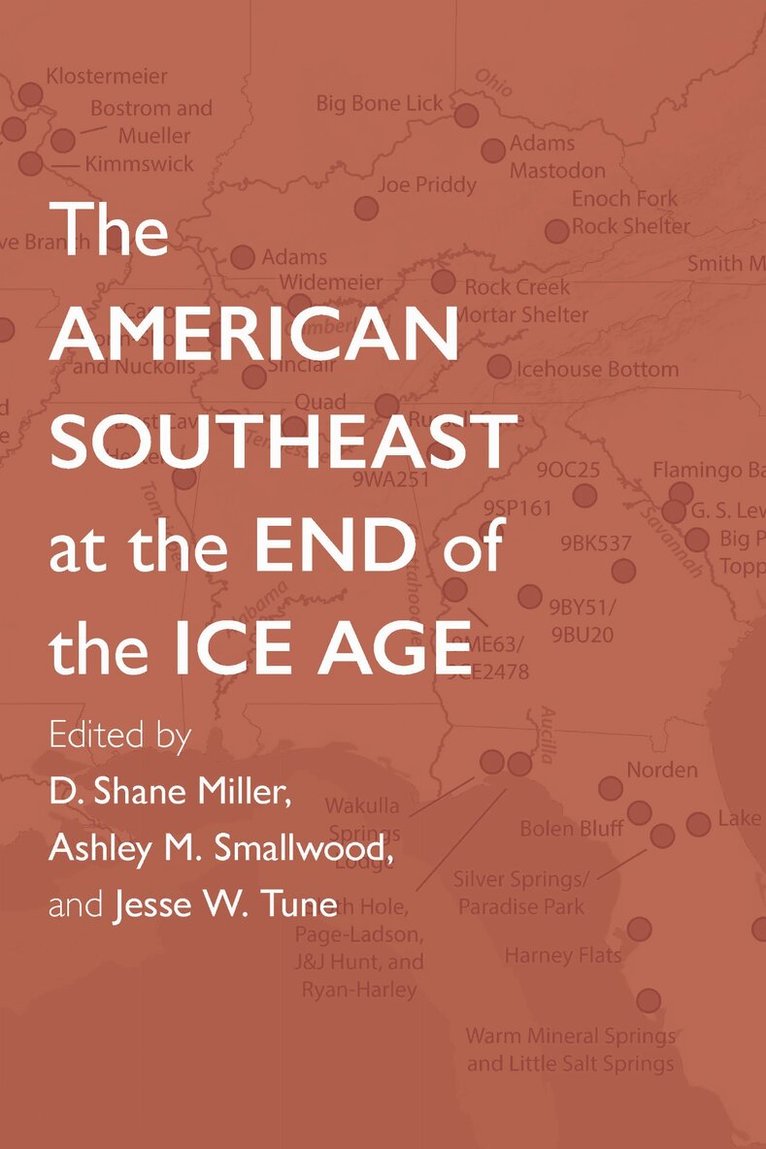
The definitive book on what is known about the Late Pleistocene and Early Holocene archaeological record in the SoutheastThe 1996 benchmark volume The Paleoindian and Early Archaic Southeast, edited by David G. Anderson and Kenneth E. Sassaman, was the first study to summarize what was known of the peoples who lived in the Southeast when ice sheets covered the northern part of the continent and mammals such as mammoths, saber-toothed cats, and ground sloths roamed the landscape.The American Southeast at the End of the Ice Age provides an updated, definitive synthesis of current archaeological research gleaned from an array of experts in the region. It is organized in three parts: state records, the regional perspective, and reflections and future directions. Chapters survey a diversity of topics including the distribution of the earliest archaeological sites in the region, chipped-stone tool technology, the expanding role of submerged archaeology, hunter-gatherer lifeways, past climate changes and the extinction of megafauna on the transitional landscape, and evidence of demographic changes at the end of the Ice Age. Discussion of the ethical responsibilities regarding the use of private collections and the relationship of archaeologists and the avocational community, insight from outside the Southeast, and considerations for future research round out the volume.
242 kr
Skickas inom 10-15 vardagar
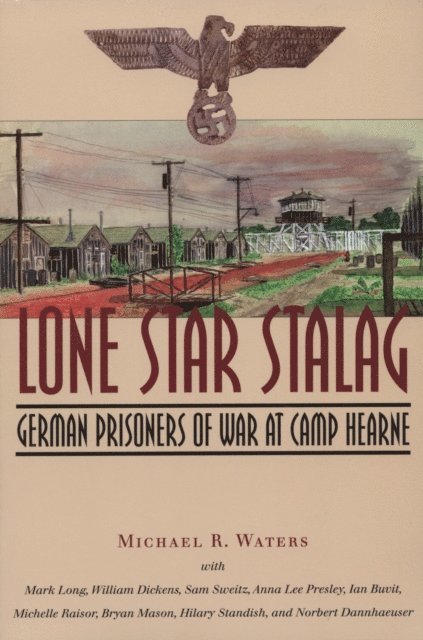
Between 1943 and 1945 nearly fifty thousand German prisoners of war, mostly from the German Afrika Korps, lived and worked at seventy POW camps across Texas. Camp Hearne, located on the outskirts of rural Hearne, Texas, was one of the first and largest German prisoner-of-war camps in the United States. Waters and his research team tell the story of the five thousand German soldiers held there during World War II. The book reveals the shadow world of Nazism that existed in the camp, adding darkness to a story that is otherwise optimistic and in places even humorous.
Clovis Lithic Technology
Investigation of a Stratified Workshop at the Gault Site, Texas
Inbunden, Engelska, 2011
538 kr
Skickas inom 11-20 vardagar
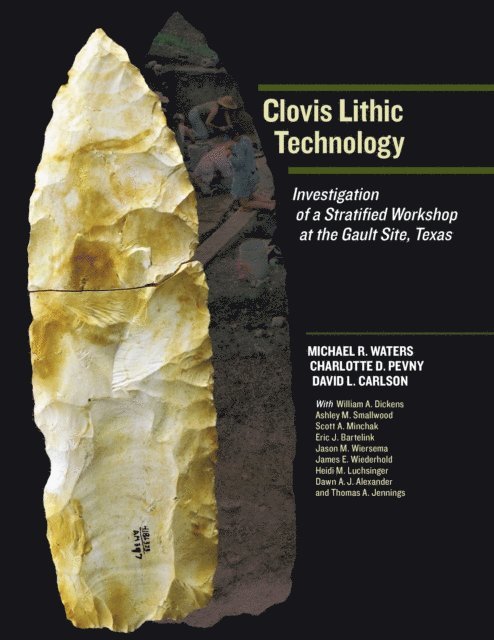
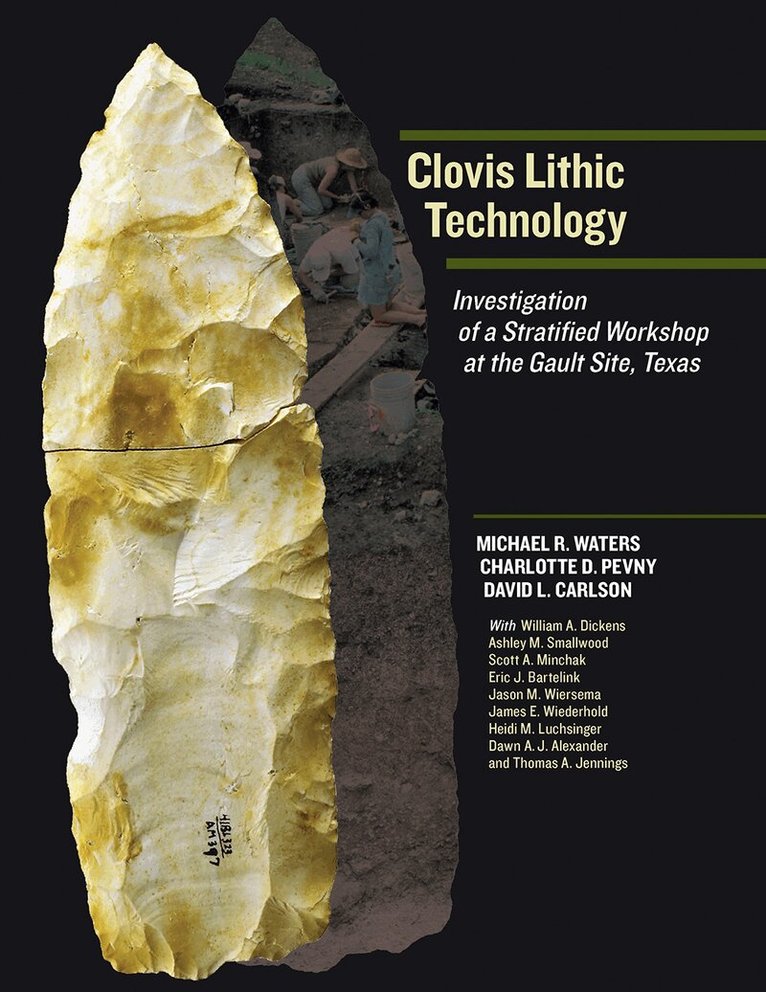
Some 13,000 years ago, humans were drawn repeatedly to a small valley in what is now Central Texas, near the banks of Buttermilk Creek. These early hunter-gatherers camped, collected stone, and shaped it into a variety of tools they needed to hunt game, process food, and subsist in the Texas wilderness. Their toolkit included bifaces, blades, and deadly spear points. Where they worked, they left thousands of pieces of debris, which have allowed archaeologists to reconstruct their methods of tool production. Along with the faunal material that was also discarded in their prehistoric campsite, these stone, or lithic, artifacts afford a glimpse of human life at the end of the last ice age during an era referred to as Clovis.The area where these people roamed and camped, called the Gault site, is one of the most important Clovis sites in North America. A decade ago a team from Texas A&M University excavated a single area of the site - formally named Excavation Area 8, but informally dubbed the Lindsey Pit - which features the densest concentration of Clovis artifacts and the clearest stratigraphy at the Gault site. Some 67,000 lithic artifacts were recovered during fieldwork, along with 5,700 pieces of faunal material.In a thorough synthesis of the evidence from this prehistoric 'workshop,' Michael R. Waters and his coauthors provide the technical data needed to interpret and compare this site with other sites from the same period, illuminating the story of Clovis people in the Buttermilk Creek Valley.
356 kr
Skickas inom 11-20 vardagar
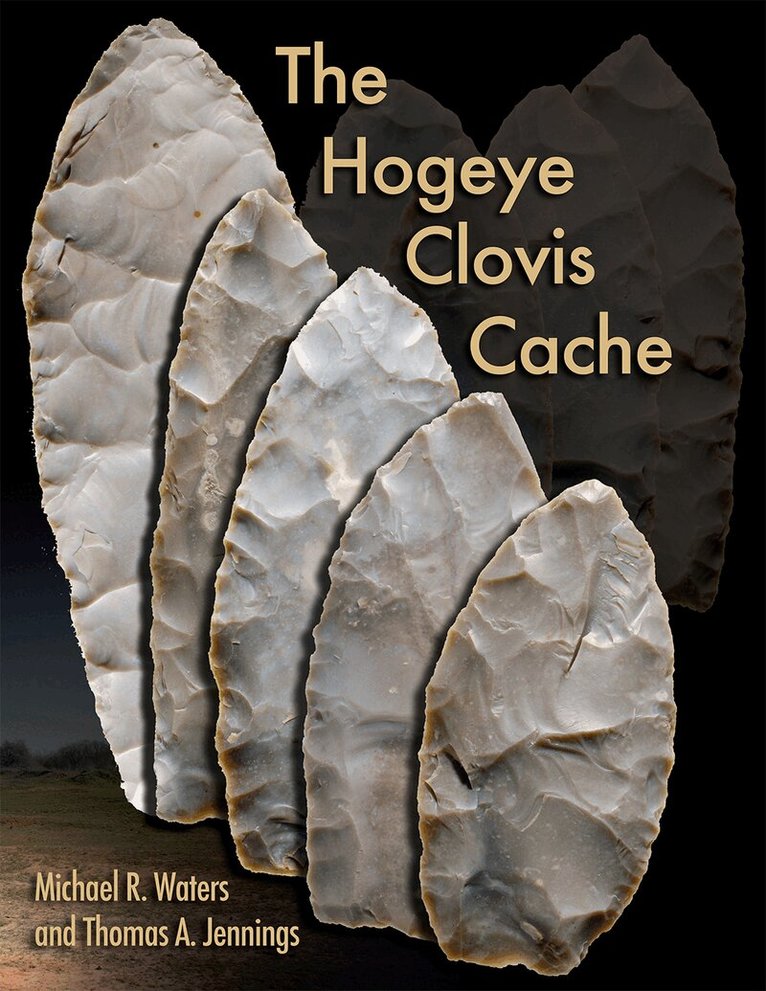
Roughly thirteen thousand years ago, Clovis hunters cached more than fifty projectile points, preforms, and knives at the toe of a gentle slope near present-day Elgin, Bastrop County, in central Texas. Over the next millennia, deposition buried the cache several meters below the surface. The entombed artifacts lay undisturbed until 2003.A circuitous path brought thirteen of the original thirty-seven Clovis bifaces and points through many hands before reaching the attention of Michael Waters at Texas A&M University. At the site of the original cache, Waters and coauthor Thomas A. Jennings conducted excavations, studied the geology, and dated the geological layers to reconstruct how the cache was buried.This book provides a well-illustrated, thoroughly analyzed description and discussion of the Hogeye Clovis cache, the projectile points and other artifacts from later occupations, and the geological context of the site, which has yielded evidence of multiple Paleoindian, Archaic, and Late Prehistoric occupations.The cache of tools and weapons at Hogeye, when combined with other sites, allows us to envision a snapshot of life at the end of the last Ice Age.
364 kr
Skickas inom 10-15 vardagar
Roughly thirteen thousand years ago, Clovis hunters cached more than fifty projectile points, preforms, and knives at the toe of a gentle slope near present-day Elgin, Bastrop County, in central Texas. Over the next millennia, deposition buried the cache several meters below the surface. The entombed artifacts lay undisturbed until 2003. A circuitous path brought thirteen of the original thirty-seven Clovis bifaces and points through many hands before reaching the attention of Michael Waters at Texas A&M University. At the site of the original cache, Waters and coauthor Thomas A. Jennings conducted excavations, studied the geology, and dated the geological layers to reconstruct how the cache was buried. This book provides a well-illustrated, thoroughly analyzed description and discussion of the Hogeye Clovis cache, the projectile points and other artifacts from later occupations, and the geological context of the site, which has yielded evidence of multiple Paleoindian, Archaic, and Late Prehistoric occupations. The cache of tools and weapons at Hogeye, when combined with other sites, allows us to envision a snapshot of life at the end of the last Ice Age.
Clovis Lithic Technology
Investigation of a Stratified Workshop at the Gault Site, Texas
Häftad, Engelska, 2026
529 kr
Skickas inom 10-15 vardagar
Some 13,000 years ago, humans were drawn repeatedly to a small valley in what is now Central Texas, near the banks of Buttermilk Creek. These early hunter-gatherers camped, collected stone, and shaped it into a variety of tools they needed to hunt game, process food, and subsist in the Texas wilderness. Their toolkit included bifaces, blades, and deadly spear points. Where they worked, they left thousands of pieces of debris, which have allowed archaeologists to reconstruct their methods of tool production. Along with the faunal material that was also discarded in their prehistoric campsite, these stone, or lithic, artifacts afford a glimpse of human life at the end of the last ice age during an era referred to as Clovis. The area where these people roamed and camped, called the Gault site, is one of the most important Clovis sites in North America. A decade ago a team from Texas A&M University excavated a single area of the site—formally named Excavation Area 8, but informally dubbed the Lindsey Pit—which features the densest concentration of Clovis artifacts and the clearest stratigraphy at the Gault site. Some 67,000 lithic artifacts were recovered during fieldwork, along with 5,700 pieces of faunal material. In a thorough synthesis of the evidence from this prehistoric “workshop,” Michael R. Waters and his coauthors provide the technical data needed to interpret and compare this site with other sites from the same period, illuminating the story of Clovis people in the Buttermilk Creek Valley.