David G. Anderson – författare
1 057 kr
Läs direkt efter köp
335 kr
Skickas inom 10-15 vardagar
570 kr
Skickas inom 5-8 vardagar
542 kr
Skickas inom 5-8 vardagar
542 kr
Skickas inom 5-8 vardagar
444 kr
Skickas inom 5-8 vardagar
944 kr
Läs direkt efter köp
This volume explores political change in chiefdoms, specifically how complex chiefdoms emerge and collapse, and how this process—called cycling—can be examined using archaeological, ethnohistoric, paleoclimatic, paleosubsistence, and physical anthropological data. The focus for the research is the prehistoric and initial contact-era Mississippian chiefdoms of the Southeastern United States, specifically the societies occupying the Savannah River basin from ca. A.D. 1000 to 1600. This regional focus and the multidisciplinary nature of the investigation provide a solid introduction to the Southeastern Mississippian archaeological record and the study of cultural evolution in general.
944 kr
Läs direkt efter köp
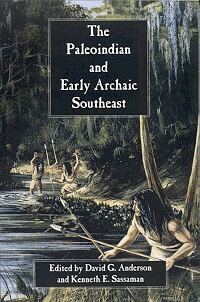
The southeastern United States has one of the richest records of early human settlement of any area of North America. This book provides the first state-by-state summary of Paleoindian and Early Archaic research from the region, together with an appraisal of models developed to interpret the data. It summarizes what we know of the peoples who lived in the Southeast more than 8,000 years ago—when giant ice sheets covered the northern part of the continent, and such mammals as elephants, saber-toothed tigers, and ground sloths roamed the landscape. Extensively illustrated, this benchmark collection of essays on the state of Paleoindian and Early Archaic research in the Southeast will guide future studies on the subject of the region''s first inhabitants for years to come.
Divided in three parts, the volume includes:
Part I: Modeling Paleoindian and Early Archaic Lifeways in the Southeast
Environmental and Chronological Considerations, David G. Anderson, Lisa D. O''Steen, and Kenneth E. Sassaman Modeling Paleoindian and Early Archaic Settlement in the Southeast: A Historical Perspective, David G. Anderson and Kenneth E. Sassaman
Models of Paleoindian and Early Archaic Settlement in the Lower Southeast, David G. Anderson Early Archaic Settlement in the South Carolina Coastal Plain, Kenneth E. Sassaman Raw Material Availability and Early Archaic Settlement in the Southeast, I. Randolph Daniel Jr. Paleoindian and Early Archaic Settlement along the Oconee Drainage, Lisa D. O''Steen Haw River Revisited: Implications for Modeling Terminal Late Glacial and Early Holocene Hunter-Gatherer Settlement Systems in the Southeast, John S. Cable Early Archiac Settlement and Technology: Lessons from Tellico, Larry R. Kimball Paleoindians Near the Edge: A Virginia Perspective, Michael F. Johnson
Part II: The Regional Record
The Need for a Regional Perspective, Kenneth E. Sassaman and David G. Anderson Paleoindian and Early Archaic Research in the South Carolina Area, David G. Anderson and Kenneth E. Sassaman The Taylor Site: An Early Occupation in Central South Carolina, James L. Michie Paleoindian and Early Archaic Research in Tennessee, John B. Boster and Mark R. Norton A Synopsis of Paleoindian and Early Archaic Research in Alabama, Eugene M. Futato Statified Late Pleistocene and Early Holocene Deposits at Dust Cave, Northwestern Alabama, Boyce N. Driskell Bone and Ivory Tools from Submerged Paleoindian Sites in Florida, James S. Dunbar and S. David Webb Paleoindian and Early Archaic Data from Mississippi, Samuel O. McGahey Early and Middle Paleoindian Sites in the Northeastern Arkansas Region, J. Christopher Gillam
Part III: Commentary
A Framework for the Paleoindian/Early Archaic Transition, Joel Gunn Modeling Communities and Other Thankless Tasks, Dena F. Dincauze An Arkansas View, Dan F. Morse Comments, Henry T. Wright
325 kr
Läs direkt efter köp
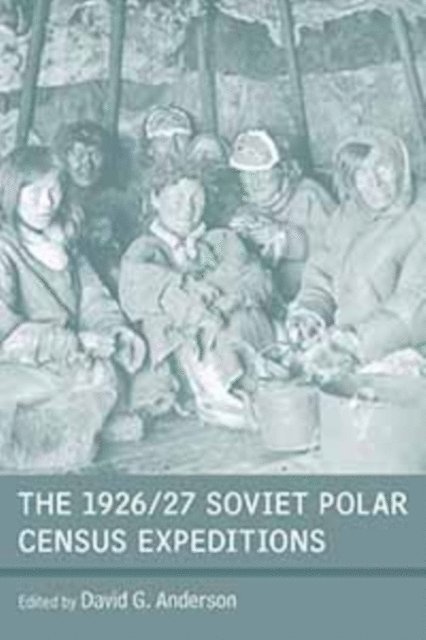
In 1926/27 the Soviet Central Statistical Administration initiated several yearlong expeditions to gather primary data on the whereabouts, economy and living conditions of all rural peoples living in the Arctic and sub-Arctic at the end of the Russian civil war. Due partly to the enthusiasm of local geographers and ethnographers, the Polar Census grew into a massive ethnological exercise, gathering not only basic demographic and economic data on every household but also a rich archive of photographs, maps, kinship charts, narrative transcripts and museum artifacts. To this day, it remains one of the most comprehensive surveys of a rural population anywhere. The contributors to this volume – all noted scholars in their region – have conducted long-term fieldwork with the descendants of the people surveyed in 1926/27. This volume is the culmination of eight years’ work with the primary record cards and was supported by a number of national scholarly funding agencies in the UK, Canada and Norway. It is a unique historical, ethnographical analysis and of immense value to scholars familiar with these communities’ contemporary cultural dynamics and legacy.
284 kr
Läs direkt efter köp
Anthropologists know that conservation often disempowers already under-privileged groups, and that it also fails to protect environments. Through a series of ethnographic studies, this book argues that the real problem is not the disappearance of "pristine nature" or even the land-use practices of uneducated people. Rather, what we know about culturally determined patterns of consumption, production and unequal distribution, suggests that critical attention would be better turned on discourses of "primitiveness" and "pristine nature" so prevalent within conservation ideology, and on the historically formed power and exchange relationships that they help perpetuate.
1 999 kr
Skickas inom 3-6 vardagar
315 kr
Läs direkt efter köp
Due to changing climates and demographics, questions of policy in the circumpolar north have focused attention on the very structures that people call home. Dwellings lie at the heart of many forms of negotiation. Based on years of in-depth research, this book presents and analyzes how the people of the circumpolar regions conceive, build, memorialize, and live in their dwellings. This book seeks to set a new standard for interdisciplinary work within the humanities and social sciences and includes anthropological work on vernacular architecture, environmental anthropology, household archaeology and demographics.
357 kr
Skickas inom 5-8 vardagar
185 kr
Skickas inom 5-8 vardagar
357 kr
Skickas inom 5-8 vardagar
200 kr
Skickas inom 5-8 vardagar
2 627 kr
Kommande
1 965 kr
Skickas inom 3-6 vardagar
1 965 kr
Skickas inom 3-6 vardagar
568 kr
Skickas inom 3-6 vardagar
499 kr
Skickas inom 3-6 vardagar
585 kr
Skickas inom 3-6 vardagar
315 kr
Läs direkt efter köp
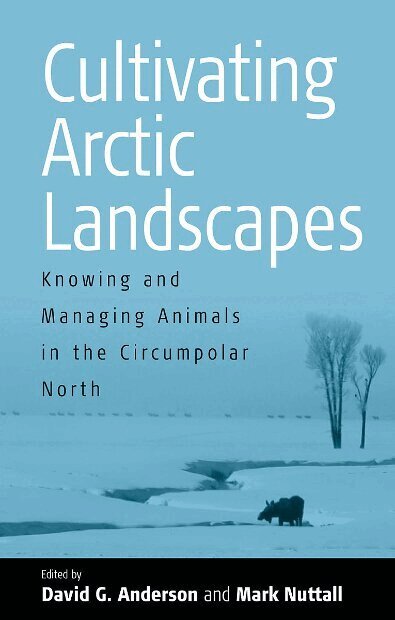
In the last two decades, there has been an increased awareness of the traditions and issues that link aboriginal people across the circumpolar North. One of the key aspects of the lives of circumpolar peoples, be they in Scandinavia, Alaska, Russia, or Canada, is their relationship to the wild animals that support them. Although divided for most of the 20th Century by various national trading blocks, and the Cold War, aboriginal people in each region share common stories about the various capitalist and socialist states that claimed control over their lands and animals. Now, aboriginal peoples throughout the region are reclaiming their rights.
This volume is the first to give a well-rounded portrait of wildlife management, aboriginal rights, and politics in the circumpolar north. The book reveals unexpected continuities between socialist and capitalist ecological styles, as well as addressing the problems facing a new era of cultural exchanges between aboriginal peoples in each region.
568 kr
Skickas inom 3-6 vardagar
497 kr
Skickas inom 5-8 vardagar
677 kr
Skickas inom 5-8 vardagar
2 024 kr
Skickas inom 3-6 vardagar
340 kr
Tillfälligt slut