Stafford Poole - Böcker
Visar alla böcker från författaren Stafford Poole. Handla med fri frakt och snabb leverans.
7 produkter
7 produkter
1 128 kr
Skickas inom 10-15 vardagar
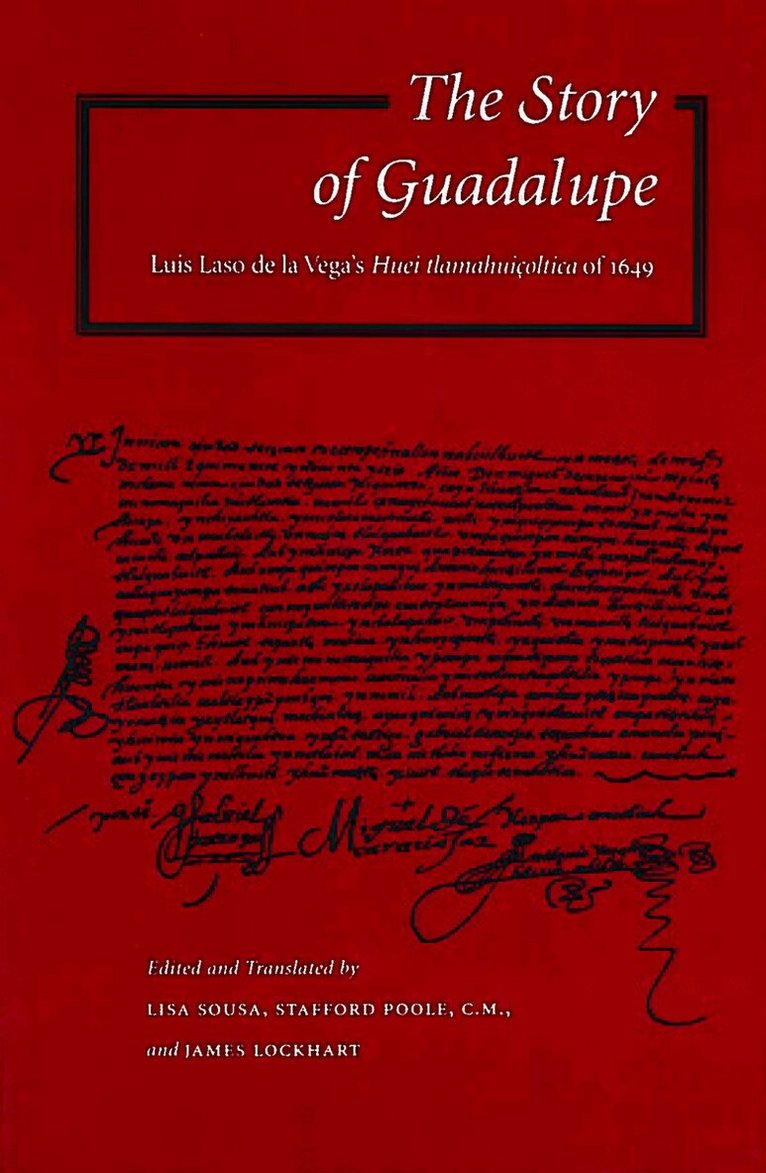
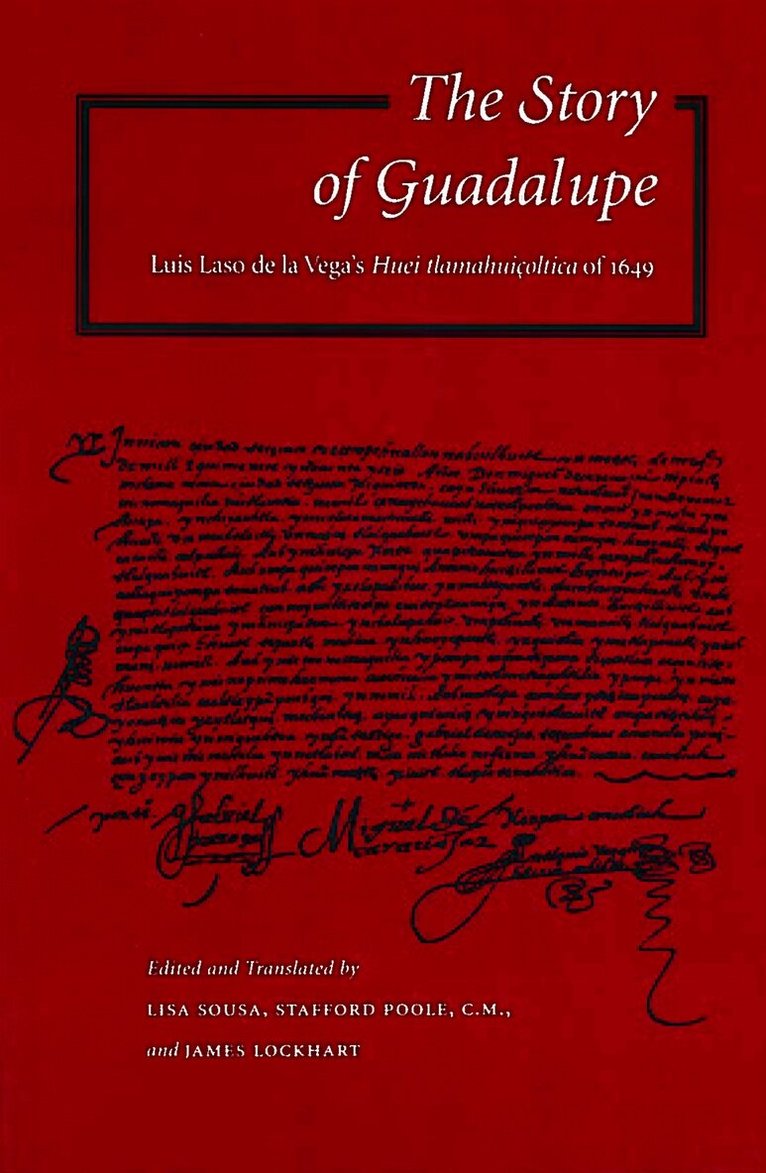
The devotion to Our Lady of Guadalupe is one of the most important elements in the development of a specifically Mexican tradition of religion and nationality over the centuries. The picture of the Virgen morena (Dark Virgin) is to be found everywhere throughout Mexico, and her iconography is varied almost beyond telling. Though innumerable books, both historical and devotional, have been published on the Guadalupan legend in this century alone, it is only recently that its textual sources have been closely studied.This volume makes available to the English-reading public an easily accessible translation from the original Nahuatl of the story itself and the entire book in which the story is embedded. The study also provides scholars with new perspectives on a text long at the center of Mexican intellectual currents. Through the use of technical philological methods, it indicates that the text may have been authored in the mid-seventeenth century by a Spanish-Mexican priest, based on an earlier text by a colleague of his, and that it was not the product of Nahuatl oral tradition.The story of the apparition of the Virgin of Guadalupe to a poor indigenous man less than fifteen years after the Spanish conquest of Mexico did not come into prominence until the mid-seventeeth century. The first known telling of the tale appeared in a book published in Spanish in 1648 by the priest Miguel Sánchez. On the heels of the Sánchez version, the story was included in the book Huei tlamahuiçoltica published in 1649 by Luis Laso de la Vega, the vicar of the Guadalupe chapel and a friend of Sánchez. It had little impact initially, but by the twentieth century, with indigenism triumphant, it had become the best known version.There have been a few translations of Laso de la Vega's apparition story into English but only on a popular or devotional level. The present edition offers a translation and transcription of the complete text of the 1649 edition, together with critical apparatus, including comparisons of the Sánchez and Laso de la Vega texts, and various linguistic, orthographic, and typographical matters that throw light on the date and manner of composition.
270 kr
Skickas inom 7-10 vardagar
The devotion to Our Lady of Guadalupe is one of the most important elements in the development of a specifically Mexican tradition of religion and nationality over the centuries. The picture of the Virgen morena (Dark Virgin) is to be found everywhere throughout Mexico, and her iconography is varied almost beyond telling. Though innumerable books, both historical and devotional, have been published on the Guadalupan legend in this century alone, it is only recently that its textual sources have been closely studied.This volume makes available to the English-reading public an easily accessible translation from the original Nahuatl of the story itself and the entire book in which the story is embedded. The study also provides scholars with new perspectives on a text long at the center of Mexican intellectual currents. Through the use of technical philological methods, it indicates that the text may have been authored in the mid-seventeenth century by a Spanish-Mexican priest, based on an earlier text by a colleague of his, and that it was not the product of Nahuatl oral tradition.The story of the apparition of the Virgin of Guadalupe to a poor indigenous man less than fifteen years after the Spanish conquest of Mexico did not come into prominence until the mid-seventeeth century. The first known telling of the tale appeared in a book published in Spanish in 1648 by the priest Miguel Sánchez. On the heels of the Sánchez version, the story was included in the book Huei tlamahuiçoltica published in 1649 by Luis Laso de la Vega, the vicar of the Guadalupe chapel and a friend of Sánchez. It had little impact initially, but by the twentieth century, with indigenism triumphant, it had become the best known version.There have been a few translations of Laso de la Vega's apparition story into English but only on a popular or devotional level. The present edition offers a translation and transcription of the complete text of the 1649 edition, together with critical apparatus, including comparisons of the Sánchez and Laso de la Vega texts, and various linguistic, orthographic, and typographical matters that throw light on the date and manner of composition.
861 kr
Skickas inom 10-15 vardagar
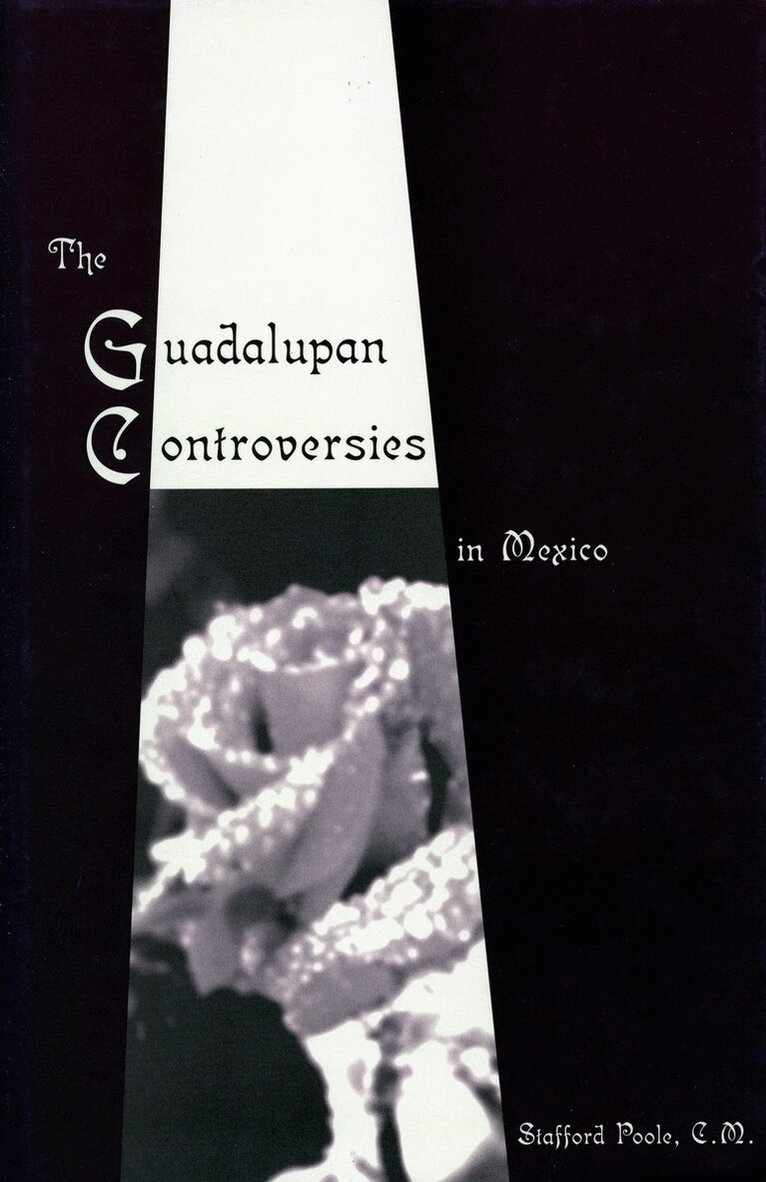
The tradition of Our Lady of Guadalupe of Mexico is one of history's greatest examples of the fusion of religious devotion and national identity. For more than three centuries it has united a people who have often been divided. Given the universality of the devotion, not just in Mexico but throughout the Catholic world, it is surprising to know that from the beginning the story of the Virgin Mary's appearances to the neophyte Indian Juan Diego has been the object of bitter controversy. In the late nineteenth century this centered on the authenticity of the tradition, sparked in part by the famous letter of the great Mexican historian Joaquín García Icazbalceta to the archbishop of Mexico, in which he listed his arguments against the tradition. From 1980 until 2002 the controversy centered on the canonization of Juan Diego and the doubts about his historical existence. The Guadalupan Controversies in Mexico is the first comprehensive history of this interesting yet relatively unknown facet of Mexican social and religious history.
674 kr
Skickas inom 7-10 vardagar
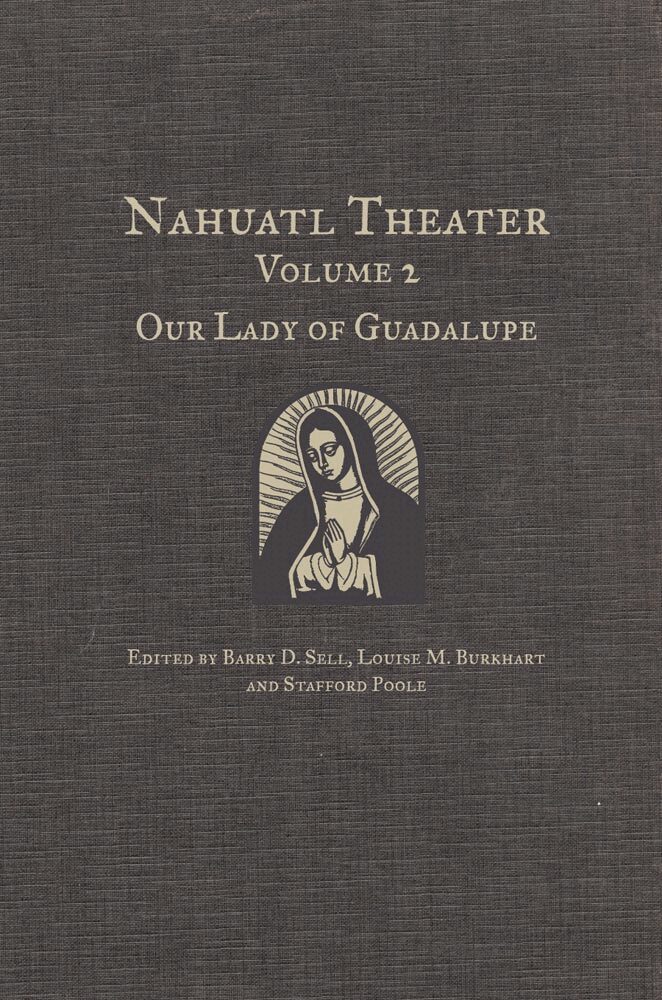
The foundation legend of the Mexican devotion to Our Lady of Guadalupe is one of the most appealing and beloved of all religious stories. In this volume, editors Barry D. Sell, Louise M. Burkhart, and Stafford Poole present the only known colonial Nahuatl-language dramas based on the Virgin of Guadalupe story: the Dialogue of the Apparition of the Virgin Saint Mary of Guadalupe, an anonymous work from the late seventeenth or early eighteenth century, and The Mexican Portent, authored by creole priest Joseph Pérez de la Fuente in the early eighteenth century. The plays, never before published in English translation, are vital works in the history of the Guadalupe devotion, for they show how her story was presented to native people at a time when it was not universally known.Faithful transcriptions and translations of the plays are accompanied here by introductory essays by Poole and Burkhart and by three additional previously unpublished Guadalupan texts in Nahuatl.This volume is the second in a four-volume series titled Nahuatl Theater, edited by Sell and Burkhart.
Pedro Moya De Contreras
Catholic Reform and Royal Power in New Spain, 1571–1591 Second Edition
Häftad, Engelska, 2011
276 kr
Skickas inom 10-15 vardagar
For a brief few years in the sixteenth century, Pedro Moya de Contreras was the most powerful man in the New World. A church official and loyal royalist, he came to Mexico in 1571 to establish the Inquisition and later became archbishop and viceroy for the region. This new edition of Stafford Poole's definitive portrait of Moya de Contreras, first published in 1971, now offers an expanded understanding of this enigmatic figure's influence on the development of New Spain.In tracing the career of a sixteenth-century church official and administrator who was more notable for what he did than for who he was, Poole offers a rich source of information about Spanish rule in colonial Mexico and the evolving relationship between the Spanish monarchy and the Catholic Church. For this second edition, Poole draws on newly available sources to fill in gaps regarding Moya de Contreras's shadowy early career and final years in Spain. He also explores in greater depth the churchman's influence as Grand Inquisitor in light of the plethora of new research and recent publications on the Spanish Inquisition.Poole shows that Moya de Contreras was as diligent at carrying out the tortures of the Inquisition as he was at exposing government and church corruption. His reforming zeal reached its culmination in his leadership of the Third Mexican Provincial Council of 1585, which enacted a legal code for the Mexican Church that lasted more than three hundred years.
276 kr
Skickas inom 10-15 vardagar
Philip II is a fascinating and enigmatic figure in Spanish history, but it was his letrados--professional bureaucrats and ministers trained in law--who made his vast castilian empire possible. In Juan de Ovando, Stafford Poole traces the life and career of a key minister in the king's government to explore the role that letrados played in Spanish society as they sought to displace the higher nobility in the administration through a system based upon merit.Juan de Ovando was an industrious, discerning, and loyal servant, yet, like all letrados, he owed his position to royal favor. Ovando began his career as an ecclesiastical judge and inquisitor in Seville. From there, at the king's order, he undertook the reform of the University of Alcalá de Henares, one of his most enduring achievements. Appointed then to the supreme council of the Spanish Inquisition, Ovando was commissioned to investigate the Council of the Indies, over which he eventually presided. In this role, Ovando began codifying laws and collecting information about Spain's overseas possessions through the famed Relaciones geográficas--wide-ranging surveys of daily life in the New World. He devised long-term and forward-looking colonial policies for New Spain while, also serving as president of the Council of Finance, he sought to bring order to Spain's chaotic financial situation.Poole's biography of Juan de Ovando provides an intimate view of the day-to-day influence letrados wielded over the Spanish colonial machine.
665 kr
Skickas inom 3-6 vardagar
Religion in New Spain presents an overview of the history of colonial religious culture and encompasses aspects of religion in the many regions of New Spain. The contributors reveal that Spanish conquest was not the end-all of indigenous culture and that the Virgin of Guadalupe was a myth-in-the-making by locals as well as foreigners. Furthermore, nuns and priests had real lives and the institutional colonial church was seldom if ever immune to political or economic influence.The essays, while varying in subject and content, validate the sheer pervasiveness and importance of religion in colonial Latin America while reiterating its many manifestations. We can now better understand how it was particularized by individuals, groups, and institutions because of the rich, remarkable histories found in this collection.