Harry Dempsey – Illustratör
Upptäck titlar med illustrationer av Harry Dempsey.
15 produkter
15 produkter
198 kr
Skickas inom 10-15 vardagar
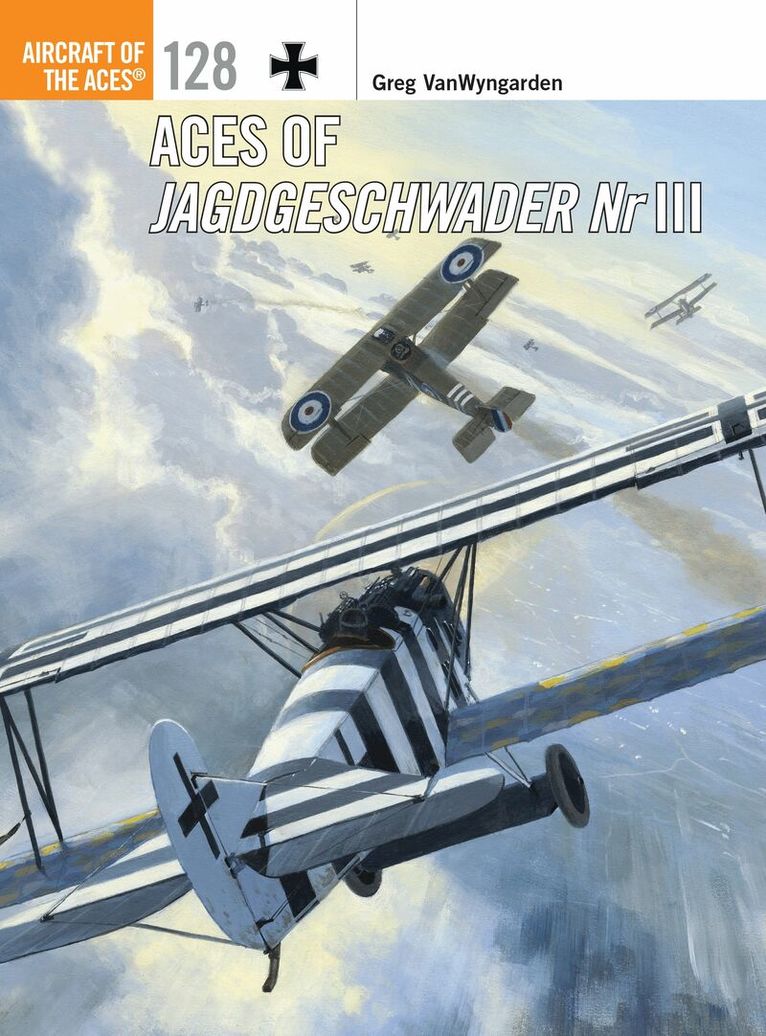
A history of Royal Prussian Jagdgeschwader Nr III, the third of Germany's vaunted fighter wings to be formed during World War 1.Commanded by the Pour le Mérite winner and well-respected ace Hauptmann Bruno Loerzer for its entire existence, it was composed of the celebrated Jasta 'Boelcke', along with Jagdstaffeln 26, 27 and 36. Equipped largely with the new Fokker triplane, these four units would play an important role in the Kaiserschlacht as part of the 17. Armee. JG III flew all the key German fighter types in World War 1, namely the Albatros D III and D Va and Fokker Dr I triplane and D VII.As Germany's fortunes waned in the summer of 1918, the aces of JG III nonetheless did their best to stem the tides of British, French and later American aircraft they encountered. Aces such as Carl Bolle, Paul Bäumer, Heinrich Bongartz, Hermann Frommherz, Rudolf Klimke and the infamous Hermann Göring all carved their names in the record books flying in this formidable formation.This book examines the tactics, achievements and personalities of one of the deadliest of Germany's aerial units.
198 kr
Skickas inom 10-15 vardagar
Featuring previously unpublished photographs, the story of the Russian air arm, which exclusively flew French- and British-designed fighters such as the Morane-Saulnier Type G, Nieuport Scouts and Sopwith ½ Strutters.Although the Russian Imperial Army Air Service consisted of no more than four BAGs (Boevaya Aviatsionniy Gruppa – battle aviation groups), each controlling three or four smaller AOIs (Aviatsionniy Otryad Istrebitelei – fighter aviation detachments) equipped with a variety of aircraft types, its fighter pilots nevertheless gave a good account of themselves. Indeed, during three years of war they claimed more than 200 Austro-Hungarian and German aircraft shot down, creating 13 aces – these elite aviators accounted for around half of the victories claimed on the Eastern Front.Pilots flew a variety of fighter types, with French Nieuport scouts and SPAD VIIs proving to be the most popular, and effective, aeroplanes to see service on this front. The exploits of these aces are detailed here, with information based on material newly sourced by the author from Russian military and private archives.Many previously unpublished photographs are used to illustrate this book, supported by full-colour profiles that reveal how striking some of the aces’ fighters were in this often-forgotten theatre of World War 1.
175 kr
Skickas inom 10-15 vardagar
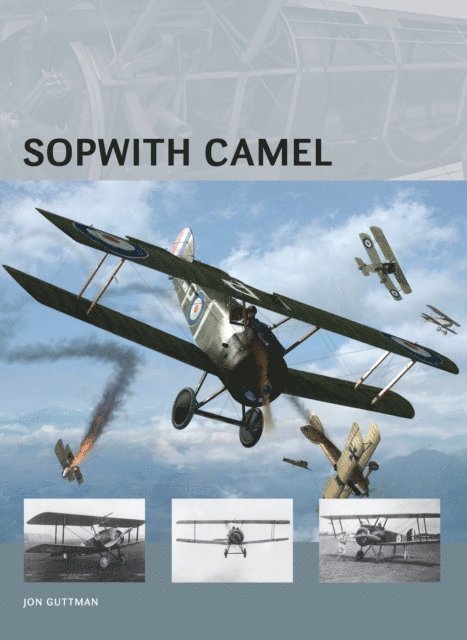
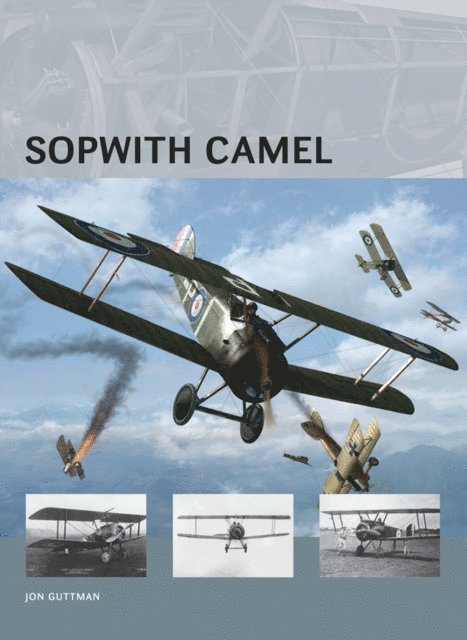
A definitive technical guide to the Sopwith Camel, featuring illustrations and profiles.An icon of World War I aerial combat, the Sopwith Camel was a superb dogfighter in the hands of a pilot who could master its vicious idiosyncrasies. The first British fighter to be armed with twin machine guns, the Camel packed a considerable punch and was highly successful, notching up a considerable number of aerial victories. The Camel was a remarkable aircraft, and one that could perform in a variety of roles, including as a ground strafer, a night fighter and a carrier-based fighter.Alongside stunning illustrations, Jon Guttman charts how, as newer, higher performance aircraft types were introduced and began to eclipse it, the dominance of the Camel declined and losses mounted. Nevertheless, Camels appeared over battlefields throughout the war and beyond, notably in the Russian Civil War.
198 kr
Skickas inom 10-15 vardagar
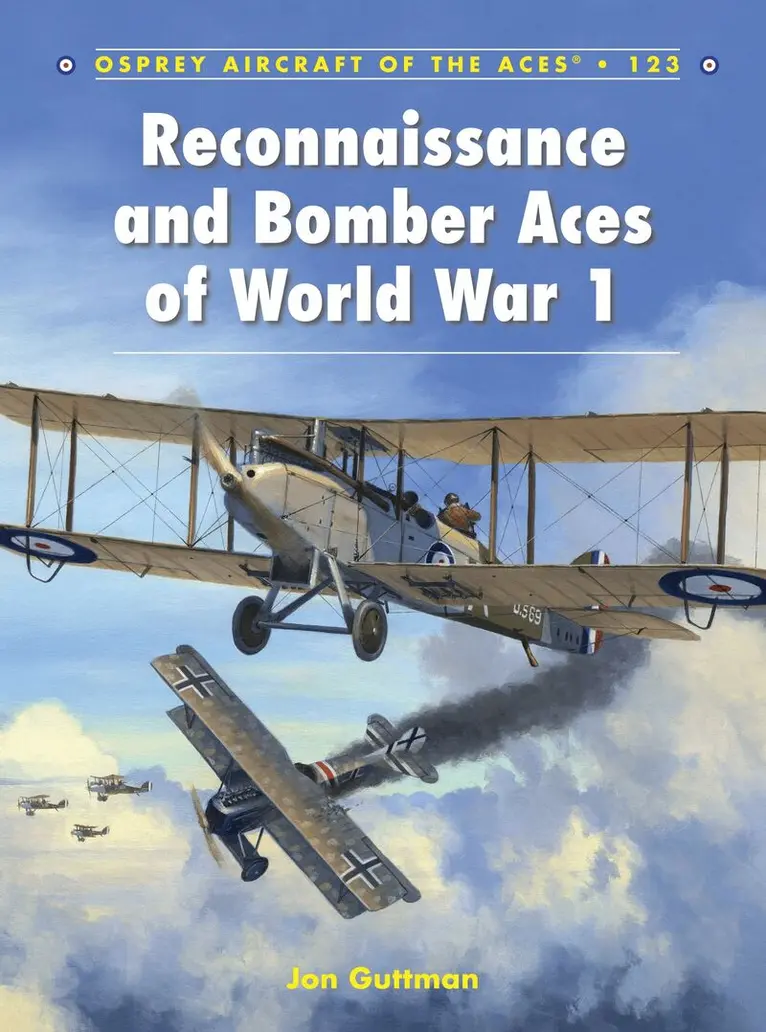
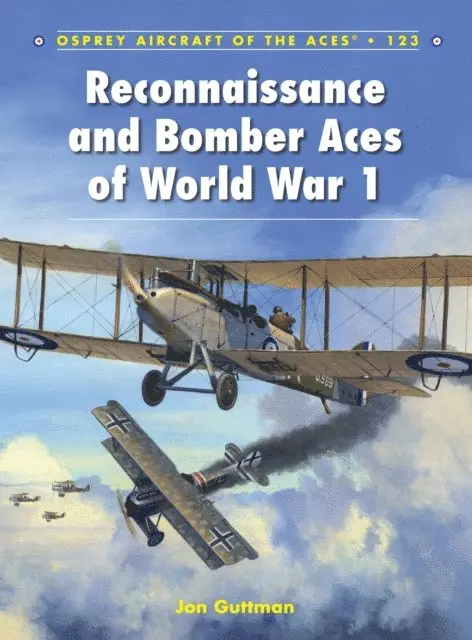
Many fighter aces began their careers in two-seaters, but a surprising number of British, French and German aircrews managed to achieve acedom in those not-so-helpless workhorses too. This is their story.Often overshadowed by the fighters that either protected or threatened them, two-seater reconnaissance aircraft performed the oldest and most strategically vital aerial task of World War 1 - a task that required them to return with the intelligence they gathered at all costs. Bomber sorties were equally important and dangerous, and the very nature of both types of mission required going in harm's way. A remarkable number of British, French and German two-seater teams managed to attain or exceed the five victories needed to achieve the acedom popularly associated with their single-seat nemeses, and in this book, with rich illustrations and first-hand accounts of the veterans themselves, they receive their long-overdue recognition.Many high-scoring single-seat fighter aces also began their careers in two-seaters, particularly in the early stages of the conflict, and their exploits as either pilots or observers are detailed here too.
198 kr
Skickas inom 10-15 vardagar
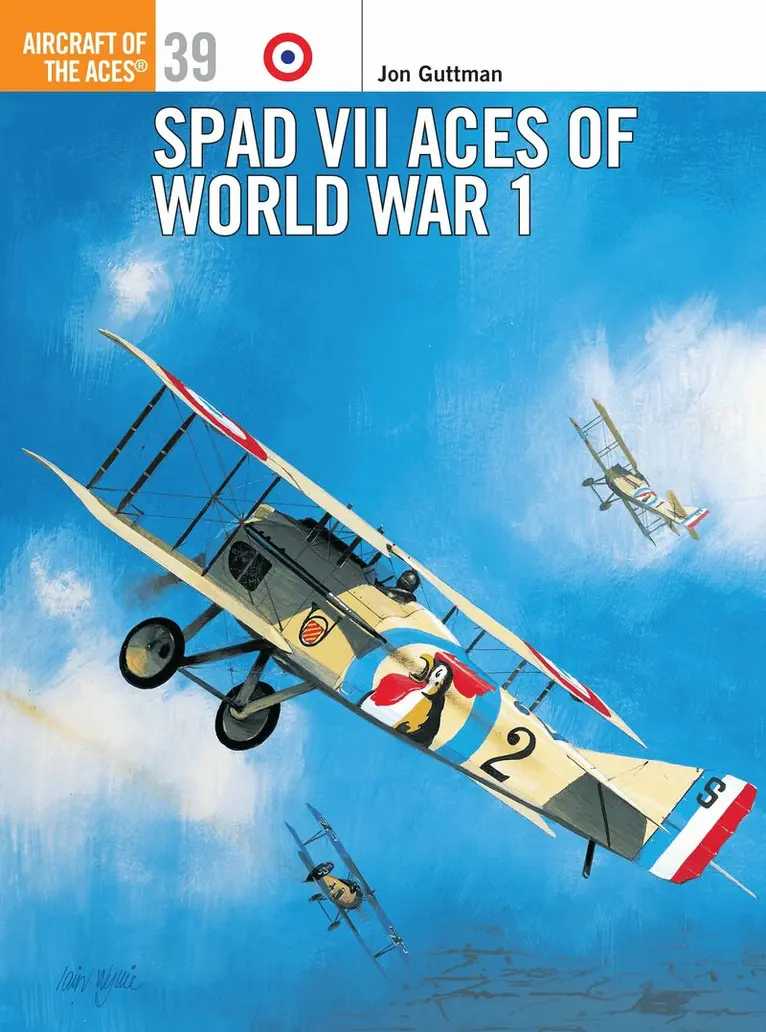
Built by the 'Société Anonyme Pour l’Aviation et ses Dérivés', (SPAD), the SPAD VII was the first successful fighting scout design to emerge from the company that had traded as Duperdussin pre-war.Flown ‘from the off’ by aces Paul Sauvage and Georges Guynemer, the scouts made an immediate impression. Indeed, the latter pilot was so impressed that he dubbed the Type VII the ‘flying machine gun’.The first of two volumes on SPAD aces, this book tells the whole story from the ace perspective. By the time production of the SPAD VII ended in the final months of 1918, around 6000 examples had been built, and Allied aces on every front had enjoyed success with the type.
198 kr
Skickas inom 10-15 vardagar
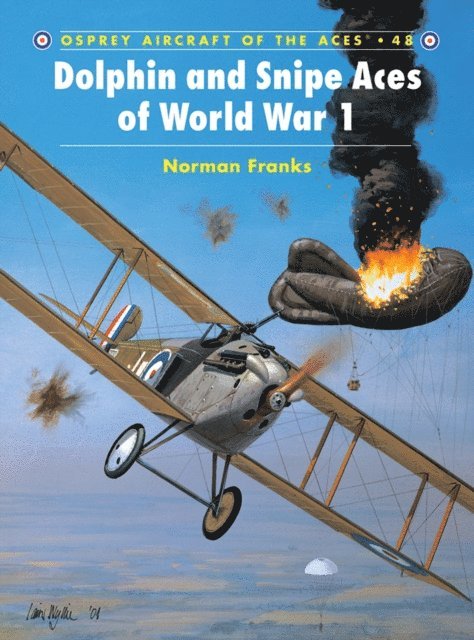
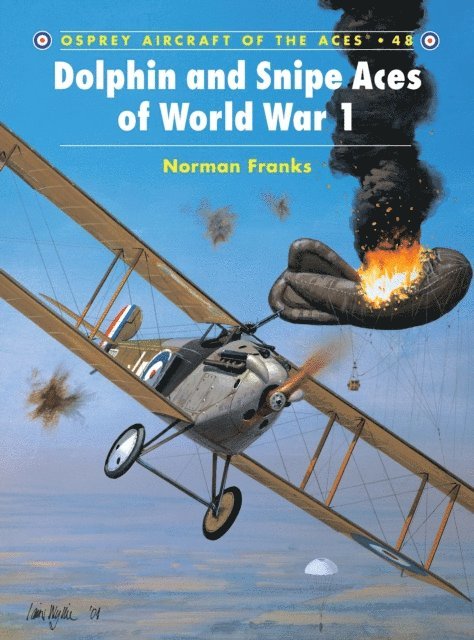
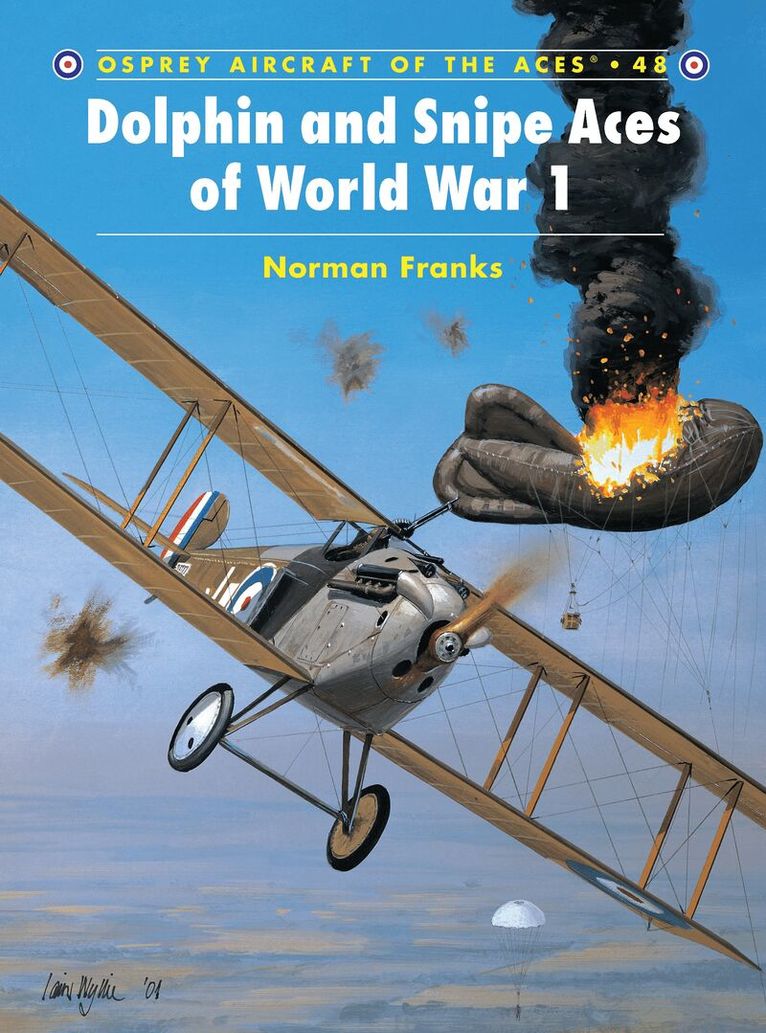
This book focuses on the combat careers of the last of the famous Sopwith fighters to enter service during World War 1, the Dolphin and the Snipe, both of which were built on the strong scouting heritage of the Pup and Camel.The Dolphin featured the unique negative-staggered biplane wing arrangement, which provided the pilot with the best possible tactical view forward for seeking out his enemy. Used extensively on the Western Front, the Dolphin proved very effective in combat, with a substantial number of British aces scoring kills with the fighter. The Snipe was built as the successor of the highly successful Camel, and entered service with the fledgling Royal Air Force in the summer of 1918.As Norman Franks explores in this illustrated volume, although seeing just a few months of action before the Armistice, the Snipe nevertheless proved its superiority over virtually all other fighters.
192 kr
Skickas inom 10-15 vardagar
After struggling with inadequate supplies of aircraft and matériel, the veteran pilots of the Geschwader would go on to enjoy incredible successes against French and American opponents in September 1918.Aces who flew the famous blue-fuselaged Fokkers of JG II included such stalwarts as Josef Veltjens (35 kills), Georg von Hantelmann (25 kills), Franz Büchner (40 kills) and Ulrich Neckel (30 kills). This volume contains many first-hand accounts by these and other notable aces, which reveal the esprit de corps and camaraderie these airmen displayed in their struggles against superior numbers up to the war’s final grim days.
Del 18 - Aviation Elite Units
Groupe de Combat 12, 'Les Cigognes'
France's Ace Fighter Group in World War 1
Häftad, Engelska, 2004
198 kr
Skickas inom 10-15 vardagar
This book traces the combat history of the most famous and highest-scoring fighter group in France's World War I Aviation Militaire.Groupe de Combat 12 boasted the highest-scoring Allied fighter pilot, René Fonck, and France's most celebrated hero of the air, Georges Guynemer. Its ranks included numerous other famous aces, such as Rene's Dorme, Alfred Heurteaux, Albert Deullin, and American volunteers Edwin Parsons and Frank L. Baylies. Additionally, Guynemer was instrumental in developing France's premier series of fighter planes, the SPAD VII, XII, XIII and XVII.
198 kr
Skickas inom 10-15 vardagar
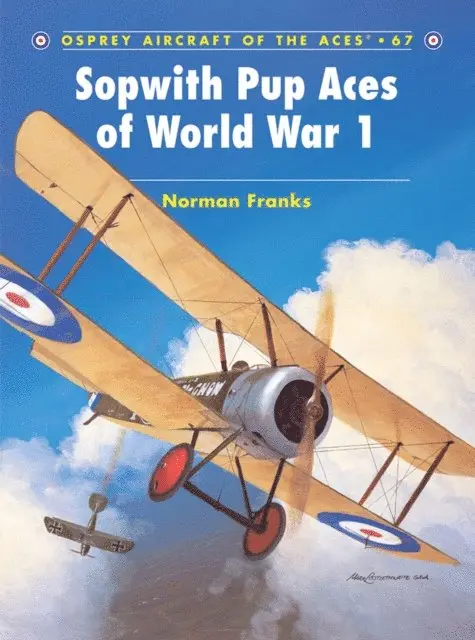
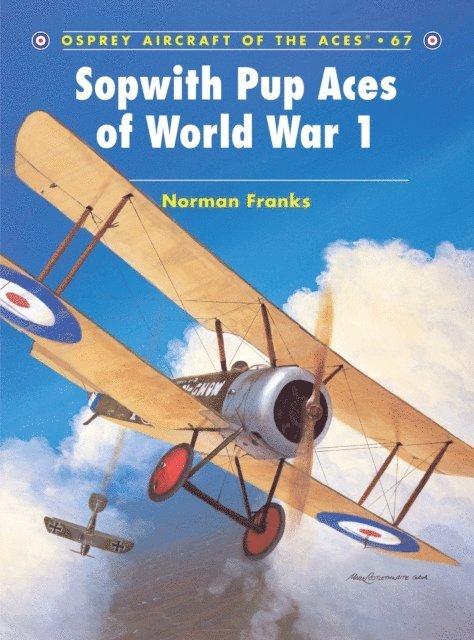
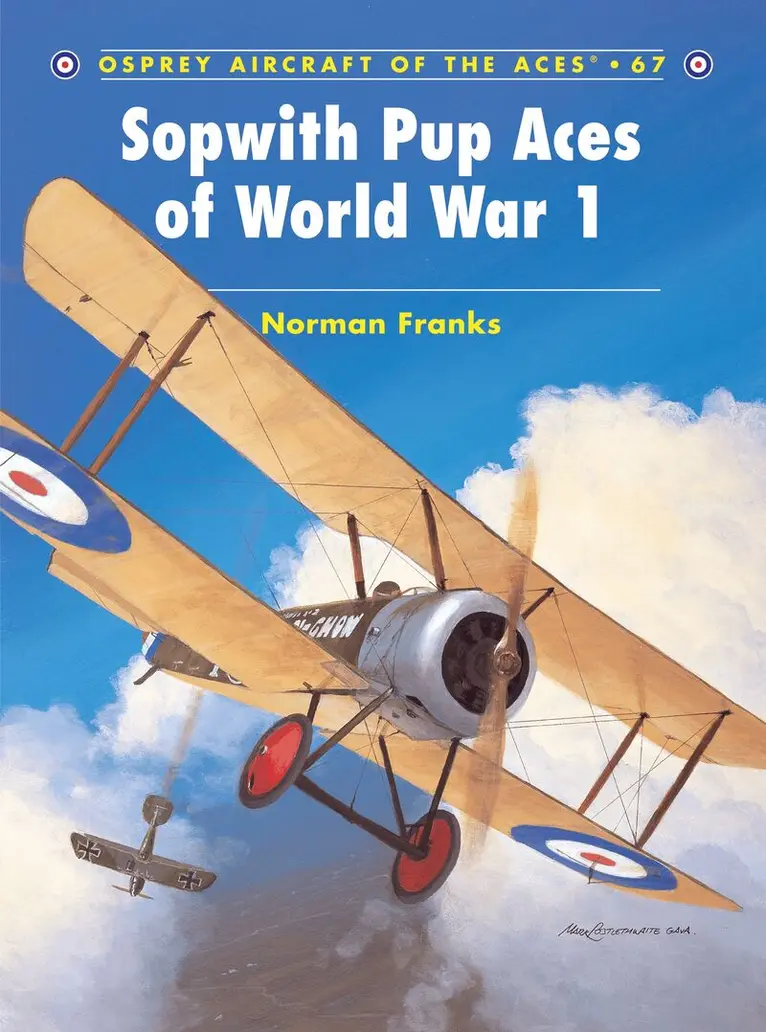
An illustrated history of the Pup, the forerunner of the hugely successful Sopwith Camel, and the aces that flew it.The first proper British fighting scout, the first Pups – the Royal Naval Air Service – arrived on the Western Front in 1916. Although regarded as a ‘nice’ aeroplane to fly, pilots who used it in combat gained much success during the first half of 1917. The Royal Flying Corps also used the Pup from January 1917 onwards, with the final combats with the machine occurring in December of that year.This book describes the combat careers of the successful Pup aces, how they flew and how they fought.
198 kr
Skickas inom 10-15 vardagar
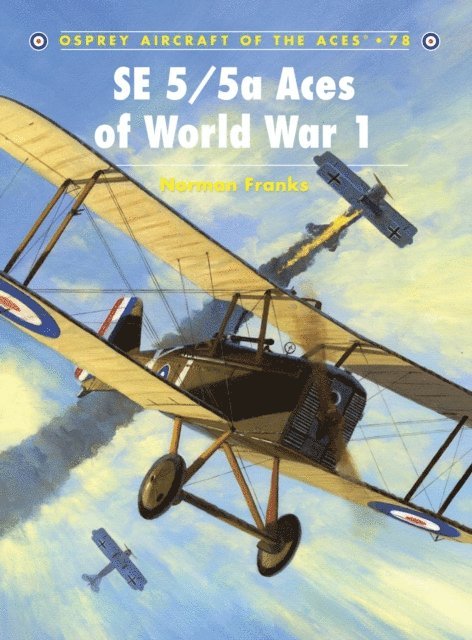
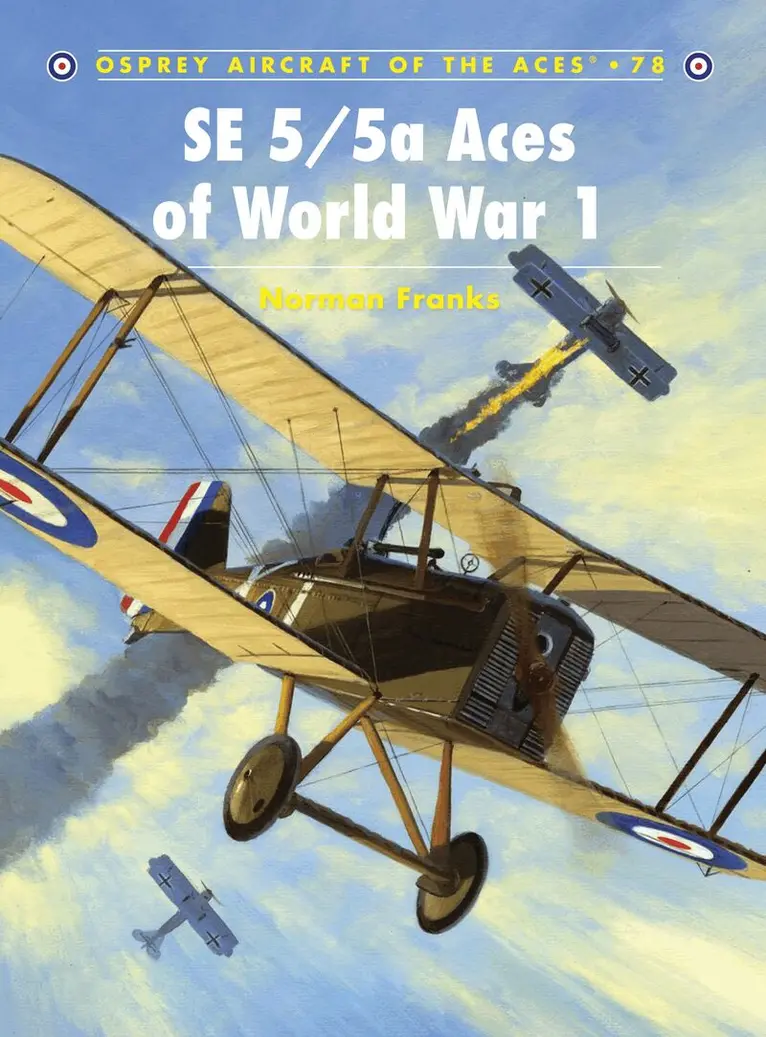
The Royal Aircraft Factory SE 5/5a was, along with the Sopwith Camel, the major British fighting scout of the last 18 months of the war in France.It equipped several major squadrons, the first being No 56 Sqn in April 1917. This unit became famous for the number of aces it had among its pilots, including Albert Ball, James McCudden, Geoffrey Bowman, Richard Maybery, Leonard Barlow, Hank Burden and Cyril Crowe. In all, 26 aces flew the aircraft with No 56 Sqn alone. Other well-known units were Nos 1, 24, 29, 32, 40, 41, 60, 64, 2 AFC, 74, 84, 85 and 92 Sqns. A number of Victoria Cross winners also flew SE 5/5as, namely Ball, Mannock, McCudden, Beauchamp Proctor and Bishop. Among the aces, no fewer than 20 scored more than 20 victories. In all, there were almost 100 SE 5/5a aces, and a large number of them are profiled in this volume.Supporting the text are more than 110 photographs, 37 brand new colour artworks and detailed appendices listing every pilot who 'made ace' on the SE 5/5a.
198 kr
Skickas inom 10-15 vardagar
By August 1916, the German Air Service was fighting a losing struggle in the skies over the Battle of the Somme. In response, an entirely new type of fighting formation came into being -the Jagdstaffel, a unit designed solely as a fighting squadron.One of the most famous was Jasta 2, formed and led by Germany's premiere fighter ace Oswald Boelcke. Renamed Jasta 'Boelcke', the unit would carry its first commander's legacy to spectacular success in late 1918. This title examines the tactics, personalities and achievements of this ace squadron which finished the war with an immense 336 victories, second only to Richthofen's own unit in confirmed kills.
187 kr
Skickas inom 10-15 vardagar
Amid the continuous struggle for aerial superiority during World War I, two aircraft types were at the forefront.Both rotary engined fighters, the Sopwith Camel and the Fokker Dr I triplane were relatively slow for their time, but were regarded as the most manoeuvrable machines produced during the conflict, and the classic pair for a tight, evenly matched dogfight at close quarters.In this book Jon Guttman examines the fascinating story of the design and development of these deadly foes. First-hand accounts and innovative cockpit-view artwork give a thrilling insight into the pilots' experiences during the world's first aerial duels and helps explain their successes and failures.
192 kr
Skickas inom 10-15 vardagar
By the autumn of 1916, with the formation of the new Jagdstaffeln, the pendulum of aerial supremacy had once again swung in favour of the German Air Force.The battle of the Somme in 1916 saw the RFC suffer losses of nearly 400 aircrew between September and November, and British casualties were to reach a zenith in the 'Bloody April' of 1917 when 319 aircrew were lost, killed or taken prisoner of war. This was the situation when No 56 Squadron arrived in France at the end of April 1917. Equipped with the superb new SE 5, it was the first fighter squadron of the RFC to be able to meet the Albatros and Halberstadt fighters of the Jagdstaffeln on equal terms.The squadron's pilots won an incredible tally of decorations, and by the end of the hostilities many famous fighter pilots had passed through its ranks Albert Ball VC, Canadian Hank Burden and American Robert Caldwell to name but a few.In this study, Alex Revell uncovers the early days and development of No 56 Squadron, its victories and losses, and the birth of a proud tradition.
187 kr
Skickas inom 10-15 vardagar
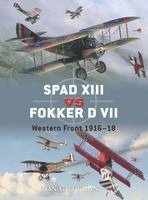
The gripping story of two of the best fighters produced in World War I as they duelled in the skies above the trenches in the closing months of the war.The Fokker D VII earned a reputation as the most formidable fighter of the war, yet the SPAD XIII's greater speed, especially in a dive, and its outstanding durability proved a fearsome rival. Never before published artwork, including fascinating cockpit illustrations, reveal several dramatic clashes from the two foes, whilst diary entries and first hand accounts from the pilots bring this classic World War I duel to life with intimate detail.
187 kr
Skickas inom 10-15 vardagar
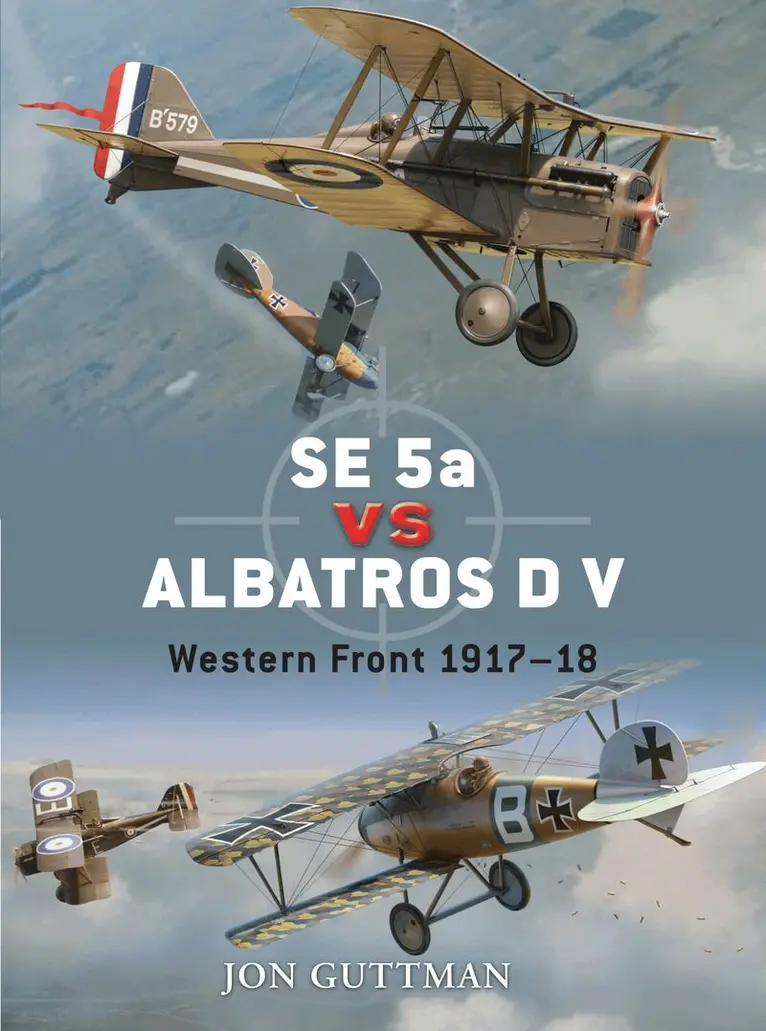
Amid the ongoing quest for aerial superiority during World War I, the late spring of 1917 saw two competing attempts to refine proven designs.The Royal Aircraft Factory SE 5a incorporated improvements to the original SE 5 airframe along with 50 more horsepower to produce a fast, reliable ace-maker. The Albatros D V, a development of the deadly D III of 'Bloody April', proved to be more disappointing. Nevertheless, Albatrosen remained the Germans' most common fighters available when the Germans launched their final offensive on 21 March 1918. Despite its shortcomings, German tactics and skill made the Albatros D V a dangerous foe that SE 5a pilots dismissed at their peril.This title tells the story of the design and development of these two fighters and concludes with their dramatic fights in the last year of World War I.