
Visar resultat för..."ADDISON-WESLEY"

999 kr
Skickas inom 3-6 vardagar
565 kr
Skickas inom 3-6 vardagar
The MMIX Supplement: Supplement to the Art of Computer Programming Volumes 1, 2, 3 by Donald E. Knuth
444 kr
Skickas inom 3-6 vardagar
685 kr
Skickas inom 3-6 vardagar
476 kr
Skickas inom 3-6 vardagar
301 kr
Tillfälligt slut

CD-Morph!: Explore Gryphon Software's Amazing Special Effects and Animation Software
475 kr
Tillfälligt slut
377 kr
Tillfälligt slut
665 kr
Skickas inom 3-6 vardagar
926 kr
Skickas inom 3-6 vardagar
346 kr
Tillfälligt slut
1 167 kr
Skickas inom 3-6 vardagar
421 kr
Skickas inom 7-10 vardagar
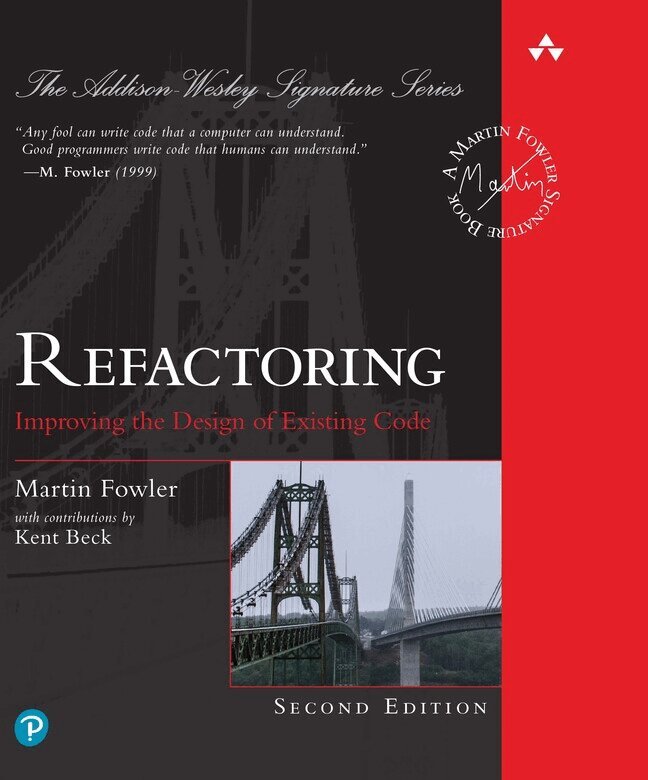
Martin Fowler’s guide to reworking bad code into well-structured code
Refactoring improves the design of existing code and enhances software maintainability, as well as making existing code easier to understand. Original Agile Manifesto signer and software development thought leader, Martin Fowler, provides a catalog of refactorings that explains why you should refactor; how to recognize code that needs refactoring; and how to actually do it successfully, no matter what language you use.
Refactoring principles: understand the process and general principles of refactoring Code smells: recognize “bad smells” in code that signal opportunities to refactor Application improvement: quickly apply useful refactorings to make a program easier to comprehend and change Building tests: writing good tests increases a programmer’s effectiveness Moving features: an important part of refactoring is moving elements between contexts Data structures: a collection of refactorings to organize data, an important role in programs Conditional Logic: use refactorings to make conditional sections easier to understand APIs: modules and their functions are the building blocks of our software, and APIs are the joints that we use to plug them together Inheritance: it is both very useful and easy to misuse, and it’s often hard to see the misuse until it’s in the rear-view mirror---refactorings can fix the misuseExamples are written in JavaScript, but you shouldn’t find it difficult to adapt the refactorings to whatever language you are currently using as they look mostly the same in different languages.
"Whenever you read [Refactoring], it’s time to read it again. And if you haven’t read it yet, please do before writing another line of code." –David Heinemeier Hansson, Creator of Ruby on Rails, Founder & CTO at Basecamp
“Any fool can write code that a computer can understand. Good programmers write code that humans can understand.” –M. Fowler (1999)
305 kr
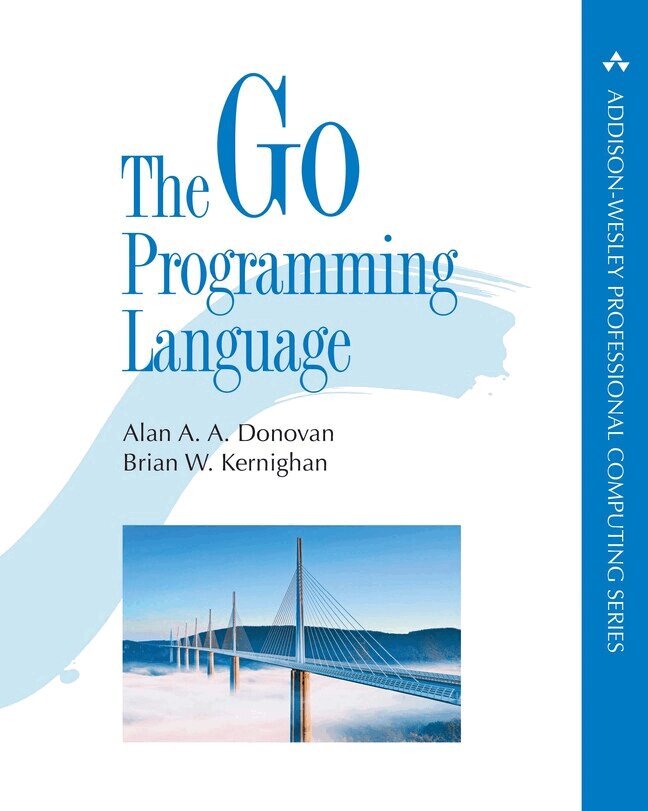
The authoritative resource to writing clear and idiomatic Go to solve real-world problems
Google’s Go team member Alan A. A. Donovan and Brian Kernighan, co-author of The C Programming Language, provide hundreds of interesting and practical examples of well-written Go code to help programmers learn this flexible, and fast, language. It is designed to get you started programming with Go right away and then to progress on to more advanced topics.
Basic components : an opening tutorial provides information and examples to get you off the ground and doing useful things as quickly as possible. This includes: command-line arguments gifs URLs web servers Program structure : simple examples cover the basic structural elements of a Go program without getting sidetracked by complicated algorithms or data structures. Data types: Go offers a variety of ways to organize data, with a spectrum of data types that at one end match the features of the hardware and at the other end provide what programmers need to conveniently represent complicated data structures. Composite types : arrays slices maps structs JSON test and HTML templates Functions : break a big job into smaller pieces that might well be written by different people separated by both time and space. Methods : declarations with a pointer receiver struct embedding values and expressions Interfaces : write functions that are more flexible and adaptable because they are not tied to the details of one particular implementation. Concurrent programming : Goroutines, channels, and with shared variables. Packages : use existing packages and create new ones. Automated testing : write small programs that check the code. Reflection features : update variables and inspect their values at run time. Low-level programming : step outside the usual rules to achieve the highest possible performance, interoperate with libraries written in other languages, or implement a function that cannot be expressed in pure Go.Each chapter has exercises to test your understanding and explore extensions and alternatives. Source code is freely available for download and may be conveniently fetched, built, and installed using the go get command.
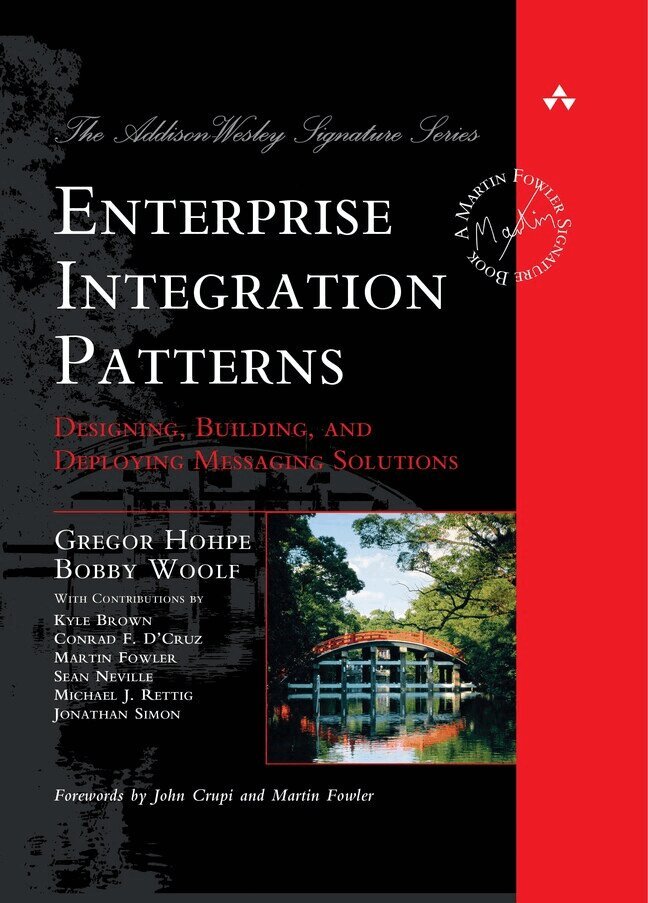
Enterprise Integration Patterns
Designing, Building, and Deploying Messaging Solutions
446 kr
Skickas inom 7-10 vardagar
Enterprise Integration Patterns provides an invaluable catalog of sixty-five patterns, with real-world solutions that demonstrate the formidable of messaging and help you to design effective messaging solutions for your enterprise.
The authors also include examples covering a variety of different integration technologies, such as JMS, MSMQ, TIBCO ActiveEnterprise, Microsoft BizTalk, SOAP, and XSL. A case study describing a bond trading system illustrates the patterns in practice, and the book offers a look at emerging standards, as well as insights into what the future of enterprise integration might hold.
This book provides a consistent vocabulary and visual notation framework to describe large-scale integration solutions across many technologies. It also explores in detail the advantages and limitations of asynchronous messaging architectures. The authors present practical advice on designing code that connects an application to a messaging system, and provide extensive information to help you determine when to send a message, how to route it to the proper destination, and how to monitor the health of a messaging system. If you want to know how to manage, monitor, and maintain a messaging system once it is in use, get this book.
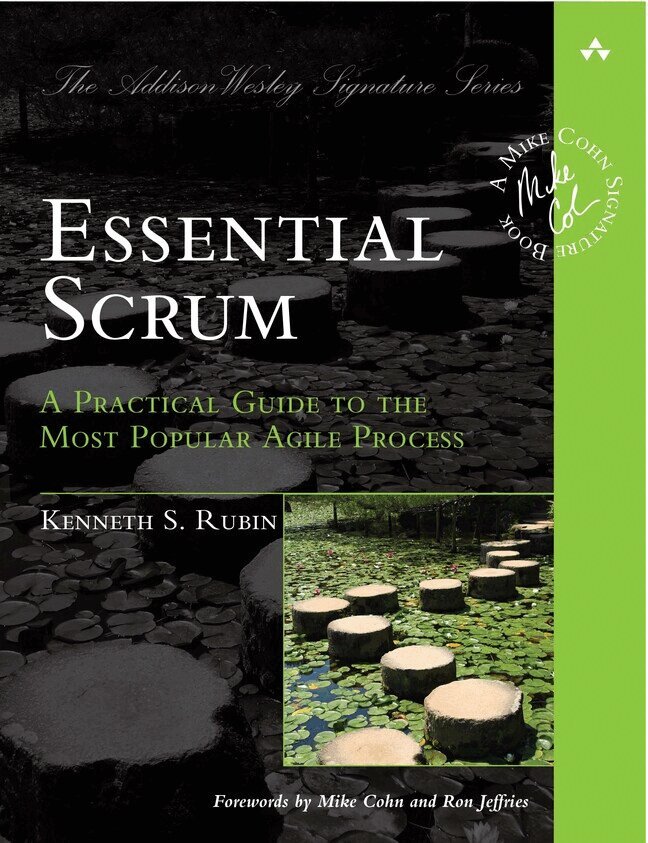
366 kr
Skickas inom 7-10 vardagar
A Practical Guide to the Most Popular Agile Process
The Single-Source, Comprehensive Guide to Scrum for All Team Members, Managers, and Executives
If you want to use Scrum to develop innovative products and services that delight your customers, Essential Scrum is the complete, single-source reference you’ve been searching for. Leading Scrum coach and trainer Kenny Rubin illuminates the values, principles, and practices of Scrum, and describes flexible, proven approaches that can help you implement it far more effectively.
Whether you are new to Scrum or years into your use, this book will introduce, clarify, and deepen your Scrum knowledge at the team, product, and portfolio levels. Drawing from Rubin’s experience helping hundreds of organizations succeed with Scrum, this book provides easy-to-digest descriptions enhanced by more than two hundred illustrations based on an entirely new visual icon language for describing Scrum’s roles, artifacts, and activities.
Essential Scrum will provide every team member, manager, and executive with a common understanding of Scrum, a shared vocabulary they can use in applying it, and practical knowledge for deriving maximum value from it.
465 kr
Skickas inom 7-10 vardagar
257 kr
Tillfälligt slut

649 kr
Tillfälligt slut

342 kr
Tillfälligt slut
446 kr
Skickas inom 7-10 vardagar
“For an engineer determined to refine and secure Internet operation or to explore alternative solutions to persistent problems, the insights provided by this book will be invaluable.”
—Vint Cerf, Internet pioneer
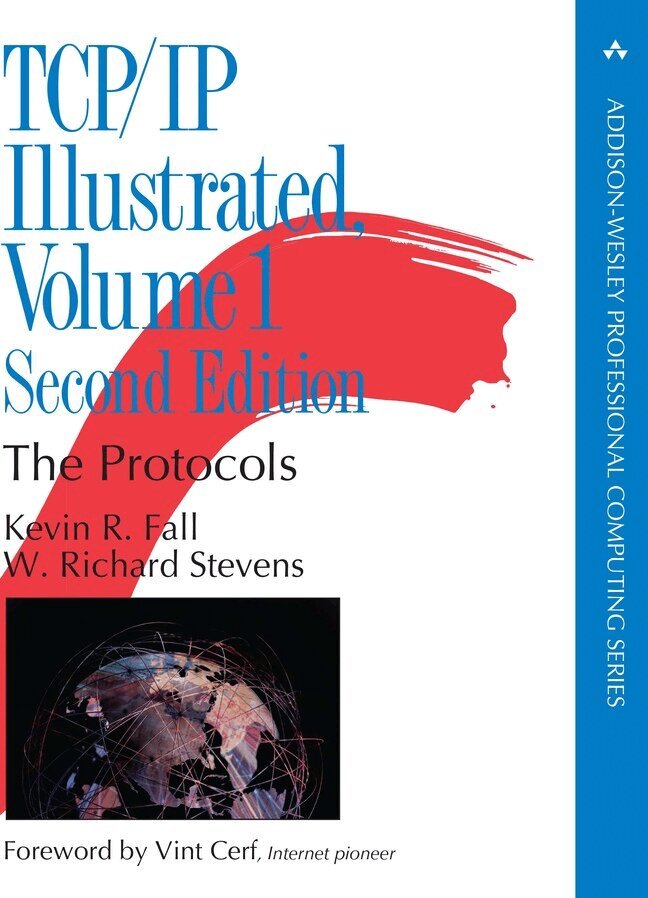
TCP/IP Illustrated, Volume 1, Second Edition, is a detailed and visual guide to today’s TCP/IP protocol suite. Fully updated for the newest innovations, it demonstrates each protocol in action through realistic examples from modern Linux, Windows, and Mac OS environments. There’s no better way to discover why TCP/IP works as it does, how it reacts to common conditions, and how to apply it in your own applications and networks.
Building on the late W. Richard Stevens’ classic first edition, author Kevin R. Fall adds his cutting-edge experience as a leader in TCP/IP protocol research, updating the book to fully reflect the latest protocols and best practices. He first introduces TCP/IP’s core goals and architectural concepts, showing how they can robustly connect diverse networks and support multiple services running concurrently. Next, he carefully explains Internet addressing in both IPv4 and IPv6 networks. Then, he walks through TCP/IP’s structure and function from the bottom up: from link layer protocols–such as Ethernet and Wi-Fi–through network, transport, and application layers.
Fall thoroughly introduces ARP, DHCP, NAT, firewalls, ICMPv4/ICMPv6, broadcasting, multicasting, UDP, DNS, and much more. He offers extensive coverage of reliable transport and TCP, including connection management, timeout, retransmission, interactive data flow, and congestion control. Finally, he introduces the basics of security and cryptography, and illuminates the crucial modern protocols for protecting security and privacy, including EAP, IPsec, TLS, DNSSEC, and DKIM. Whatever your TCP/IP experience, this book will help you gain a deeper, more intuitive understanding of the entire protocol suite so you can build better applications and run more reliable, efficient networks.
458 kr
Skickas inom 7-10 vardagar
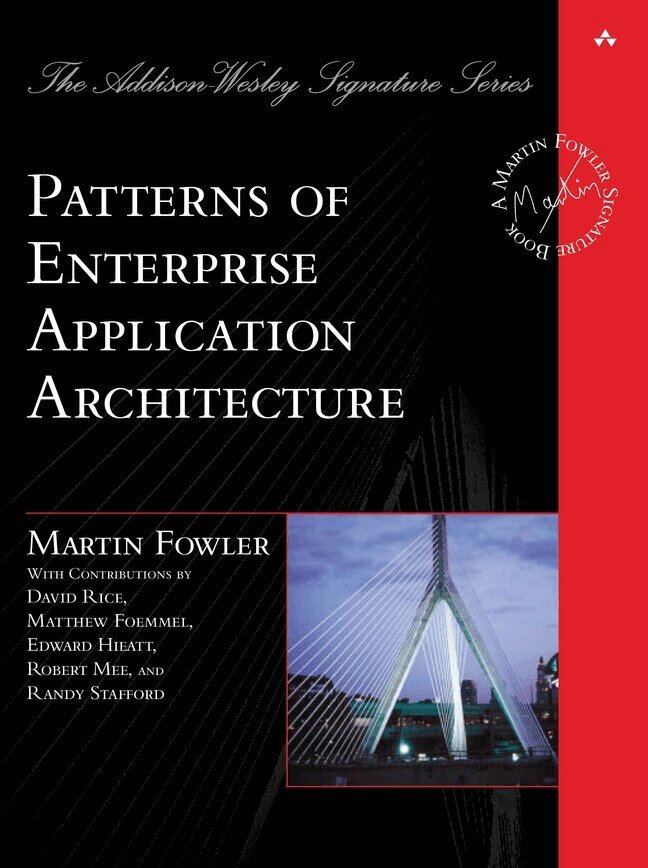
The practice of enterprise application development has benefited from the emergence of many new enabling technologies. Multi-tiered object-oriented platforms, such as Java and .NET, have become commonplace. These new tools and technologies are capable of building powerful applications, but they are not easily implemented. Common failures in enterprise applications often occur because their developers do not understand the architectural lessons that experienced object developers have learned.
Patterns of Enterprise Application Architecture is written in direct response to the stiff challenges that face enterprise application developers. The author, noted object-oriented designer Martin Fowler, noticed that despite changes in technology--from Smalltalk to CORBA to Java to .NET--the same basic design ideas can be adapted and applied to solve common problems. With the help of an expert group of contributors, Martin distills over forty recurring solutions into patterns. The result is an indispensable handbook of solutions that are applicable to any enterprise application platform.
This book is actually two books in one. The first section is a short tutorial on developing enterprise applications, which you can read from start to finish to understand the scope of the book's lessons. The next section, the bulk of the book, is a detailed reference to the patterns themselves. Each pattern provides usage and implementation information, as well as detailed code examples in Java or C#. The entire book is also richly illustrated with UML diagrams to further explain the concepts.
Armed with this book, you will have the knowledge necessary to make important architectural decisions about building an enterprise application and the proven patterns for use when building them.
The topics covered include
· Dividing an enterprise application into layers
· The major approaches to organizing business logic
· An in-depth treatment of mapping between objects and relational databases
· Using Model-View-Controller to organize a Web presentation
· Handling concurrency for data that spans multiple transactions
· Designing distributed object interfaces
546 kr
Kommande
371 kr
Skickas inom 7-10 vardagar
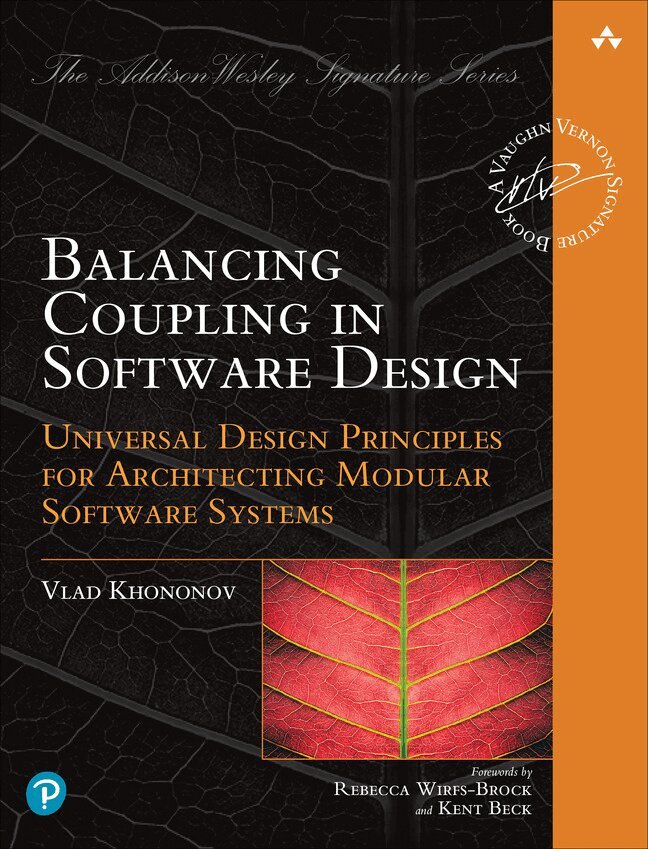
Balancing Coupling in Software Design
Universal Design Principles for Architecting Modular Software Systems
305 kr
Skickas inom 7-10 vardagar
Learn How Coupling Impacts Every Software Design Decision You Make--and How to Control It
If you want to build modular, evolvable, and resilient software systems, you have to get coupling right. Every design decision you make influences coupling, which in turn shapes the design options available to you. Despite its importance, coupling often doesn't receive the attention it deserves--until now.
Since the dawn of software engineering, it's been clear that proper management of coupling is essential for architecting modular software systems. This topic has been extensively researched over the years, but some of that knowledge has been forgotten, and some of it is challenging to apply in this day and age. In Balancing Coupling in Software Design, author Vlad Khononov has built a model that not only draws on this accumulated knowledge, but also adapts it to modern software engineering practices, offering a fresh perspective on modular software design.
With principles grounded in practice, Vlad teaches you not only to navigate the multi-dimensional nature of coupling but also to use coupling as a tool for managing complexity and increasing modularity. And who knows, maybe this book will change the way you think about software design as whole.
Defines the concept of coupling and the role it plays in system design and architecture Explains how coupling can both increase complexity and foster modularity of a system Introduces a holistic model that turns coupling into a tool for designing modular software Shows how to evolve design decisions to support continuous growth of software systems Illustrates the discussed principles with detailed examples based on real-life case studies"Coupling is one of those words that is used a lot, but little understood. Vlad propels us from simplistic slogans like 'always decouple components' to a nuanced discussion of coupling in the context of complexity and software evolution. If you build modern software, read this book!"--Gregor Hohpe, author of The Software Architect Elevator
Register your book for convenient access to downloads, updates, and/or corrections as they become available. See inside book for details.
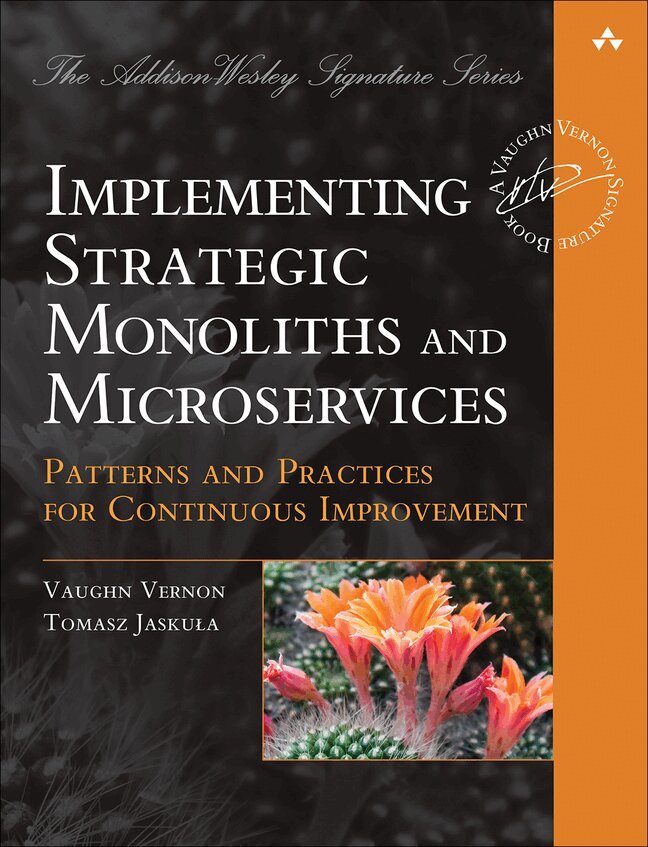
Implementing Strategic Monoliths and Microservices
Patterns and Practices for Continuous Improvement
317 kr
Kommande
353 kr
Skickas inom 7-10 vardagar
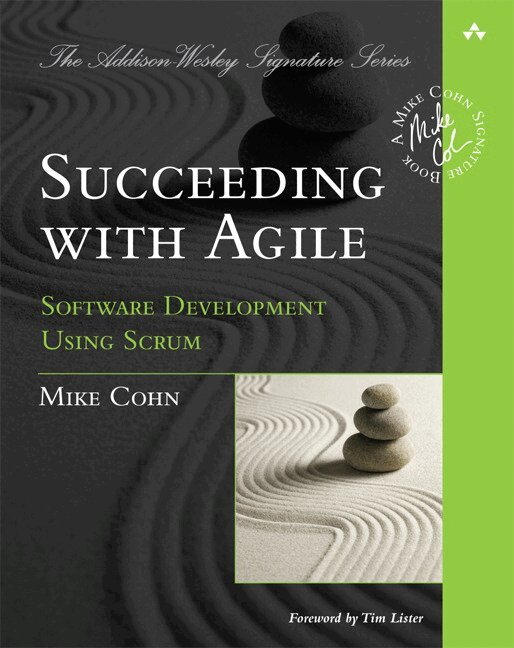
Proven, 100% Practical Guidance for Making Scrum and Agile Work in Any Organization
This is the definitive, realistic, actionable guide to starting fast with Scrum and agile–and then succeeding over the long haul. Leading agile consultant and practitioner Mike Cohn presents detailed recommendations, powerful tips, and real-world case studies drawn from his unparalleled experience helping hundreds of software organizations make Scrum and agile work.
Succeeding with Agile is for pragmatic software professionals who want real answers to the most difficult challenges they face in implementing Scrum. Cohn covers every facet of the transition: getting started, helping individuals transition to new roles, structuring teams, scaling up, working with a distributed team, and finally, implementing effective metrics and continuous improvement.
Throughout, Cohn presents “Things to Try Now” sections based on his most successful advice. Complementary “Objection” sections reproduce typical conversations with those resisting change and offer practical guidance for addressing their concerns. Coverage includes
Practical ways to get started immediately–and “get good” fast Overcoming individual resistance to the changes Scrum requires Staffing Scrum projects and building effective teams Establishing “improvement communities” of people who are passionate about driving change Choosing which agile technical practices to use or experiment with Leading self-organizing teams Making the most of Scrum sprints, planning, and quality techniques Scaling Scrum to distributed, multiteam projects Using Scrum on projects with complex sequential processes or challenging compliance and governance requirements Understanding Scrum’s impact on HR, facilities, and project managementWhether you've completed a few sprints or multiple agile projects and whatever your role–manager, developer, coach, ScrumMaster, product owner, analyst, team lead, or project lead–this book will help you succeed with your very next project. Then, it will help you go much further: It will help you transform your entire development organization.
339 kr
Skickas inom 7-10 vardagar
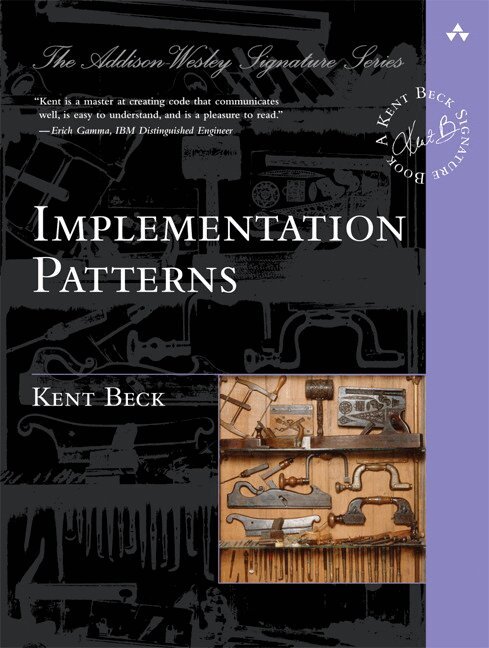
“Kent is a master at creating code that communicates well, is easy to understand, and is a pleasure to read. Every chapter of this book contains excellent explanations and insights into the smaller but important decisions we continuously have to make when creating quality code and classes.”
–Erich Gamma, IBM Distinguished Engineer
“Many teams have a master developer who makes a rapid stream of good decisions all day long. Their code is easy to understand, quick to modify, and feels safe and comfortable to work with. If you ask how they thought to write something the way they did, they always have a good reason. This book will help you become the master developer on your team. The breadth and depth of topics will engage veteran programmers, who will pick up new tricks and improve on old habits, while the clarity makes it accessible to even novice developers.”
–Russ Rufer, Silicon Valley Patterns Group
“Many people don’t realize how readable code can be and how valuable that readability is. Kent has taught me so much, I’m glad this book gives everyone the chance to learn from him.”
–Martin Fowler, chief scientist, ThoughtWorks
“Code should be worth reading, not just by the compiler, but by humans. Kent Beck distilled his experience into a cohesive collection of implementation patterns. These nuggets of advice will make your code truly worth reading.”
–Gregor Hohpe, author of Enterprise Integration Patterns
“In this book Kent Beck shows how writing clear and readable code follows from the application of simple principles. Implementation Patterns will help developers write intention revealing code that is both easy to understand and flexible towards future extensions. A must read for developers who are serious about their code.”
–Sven Gorts
“Implementation Patterns bridges the gap between design and coding. Beck introduces a new way of thinking about programming by basing his discussion on values and principles.”
–Diomidis Spinellis, author of Code Reading and Code Quality
Software Expert Kent Beck Presents a Catalog of Patterns Infinitely Useful for Everyday Programming
Great code doesn’t just function: it clearly and consistently communicates your intentions, allowing other programmers to understand your code, rely on it, and modify it with confidence. But great code doesn’t just happen. It is the outcome of hundreds of small but critical decisions programmers make every single day. Now, legendary software innovator Kent Beck–known worldwide for creating Extreme Programming and pioneering software patterns and test-driven development–focuses on these critical decisions, unearthing powerful “implementation patterns” for writing programs that are simpler, clearer, better organized, and more cost effective.
Beck collects 77 patterns for handling everyday programming tasks and writing more readable code. This new collection of patterns addresses many aspects of development, including class, state, behavior, method, collections, frameworks, and more. He uses diagrams, stories, examples, and essays to engage the reader as he illuminates the patterns. You’ll find proven solutions for handling everything from naming variables to checking exceptions.
This book covers
The value of communicating through code and the philosophy behind patterns How and when to create classes, and how classes encode logic Best practices for storing and retrieving state Behavior: patterns for representing logic, including alternative paths Writing, naming, and decomposing methods Choosing and using collections Implementation pattern variations for use in building frameworksImplementation Patterns will help programmers at all experience levels, especially those who have benefited from software patterns or agile methods. It will also be an indispensable resource for development teams seeking to work together more efficiently and build more maintainable software. No other programming book will touch your day-to-day work more often.
280 kr
Skickas inom 7-10 vardagar
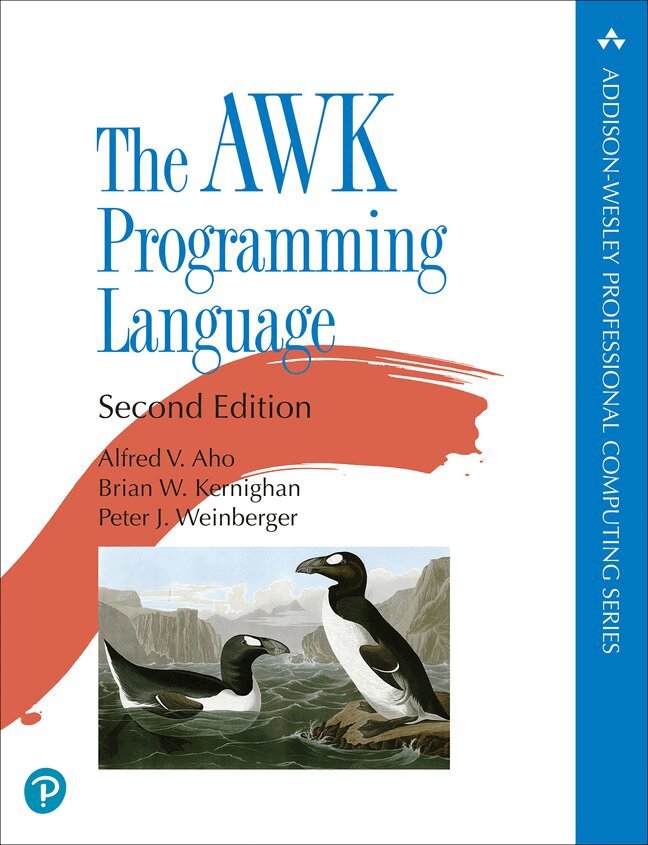
Awk was developed in 1977 at Bell Labs, and it's still a remarkably useful tool for solving a wide variety of problems quickly and efficiently. In this update of the classic Awk book, the creators of the language show you what Awk can do and teach you how to use it effectively.
Here's what programmers today are saying: "I love Awk." "Awk is amazing." "It is just so damn good." "Awk is just right." "Awk is awesome." "Awk has always been a language that I loved."
It's easy: "Simple, fast and lightweight." "Absolutely efficient to learn because there isn't much to learn." "3-4 hours to learn the language from start to finish." "I can teach it to new engineers in less than 2 hours."
It's productive: "Whenever I need to do a complex analysis of a semi-structured text file in less than a minute, Awk is my tool." "Learning Awk was the best bang for buck investment of time in my entire career." "Designed to chew through lines of text files with ease, with great defaults that minimize the amount of code you actually have to write to do anything."
It's always available: "AWK runs everywhere." "A reliable Swiss Army knife that is always there when you need it." "Many systems lack Perl or Python, but include Awk."
Register your book for convenient access to downloads, updates, and/or corrections as they become available. See inside book for details.

505 kr
Skickas inom 7-10 vardagar