American Folklore Society Bibliographical and Special Series – Serie
Visar alla böcker i serien American Folklore Society Bibliographical and Special Series. Handla med fri frakt och snabb leverans.
10 produkter
10 produkter
235 kr
Skickas
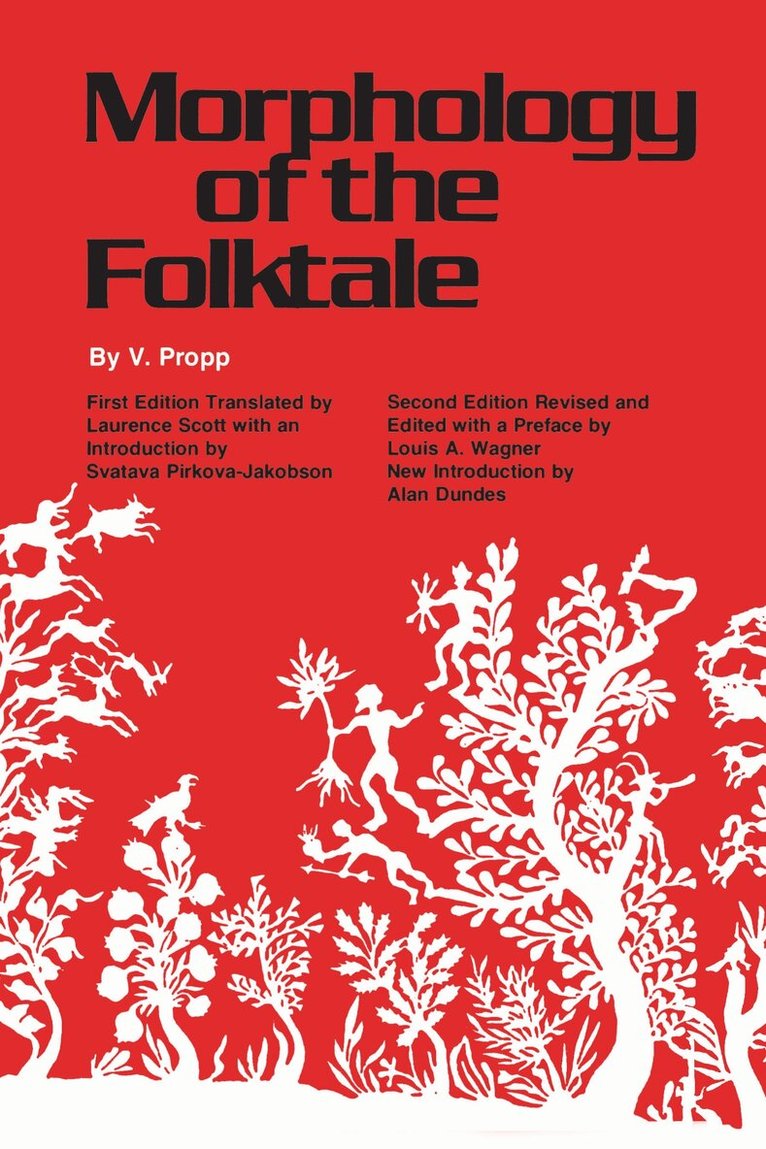
This book is the classic work on forms of the European folktale.
261 kr
Skickas inom 10-15 vardagar
I had a little brother.His name was Tiny Tim.I put him in the bathtubTo teach him how to swim.He drank all the water.He ate all the soap.He died last nightWith a bubble in his throat. Jump-rope rhymes, chanted to maintain the rhythm of the game, have other, equally entertaining uses: You can dispatch bothersome younger siblings instantly-and temporarily. You can learn the name of your boyfriend through the magic words "Ice cream soda, Delaware Punch, Tell me the initials of my honey-bunch." You can perform the series of tasks set forth in "Teddy Bear, Teddy Bear, turn around" and find out who, really, is the most nimble. You can even, with impunity, "conk your teacher on the bean with a rotten tangerine. " This collection of over six hundred jump-rope rhymes, originally published in 1969, is an introduction into the world of children-their attitudes, their concerns, their humor. Like other children's folklore, the rhymes are both richly inventive and innocently derivative, ranging from on-the-spot improvisations to old standards like "Bluebells, cockleshells," with a generous sprinkling of borrowings from other play activities-nursery rhymes, counting-out rhymes, and taunts. Even adult attitudes of the time are appropriated, but expressed with the artless candor of the child: Eeny, meeny, miny, moe.Catch Castro by the toe.If he hollers make him say"I surrender, U.S.A." Though aware that children's play serves social and psychological functions, folklorists had long neglected analytical study of children's lore because primary data was not available in organized form. Roger Abraham's Dictionary has provided such a bibliographical tool for one category of children's lore and a model for future compendia in other areas. The alphabetically arranged rhymes are accompanied by notes on sources, provenience, variants, and connection with other play activities.
Folklore Methodology
Formulated by Julius Krohn and Expanded by Nordic Researchers
Häftad, Engelska, 1971
205 kr
Skickas inom 7-10 vardagar
Kaarle Krohn's Folklore Methodology was the first systematic attempt to state a method of studying folkloristic materials. For centuries scholars had collected folkloristic texts and had commented on them, but they had not tried to formulate a method of investigating folklore. Folklore Methodology became the handbook for the great Finnish School of folklore research. It provided for its students a guide to the geographical research of traditional materials, a radical departure from the literary scholarship that had dominated folklore studies. Krohn's book explores the causes and modes of folklore diffusion, development, and destruction; it outlines the influences that cause change in folklore; it provides valuable insights into the nature of folklore; and, finally, it develops geographic methods for analyzing, classifying, and reconstructing individual items from the folk repertoire. While many developments have taken place since Krohn first published his guide, important new concepts of folklore research sprang from his efforts. For this reason, Folklore Methodology is mandatory reading for every serious student of folklore.
341 kr
Skickas inom 10-15 vardagar
The essays in Folklore Genres represent development in folklore genre studies, diverging into literary, ethnographic, and taxonomic questions. The study as a whole is concerned with the concept of genre and with the history of genre theory. A selective bibliography provides a guide to analytical and theoretical works on the topic. The literary-oriented articles conceive of folklore forms, not as the antecedents of literary genres, but as complex, symbolically rich expressions. The ethnographically oriented articles, as well as those dealing with classification problems, reveal dimensions of folklore that are often obscured from the student reading the folklore text alone. It has long been known that the written page is but a pale reproduction of the spoken word, that a tale hardly reflects the telling. The essays in this collection lead to an understanding of the forms of oral literature as multidimensional symbols of communication and to an understanding of folklore genres as systematically related conceptual categories in culture. What kinship terms are to social structure, genre terms are to folklore. Since genres constitute recognized modes of folklore speaking, their terminology and taxonomy can play a major role in the study of culture and society. The essays were originally published in Genre (1969–1971); introduction, bibliography, and index have been added to this edition.
362 kr
Skickas inom 10-15 vardagar
Among the more interesting incunabula preserved in the Salle de la RÉserve of the BibliothÈque National in Paris are the apparently unique copies of two editions, very similar in content, of a work entitled Les Adevineaux amoureux. In much more comprehensive form Les Adevineaux amoureux is preserved in a manuscript belonging to the MusÉe Conde at Chantilly. All three texts, in medieval French, appear to date from the 1470s. The present work, Amorous Games, is a critical edition of Les Adevineaux amoureux. Amorous Games is a miscellany whose principal unifying force is the compiler's aim to provide a manual of conversation and entertainment for polite society. Included are series of questions and answers belonging to the well-established medieval tradition of the "Demandes amoureuses"; a very large number of riddles, mainly folk riddles; and "venditions en amours," little poems that apparently came into bing as part of a social game. Students of medieval French literature, particularly those with a penchant for some of the minor genres, will find new material in the Amorous Games. Folklorists will discover what is probably the largest collection of riddles bequeathed to us by medieval France and also much that is of value to specialists in the proverb and folk tale. For this critical edition of Les Adevineaux amoureux Professor Hassell has selected the Chantilly manuscript, because it is the most complete and also because it had not yet been published. The Appendix contains the text of the more complete of the two incunabula and the significant variants appearing in the other fifteenth-century printed edition. The manuscript text has been collated with that of the incunabula, and copious notes and an index to the riddles have been supplied. In his introduction Professor Hassell discusses in detail the major classes and subclasses of the riddle, drawing on the work of Petsch, Taylor, Abrahams, and other scholars of the genre.
214 kr
Skickas inom 10-15 vardagar
This collection of folktales, originally published in 1961, presents stories from a wide range of North American indigenous peoples. The stories are grouped into three categories: “The Way the World Is,” “What Man Must Know and Learn,” and “The Excitement of Living.”
261 kr
Skickas inom 10-15 vardagar
Eeny, meeny, figgledy, fig.Delia, dolia, dominig,Ozy, pozy doma-nozy,Tee, tau, tut,Uggeldy, buggedy, boo!Out goes you. (no. 129) You can stand,And you can sit,But, if you play,You must be it. (no. 577) Counting-out rhymes are used by children between the ages of six and eleven as a special way of choosing it and beginning play. They may be short and simple ("O-U-T spells out/And out goes you") or relatively long and complicated; they may be composed of ordinary words, arrant nonsense, or a mixture of the two. Roger D. Abrahams and Lois Rankin have gathered together a definitive compendium of counting-out rhymes in English reported to 1980. These they discovered in over two hundred sources from the nineteenth and twentieth centuries, including rhymes from England, Scotland, Ireland, Australia, New Zealand, and the United States. Representative texts are given for 582 separate rhymes, with a comprehensive listing of sources and variants for each one, as well as information on each rhyme's provenience, date, and use. Cross-references are provided for variants whose first lines differ from those of the representative texts. Abrahams's introduction discusses the significance of counting-out rhymes in children's play. Children's folklore and speech play have attracted increasing attention in recent years. Counting-Out Rhymes will be a valuable resource for researchers in this field.
314 kr
Skickas inom 10-15 vardagar
Tristram Potter Coffin’s The British Traditional Ballad in North America, published in 1950, became recognized as the standard reference to the published material on the Child ballad in North America. Centering on the theme of story variation, the book examines ballad variation in general, treats the development of the traditional ballad into an art form, and provides a bibliographical guide to story variation as well as a general bibliography of titles referred to in the guide. Roger deV. Renwick’s supplement to The British Traditional Ballad in North America provides a thorough review of all sources of North American ballad materials published from 1963, the date of the last revision of the original volume, to 1977. The references, which include published text fragments and published title lists of items in archival collections, are arranged according to each ballad’s story variations. Textual and thematic comparisons among ballads in the British and American tradition are made throughout. In his introductory essay Renwick synthesizes the various theoretical approaches to the phenomenon of variation that have appeared in scholarly publications since 1963 and provides examples from texts referred to in the bibliographical guide itself. The supplement, like its parent work, is an invaluable reference tool for the study of variation in ballad form, content, and style. Together with the reprinted text of the 1963 edition, the supplement provides an exhaustive bibliography to the literature on the British traditional ballad in North America.
406 kr
Skickas inom 10-15 vardagar
In the eyes of many white Americans, North and South, the Negro did not have a culture until the Emancipation Proclamation. With few exceptions, serious collecting of Negro folklore by whites did not begin until the Civil War—and it was to be another four decades before black Americans would begin to appreciate their own cultural heritage. Few of the earlier writers realized that they had observed and recorded not simply a manifestation of a particular way of life but also a product peculiarly American and specifically Negro, a synthesis of African and American styles and traditions.The folksongs, speech, beliefs, customs, and tales of the American Negro are discussed in this anthology, originally published in 1967, of thirty-five articles, letters, and reviews from nineteenth-century periodicals. Published between 1838 and 1900 and written by authors who range from ardent abolitionist to dedicated slaveholder, these articles reflect the authors' knowledge of, and attitudes toward, the Negro and his folklore. From the vast body of material that appeared on this subject during the nineteenth century, editor Bruce Jackson has culled fresh articles that are basic folklore and represent a wide range of material and attitudes. In addition to his introduction to the volume, Jackson has prefaced each article with a commentary. He has also supplied a supplemental bibliography on Negro folklore.If serious collecting of Negro folklore had begun by the middle of the nineteenth century, so had exploitation of its various aspects, particularly Negro songs. By 1850 minstrelsy was a big business. Although Jackson has considered minstrelsy outside the scope of this collection, he has included several discussions of it to suggest some aspects of its peculiar relation to the traditional. The articles in the anthology—some by such well-known figures as Joel Chandler Harris, George Washington Cable, Thomas Wentworth Higginson, John Mason Brown, and Antonin Dvorak—make fascinating reading for an observer of the American scene. This additional insight into the habits of thought and behavior of a culture in transition—folklore recorded in its own context—cannot but afford the thinking reader further understanding of the turbulent race problems of later times and today.
296 kr
Skickas inom 10-15 vardagar
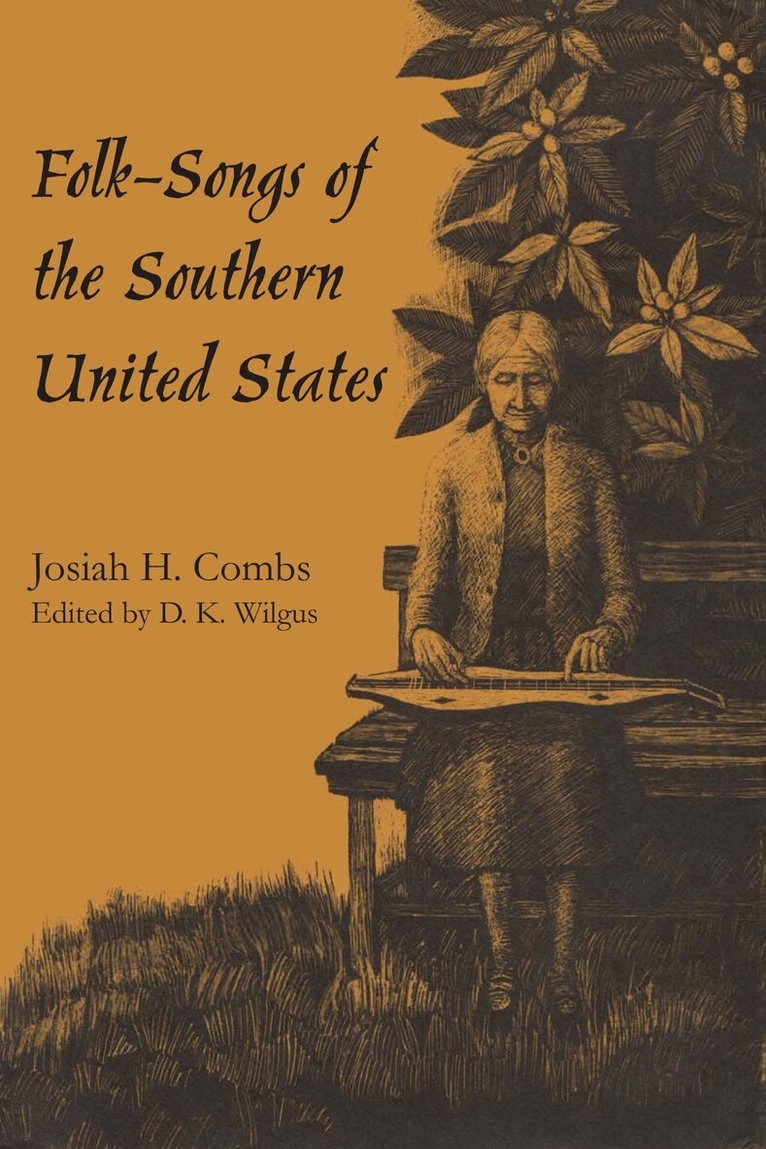
“The spirit of balladry is not dead, but slowly dying. The instincts, sentiments, and feelings which it represents are indeed as immortal as romance itself, but their mode of expression, the folksong, is fighting with its back to the wall, with the odds against it in our introspective age.” This statement by Josiah Henry Combs is that of a man who grew up among the members of a singing family in one of the last strongholds of the ballad-making tradition, the Southern Highlands of the United States. Combs was born in 1886 in Hazard, Kentucky, the heart of the mountain feud area-a significant background for one who was to take a prominent part in the “ballad war” of the 1900s. Combs’s intimate knowledge of folk culture and his grasp of the scholarly literature enabled him to approach the ballad controversy with common sense as well as with some of the heat generated by the dispute. Although in the early twentieth century there was probably no more controversy about the nature of the folk and folksong than there is today, it was a different kind of controversy. Many theories of the origins of folksong current at that time, such as the alleged relationship of traditional ballads to “primitive poetry,” did not take into account contemporary evidence. Combs said, “Here as elsewhere, I go directly to the folk for much of my information, allowing the songs, language, names, customs . . . of the people to help settle the problem of ancestry. . . . In brief, a conscientious study of the lore of the folk cannot be separated from the folk itself.” Folk-Songs du Midi des États-Unis, published as a doctoral dissertation at the University of Paris in 1925, was an introduction to the study of the folksong of the Southern Appalachians, together with a selection of folksong texts collected by Combs. Folk-Songs of the Southern United States, the first publication of that work in English, is based on the French text and Combs’s English draft. To this edition is appended an annotated listing of all songs in the Josiah H. Combs Collection in the Western Kentucky Folklore Archive at the University of California, Los Angeles. The appendix also includes the texts of selected songs. The aim of this edition is to make the contents of the original volume more readily available in English and to provide an index to the Combs Collection that may be drawn upon by students of folksong. The book also offers texts of over fifty songs of British and American origin as sung in the Southern Highlands.