Ancient Textiles Series - Böcker
Visar alla böcker i serien Ancient Textiles Series. Handla med fri frakt och snabb leverans.
9 produkter
9 produkter
625 kr
Tillfälligt slut
An understanding of textiles and the role they played in the past is important for anyone interested in past societies. Textiles served and in fact still do as both functional and symbolic items. The evidence for ancient textiles in Europe is split quite definitely along a north-south divide, with an abundance of actual examples in the north, but precious little in the south, where indirect evidence comes from such things as vase painting and frescoes. This volume brings together these two schools to look in more detail at textiles in the ancient world, and is based on a conference held in Denmark and Sweden in March 2003. Section one, Production and Organisation takes a chronological look through more than four thousand years of history; from Syria in the mid-third millennium BC, to Seventeenth Century Germany. Section two, Crafts and Technology focuses on the relationship between the primary producer (the craftsman) and the secondary receiver (the archaeologist/conservator). The third section, Society, examines the symbolic nature of textiles, and their place within ancient societal groups. Throughout the book emphasis is placed on the universality of textiles, and the importance of information exchange between scholars from different disciplines.
523 kr
Skickas
The NESAT symposium has grown from the first meeting in 1981 which was attended by 23 scholars, to over 100 at the tenth meeting that took place in Copenhagen in 2008, with virtually all areas of Europe represented. The 50 papers from the conference presented here show the vibrance of the study of archaeological textiles today. Examples studied come from the Bronze Age, Neolithic, the Iron Age, Roman, Viking, the Middle Ages and post-Medieval, and from a wide range of countries including Norway, Czech Republic, Poland, Greece, Germany, Lithuania, Estonia and the Netherlands. Modern techniques of analysis and examination are also discussed.
760 kr
Tillfälligt slut
This latest title in the highly successful Ancient Textiles series is the first substantial monograph-length historiography of early medieval embroideries and their context within the British Isles. The book brings together and analyses for the first time all 43 embroideries believed to have been made in the British Isles and Ireland in the early medieval period. New research carried out on those embroideries that are accessible today, involving the collection of technical data, stitch analysis, observations of condition and wear-marks and microscopic photography supplements a survey of existing published and archival sources. The research has been used to write, for the first time, the ‘story’ of embroidery, including what we can learn of its producers, their techniques, and the material functions and metaphorical meanings of embroidery within early medieval Anglo-Saxon society. The author presents embroideries as evidence for the evolution of embroidery production in Anglo-Saxon society, from a community-based activity based on the extended family, to organised workshops in urban settings employing standardised skill levels and as evidence of changing material use: from small amounts of fibres produced locally for specific projects to large batches brought in from a distance and stored until needed. She demonstrate that embroideries were not simply used decoratively but to incorporate and enact different meanings within different parts of society: for example, the newly arrived Germanic settlers of the fifth century used embroidery to maintain links with their homelands and to create tribal ties and obligations. As such, the results inform discussion of embroidery contexts, use and deposition, and the significance of this form of material culture within society as well as an evaluation of the status of embroiderers within early medieval society. The results contribute significantly to our understanding of production systems in Anglo-Saxon England and Ireland.
Textiles and the Medieval Economy
Production, Trade, and Consumption of Textiles, 8th–16th Centuries
Häftad, Engelska, 2019
505 kr
Tillfälligt slut
Archaeologists and textile historians bring together 16 papers to investigate the production, trade and consumption of textiles in Scandinavia and across parts of northern and Mediterranean Europe throughout the medieval period. Archaeological evidence is used to demonstrate the existence or otherwise of international trade and to examine the physical characteristics of textiles and their distribution in order to understand who was producing, using and trading them and what they were being used for. Historical evidence, mainly textual, is employed to link textile names to places, numbers and prices and thus provide an appreciation of changing economics, patterns of distribution and the organisation of trade. Different types and qualities of cloths are discussed and the social implications of their production and import/export considered against a developing background of urbanism and increasing commercial wealth.
Competition of Fibres
Early Textile Production in Western Asia, Southeast and Central Europe (10,000–500 BC)
Häftad, Engelska, 2020
523 kr
Skickas
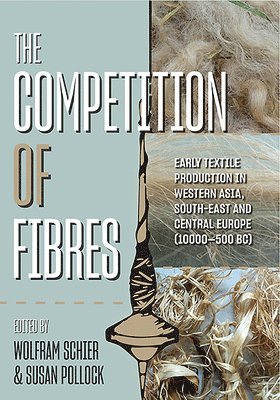
The central issues discussed in this new collected work in the highly successful ancient textiles series are the relationships between fiber resources and availability on the one hand and the ways those resources were exploited to produce textiles on the other. Technological and economic practices - for example, the strategies by which raw materials were acquired and prepared - in the production of textiles play a major role in the papers collected here. Contributions investigate the beginnings of wool use in western Asia and southeastern Europe. The importance of wool in considerations of early textiles is due to at least two factors. First, both wild as well as some domesticated sheep are characterized by a hairy rather than a woolly coat. This raises the question of when and where woolly sheep emerged, a question that has not up to now been resolvable by genetic or other biological analyses. Second, wool as a fiber has played a major role both economically and socially in both western Asian and European societies from as early as the 3rd millennium BCE in Mesopotamia, and it continues to do so, in different ways, up to the modern day. Despite the importance of wool as a fiber resource contributors demonstrate clearly that its development and use can only be properly addressed in the context of a consideration of other fibers, both plant and animal. Only within a framework that takes into account historically and regionally variable strategies of procurement, processing, and the products of different types of fibers is it possible to gain real insights into the changing roles played by fibers and textiles in the lives of people in different places and times in the past. With relatively rare, albeit sometimes spectacular exceptions, archaeological contexts offer only poor conditions of preservation for textiles. As a result, archaeologists are dependent on indirect or proxy indicators such as textile tools (e.g., loom weights, spindle whorls) and the analysis of faunal remains to explore a range of such proxies and methods by which they may be analyzed and evaluated in order to contribute to an understanding of fiber and textile production and use in the past.
426 kr
Skickas
Persian blue, pomegranate flower, spiny lobster, wine soup, pale flesh, dove breast, golden wax, grass green, green sand, rotten olive, modest plum, agate, rich French gray, gunpowder of the English...these are just some of the colour names of old fabric to fire the imagination. The Dyer's Handbook concerns a unique manuscript from the eighteenth century; a dyers memoirs from Languedoc, containing recipes for dyes with corresponding colour samples. It is an exceptional document, hugely rare and of great significance not only to textile historians but dyers and colourists today, as thanks to the information in the manuscript the colours can be reproduced exactly, with the same ingredients, or reproduced using modern techniques by matching the colour samples. To the English translation of the text, together with facsimile pages reproduced in colour from the original manuscript, are added essays meant to situate it in its historical, economic and technological contexts. For those historians who have long been fascinated by the change in scale and the amount of innovation that occurred in woollen cloth production in Europe during the 17th and 18th centuries, The Dyer's Handbook brings first-hand insight into the daily preoccupations and tasks of a key actor in the success story of the Languedocian broadcloth production specially devised for export to the Levant. Even non-specialists may be interested in understanding the clever management and technical organisation that made it possible for the author to produce, dye, finish, pack and export up to 1,375 pieces of superfine broadcloth per year, representing nearly 51 km of cloth.
Silk
Trade and Exchange along the Silk Roads between Rome and China in Antiquity
Häftad, Engelska, 2020
400 kr
Skickas
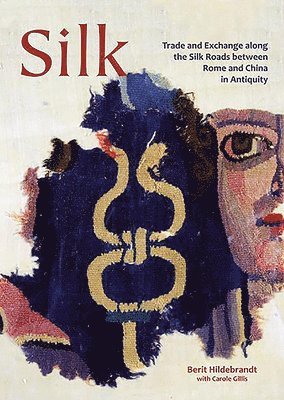
Already in Greek and Roman antiquity a vibrant series of exchange relationships existed between the Mediterranean regions and China, including the Indian subcontinent, along well-defined routes we call the Silk Roads. Among the many goods that found their way from East to West and vice versa were glass, wine spices, metals and precious stones as well as textile raw materials and fabrics of wool and silk, a precious fibre that was highly appreciated in many of the cultures along the roads that were named after it by modern scholars. These collected papers bring together current historical, philological and archaeological research from different areas and disciplines in order highlight the use, circulation and meaning of silk as a commodity, gift, tribute , booty, and status symbol in varying cultural and chronological contexts between East and West, including technological aspects of silk production. Rome and China in antiquity provide the geographical and chronological frame for this volume (c. from the third century BCE to the fifth century CE), but also earlier and later epochs and cultures in between these empires are considered in order to build and intercultural and diachronic understanding of long-distance relations that involved silk.
First Textiles
The Beginnings of Textile Manufacture in Europe and the Mediterranean
Häftad, Engelska, 2021
482 kr
Skickas
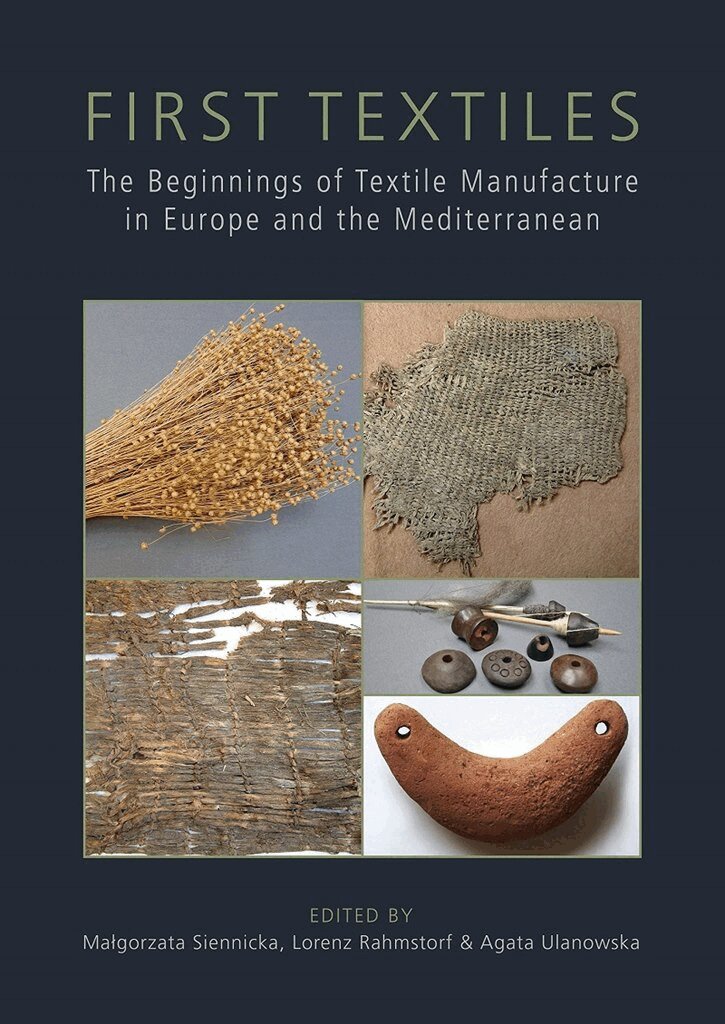
Textile production and the manufacture of clothing was one of the most essential daily activities in prehistory. Textiles were significant objects of practical use, and at the same time had cultural, social and symbolic meaning, crucial for displaying the identity, gender, social rank and status, or wealth of their users. However, evidence of ancient clothing is scarce due to unfavourable preservation of organic materials. Only occasionally are prehistoric textiles and associated implements preserved, mainly as a result of exceptional environmental conditions, such as waterlogged contexts like bogs, or in very dry or cold climates. In other cases textiles are sporadically mineralised, carbonised or preserved by metal corrosion. Textiles and leather can also be visible as imprints on clay.The beginning of textile manufacture is still vague, but can be traced back to the upper Palaeolithic. Important developments in textile technology, e.g. weaving, spinning with a spindle, introduction of wool, appeared in Europe and the Mediterranean throughout the Neolithic, Chalcolithic and Early Bronze Age. This book is devoted to the early textile production in Europe and the Mediterranean and aims to collect and investigate the combined evidence of textile and leather remains, tools, workplaces and textile iconography.The chapters discuss the recent achievements in the research of ancient textiles and textile production, textile techniques such as spinning, fabric and skin manufacture, use of textile tools and experimental textile archaeology. The volume explores important cultural and social aspects of textile production, and its development.
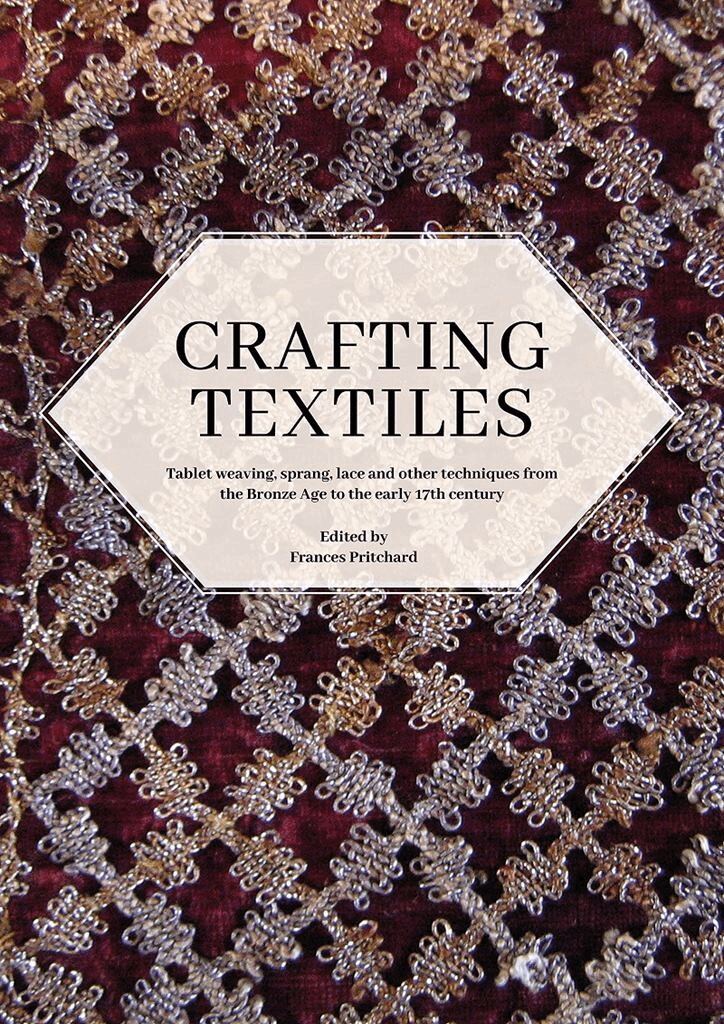
Crafting Textiles
Tablet Weaving, Sprang, Lace and Other Techniques from the Bronze Age to the Early 17th Century
Häftad, Engelska, 2021
523 kr
Skickas
New research into the techniques of tablet weaving, sprang, braiding, knotting and lace is presented in this lavishly illustrated volume written by leading specialists from Austria, Canada, Denmark, France, Germany, Sweden, Switzerland, the UK and USA. Drawing inspiration from the pioneering work of Peter Collingwood, this publication explores aspects of these craft skills in the prehistoric, Roman and medieval world through scientific, object-based analysis and 'research through making'. Chapters include the growth of patterned tablet weaving for trimming garments in prehistoric Central Europe; recently identified styles of headdress worn in the Roman Rhineland and pre-Islamic Egypt; Viking-age Dublin as a production centre for tablet-woven bands; a new interpretation of the weaving technique used to make luxurious gold bands in the twelfth to late thirteenth centuries; and the development out of plaiting of bobbin lace borders in gold and silver threads from the fifteenth to early seventeenth centuries. Practical experiments test methods of hand spinning and the production of figure-hugging hose in ancient Greece and Renaissance Italy. A typology of braid and knotting structures in late medieval Europe is also set out for the first time. Diagrams, illustrations and photographs enrich each chapter with a wealth of visual source material. The work is the outcome of recent discoveries of archaeological textile finds from excavations as well as fresh examination of material recovered in the past, or preserved in treasuries. Early textiles form an increasingly popular subject of interest and this publication, which is a landmark in the study of various specialised textile techniques, aims to provide the reader with a better understanding of these virtuoso craft skills in antiquity.