British Academy Monographs Series - Böcker
Visar alla böcker i serien British Academy Monographs Series. Handla med fri frakt och snabb leverans.
6 produkter
6 produkter
1 295 kr
Skickas inom 7-10 vardagar
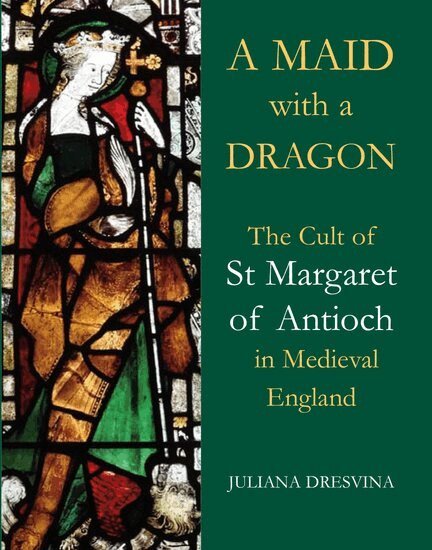
This is the first comprehensive interdisciplinary study of the cult of St Margaret of Antioch in medieval England. Margaret was one of the most famous female saints of both the Catholic world and of Eastern Christianity (where she was known as St Marina). Her legend is remembered for her confrontation with a dragon-shaped devil, who allegedly swallowed Margaret and then burst asunder. This episode became firmly established in iconography, making her one of the most frequently represented saints. Margaret was supposedly martyred in the late 3rd century, but apart from the historically problematic legend there is no evidence concerning her in other contemporary sources. The sudden appearance of her name in liturgical manuscripts in the late 8th century is connected with the dispersal of her relics at that time. The cult grew in England from Anglo-Saxon times, with over 200 churches dedicated to Margaret (second only to Mary among female saints), and hundreds of images and copies of her life known to have been made.The book examines Greek, Latin, Old English, Middle English and Anglo-Norman versions of Margaret's live, their mouvance and cultural context, providing editions of the hitherto unpublished texts. By considering these versions, the iconographic evidence, their patronage and audience, the monograph traces the changes of St Margaret's story through the eight centuries before the Reformation. The book also considers the further trajectory of the legend as reflected in popular fairy-tales and contemporary cultural stereotypes. Special attention is given to the interpretation of St Margaret's demonic encounter, central to the legend's iconography and theology.
1 581 kr
Skickas inom 7-10 vardagar
In 1836, John Wilson Croker, having immersed himself in dozens of contemporary French novels, warned his readers that 'she who dares to read a single page of the hundred thousand licentious pages with which the last five years have indundated society, is lost for ever.' It has become common to build an opposition between the attitudes towards fiction held in prudish Victorian England and permissive 19th-century France. The lack of a full-length study of 19th-century Anglo-French literary relations means, however, that the rejection of French novels has been greatly exaggerated. French Novels and the Victorians sheds new light on these relations by exploring the enormous impact of French fiction on the Victorian reading public. The book considers the many different ties built between the two countries in the publishing industry, identifying how French novels could be accessed and by whom, as well as who promoted and who resisted the importation of Continental works in England and why. The book reflects on what 'immorality' meant to both critics and the readers they sought to warn, and how the notion was subjected to scrutiny through censorship debates as well as the fictional representations of readers. It also tackles the contemporary preoccupation with literary influence, and explores how the extensive circulation of French fiction in England affected the concept of a 'national' literature. In addition to highlighting the cultural importance of novelists such as Sand, Balzac, and Dumas, this book uncovers the networks and mediums that enabled French novels to cross the Channel, and looks at how the concept of 'the French novel' was elaborated, interpreted, and challenged.
1 250 kr
Skickas inom 7-10 vardagar
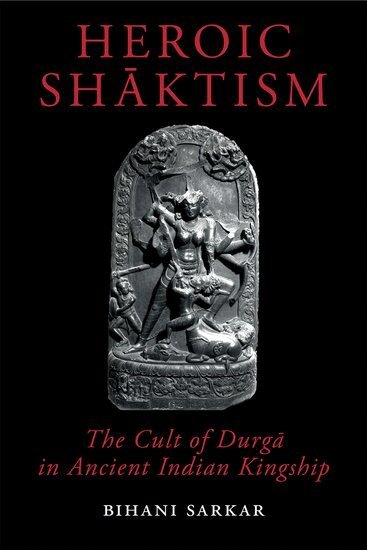
Heroic Śāktism is the belief that a good king and a true warrior must worship the goddess Durgā, the form and substance of kingship. This belief formed the bedrock of ancient Indian practices of cultivating political power. Wildly dangerous and serenely benevolent at one and the same time, the goddess's charismatic split nature promised rewards for a hero and king and success in risky ventures. This book is the first expansive historical treatment of the cult of Durgā and the role it played in shaping ideas and rituals of heroism in India between the 3rd and the 12th centuries CE. Within the story of ancient Indian kingship, two critical transitions overlapped with the rise of heroic Śāktism: the decline of the war-god Skanda-Mahāsena as a military symbol, and the concomitant rise of the early Indian kingdom. As the rhetoric of kingship once strongly linked to the older war god shifted to the cultural narratives of the goddess, her political imagery broadened in its cultural resonance. And indigenous territorial deities became associated with Durgā as smaller states unified into a broader conception of civilization. By assessing the available epigraphic, literary and scriptural sources in Sanskrit, and anthropological studies on politics and ritual, Bihani Sarkar demonstrates that the association between Indian kingship and the cult's belief-systems was an ancient one based on efforts to augment worldly power.
1 250 kr
Skickas inom 7-10 vardagar
This book challenges commonplace conceptions of musical conservatism during Germany's Weimar Republic (1918-1933). Its primary goal is to offer scrutiny of uncritical links often made by musicologists and historians between musical conservatism and political conservatism of the era. It does so through a critical and nuanced application of the term 'conservative revolution', as used throughout the Weimar era and popularised in its historiography after 1945.After an opening discussion of the time-honoured notion of 'Weimar Culture' and its tendency to obscure parts of the contemporary cultural landscape (and their relation to modernity and modernism), the book presents four contrasting studies, each focused on a particular 'conservative' musical figure or movement, and informed by readings of a complex discourse drawn together from contemporary journals, speeches, letters, scores, and archival sources. The first two studies address Thomas Mann and his relationship with Hans Pfitzner in the aftermath of the First World War, and Alfred Heuss's 1920s tenure as editor of Schumann's Zeitschrift für Musik. The second two studies turn to the so-called 'Bruckner-Cult' of the Weimar era and its representations of its central composer as medieval mystic, and the work of August Halm - another dedicated Brucknerian - within the German Youth Movement, as defined by the radical pedagogue Gustav Wyneken. An extended epilogue considers advocacy for these Weimar-era 'revolutionary conservatisms' under the Nazi regime after 1933.
1 026 kr
Skickas inom 7-10 vardagar
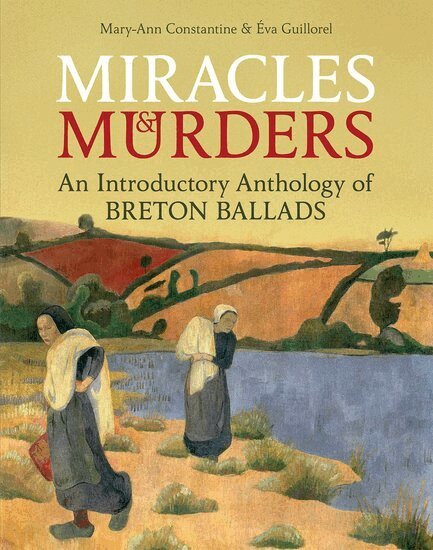
This is a vivid introduction, by two of the foremost scholars in the field, to one of the most fascinating and little-known song traditions in Europe, the Breton gwerz, or ballad. These narrative songs, collected in Western Brittany from the 19th century to the present day, recount a wealth of stories based on tragic local events or legends. They tell of shipwrecks, abductions, accidents and murders, miraculous rescues, penitent souls, and strange journeys. Quite unlike songs from the neighbouring French tradition, and distinct from anything else in the other Celtic languages, these ballads unfold in clear, spare verses, filled with striking imagery: they are often highly dramatic in nature.Historians of popular culture will find much to explore here, as will medievalists interested in tracing themes and legends across different European cultures, or linguists looking for rare material in Breton. But the gwerziou speak to readers and listeners of all kinds, with stories of violence, love, and grief that touch us directly today. This generous selection of songs is presented here for the first time in the original Breton with English translations and musical notation; an accompanying CD showcases some of the most famous Breton traditional singers. A comprehensive introductory essay offers insights into the history of ballad collection in Brittany, the nature of the songs, and the contexts in which they have been performed.
836 kr
Skickas inom 7-10 vardagar
Fighting for France is a ground-breaking examination of violence in French politics in the interwar period. During these years, a range of groups at the political extremes employed physical aggression against their enemies and threatened to bring about the violent demise of the democratic regime. Until now, historians have denied and downplayed the frequency and seriousness of French political violence in favour of an interpretation that emphasises France's weddedness to democracy. Fighting for France demonstrates that the democratic culture of the late Third Republic co-existed with a culture of violence in which the physical punishment of rivals and opponents was considered acceptable. Drawing on the narratives constructed around outbreaks of violence, the book reconstructs the lived experience of fighting and the sense that contemporaries made of conflict. It examines violence in a variety of settings, from the street to the factory floor. A range of actors come under investigation, including fascists, communists, and the police. Fighting for France transforms our understandings of the course of interwar France and Europe.